
Pure Titanium Foil: Grade 1 vs Grade 2 vs Grade 4
- Pure Titanium Foil
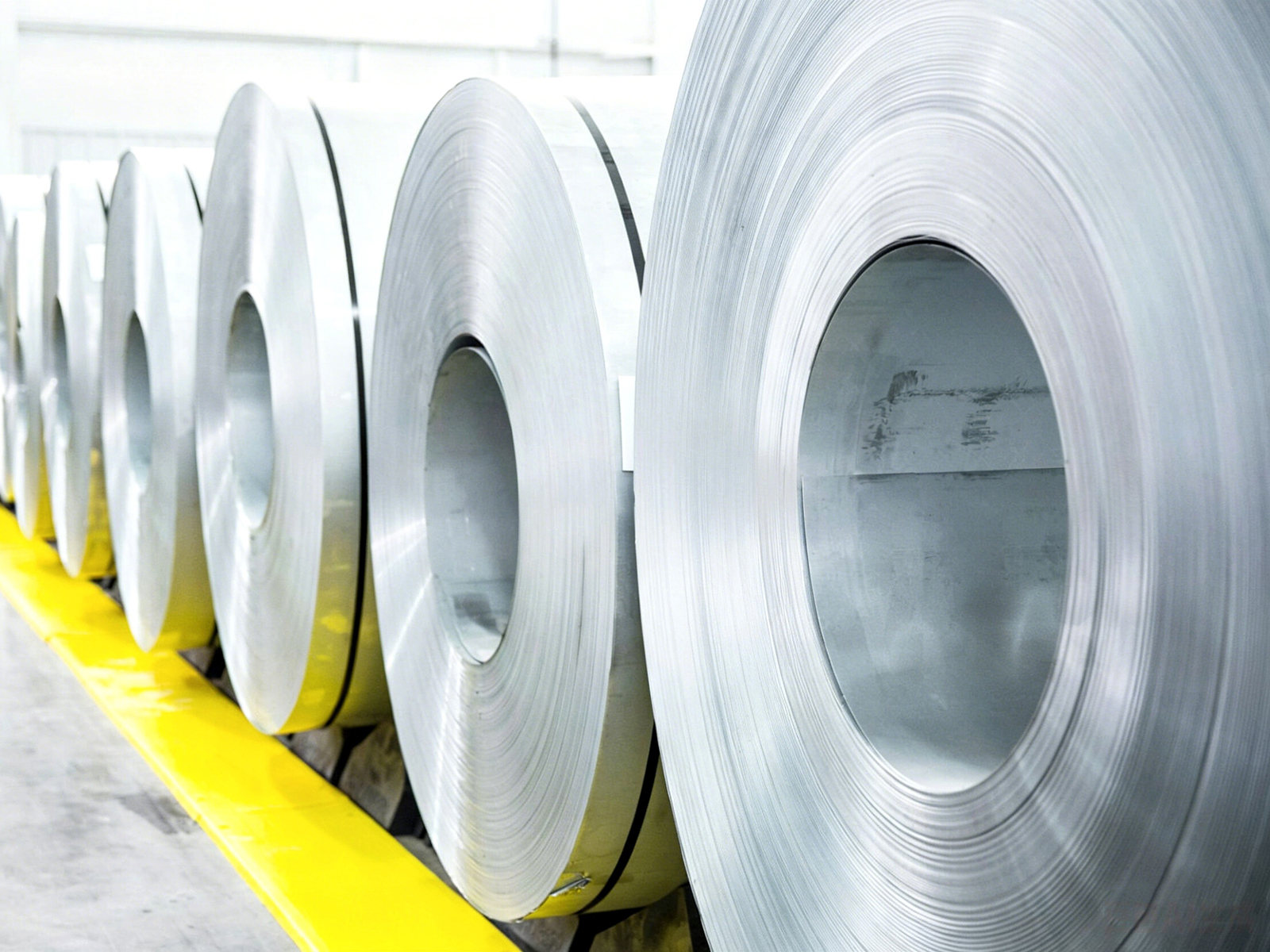
Compare three commercially pure foil grades: Grade 1 when forming takes priority, Grade 2 when the part needs a balance of strength and formability, and Grade 4 when higher strength matters. Check the ordered gauge and condition before applying any table value. Browse titanium foil grades.
What “Pure” Means in Titanium Foil
Commercially pure titanium is not chemically pure — it is “pure” in the metallurgical sense of containing no deliberate alloy additions. Published purities are Ti ≥ 99.5% (Grade 1), Ti ≥ 99.2% (Grade 2) and Ti ≥ 99% (Grade 4), with O, Fe, N, C and H controlled because they dominate the properties. A separate high-purity tier — 4N–5N (99.99–99.999%) — serves sputtering targets and getter material, refined by molten-salt electrolysis and electron-beam melting to grain sizes below 50 µm.
The Grade Ladder at a Glance
Item | Grade 1 | Grade 2 | Grade 4 |
UNS | R50250 | R50400 | R50700 |
Chinese designation | TA1 | TA2 | TA4 |
Oxygen (max %) | 0.18 | 0.25 | 0.40 |
Iron (max %) | 0.20 | 0.30 | 0.50 |
Tensile strength (min) | ≥ 240 MPa | ≥ 345 MPa | ≥ 550 MPa |
Yield strength | 170–310 MPa | 275–450 MPa | 483–655 MPa |
Elongation (min) | 24% | 20% | 15% |
Density | ≈ 4.51 g/cm³ | ≈ 4.51 g/cm³ | ≈ 4.51 g/cm³ |
Table 1 — Commercially pure titanium foil grades per ASTM B265 (annealed).
Manufacturing: Three Thickness Bands, One Discipline
Pure titanium foil is vacuum melted, multi-pass cold rolled on a 20-high mill, annealed, leveled and slit into three bands: 0.02–0.2 mm foil (±0.005 mm class thickness tolerance), 0.2–0.5 mm strip and 0.5–1.0 mm sheet, to 680 mm width. All three bands support etching, stamping and welding, and the same grade can be cold-worked (Y) for springs or annealed (M) for forming. Custom size, condition, tolerance and documentation can be reviewed to the purchase specification.
Application Map: The Foil Band (0.02–0.2 mm, 12 Applications)
Application | Typical thickness | Process | Key requirement |
Semiconductor sputtering target blanks | 0.05–0.2 mm | Vacuum melting (molten-salt electrolysis + electron-beam) + precision cold rolling | 4N–5N purity, grain < 50 µm, flat sheet, no scratches |
X-ray transmission windows | 0.03–0.06 mm | Precision rolling to gas-tight ultra-thin foil | Strength + gas-tightness, low absorption of soft X-rays |
Tweeter / headphone driver diaphragms | 0.03–0.05 mm | Stamping + anodized coloring | High rigidity, low damping, uniform thickness |
Li-ion battery current collectors | 0.02–0.03 mm | Precision rolling to the thinnest band | Electrolyte corrosion resistance, mechanical strength, light weight |
EMI shielding foil | 0.05–0.1 mm | Slitting / etching / stamping | Non-magnetic, low density, corrosion resistance |
Coin-cell liners and tabs | 0.03–0.1 mm | Stamping (paired with 0.2–0.5 mm case strip) | Biocompatibility, electrolyte resistance, low contact resistance |
Strain-gauge and sensor substrates | 0.02–0.05 mm | Precision rolling of high-purity foil | Fatigue resistance, elastic response, environmental stability |
High-vacuum getter material | 0.05–0.2 mm | Precision rolling of 4N–5N high-purity titanium | Strong hydrogen sorption, wide working temperature, activatable |
consumer electronics precision shielding and masking parts | 0.03–0.15 mm | Etching, stamping, laser cutting | Thin, hard, temperature-resistant, etchable to micron detail |
Electroplating anode titanium substrates | 0.1–0.2 mm | Foil / expanded mesh | Electrolyte corrosion resistance, long life, recoatable |
Precision etched parts / lead frames | 0.05–0.15 mm | Double-sided etching + post-processing | Burr-free edges, high aspect ratio, batch consistency |
Decorative anodized foil | 0.05–0.2 mm | Stamping + anodized coloring | Gold / blue / purple interference colors, wear resistance |
Table 2 — The twelve foil-band applications.
Application Map: The Strip Band (0.2–0.5 mm, 12 Applications)
Application | Typical thickness | Process | Key requirement |
Hydrogen fuel-cell bipolar plates | 0.1–0.25 mm | Stamping / hydroforming + conductive coating | 40–50% weight reduction vs graphite plates |
Coin-cell cases and lids | 0.2–0.3 mm | Multi-station progressive stamping + crimping | Non-magnetic, corrosion-resistant, hermetic sealing |
Pacemaker / defibrillator housings | 0.2–0.4 mm | Deep drawing + laser seal welding | Biocompatibility, EMI shielding, hermetic closure |
PEM electrolyzer bipolar plates | 0.1–0.5 mm | Etched flow fields + noble-metal catalyst coating | Acidic oxygen-evolving environment, conductivity, strength |
Automotive exhaust multilayer gaskets | 0.1–0.2 mm | Stamping | High-temperature oxidation resistance, elastic recovery, vibration tolerance |
Exhaust bellows / EGR ducts | 0.15–0.3 mm | Corrugated forming + hydroforming | High-temperature strength, thermal-stress tolerance, damping |
Heat-exchanger thin-wall tubes and plates | 0.2–0.5 mm | Roll-welded thin-wall tube from strip | Chloride-ion resistance, good heat transfer |
Heat-spreading / vapor-chamber structures | 0.2–0.5 mm | Stamping / forming | Low thermal expansion, high strength, corrosion resistance |
Precision springs and clips | 0.2–0.4 mm | Cold-hard (temper) strip + forming | Elastic fatigue life, non-magnetic |
Electroplating anode baskets | 0.3–0.5 mm | Welded forming | Acid-bath stability, stable material retention |
Eyeglass frames and hinges | 0.3–0.5 mm | Bending + anodized coloring (β-Ti / Ti-6Al-4V) | Light, corrosion-resistant, skin-friendly, elastic |
Medical device housings and parts | 0.2–0.5 mm | Stamping / deep drawing | Biocompatible, non-magnetic, sterilization-resistant |
Table 3 — The twelve strip-band applications (springs and eyewear may use alloy grades as well).
Application Map: The Sheet Band (0.5–1.0 mm, 12 Applications)
Application | Typical thickness | Process | Key requirement |
PEM electrolyzer plates and end plates | 0.5–1.0 mm | Machining / etched flow fields + coating | High strength, corrosion resistance, conductivity |
consumer electronics housing structural parts | 0.5–0.8 mm | CNC machining + anodizing | Light, hard, anodizable, premium feel |
Bone plates / internal fixation | 0.6–1.0 mm | Stamping + machining + surface treatment | Elastic modulus near bone, non-magnetic, biocompatible |
Dental implants and abutments | 0.5–1.0 mm | Turning + threading + sandblasting/acid-etching | Osseointegration, saliva corrosion resistance, non-toxic |
Aerospace structure / skin reinforcement | 0.6–1.0 mm | Forming / machining | High specific strength, thermal match with CFRP |
Engine heat shields / thermal barrier liners | 0.3–0.8 mm | Stamping + surface coating | 600℃+ resistance, low density, formable |
Chemical corrosion-resistant components | 0.5–1.0 mm | Forming / welding | Resistance to acids and chloride media |
Marine / seawater heat exchange and structure | 0.5–1.0 mm | Forming / welding | Seawater corrosion resistance, anti-fouling |
Carbon-fiber–titanium laminates | 0.5–1.0 mm | Lamination with CFRP | Prevents galvanic corrosion, dimensional match |
Sports equipment | 0.5–1.0 mm | Forming / machining | Light, strong, weatherproof, good feel |
Premium watch cases and jewelry | 0.5–1.0 mm | Stamping / machining + anodizing | Skin-friendly, sweat-resistant, rich anodized colors |
Titanium crafts and souvenirs | 0.5–1.0 mm | Anodized coloring | Gradient iridescent colors, metallic finish |
Table 4 — The twelve sheet-band applications.
1. Deep Dive: Semiconductor sputtering target blanks
Semiconductor and flat-panel PVD sputtering targets start from 0.05–0.2 mm 4N–5N high-purity titanium foil/coil stock. The foil becomes Ti/TiN barrier and adhesion layers on 12-inch wafers; purity above 4N5–5N measurably improves film resistivity and step coverage, and the mill must hold grain size below 50 µm with a flat, scratch-free sheet.
2. Deep Dive: X-ray transmission windows
XRF analysis windows and X-ray tube output windows use 0.03–0.06 mm foil: titanium absorbs little low-energy X-radiation, and a 0.05 mm-class foil transmits better than molybdenum or beryllium alternatives while being mechanically stronger and environmentally benign.
3. Deep Dive: High-vacuum getter material
Non-evaporable getters in electron tubes, vacuum insulation panels and accelerator vacuum systems use 0.05–0.2 mm high-purity foil: thin gauge maximizes sorption surface area for N₂/H₂/O₂, and the material activates thermally — titanium’s classic vacuum-service role.
4. Deep Dive: Li-ion battery current collectors
0.02–0.03 mm foil serves as current collector in high-voltage cathode systems and as coin-cell liner stock, surviving electrolytes that corrode aluminum while adding almost no stack thickness.
5. Deep Dive: Heat-exchanger thin-wall tubes and plates
0.2–0.5 mm strip roll-welds into thin-wall heat-exchanger tubes for seawater and chlorinated duty — desalination, power condensers, chemical service — where total life cost beats copper-nickel.
6. Deep Dive: Bone plates / internal fixation
CP sheet at 0.6–1.0 mm becomes bone plates, fixation hardware and dental implant stock: modulus near bone, osseointegration, saliva and body-fluid corrosion resistance, non-magnetic imaging compatibility and long-term implantability.
How to Choose Among the Pure Grades
Select the weakest grade that meets the strength requirement — the classic rule that keeps forming margin and weld quality on your side. Grade 1 for deep drawing and microforming; Grade 2 for general chemical, marine, energy and structural service at the best cost-performance; Grade 4 where thin parts carry real load (its specific strength approaches alloy territory without alloy forming and welding compromises). High-purity 4N–5N material is a separate specification tier for sputtering and vacuum duty.
Standards
All three CP grades are ordered to ASTM B265; the surgical parallel is ASTM F67 (ISO 5832-2), and Chinese domestic supply references GB/T 3622. Equivalent designations: DIN 3.7025 / 3.7035 / 3.7065 and JIS Classes 1–3.
FAQ
(1) What is the difference between pure titanium foil and titanium alloy foil?
Pure (CP) foil is Ti ≥ 99% with no alloy additions: strength 240–550 MPa, maximum formability and weldability. Alloy foil (Ti-6Al-4V, Ti-3Al-2.5V) reaches 620–895 MPa at nearly the same density but forms and welds with more care.
(2) Which pure titanium grade has the best corrosion resistance?
All CP grades share essentially the same passivity; the grades differ in strength, not corrosion. Grade 2 is the standard cost-effective choice for corrosive service.
(3) Is pure titanium foil magnetic?
No. Commercially pure titanium is non-magnetic, which is why it serves MRI-compatible devices, EMI shielding and electronics.
(4) Can pure titanium foil be anodized?
Yes — CP grades anodize well, from decorative gold/blue/purple coloring to Type 2 bond-preparation films for adhesive bonding.
(5) What thickness range is available?
The standard program is 0.02–1.0 mm × up to 680 mm in three bands; sub-0.02 mm and non-standard tolerances are reviewed case by case. Custom size, condition, tolerance and documentation can be reviewed to the purchase specification.
(6) What is the difference between TA1/TA2 and Grade 1/Grade 2?
They are the Chinese (GB/T) and ASTM designations for the same commercially pure grades: TA1 = Grade 1, TA2 = Grade 2, TA4 = Grade 4.
(7) Which pure grade suits deep drawing?
Grade 1, with elongation ≥ 24% and the lowest yield strength of the family — coin-cell cases and pacemaker housings are the classic deep-drawn CP parts.
(8) Where does high-purity 4N–5N foil fit?
Sputtering targets and getter material. It is not an ASTM B265 chemistry tier — melting route, purity and grain size are fixed in the purchase specification. Custom size, condition, tolerance and documentation can be reviewed to the purchase specification.
Related Resources and Inquiry
See individual grade pages — Grade 1, Grade 2, Grade 4 — or the titanium foil category. Send your specification.
Baoji Titanium Valley Titanium Nickel Zirconium Material Processing Co., Ltd. operates a 750 mm 20-high titanium foil line (3, 000 t/yr, ISO 9001 / ISO 13485) covering the full 0.02–1.0 mm range with etching, stamping and welding compatibility. Send your specification to sales@titaniumvalleys.com — Custom size, condition, tolerance and documentation can be reviewed to the purchase specification.
References
1. ASTM B265, Standard Specification for Titanium and Titanium Alloy Strip, Sheet, and Plate.
2. ASTM F67, Standard Specification for Unalloyed Titanium, for Surgical Implant Applications.
3. ASTM E8/E8M, Standard Test Methods for Tension Testing of Metallic Materials.
4. ISO 5832-2, Implants for Surgery — Metallic Materials — Unalloyed Titanium.
5. GB/T 3622, Titanium and Titanium Alloy Strip and Foil.
6. Baoji Titanium Valley: 0.02–1.0 mm Titanium and Titanium Alloy Strip and Foil — Application Introduction (internal application deck).
7. Titanium Valley product data: Gr1, Gr2 and Gr4 Titanium Foil product pages (titaniumvalleys.com).
This article is a technical reference. It does not constitute a commercial offer; dimensions, tolerances and documentation are confirmed at order review.
Published by: Titanium Valley Technical Team. Technical and quality review: pending.