
Grade 9 Titanium Foil: Composition, ASTM B265 and Ordering
- Grade 9 Titanium Foil
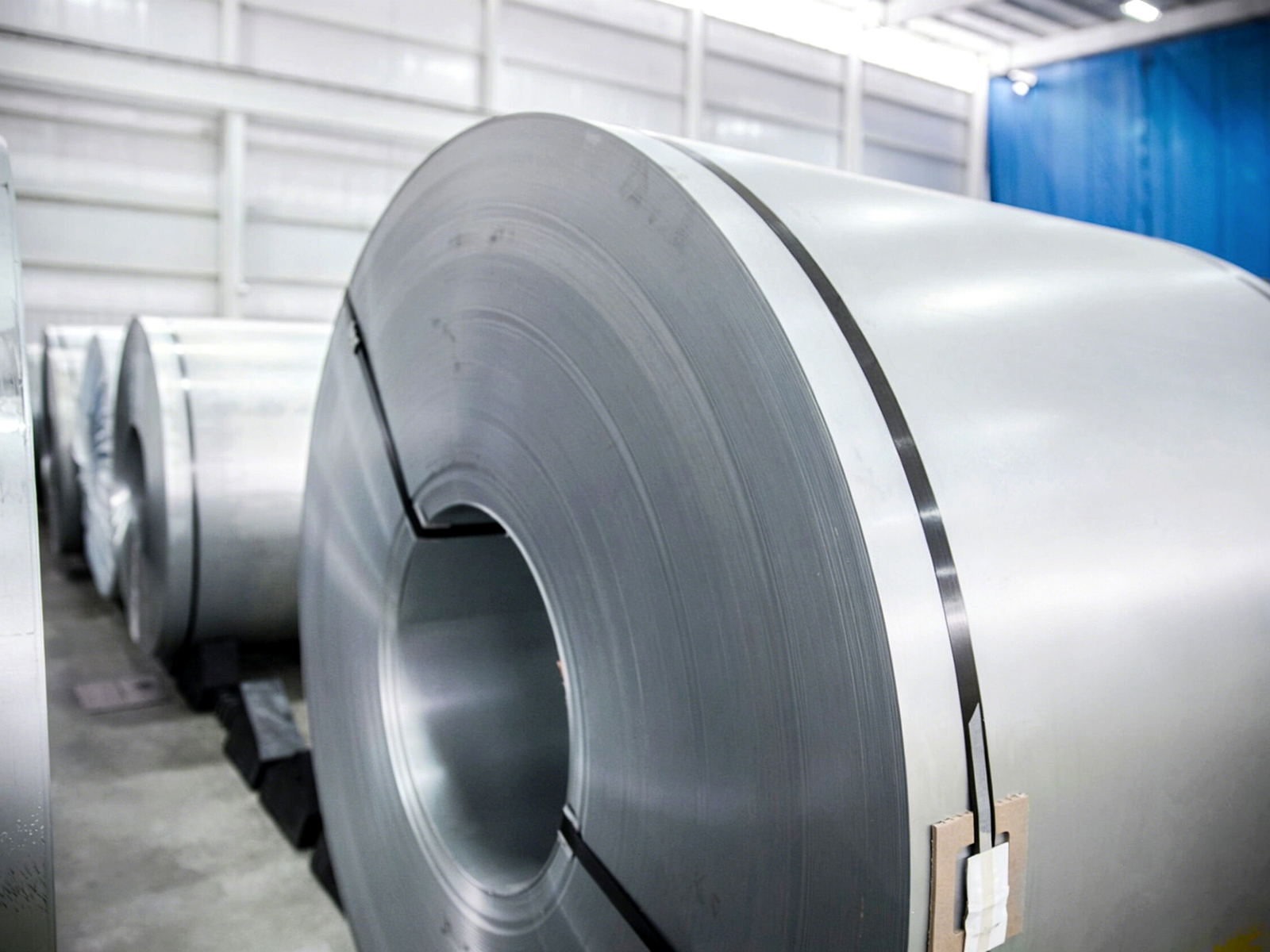
Specify Grade 9 titanium foil by Ti-3Al-2.5V designation, governing standard and edition, gauge, width, delivery condition, and inspection requirements. Use the chemistry table to review the mill test report against the purchase specification. Request a Grade 9 foil quote.
Grade 9 purchase order example
ASTM B265 [edition], Grade 9 (UNS R56320), [condition], [thickness × width], [tolerances], [surface and edge], [quantity]. Provide heat identification and a material test report with the agreed chemistry and mechanical results.
Names and Designations
- Grade 9 — the ASTM grade designation (ASTM B265 Grade 9);
- Ti-3Al-2.5V — the nominal composition;
- UNS R56320 — the unified numbering entry;
- DIN 3.7195 / EN designation — European delivery designation;
- “Half 6-4” — industry nickname, aluminum and vanadium at roughly half Ti-6Al-4V levels.
Composition Limits in the Standards
Element | Limit (%) |
Aluminum (Al) | 2.50–3.50 |
Vanadium (V) | 2.00–3.00 |
Iron (Fe) | ≤ 0.25 |
Oxygen (O) | ≤ 0.12 |
Carbon (C), Nitrogen (N), Hydrogen (H) | As limited in the governing standard edition |
Titanium (Ti) | Balance |
Table 1 — Ti-3Al-2.5V composition window per ASTM B265 Grade 9 / AMS 4943; always confirm against the contracted edition.
Mechanical Requirements
Requirement | ASTM B265 Grade 9 / AMS 4943 (annealed) |
Tensile strength (min) | ≥ 620 MPa (90 ksi) |
Yield strength (min) | ≥ 483 MPa (70 ksi) |
Elongation (min) | 15% (by thickness band) |
Condition | Annealed |
Table 2 — Mechanical acceptance values; elongation is specified by thickness band, so quote the band with the value.
Thickness Bands and Tolerance Practice
The 0.02–1.0 mm program splits into foil (0.02–0.2 mm, ±0.005 mm class tolerance), strip (0.2–0.5 mm) and sheet (0.5–1.0 mm) bands. Grade 9’s elongation minimum is quoted by band, and cold-hard temper strip is a standard second condition for spring stock. Where an order falls outside the standard bands, gauge and tolerance are fixed in the purchase specification. Custom size, condition, tolerance and documentation can be reviewed to the purchase specification.
Application Snapshot
Application | Typical thickness | Process | Key requirement |
Precision springs and clips | 0.2–0.4 mm | Cold-hard (temper) strip + forming | Elastic fatigue life, non-magnetic |
Exhaust bellows / EGR ducts | 0.15–0.3 mm | Corrugated forming + hydroforming | High-temperature strength, thermal-stress tolerance, damping |
Heat-exchanger thin-wall tubes and plates | 0.2–0.5 mm | Roll-welded thin-wall tube from strip | Chloride-ion resistance, good heat transfer |
Eyeglass frames and hinges | 0.3–0.5 mm | Bending + anodized coloring (β-Ti / Ti-6Al-4V) | Light, corrosion-resistant, skin-friendly, elastic |
Sports equipment | 0.5–1.0 mm | Forming / machining | Light, strong, weatherproof, good feel |
Marine / seawater heat exchange and structure | 0.5–1.0 mm | Forming / welding | Seawater corrosion resistance, anti-fouling |
Table 3 — The Grade 9 application families at a glance (see the Grade 9 properties article for the deep dive).
What Makes the Grade 9 Order Different from a Pure-Titanium Order
Three practical differences: the alloy foil must be vacuum or inert-gas annealed to protect the chemistry from oxygen and hydrogen pickup; elongation is quoted by thickness band, so ultra-thin gauge lines on the MTR carry their own values; and alloy foil normally carries more supplementary testing — microstructure checks, additional chemistry rounds and stricter surface acceptance are common aerospace practice.
RFQ Fields for Grade 9 Alloy Foil
- Grade + UNS — Grade 9 / UNS R56320;
- Standard + edition — ASTM B265-25 Grade 9 or AMS 4943, plus any supplementary requirements;
- Gauge and tolerance — thickness nominal ± tolerance, width, coil ID/OD;
- Condition and surface — annealed (M) or cold-hard temper, bright or matte, dyne level, edge condition;
- Documentation — MTR to EN 10204 3.1/3.2, CoC, RoHS, ISO certificates.
FAQ
(1) Is Grade 9 the same as Ti-3Al-2.5V?
Yes — Grade 9 is the ASTM grade designation for the Ti-3Al-2.5V composition (UNS R56320, DIN 3.7195).
(2) What is the difference between Grade 9 and Grade 5 on the order?
Different composition windows (Al 2.5–3.5 / V 2.0–3.0 vs Al 5.5–6.75 / V 3.5–4.5), different mechanical minimums (620/483/15% vs 895/825/10%) and different standards practice (AMS 4943 vs AMS 4911).
(3) Does ASTM B265 cover Grade 9 foil?
Yes — B265 lists Grade 9 among its strip/sheet/plate grades, and it supplies the chemistry and tensile basis for the foil order; gauge and tolerance outside the standard bands are fixed in the purchase specification. Custom size, condition, tolerance and documentation can be reviewed to the purchase specification.
(4) Why does elongation vary by thickness band?
Thin gauges use different gauge lengths and accept different elongation values than thick product — quoting the headline 15% without the thickness band is a common certificate-reading error.
(5) Which documents should a Grade 9 alloy foil shipment carry?
MTR with heat number, full chemistry including Al, V, Fe and O, tensile and elongation for the correct band, annealing condition, standard edition — plus CoC and any customer-specific test reports.
(6) Can Grade 9 foil be supplied cold-worked?
Yes — cold-hard temper strip (typically 0.2–0.4 mm) is the standard spring-stock condition, with strength above the annealed minimums and reduced formability.
(7) How is vacuum annealing confirmed on the certificate?
By the condition designation and, where specified, by hydrogen analysis — H is the fingerprint of annealing atmosphere, and tight H limits indicate vacuum or inert practice.
(8) What is the typical lead-time difference vs CP foil?
Alloy foil normally carries longer review and testing cycles than CP stock; program quantities should be quoted with the standard edition and band named to avoid rework.
Related Resources and Inquiry
Compare the alloy against the rest of the family in the titanium foil category or send your specification for a Grade 9 order review.
Baoji Titanium Valley Titanium Nickel Zirconium Material Processing Co., Ltd. operates a 750 mm 20-high titanium foil line (3, 000 t/yr, ISO 9001 / ISO 13485) covering the full 0.02–1.0 mm range with etching, stamping and welding compatibility. Send your specification to sales@titaniumvalleys.com — Custom size, condition, tolerance and documentation can be reviewed to the purchase specification.
References
1. ASTM B265, Standard Specification for Titanium and Titanium Alloy Strip, Sheet, and Plate.
2. ASTM E8/E8M, Standard Test Methods for Tension Testing of Metallic Materials.
3. SAE AMS 4943, Titanium Alloy Sheet, Strip, and Plate, 3Al-2.5V, Annealed.
4. Baoji Titanium Valley: 0.02–1.0 mm Titanium and Titanium Alloy Strip and Foil — Application Introduction (internal application deck).
5. EN 10204, Metallic Products — Types of Inspection Documents.
6. Titanium Valley product data: titanium foil product pages (titaniumvalleys.com).
This article is a technical reference. It does not constitute a commercial offer; dimensions, tolerances and documentation are confirmed at order review.
Published by: Titanium Valley Technical Team. Technical and quality review: pending.