
Titanium Aluminum Vanadium Foil: Grades 5, 9 and 23 Compared
- Titanium/Aluminum/Vanadium Foil
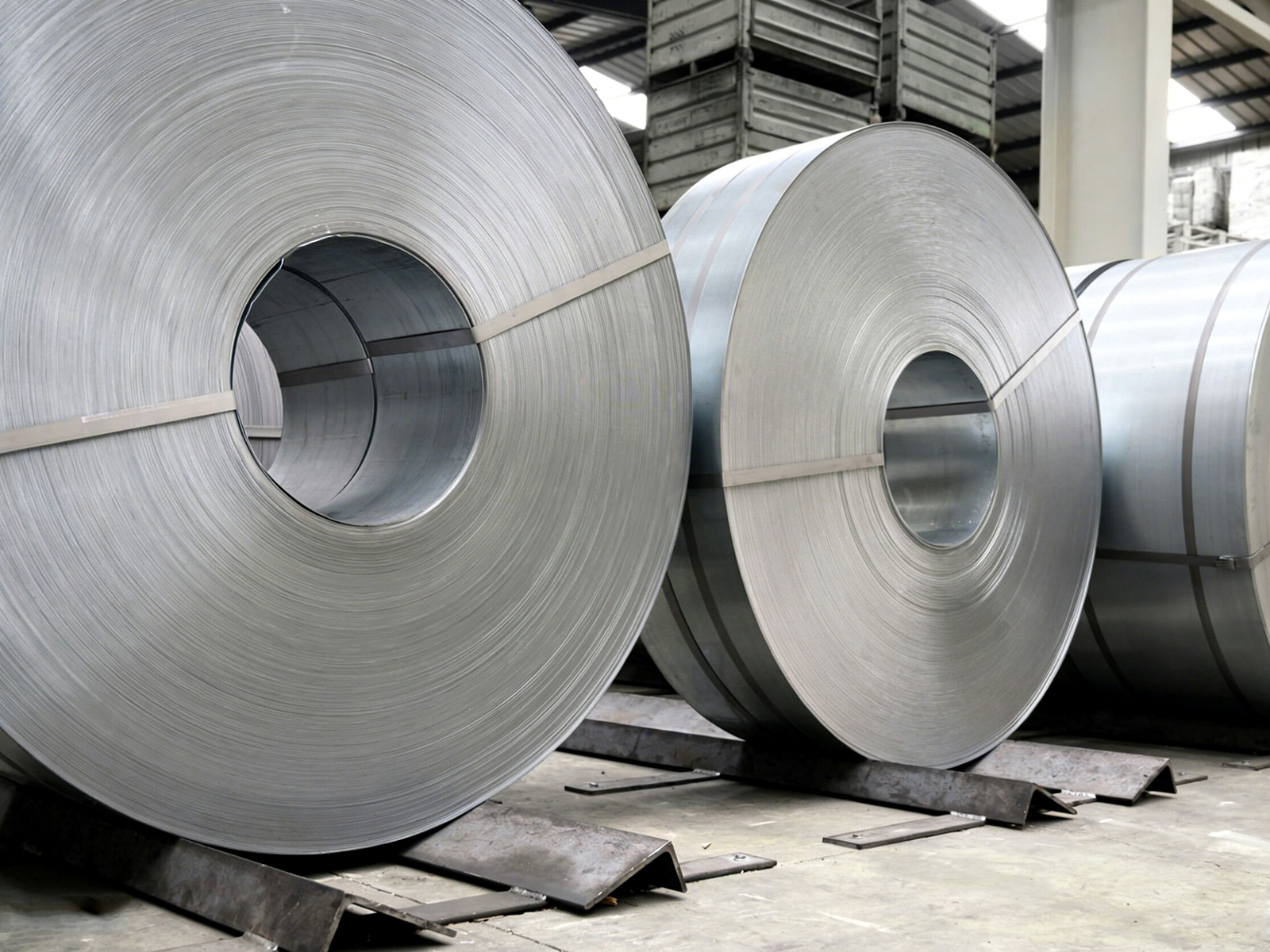
Titanium aluminum vanadium foil includes several alloy grades. Compare Ti-6Al-4V (Grade 5), Ti-3Al-2.5V (Grade 9), and the Ti-6Al-4V ELI family by chemistry, forming needs and purchase specification. Browse titanium foil grades.
The Ti-Al-V Alloys Used in Foil
Alloy | Al (%) | V (%) | UNS | Key limits |
Ti-6Al-4V (Gr5) | 5.50–6.75 | 3.50–4.50 | R56400 | Fe ≤ 0.40, O ≤ 0.20 |
Ti-6Al-4V ELI (Gr23) | 5.50–6.50 | 3.50–4.50 | R56401 (F136); R56407 (B265 Grade 23) | Fe ≤ 0.25, O ≤ 0.13 |
Ti-3Al-2.5V (Gr9) | 2.50–3.50 | 2.00–3.00 | R56320 | Fe ≤ 0.25, O ≤ 0.12 |
Table 1 — Compositions of the Ti-Al-V foil alloys (ASTM B265 / AMS 4911 / AMS 4943; confirm limits against the contracted edition).
Why Aluminum and Vanadium
Aluminum is an α-phase stabilizer: it dissolves in the hexagonal titanium lattice, adding strength and lowering density. Vanadium stabilizes the higher-temperature β phase, so Ti-6Al-4V solidifies as a two-phase α+β structure that delivers the 895 MPa tensile that CP titanium cannot reach. Ti-3Al-2.5V keeps both additions lower and sits near-α — strong, but soft enough to cold form; its nickname “half 6-4” reflects the halved aluminum and vanadium contents.
Properties of the Family
Property | Gr5 | Gr9 | Gr23 ELI |
Tensile (min) | ≥ 895 MPa | ≥ 620 MPa | ≥ 860 MPa |
Yield (min) | ≥ 825 MPa | ≥ 483 MPa | ≥ 795 MPa |
Elongation (min) | 10% | 15% | 10% |
Density | 4.43 g/cm³ | 4.48 g/cm³ | 4.43 g/cm³ |
Table 2 — Annealed minimums (Grade 23 per ASTM F136; ASTM B265 Grade 23 lists 828/760 MPa).
Applications by Alloy
Alloy | Application families |
Ti-6Al-4V (Gr5) | consumer electronics housings, aerospace skin reinforcement, engine heat shields (600℃+), CF-Ti laminates, sports equipment, watch cases |
Ti-3Al-2.5V (Gr9) | Precision springs, eyeglass frames, exhaust bellows, heat-exchanger tubes, marine and sports parts |
Ti-6Al-4V ELI (Gr23) | Pacemaker housings, bone plates, dental implants, surgical instruments, fracture-critical and cryogenic components |
Table 3 — Where each Ti-Al-V alloy earns its place.
1. Deep Dive: Aerospace structure / skin reinforcement
The Boeing 787 is ~15% titanium by weight, and Ti-6Al-4V sheet at 0.6–1.0 mm does a large share of that work as skin doublers, honeycomb panels and fittings. The decisive property is thermal compatibility with carbon-fiber composites — aluminum joints corrode galvanically against CFRP, titanium does not, and its expansion coefficient sits between aluminum and carbon fiber.
2. Deep Dive: Engine heat shields / thermal barrier liners
Engine heat shields and nozzle liners stamped from 0.3–0.8 mm Ti-6Al-4V sheet hold strength and oxidation resistance to 600℃ and beyond, protecting airframe structure from radiant engine heat at roughly half the weight of steel or nickel alternatives.
3. Deep Dive: Precision springs and clips
Grade 9 (Ti-3Al-2.5V) cold-hard strip at 0.2–0.4 mm makes springs and clips ~40% lighter than steel, non-magnetic and corrosion-free — the alloy’s cold formability and weldability decide the selection where Grade 5 would crack in forming.
4. Deep Dive: Pacemaker / defibrillator housings
ASTM B265 Grade 23 (Titanium Valley material documentation) uses UNS R56407. ASTM F136 (Titanium Valley material documentation) uses UNS R56401. Specify the required edition, product form and acceptance requirements on the order.
How to Specify Ti-Al-V Foil
Name the alloy (e.g., Ti-6Al-4V), the grade (Grade 5), the UNS number (R56400), the standard and edition (ASTM B265-25 Grade 5, or AMS 4911), plus gauge, tolerance, condition and surface. This five-field discipline removes every ambiguity the shorthand “Ti-Al-V foil” creates.
FAQ
(1) Is titanium/aluminum/vanadium foil the same as Ti-6Al-4V foil?
Usually, but not always — the Ti-Al-V foil family also includes Ti-6Al-4V ELI (Grade 23) and Ti-3Al-2.5V (Grade 9). If the drawing omits the grade, assume Ti-6Al-4V and confirm before quoting.
(2) What does the ELI in Ti-6Al-4V ELI mean?
Extra-low interstitial: oxygen capped at 0.13% and iron at 0.25%. The cleaner alloy trades a little strength for higher fracture toughness, cryogenic ductility and better weld and fatigue behavior.
(3) Why is Ti-3Al-2.5V called “half 6-4”?
Its aluminum and vanadium contents are roughly half those of Ti-6Al-4V, which also halves the strength gap over pure titanium while keeping excellent cold formability and weldability.
(4) Can Ti-Al-V foil be anodized?
Specify decorative anodizing and qualified surface preparation by the intended finish or bond performance and the applicable processing specification.
(5) What thicknesses are available?
The standard published program is 0.02–1.0 mm × up to 680 mm with vacuum annealing and bright or matte surface. Custom size, condition, tolerance and documentation can be reviewed to the purchase specification.
(6) Why does aerospace choose Ti-6Al-4V over aluminum for composite joints?
Aluminum corrodes galvanically against carbon fiber and mismatches its thermal expansion; Ti-6Al-4V eliminates the galvanic couple and matches the laminate thermally.
(7) Which Ti-Al-V foil suits cold forming?
Grade 9 (Ti-3Al-2.5V): elongation ≥ 15% and near-α structure make it the cold-forming, cold-welding member of the family.
(8) How do I avoid ordering the wrong Ti-Al-V grade?
Fix all five fields on the RFQ — alloy name, grade, UNS number, standard + edition, and gauge/tolerance/condition — and reconcile them against the drawing before release. Custom size, condition, tolerance and documentation can be reviewed to the purchase specification.
Related Resources and Inquiry
See the Grade 5 foil page, the ASTM F136 Gr23 ELI page and the titanium foil category. Send your specification.
Baoji Titanium Valley Titanium Nickel Zirconium Material Processing Co., Ltd. operates a 750 mm 20-high titanium foil line (3, 000 t/yr, ISO 9001 / ISO 13485) covering the full 0.02–1.0 mm range with etching, stamping and welding compatibility. Send your specification to sales@titaniumvalleys.com — Custom size, condition, tolerance and documentation can be reviewed to the purchase specification.
References
1. ASTM B265, Standard Specification for Titanium and Titanium Alloy Strip, Sheet, and Plate.
2. ASTM E8/E8M, Standard Test Methods for Tension Testing of Metallic Materials.
3. SAE AMS 4911, Titanium Alloy Sheet, Strip, and Plate, 6Al-4V, Annealed.
4. SAE AMS 4943, Titanium Alloy Sheet, Strip, and Plate, 3Al-2.5V, Annealed.
5. SAE AMS 4907, Titanium Alloy Sheet, Strip, and Plate, 6Al-4V, Extra Low Interstitial, Annealed.
6. ASTM F136, Standard Specification for Wrought Titanium-6Aluminum-4Vanadium ELI Alloy for Surgical Implant Applications.
7. Baoji Titanium Valley: 0.02–1.0 mm Titanium and Titanium Alloy Strip and Foil — Application Introduction (internal application deck).
8. Titanium Valley product data: Gr5 and ASTM F136 Gr23 foil pages (titaniumvalleys.com).
This article is a technical reference. It does not constitute a commercial offer; dimensions, tolerances and documentation are confirmed at order review.
Published by: Titanium Valley Technical Team. Technical and quality review: pending.