
Titanium Alloy Foil: Grades, Properties and Selection Guide
- Titanium Alloy Foil
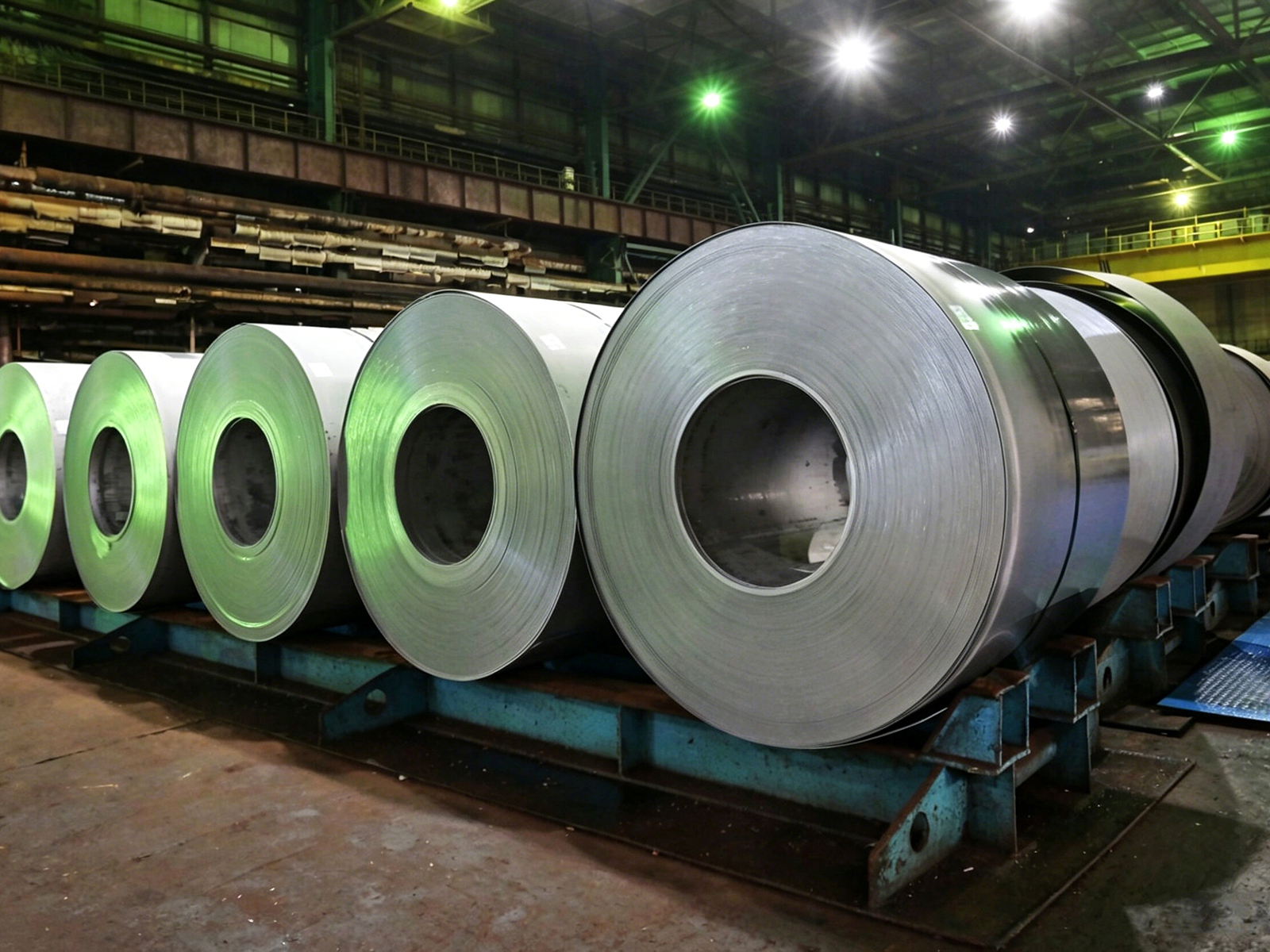
Start with the part requirement. Compare Grade 5 for strength, Grade 9 when forming is a priority, Grade 23 when the specified ELI material requirements apply, and Ti-15-3 when a beta alloy is a candidate for a spring or formed part. Browse titanium foil grades.
Where Ti-15-3 fits
For beta-alloy options, review Ti-15-3 foil. Confirm delivery condition and the forming and heat-treatment route with the supplier.
What Counts as Titanium Alloy Foil
Any titanium foil whose composition contains deliberate additions qualifies. In foil commerce the three workhorses are Grade 5 (Ti-6Al-4V, α+β), Grade 9 (Ti-3Al-2.5V, near-α) and Grade 23 (Ti-6Al-4V ELI, α+β). Beta alloys such as Ti-15V-3Al-3Cr-3Sn extend the family for spring and heat-treatment applications.
The Three Workhorses Compared
Item | Grade 5 | Grade 9 | Grade 23 |
Nominal composition | Ti-6Al-4V | Ti-3Al-2.5V | Ti-6Al-4V ELI |
UNS | R56400 | R56320 | R56401 (F136); R56407 (B265 Grade 23) |
Tensile strength (min) | ≥ 895 MPa | ≥ 620 MPa | ≥ 860 MPa (F136) |
Yield strength (min) | ≥ 825 MPa | ≥ 483 MPa | ≥ 795 MPa (F136) |
Elongation (min) | 10% | 15% | 10% |
Density | 4.43 g/cm³ | 4.48 g/cm³ | 4.43 g/cm³ |
Key standards | B265, AMS 4911 | B265, AMS 4943 | F136, B265, AMS 4907 |
Table 1 — Annealed minimums; Grade 23 values vary slightly between ASTM F136 and ASTM B265 Grade 23.
When Alloy Foil Beats Pure Titanium
Choose alloy foil when any of these apply: the part needs tensile strength above ~550 MPa (the Grade 4 ceiling); specific strength must be maximized (Grade 5 ≈ 202 kN·m/kg vs ≈ 122 for Grade 4); service temperature approaches or exceeds the CP ceiling; or the application demands certified aerospace or implant alloy chemistry. The price of alloy strength is forming discipline: higher pressure, more springback, and vacuum annealing to protect the chemistry.
Application Map by Alloy
Alloy | Characteristic applications |
Grade 5 (Ti-6Al-4V) | consumer electronics housing structure (0.5–0.8 mm), aerospace skin reinforcement, engine heat shields, CF-Ti laminates, sports equipment, watch cases, springs, fuel-cell plates |
Grade 9 (Ti-3Al-2.5V) | Precision springs and clips, eyeglass frames, exhaust bellows, heat-exchanger tube stock, marine hardware, sports parts |
Grade 23 (Ti-6Al-4V ELI) | Pacemaker housings, bone plates, dental implants, surgical instruments, fracture-critical and cryogenic components |
Table 2 — Where each alloy foil earns its keep.
1. Deep Dive: consumer electronics housing structural parts
Flagship smartphones and laptops machine structural frames from 0.5–0.8 mm Ti-6Al-4V sheet and anodize them: hardness, strength-to-weight, non-magnetic cleanliness and a premium color palette that pure titanium cannot match at equal section.
2. Deep Dive: Aerospace structure / skin reinforcement
Skin doublers, honeycomb panels and fittings in 0.6–1.0 mm alloy sheet exploit the thermal match with carbon-fiber composites — the reason the Boeing 787 is ~15% titanium by weight — plus 600℃-class engine heat shields stamped from 0.3–0.8 mm sheet.
3. Deep Dive: Precision springs and clips
Cold-hard alloy strip at 0.2–0.4 mm produces springs roughly 40% lighter than steel, non-magnetic and corrosion-free: Grade 9 (Ti-3Al-2.5V) leads on cold formability, Grade 5 where maximum strength matters.
4. Deep Dive: Pacemaker / defibrillator housings
Implant housings deep drawn from 0.2–0.4 mm strip use ELI or CP chemistry for biocompatibility and hermetic laser-sealed enclosures; bone plates (0.6–1.0 mm) and dental implants (0.5–1.0 mm) follow Ti-6Al-4V or its ELI variant.
Standards
ASTM B265 Grade 23 (Titanium Valley material documentation) uses UNS R56407. ASTM F136 (Titanium Valley material documentation) uses UNS R56401. Specify the required edition, product form and acceptance requirements on the order.
FAQ
(1) What is the difference between titanium alloy foil and pure titanium foil?
Alloy foil is 2–3× stronger at similar density but with lower ductility, higher forming difficulty and more process control (vacuum annealing). Pure foil wins on cost, formability and weld forgiveness; alloy foil wins on strength-to-weight and temperature.
(2) Which titanium alloy foil is easiest to cold form?
Grade 9 (Ti-3Al-2.5V), with elongation ≥ 15% and near-α structure. It is the preferred alloy where the part must be bent or drawn cold and then welded.
(3) Is Ti-6Al-4V foil weldable?
Yes, with TIG or laser and full shielding. For fracture-critical welds, the ELI variant (Grade 23) retains more weld ductility.
(4) Are beta titanium alloys available as foil?
Yes — Ti-15V-3Al-3Cr-3Sn foil is supplied for spring and heat-treatable thin parts; see the Ti-15V-3Al-3Cr-3Sn product page. Confirm alloy, condition and standard at order review.
(5) How do I choose between Grade 5 and Grade 23?
Compare the requirements for the specified standard, edition, thickness and condition. Differences between published minimums do not quantify the effect of interstitial content on a particular heat.
(6) Why do consumer electronics and aerospace both select Ti-6Al-4V sheet?
The same three properties: specific strength, anodizable premium surface, and thermal compatibility with composites. Aerospace adds 600℃-class heat resistance for engine shields.
(7) Can alloy foil be anodized like pure titanium?
Specify decorative anodizing and qualified surface preparation by the intended finish or bond performance and the applicable processing specification.
(8) What thicknesses are available in alloy foil?
The 0.02–1.0 mm program applies, with vacuum annealing and tight gauge control; exact gauge, tolerance and condition are confirmed at order review. Custom size, condition, tolerance and documentation can be reviewed to the purchase specification.
Related Resources and Inquiry
Browse the titanium foil category or send your specification for a grade recommendation at order review.
Baoji Titanium Valley Titanium Nickel Zirconium Material Processing Co., Ltd. operates a 750 mm 20-high titanium foil line (3, 000 t/yr, ISO 9001 / ISO 13485) covering the full 0.02–1.0 mm range with etching, stamping and welding compatibility. Send your specification to sales@titaniumvalleys.com — Custom size, condition, tolerance and documentation can be reviewed to the purchase specification.
References
1. ASTM B265, Standard Specification for Titanium and Titanium Alloy Strip, Sheet, and Plate.
2. ASTM E8/E8M, Standard Test Methods for Tension Testing of Metallic Materials.
3. SAE AMS 4911, Titanium Alloy Sheet, Strip, and Plate, 6Al-4V, Annealed.
4. SAE AMS 4943, Titanium Alloy Sheet, Strip, and Plate, 3Al-2.5V, Annealed.
5. SAE AMS 4907, Titanium Alloy Sheet, Strip, and Plate, 6Al-4V, Extra Low Interstitial, Annealed.
6. ASTM F136, Standard Specification for Wrought Titanium-6Aluminum-4Vanadium ELI Alloy for Surgical Implant Applications.
7. Baoji Titanium Valley: 0.02–1.0 mm Titanium and Titanium Alloy Strip and Foil — Application Introduction (internal application deck).
8. Titanium Valley product data: Gr5, ASTM F136 Gr23 and Ti-15V-3Al-3Cr-3Sn foil pages (titaniumvalleys.com).
This article is a technical reference. It does not constitute a commercial offer; dimensions, tolerances and documentation are confirmed at order review.
Published by: Titanium Valley Technical Team. Technical and quality review: pending.