
Grade 5 Titanium Foil (Ti-6Al-4V): Properties and Standards
- Grade 5 Titanium Foil
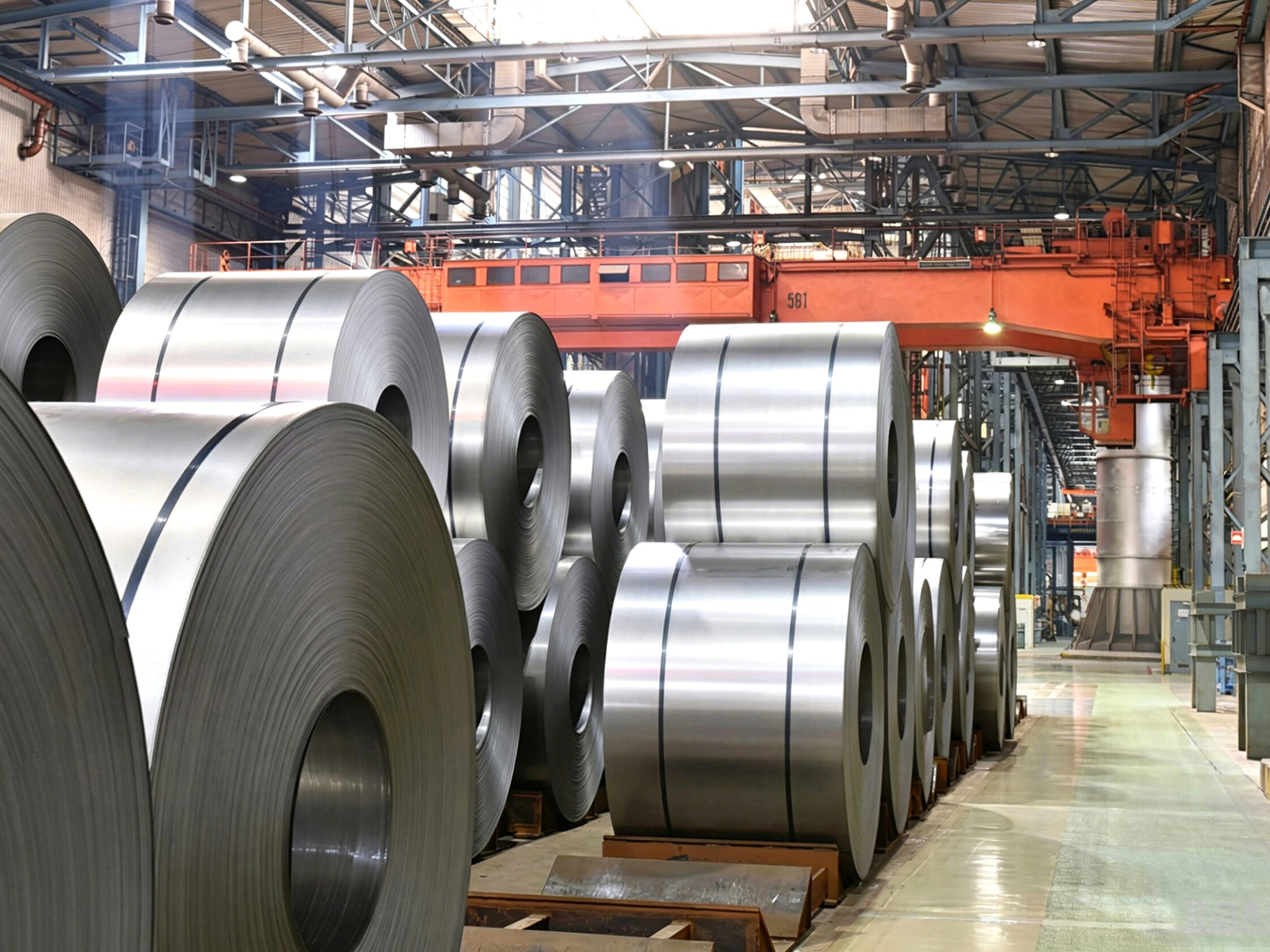
Grade 5 titanium foil is Ti-6Al-4V for applications that need higher strength than commercially pure foil. Verify tensile requirements for the ordered thickness and condition, and confirm whether the application actually uses foil, strip or sheet. View related foil specifications.
Chemical Composition
Element | Content (%) |
Aluminum (Al) | 5.50–6.75 |
Vanadium (V) | 3.50–4.50 |
Iron (Fe) | ≤ 0.40 |
Oxygen (O) | ≤ 0.20 |
Carbon (C) | ≤ 0.08 |
Nitrogen (N) | ≤ 0.05 |
Hydrogen (H) | ≤ 0.015 |
Titanium (Ti) | Balance |
Table 1 — Ti-6Al-4V composition limits per ASTM B265 Grade 5 / AMS 4911.
Mechanical and Physical Properties
Property | Value |
Tensile strength (min) | ≥ 895 MPa (130 ksi) |
Yield strength (min) | ≥ 825 MPa |
Elongation (min) | 10% |
Density | 4.43 g/cm³ |
Elastic modulus | ≈ 110 GPa (typically 105–115 measured) |
Melting point | ≈ 1660℃ |
Magnetism | Non-magnetic |
Table 2 — Annealed properties per ASTM B265 Grade 5 / AMS 4911 and typical measured data (modulus per ASTM E111/E494 practice).
Manufacturing and Delivery
Grade 5 foil is multi-pass cold rolled and vacuum annealed to protect the chemistry from oxygen and hydrogen pickup, then leveled, slit and cleaned; surfaces are bright or matte. The program covers 0.02–0.2 mm foil, 0.2–0.5 mm strip and 0.5–1.0 mm sheet to 680 mm width. The alloy’s high strength makes roll-gauge control and edge quality harder than for CP grades — a genuine mill-capability question, not a given. Custom size, condition, tolerance and documentation can be reviewed to the purchase specification.
Applications by Thickness Band
Application | Typical thickness | Process | Key requirement |
Precision springs and clips | 0.2–0.4 mm | Cold-hard (temper) strip + forming | Elastic fatigue life, non-magnetic |
Eyeglass frames and hinges | 0.3–0.5 mm | Bending + anodized coloring (β-Ti / Ti-6Al-4V) | Light, corrosion-resistant, skin-friendly, elastic |
Hydrogen fuel-cell bipolar plates | 0.1–0.25 mm | Stamping / hydroforming + conductive coating | 40–50% weight reduction vs graphite plates |
Table 3 — Strip band (0.2–0.5 mm): springs, eyewear and energy parts in Ti-6Al-4V.
Application | Typical thickness | Process | Key requirement |
consumer electronics housing structural parts | 0.5–0.8 mm | CNC machining + anodizing | Light, hard, anodizable, premium feel |
Aerospace structure / skin reinforcement | 0.6–1.0 mm | Forming / machining | High specific strength, thermal match with CFRP |
Engine heat shields / thermal barrier liners | 0.3–0.8 mm | Stamping + surface coating | 600℃+ resistance, low density, formable |
Carbon-fiber–titanium laminates | 0.5–1.0 mm | Lamination with CFRP | Prevents galvanic corrosion, dimensional match |
Sports equipment | 0.5–1.0 mm | Forming / machining | Light, strong, weatherproof, good feel |
Premium watch cases and jewelry | 0.5–1.0 mm | Stamping / machining + anodizing | Skin-friendly, sweat-resistant, rich anodized colors |
Bone plates / internal fixation | 0.6–1.0 mm | Stamping + machining + surface treatment | Elastic modulus near bone, non-magnetic, biocompatible |
Dental implants and abutments | 0.5–1.0 mm | Turning + threading + sandblasting/acid-etching | Osseointegration, saliva corrosion resistance, non-toxic |
Table 4 — Sheet band (0.5–1.0 mm): the high-strength heartland of Grade 5 foil.
1. Deep Dive: consumer electronics housing structural parts
Premium smartphone mid-frames, laptop shells and wearable structural parts are CNC-machined from 0.5–0.8 mm sheet and anodized. Titanium’s hardness, strength-to-weight and premium feel — with a full anodized color palette — make it the flagship-grade material standard in consumer electronics products.
2. Deep Dive: Aerospace structure / skin reinforcement
Fuselage skin doublers, honeycomb panels and joint fittings use 0.6–1.0 mm sheet. The decisive property is thermal compatibility: titanium’s expansion coefficient sits between aluminum and carbon-fiber composite, avoiding the mismatch stresses that aluminum-CFRP joints suffer. The Boeing 787 is about 15% titanium by weight, and thin sheet reinforcement is a large share of that.
3. Deep Dive: Engine heat shields / thermal barrier liners
Engine heat shields, exhaust-nozzle liners and hot-end protection stamp from 0.3–0.8 mm sheet with surface coatings. Ti-6Al-4V holds strength and oxidation resistance to 600℃ and beyond in service excursions — protecting airframe structure from radiant engine heat at roughly half the weight of nickel or steel alternatives.
4. Deep Dive: Carbon-fiber–titanium laminates
Carbon-fiber–titanium laminates pair 0.5–1.0 mm sheet with CFRP plies. The titanium layer does two jobs: it eliminates the galvanic couple that corrodes aluminum when bonded to carbon fiber, and it matches the laminate’s thermal behavior — the combination used in aircraft, racing and high-performance equipment.
5. Deep Dive: Sports equipment
Golf club heads, climbing hardware and bicycle frame parts machine from 0.5–1.0 mm sheet for the strength-to-weight, feel and outdoor durability that premium sports brands market on. Watch cases and jewelry add the skin-friendly, sweat-resistant and richly anodizable properties of the same grade.
Standards
Grade 5 foil is ordered to ASTM B265 Grade 5 (UNS R56400), AMS 4911 for aerospace strip practice, and ASTM F1472 (ISO 5832-3) for surgical implants. See the Grade 5 titanium foil product page and the AMS 4911 Gr5 product page.
FAQ
(1) What is the elastic modulus of Grade 5 titanium foil?
About 110 GPa, typically 105–115 GPa in measured values (tensile ASTM E111 or ultrasonic ASTM E494). Roughly half of steel, so Grade 5 parts deflect more for the same section — a feature in springs, a design input in stiff assemblies.
(2) Can Grade 5 titanium foil be welded?
Yes, with TIG or laser under full inert-gas shielding. As-welded ductility is lower than base metal unless stress relieved, so fracture-critical weldments often move to the ELI variant (Grade 23).
(3) What is the difference between Grade 5 and Grade 23 foil?
Grade 23 is Ti-6Al-4V ELI: oxygen capped at 0.13% and iron at 0.25% instead of 0.20%/0.40%. It gives up a little strength (≥ 860 MPa per ASTM F136) for significantly higher fracture toughness, cryogenic ductility and better weld and fatigue behavior.
(4) Can Grade 5 foil be anodized?
Specify the required anodic process and acceptance criteria with the processor. Use an approved appearance sample for decorative color and qualify the surface preparation for bonded assemblies.
(5) What thicknesses are available?
The standard published program is 0.02–1.0 mm × up to 680 mm, with bright or matte surface and vacuum annealing. Custom size, condition, tolerance and documentation can be reviewed to the purchase specification.
(6) Why is Grade 5 foil used instead of stainless steel foil?
About 40% less weight at equal strength, non-magnetic, corrosion-resistant in chloride and marine environments, and thermally compatible with composites — the package that decides aerospace and consumer electronics selection.
(7) Can Grade 5 foil be cold formed?
Only modestly: 10% elongation means tight bends and simple forms, usually with hot forming or careful process development for complex shapes. Grade 9 (Ti-3Al-2.5V) is the alloy choice when cold formability decides the design.
(8) Which certification suits aerospace Grade 5 foil?
AMS 4911 with full MTR, batch traceability and, where required, ultrasonic or dimensional inspection records; confirm the edition and any supplementary requirements on the order.
Related Resources and Inquiry
Compare the alloy against CP grades in the titanium foil category or send your specification for an order review.
Baoji Titanium Valley Titanium Nickel Zirconium Material Processing Co., Ltd. operates a 750 mm 20-high titanium foil line (3, 000 t/yr, ISO 9001 / ISO 13485) covering the full 0.02–1.0 mm range with etching, stamping and welding compatibility. Send your specification to sales@titaniumvalleys.com — Custom size, condition, tolerance and documentation can be reviewed to the purchase specification.
References
1. ASTM B265, Standard Specification for Titanium and Titanium Alloy Strip, Sheet, and Plate.
2. ASTM E8/E8M, Standard Test Methods for Tension Testing of Metallic Materials.
3. SAE AMS 4911, Titanium Alloy Sheet, Strip, and Plate, 6Al-4V, Annealed.
4. ASTM F136, Standard Specification for Wrought Titanium-6Aluminum-4Vanadium ELI Alloy for Surgical Implant Applications.
5. Baoji Titanium Valley: 0.02–1.0 mm Titanium and Titanium Alloy Strip and Foil — Application Introduction (internal application deck).
6. ASTM F1472, Standard Specification for Wrought Ti-6Al-4V Alloy for Surgical Implant Applications.
7. Titanium Valley product data: Gr5 Titanium Foil product page (titaniumvalleys.com).
This article is a technical reference. It does not constitute a commercial offer; dimensions, tolerances and documentation are confirmed at order review.
Published by: Titanium Valley Technical Team. Technical and quality review: pending.