
Grade 1 Titanium Foil: Properties, Formability and Uses
- Grade 1 titanium foil
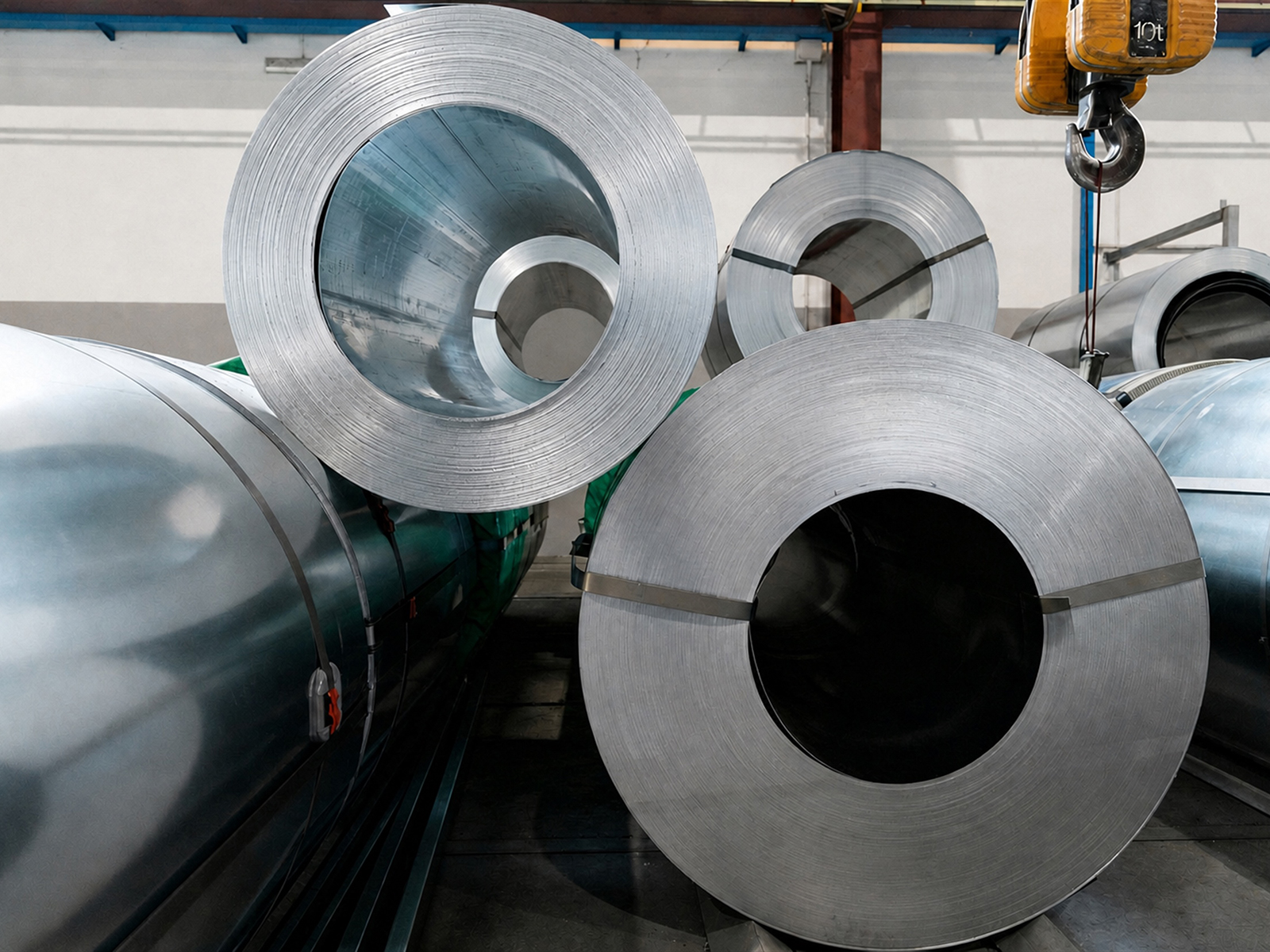
Grade 1 titanium foil is a commercially pure grade to consider when forming very thin parts takes priority. Compare strength and elongation for the actual gauge and delivery condition before choosing it for a draw, bend or stamped part. View related foil specifications.
What Grade 1 Titanium Foil Is
Grade 1 is α-phase, single-phase commercially pure titanium. With O ≤ 0.18% and Fe ≤ 0.20% it carries the lightest interstitial and iron load of the CP ladder, which is precisely why it offers the highest ductility and the lowest strength of the family. The interstitial budget is the design variable: every CP grade is strengthened by controlled oxygen, and Grade 1 keeps that control at its most formability-friendly setting.
Element (max %) | Grade 1 limit |
Nitrogen (N) | 0.03 |
Carbon (C) | 0.08 |
Hydrogen (H) | 0.015 |
Iron (Fe) | 0.20 |
Oxygen (O) | 0.18 |
Titanium (Ti) | Balance (≥ 99.5%) |
Table 1 — Chemical composition limits for Grade 1 titanium foil per ASTM B265.
Mechanical and Physical Properties
Property | Value |
Tensile strength (min) | ≥ 240 MPa (35 ksi) |
Yield strength | 170–310 MPa |
Elongation (min) | 24% |
Density | ≈ 4.51 g/cm³ |
Melting point | ≈ 1668℃ |
Thermal conductivity | ≈ 21 W/(m·K) |
Magnetism | Non-magnetic |
Table 2 — Annealed properties per ASTM B265 and typical physical data. Elongation minimums are specified by thickness band; the 24% figure applies to standard gauge bands.
Manufacturing Route and Thickness Bands
Grade 1 foil is produced by vacuum melting, multi-pass precision cold rolling on a 20-high mill, continuous annealing with tight temperature control, precision leveling and high-accuracy slitting. The product program splits into three bands, each with its own tolerance discipline: 0.02–0.2 mm foil (thickness tolerance ±0.005 mm class), 0.2–0.5 mm strip and 0.5–1.0 mm sheet, with widths to 680 mm. Delivery conditions are annealed (M) — the normal choice for forming — or cold-worked (Y). High-end foil is cleaned by ultrasonic and alkaline processes to a surface energy of dyne level ≥ 44, a meaningful acceptance test when the foil will be coated, bonded or laminated. Custom size, condition, tolerance and documentation can be reviewed to the purchase specification.
Applications by Thickness Band
Because Grade 1 is the forming grade, its application map is dominated by parts that must be stamped, deep drawn, etched or formed into complex geometry. The foil band carries the precision and micro-forming applications; the strip and sheet bands carry deep-drawn and welded parts.
Application | Typical thickness | Process | Key requirement |
X-ray transmission windows | 0.03–0.06 mm | Precision rolling to gas-tight ultra-thin foil | Strength + gas-tightness, low absorption of soft X-rays |
Tweeter / headphone driver diaphragms | 0.03–0.05 mm | Stamping + anodized coloring | High rigidity, low damping, uniform thickness |
Li-ion battery current collectors | 0.02–0.03 mm | Precision rolling to the thinnest band | Electrolyte corrosion resistance, mechanical strength, light weight |
EMI shielding foil | 0.05–0.1 mm | Slitting / etching / stamping | Non-magnetic, low density, corrosion resistance |
Coin-cell liners and tabs | 0.03–0.1 mm | Stamping (paired with 0.2–0.5 mm case strip) | Biocompatibility, electrolyte resistance, low contact resistance |
Strain-gauge and sensor substrates | 0.02–0.05 mm | Precision rolling of high-purity foil | Fatigue resistance, elastic response, environmental stability |
High-vacuum getter material | 0.05–0.2 mm | Precision rolling of 4N–5N high-purity titanium | Strong hydrogen sorption, wide working temperature, activatable |
consumer electronics precision shielding and masking parts | 0.03–0.15 mm | Etching, stamping, laser cutting | Thin, hard, temperature-resistant, etchable to micron detail |
Precision etched parts / lead frames | 0.05–0.15 mm | Double-sided etching + post-processing | Burr-free edges, high aspect ratio, batch consistency |
Decorative anodized foil | 0.05–0.2 mm | Stamping + anodized coloring | Gold / blue / purple interference colors, wear resistance |
Table 3 — The 0.02–0.2 mm foil band: representative Grade 1 applications, process routes and key requirements.
Application | Typical thickness | Process | Key requirement |
Coin-cell cases and lids | 0.2–0.3 mm | Multi-station progressive stamping + crimping | Non-magnetic, corrosion-resistant, hermetic sealing |
Pacemaker / defibrillator housings | 0.2–0.4 mm | Deep drawing + laser seal welding | Biocompatibility, EMI shielding, hermetic closure |
Medical device housings and parts | 0.2–0.5 mm | Stamping / deep drawing | Biocompatible, non-magnetic, sterilization-resistant |
Heat-exchanger thin-wall tubes and plates | 0.2–0.5 mm | Roll-welded thin-wall tube from strip | Chloride-ion resistance, good heat transfer |
Table 4 — The 0.2–0.5 mm strip and 0.5–1.0 mm sheet bands: deep-drawn, welded and formed Grade 1 parts.
1. Deep Dive: X-ray transmission windows
X-ray fluorescence (XRF) analyzers, X-ray tube output windows and security and medical imaging equipment need a window that is thin, strong, gas-tight and transparent to soft X-rays. Grade 1 foil at 0.03–0.06 mm absorbs less low-energy X-radiation than molybdenum or beryllium alternatives, is mechanically stronger and carries none of beryllium’s toxicity concerns. The purchase-critical properties are thickness uniformity (transmission varies strongly with gauge), pinhole freedom and surface cleanliness.
2. Deep Dive: Tweeter / headphone driver diaphragms
High-end tweeters and in-ear balanced-armature drivers use 0.03–0.05 mm Grade 1 foil stamped into dome diaphragms. Titanium’s high rigidity-to-weight and low internal damping give fast transient response and clean treble extension with less split vibration than aluminum or polymer diaphragms; JBL titanium-dome tweeters are the classic example. The foil is stamped and then anodized, so formability, gauge consistency and a uniform anodizable surface are the three things the driver maker buys.
3. Deep Dive: Coin-cell cases and lids
CR-series coin cells (CR2032 class) used in hearing aids, medical devices and harsh environments are drawn from 0.2–0.3 mm strip into cases and lids on multi-station progressive dies, then crimped. Grade 1’s elongation lets the cup wall draw without cracking, and the finished case is non-magnetic, corrosion-resistant and hermetic — which is why titanium coin-cell hardware is specified wherever magnetic interference or electrolyte attack rules out steel.
4. Deep Dive: Pacemaker / defibrillator housings
Pacemaker and defibrillator housings are deep drawn from 0.2–0.4 mm strip and closed by laser seal welding. The part demands exactly what Grade 1 offers: deep-draw formability, decades of corrosion resistance and biocompatibility inside the body, EMI shielding for the circuits inside, and a hermetic, weldable seam. Implant-grade supply is ordered to ASTM F67 rather than B265.
5. Deep Dive: High-vacuum getter material
In vacuum electronics — electron tubes, vacuum insulation panels, accelerator vacuum systems — titanium is the classic non-evaporable getter that sorbs N₂, H₂ and O₂ and can be reactivated by heating. Thin foil maximizes specific surface area per gram, and 0.05–0.2 mm high-purity (4N–5N) Grade 1-class foil, refined by molten-salt electrolysis and electron-beam melting to a grain size below 50 µm, is the standard material for this duty.
Standards and Delivery Conditions
Grade 1 titanium foil is ordered against ASTM B265 (annealed strip/sheet/plate); the surgical parallel is ASTM F67 (ISO 5832-2), and Chinese domestic supply references GB/T 3622 (TA1G). Aerospace practice uses the AMS 4900-series strip route. Delivery conditions are annealed (M) or cold-worked (Y), with bright or matte surface, ultrasonic-plus-alkaline cleaning and dyne level ≥ 44 for bonding-grade material. See the Grade 1 titanium foil product page and the Gr1 ASTM F67 product page.
FAQ
(1) What is the difference between Grade 1 and Grade 2 titanium foil?
Grade 2 is roughly 40% stronger (≥ 345 MPa vs ≥ 240 MPa tensile) at a small loss of ductility (≥ 20% vs ≥ 24% elongation). Choose Grade 1 for deep drawing and microforming; choose Grade 2 where the part needs modest structural support or the best cost-performance.
(2) What thicknesses are available in Grade 1 titanium foil?
The standard program covers 0.02–1.0 mm in three bands — 0.02–0.2 mm foil (±0.005 mm class tolerance), 0.2–0.5 mm strip and 0.5–1.0 mm sheet — with widths to 680 mm. Outside-band gauges are reviewed case by case. Custom size, condition, tolerance and documentation can be reviewed to the purchase specification.
(3) Is Grade 1 titanium foil pure titanium?
Yes — Grade 1 is commercially pure titanium with Ti ≥ 99.5% and tightly controlled O, Fe, N, C and H residuals, with no deliberate alloying additions.
(4) Can Grade 1 titanium foil be welded?
Yes. Like all titanium it welds well with TIG or laser under proper inert-gas shielding. As the softest grade it is the most forgiving in thin-gauge welding, but shielding discipline is still mandatory to avoid oxygen and hydrogen pickup.
(5) Can Grade 1 foil be etched?
Yes — chemical etching produces micron-level features with burr-free edges in 0.03–0.15 mm foil, which is why Grade 1 serves consumer electronics shielding parts, lead frames, nozzles, grids and gaskets.
(6) What is the anodizing behavior of Grade 1 foil?
Grade 1 anodizes well for color (gold/blue/purple by voltage) and for Type 2 bond preparation; the decorative anodized foil band is typically 0.05–0.2 mm stamped and then color-anodized.
(7) Which documents should accompany a Grade 1 foil shipment?
An MTR with heat number, full chemistry including O/N/H, tensile and elongation for the correct thickness band, delivery condition and standard edition, plus CoC, RoHS and ISO 9001/13485 certificates where required.
(8) What should I check on a Grade 1 foil MTR?
Heat number; full chemistry including O, N and H; tensile and elongation against the correct thickness band; delivery condition; standard edition and any supplementary requirements.
Related Resources and Inquiry
See the titanium foil product category for the full foil family, or compare grades in our ASTM B265 scope and grade selection guide. Ready to order? Send your specification.
Titanium Valley supplies grade 1 titanium foil across all three thickness bands from a dedicated 750 mm 20-high line with 3, 000 t/yr capacity under ISO 9001 / ISO 13485. Send your specification to sales@titaniumvalleys.com — Custom size, condition, tolerance and documentation can be reviewed to the purchase specification.
References
1. ASTM B265, Standard Specification for Titanium and Titanium Alloy Strip, Sheet, and Plate.
2. ASTM F67, Standard Specification for Unalloyed Titanium, for Surgical Implant Applications.
3. ASTM E8/E8M, Standard Test Methods for Tension Testing of Metallic Materials.
4. GB/T 3622, Titanium and Titanium Alloy Strip and Foil.
5. Baoji Titanium Valley: 0.02–1.0 mm Titanium and Titanium Alloy Strip and Foil — Application Introduction (internal application deck).
6. Titanium Valley product data: Gr1 Titanium Foil product page (titaniumvalleys.com).
This article is a technical reference. It does not constitute a commercial offer; dimensions, tolerances and documentation are confirmed at order review.
Published by: Titanium Valley Technical Team. Technical and quality review: pending.