
Why Is Zr702 Foil Widely Used in Corrosive Environments?
- Zr702 foil
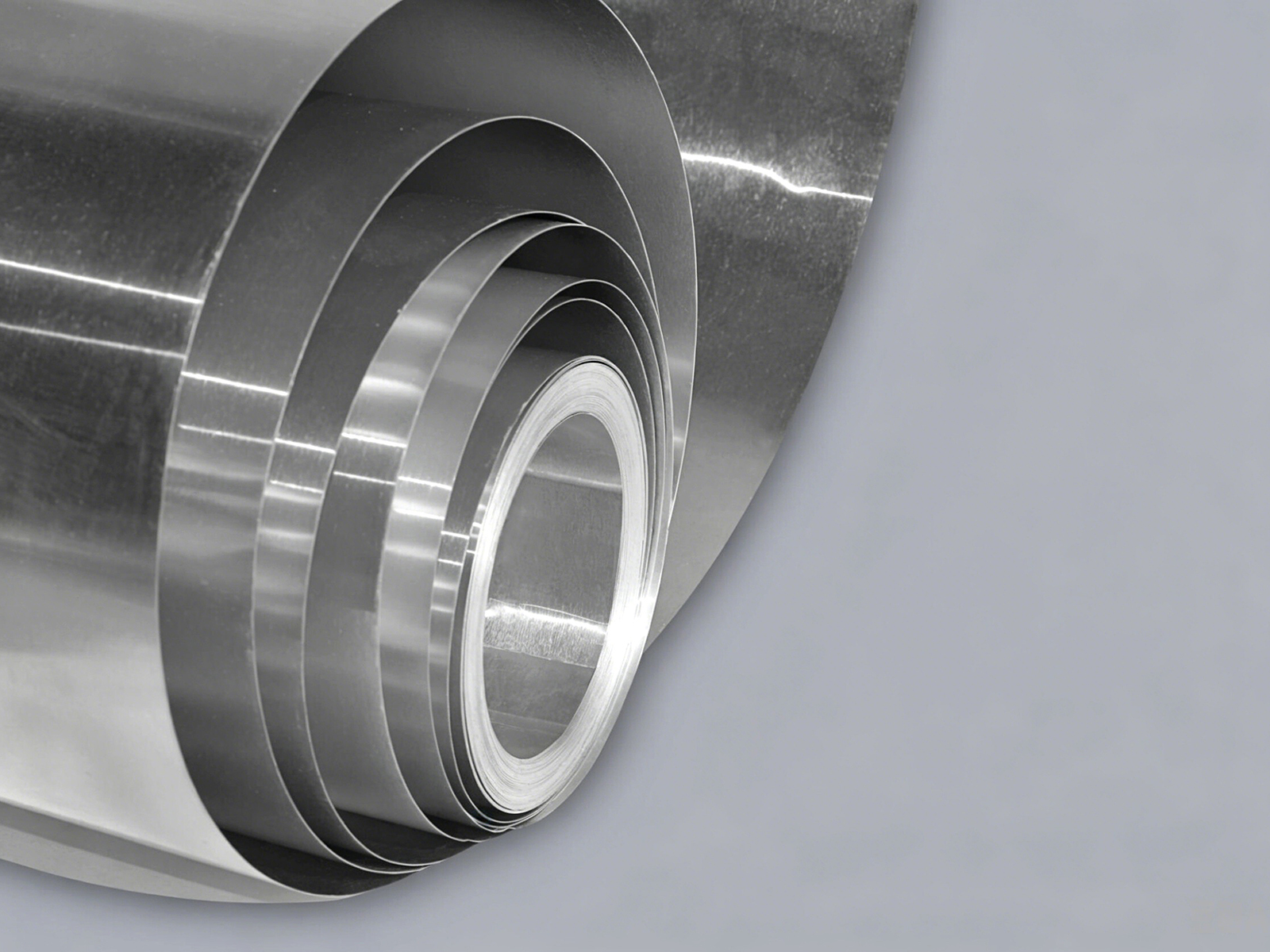
In today’s high-end manufacturing industry, the performance of materials in extreme corrosive environments directly determines the lifespan and production safety of equipment. Zr702 foil, as a high-purity industrial zirconium material (Zr Hf ≥ 99.2%), exhibits nearly inert corrosion resistance in strong corrosive media such as hydrochloric acid, dilute sulfuric acid, and organic acids. Compared to the rapid failure of titanium in non-oxidizing acids and the pitting and perforation issues of stainless steel in strong acid environments, Zr702 foil can maintain an extremely low corrosion rate and long-term stable chemical performance. This material is produced through vacuum melting, multiple precision cold rolling passes, and strict annealing processes, ensuring uniform microstructure and dimensional accuracy. Its excellent formability, weldability, and non-magnetic characteristics make it an irreplaceable key material in fields such as chemical corrosion protection, electroplating, new energy batteries, and aerospace.
1. What Should You Know About the Material Nature and Corrosion Mechanism of Zr702 Foil?
(1) What Should You Know About Chemical Composition Characteristics of High-purity Zirconium Alloy?
The core competitiveness of Zr702 foil comes from its strictly controlled chemical composition system. The material contains more than 99.2% Zr and Hf, with hafnium as a by-product element of zirconium kept below 4.5%. This combination offers a unique advantage of a low neutron absorption cross-section in nuclear industry applications. The total content of iron and chromium is limited to within 0.20%, and the oxygen content is controlled below 0.16%. These stringent composition controls ensure that the material does not undergo accelerated corrosion due to micro-galvanic effects caused by impurity elements in corrosive media. The precise control of interstitial elements such as carbon, nitrogen, and hydrogen (C≤ 0.05%, N≤ 0.025%, H≤ 0.005%) prevents embrittlement of the material during cold working while ensuring the restoration of ductility after annealing.
(2) What Should You Know About Passivation Film Formation Mechanism and Self-Healing Ability?
The excellent performance of zirconium materials in corrosive environments relies on the dense oxide film formed on their surface. When Zr702 foil is exposed to oxygen-containing or oxidizing media, a ZrO₂ passivation layer only a few nanometers thick forms rapidly on the surface. This oxide film possesses extremely high chemical stability and density, and its lattice structure can effectively block the penetration of corrosive ions. More importantly, even if the passivation film is damaged due to mechanical injury, zirconium can instantly regenerate the protective layer in an oxygen-containing environment. This self-repairing characteristic allows Zr702 foil to maintain long-term stability under dynamic corrosion conditions.
(3) What Are the Differences in Comparison of Corrosion Performance with Titanium and Nickel Materials?
In non-oxidizing acidic environments, material selection often faces technical dilemmas. Although titanium performs well in oxidizing media, it undergoes rapid hydrogen embrittlement corrosion in reducing acids (such as hydrochloric acid and dilute sulfuric acid), leading to material failure. Nickel-based alloys have some corrosion resistance in certain acidic systems, but they are expensive and their stability is limited in mixed acid environments. The table below shows the comparative performance of three materials in typical corrosive environments:
corrosive medium | Titanium (Gr2) | Nickel 200 | Zr702 |
Boiling hydrochloric acid (20%) | Rapid corrosion failure | Moderate corrosion | Corrosion rate <0.1mm/year |
Dilute sulfuric acid (50%, room temperature) | Slow corrosion | Good | Almost no corrosion |
Organic acid (acetic acid) | Good | Good | Excellent |
Marine environment | Excellent | Medium | excellent |
Sodium hydroxide solution | Good | Excellent | Good |
The data clearly indicate that Zr702 foil exhibits corrosion resistance in strongly acidic reducing environments far superior to conventional materials, making it the preferred solution in the field of chemical corrosion protection.
2. How Does Ultra-thin Wide Processing Technology Ensure Performance Stability?
(1) What Should You Know About Thickness Control Accuracy of the 20-roller Finishing Mill System?
Producing Zr702 foil with a thickness of 0.02-0.8mm faces extreme challenges in thickness control. Traditional four-roll or six-roll mills are prone to defects such as waviness and thickness fluctuations when rolling ultra-thin materials. The 750mm 20-roll precision mill we use disperses rolling force through a multi-support roller system, achieving a thickness tolerance control of ± 0.001mm. This level of precision means that over a width of 670mm, the material thickness deviation does not exceed 1 micron, which is crucial for sealing gaskets and electrolytic electrode applications that require precise assembly. Multiple-pass cold rolling combined with intermediate annealing not only ensures the work hardening and strengthening effect of the material but also maintains good ductility through structural recovery.
(2) What Should You Know About the Effect of Vacuum Annealing Process on Microstructure?
Zirconium material is highly susceptible to absorbing gases such as oxygen and nitrogen during high-temperature annealing, leading to material embrittlement and surface oxidation discoloration. The continuous vacuum annealing system conducts heat treatment under a vacuum of 10⁻³ Pa, with temperature control accuracy reaching ± 2℃, ensuring that the material undergoes stress relief and recrystallization in the annealing temperature range of 650-750℃. Protection by an inert gas atmosphere prevents abnormal thickening of the surface oxide film, and the annealed material exhibits a uniform silver-gray luster on the surface. Microstructure analysis shows that the Zr702 foil after optimized annealing has uniform grain size, with an average grain size of 6-8, and this fine-grained structure not only enhances the material’s strength but also ensures good plastic deformation capability.
(3) Why Is Surface Cleanliness and Dyne Value Control Technology Important?
Chemical corrosion protection and electrochemical applications have stringent requirements for the cleanliness of material surfaces. Residual oils, oxides, or metal particles on the surface can become starting points for corrosion or sources of contamination. We use a multi-stage ultrasonic cleaning system combined with alkaline solution treatment, which can effectively remove emulsion residues and surface micro-particles left during the rolling process. After cleaning, the material surface reaches a dyne value of 44 dyne/cm, indicating good wettability and forming performance, which is beneficial for subsequent stamping, bending, and welding. A high-cleanliness surface also reduces the initial activation rate of the material in corrosive media, prolonging the formation time of the passive film.
3. Why Is Practical Application Needs in the Chemical Anti-corrosion and Electrolysis Industry Important?
(1) What Should You Know About Sealing Gasket Design in Strong Acid Environments?
In chemical processes such as hydrochloric acid synthesis, sulfuric acid concentration, and organic acid rectification, leakage accidents are mainly caused by the sealing failure of equipment connection flanges. Although traditional graphite gaskets have certain corrosion resistance, their mechanical strength is insufficient, while polytetrafluoroethylene gaskets are prone to creep and relaxation at high temperatures. Metal spiral wound gaskets or corrugated composite gaskets made from Zr702 foil can maintain stable sealing performance within the temperature range of -50℃ to 300℃. The material thickness specifications of 0.1-0.3 mm ensure sufficient elastic recovery force while also making it easy to process into complex sealing profiles. In a certain chlor-alkali chemical project, electrolyzer flanges using Zr702 foil gaskets have operated continuously for more than 5 years without any leakage record, whereas stainless steel gaskets under the same conditions usually need to be replaced every 18-24 months.
(2) How Should Selection of Electrolyzer Anode and Cathode Materials?
The requirements for electrode materials in the electrolysis industry include three dimensions: conductivity, corrosion resistance, and long-term stability. Although the electrical conductivity of Zr702 (1.8×10⁶ S/m) is lower than that of nickel (1.4×10⁷ S/m), in strongly acidic electrolytes (such as hydrochloric acid electrolysis or sulfuric acid plating solutions), nickel anodes can dissolve and contaminate the electrolyte, while titanium anodes tend to passivate at high current densities, leading to an increase in cell voltage. Zr702 foil, as an electrode substrate or electrode frame material, can withstand extremely acidic conditions with a pH of 0-2 and maintain stable electrochemical performance at current densities of 0.5-2 A/cm². A precision plating enterprise uses 0.3mm thick Zr702 foil to produce cathode racks, which extend the service life by three times compared to nickel-based racks, while also avoiding the impact of nickel ions on plating purity.
(3) What Should You Know About Lining System of Pipelines for Transporting Corrosive Media?
In large-scale chemical plants, the anti-corrosion protection of pipelines for transporting corrosive liquids over long distances is a technical challenge. Although traditional rubber-lined or plastic-lined solutions are relatively low in cost, they are prone to aging and peeling under high temperature, high pressure, or media containing organic solvents. Metal composite liners made from Zr702 foil are bonded to steel base pipes through explosive or rolling composite processes, with the outer layer of carbon steel providing mechanical strength and the inner zirconium foil layer providing corrosion protection. This structure has been applied in the organic acid transportation system of a pharmaceutical company, reducing the internal corrosion rate of the pipeline from 0.8 mm/year with the original stainless steel pipes to below 0.05 mm/year, and increasing the designed service life from 8 years to more than 30 years.
4. What Should You Know About Emerging Opportunities in the New Energy and Precision Electronics Fields?
(1) What Should You Know About Corrosion Protection Requirements for Lithium Battery Current Collectors?
In new energy vehicle power batteries and energy storage battery systems, the corrosiveness of the electrolyte is a key factor affecting battery life. Traditional aluminum foil current collectors can experience pitting corrosion in fluorine-containing electrolyte environments, leading to increased internal resistance and capacity decay. Although surface-treated aluminum foil can slow down corrosion, there are still reliability risks under high-temperature cycling (above 60℃) and fast-charging high-current conditions. Zr702 foil demonstrates excellent chemical inertness in carbonate electrolytes and lithium hexafluorophosphate systems, and its non-magnetic properties do not interfere with the magnetic sensors of battery management systems. Comparative tests by a power battery R&D organization show that Zr702 foil current collectors retain 8% more capacity and reduce internal resistance growth by 15% after 1000 charge-discharge cycles compared to aluminum foil.
(2) What Should You Know About Substrate of Corrosion-resistant Coating for Fuel Cell Bipolar Plates?
Proton exchange membrane fuel cells (PEMFCs) operate in an environment that is both strongly acidic (pH≈2-3) and oxidative, posing extreme challenges to bipolar plate materials. Graphite bipolar plates, while corrosion-resistant, are brittle and expensive to process. Stainless steel bipolar plates require a precious metal coating for protection, but the coating is prone to peeling. Zr702 foil, used as a substrate for metal bipolar plates or as an intermediate layer in protective coatings, can effectively block corrosive ions from penetrating the base metal. The material density of 6.51 g/cm³ lies between graphite (2.2 g/cm³) and stainless steel (7.9 g/cm³), which helps reduce the weight of the fuel cell stack. A certain fuel cell company adopted a bipolar plate solution composite with 0.1mm Zr702 foil. In a 3000-hour durability test, the contact resistance increase was less than 5%, significantly better than the 25% increase observed in the pure stainless steel solution.
(3) What Should You Know About Corrosion-resistant Structural Components in Semiconductor Manufacturing?
In the semiconductor chip manufacturing process, strong acids (such as sulfuric acid, hydrochloric acid, and hydrofluoric acid) are extensively used for cleaning and etching, and the liquid-bearing trays, transport tanks, and fixed supports inside the equipment are immersed in corrosive chemicals for a long time. Although traditional polytetrafluoroethylene materials are corrosion-resistant, they lack sufficient strength and are prone to deformation, and titanium can be corroded in a hydrofluoric acid environment. Thin-walled structural parts made of Zr702 foil (thickness 0.5-0.8mm) not only meet the lightweight requirements of compact equipment but also resist the composite corrosion of mixed acids. The non-magnetic nature of the material avoids interference with precision magnetron sputtering equipment, and the high-purity surface (metal ion leaching <1 ppb) ensures the purity requirements of the process medium.
5. Why Is Extreme Environment Applications in Aerospace and Nuclear Industry Important?
(1) What Should You Know About Structural Stability in High-Temperature Corrosive Environments?
Aircraft engines and rocket engine combustion chambers have areas that are exposed to a combined environment of high-temperature oxidation and sulfide corrosion, with temperatures reaching 600-800℃. Although the melting point of Zr702 is as high as 1852℃, its recommended maximum use temperature in air is 300℃, because the reaction rate of zirconium with oxygen and nitrogen accelerates at high temperatures. By applying ceramic coatings on the surface of Zr702 foil or using it in an inert gas environment, the operating temperature can be increased to over 500℃. The propellant delivery system of a certain aerospace engine uses bellows compensators made of Zr702 foil. Operating in a hydrazine-type propellant environment (which is strongly reducing and corrosive) at 250℃, it endured 200 thermal cycles without cracks or leaks, meeting the requirements for long life and high reliability.
(2) How Should Material Selection for the Water Chemistry Environment of Nuclear Reactors?
The water chemistry conditions in the coolant system of a nuclear power plant reactor are extremely special, featuring both high temperature and high pressure (300℃, 15 MPa), and containing additives such as boric acid and hydrogen, while also being subjected to neutron irradiation. Zirconium alloys are used as standard materials for nuclear fuel cladding due to their low neutron absorption cross-section (thermal neutron absorption cross-section about 0.18 barn). Although Zr702 foil is not directly used as cladding material (typically Zr-4 and other zirconium alloys are used), it has unique applications in nuclear fuel reprocessing equipment, radioactive waste storage tanks, and corrosion monitoring sensors in research reactors. The rate of weight gain of the oxide film formed on the material in high-temperature and high-pressure water follows a cubic growth law, with the oxide film thickness being only about 2-3 microns after 10, 000 hours, far lower than the oxidation rate of stainless steel.
(3) What Should You Know About Long-term Service Reliability of Deep-sea Equipment?
The corrosiveness of seawater in deep-sea environments becomes complex due to high pressure, low temperature, and biological fouling. Although the pressure-resistant hulls of deep submersibles are made of titanium alloys, the sealed connectors of internal electronic cabins, sensor covers, and battery diaphragms require higher corrosion resistance and sealing reliability. The corrosion rate of Zr702 foil in seawater is less than 0.005 mm/year, and it does not undergo stress corrosion cracking or crevice corrosion. The pressure compensator of a certain deep-sea exploration device is made by stacking and welding multiple layers of Zr702 foil (0.2 mm per layer). After continuously operating at a depth of 7, 000 meters for 90 days, its sealing performance showed no degradation compared with the initial state, verifying the long-term stability of the material in extreme ocean environments.
6. What Should You Know About the System for Ensuring Product Quality Through Innovation in Production Processes?
(1) What Should You Know About Full-process Control From Titanium Ingots to Ultra-thin Foils?
The production of Zr702 foil begins with vacuum consumption arc melting of high-purity zirconium sponge, followed by multiple remeltings to reduce impurity content and homogenize the composition. The cast ingot is hot-rolled to reduce its thickness from 300mm to 3-5mm; during this process, the columnar grain structure of the material is broken down into equiaxed grains, providing a good microstructural foundation for subsequent cold rolling. The cold rolling stage uses a 20-roll mill to gradually reduce the thickness in 10-15 passes, with the reduction per pass controlled at 15-25%. Excessive reduction can lead to edge cracks and poor flatness. An intermediate annealing is required after every 3-4 cold rolling passes to restore plasticity, and precise control of annealing temperature, holding time, and cooling rate directly affects the mechanical properties and surface quality of the final product.
(2) What Are the Differences in Oxidation Control and Surface Color Difference Management Technology?
The surface color of zirconium material is a direct reflection of its oxidation level, showing a regular variation from silvery white (slightly oxidized) to golden yellow, blue-purple, and finally gray-black (heavily oxidized). Industrial users usually require Zr702 foil surfaces to appear uniformly light gray or silvery white. Excessive color differences not only affect appearance but also indicate uneven oxide film thickness, which may lead to differences in corrosion resistance. By optimizing the purity of the atmosphere in the annealing furnace (oxygen content <5 ppm), using rapid cooling to suppress high-temperature oxidation, and pickling after annealing to remove loose surface oxide scales, surface color differences can be controlled within a ΔE <2 range. A 500 kg batch of Zr702 foil purchased by a chemical company, after testing with a surface colorimeter, showed a standard deviation of only 0.8 for the color difference across the entire roll of material, ensuring visual consistency and uniform performance when used over large areas.
(3) What Should You Know About Technical Breakthrough in Edge Quality and Slitting Precision?
Slitting ultra-thin foil materials easily produces burrs, microcracks, and edge collapse defects at the edges, which can become sources of stress concentration leading to cracking during subsequent stamping or welding. High-precision slitting production lines are equipped with disc shears or laser cutting systems, with the tool edge radius controlled within 0.02mm, and the material tension is kept constant during the slitting process (<2% fluctuation) through a real-time tension monitoring system. The edges after slitting are processed by an automatic deburring device, achieving an edge roughness Ra value of less than 0.8 um. A client in the electronics industry requested that a 600mm wide Zr702 foil be slit into 50 narrow strips of 12mm width, with a width tolerance of ± 0.05mm. Through our precision slitting system, the actual delivered product had a width deviation within ± 0.03mm, with no visible edge defects, fully meeting the stringent requirements of automated mounting equipment.
7. What Is the Conclusion?
The widespread application of Zr702 foil in corrosive environments stems from its unique material properties and advanced processing techniques. The dense passivation film formed by high-purity zirconium alloy in strong acid media provides long-term, stable protective capabilities, while ultra-thin, wide-width precision rolling technology ensures dimensional accuracy and consistent performance of the product. From chemical corrosion protection to new energy batteries, from semiconductor manufacturing to aerospace, Zr702 foil, with its irreplaceable corrosion resistance, reliability, and processability, has become the preferred choice of material for extreme operating conditions.
FAQ
Question, Is Zr702 Foil Still Corrosion-resistant When the Concentration of Hydrochloric Acid Exceeds 30%?
Answer: Zr702 exhibits excellent corrosion resistance to hydrochloric acid of all concentrations (including concentrated hydrochloric acid at 37%) at room temperature, with a corrosion rate usually less than 0.1 mm/year. However, when the temperature rises near the boiling point, the corrosiveness of high-concentration hydrochloric acid significantly increases, and it is recommended to determine suitability under specific conditions through corrosion testing.
Question, Can Zr702 Foil Be Joined by Argon Arc Welding or Spot Welding?
Answer: Zr702 has good weldability and is suitable for TIG argon arc welding and resistance spot welding. During welding, high-purity argon gas protection (purity ≥ 99.99%) must be used, and heat input should be strictly controlled to avoid coarse grains in the weld zone. The strength of the welded joint can reach more than 85% of the base material, and its corrosion resistance is comparable to that of the base material.
Question, Compared with Zr705 Alloy, What Are the Differences in Mechanical Strength of Zr702?
Answer: Zr705 is strengthened by adding 2-3% niobium through solid solution, increasing its tensile strength by about 30-40% compared to Zr702, but it is more expensive and its corrosion resistance is slightly lower in certain media. Although Zr702 has lower strength, it has better ductility and is more suitable for sealing structure applications that require complex forming and welding.
How Should Looking for Reliable Zr702 Foil Suppliers?
Baoji Titanium Valley Titanium-Nickel-Zirconium Materials Processing Co., Ltd. is a professional manufacturer of Zr702 Foil, with an advanced production line capable of producing 3, 000 tons of ultra-thin, wide-width foil annually. We offer customized products with thicknesses of 0.02-0.8mm and widths of 350-670mm, and can provide technical support and full-process quality traceability services according to your application needs.
Contact us immediately for technical solutions and quotations: sales@titaniumvalleys.com
References
- Wang Haizhou, Li Minghui. ‘Corrosion Behavior and Protection Technology of Zirconium and Zirconium Alloys.’ Beijing: Chemical Industry Press, 2019.
- American Society for Testing and Materials. ‘ASTM B551-17 Standard Specification for Zirconium and Zirconium Alloy Strip, Sheet, and Plate.’ West Conshohocken: ASTM International, 2017.
- Zhang Wei, Zhao Junjie, Liu Xiaofeng. Study on the Electrochemical Behavior of Zirconium Materials in Highly Corrosive Media. Chinese Journal of Corrosion and Protection, 2020, 40(3): 245-252.
- Kenji Miyamoto, Ryohei Tanaka. ‘Zirconium Alloys as Nuclear Materials’ (Zirconium Alloys in Nuclear Energy Materials). Tokyo: Nikkan Kogyo Shimbun, 2018.