
Why Choose Gr4 Titanium Wire for Manufacturing Aerospace Components?
- Gr4 titanium wire
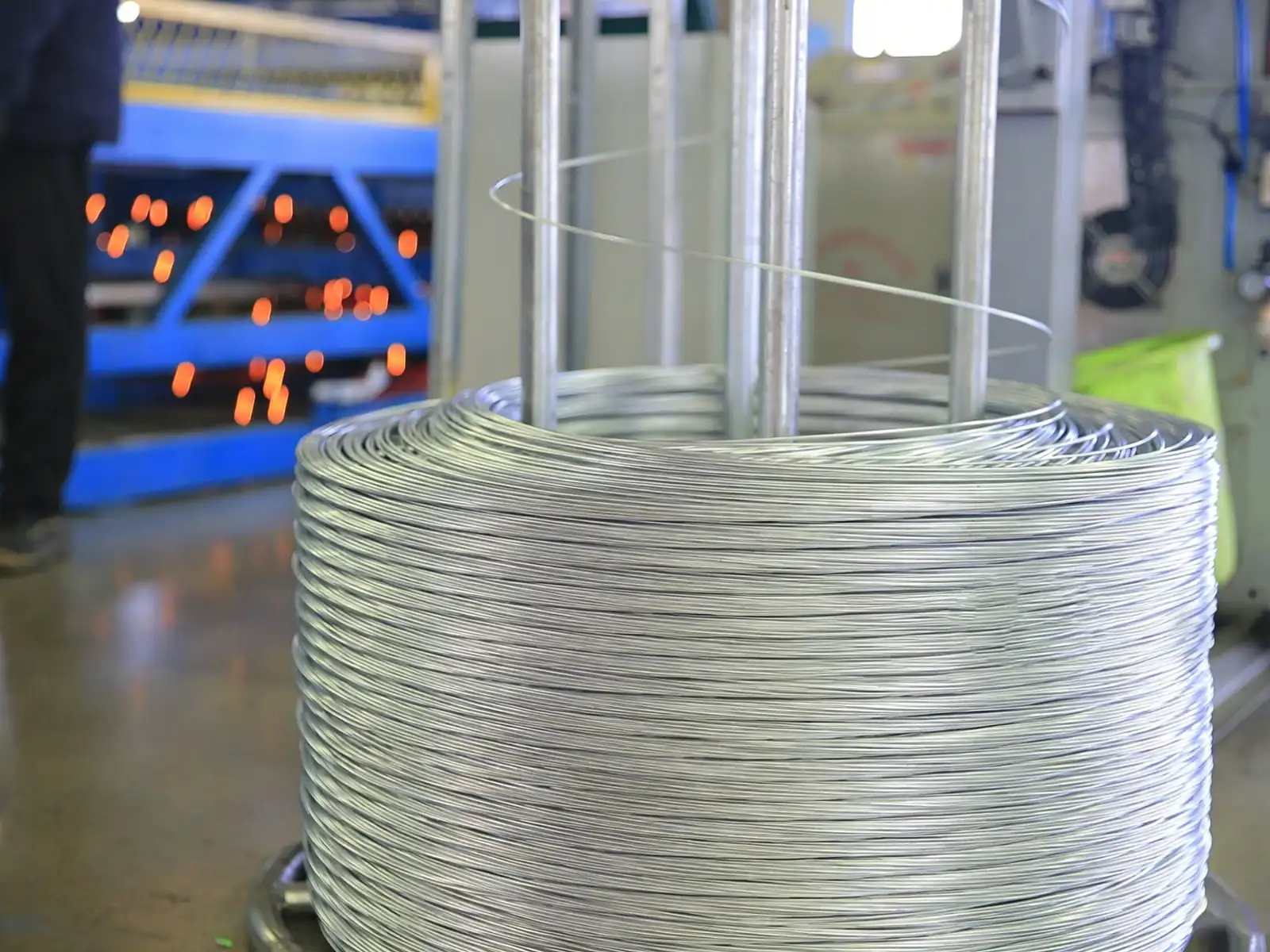
Materials for aerospace applications are typically required to offer light weight, corrosion resistance, fatigue resistance, and quality traceability. Gr4 titanium wire (ASTM Grade 4 commercially pure titanium wire) is one of the higher-strength grades of commercially pure titanium, with a tensile strength of ≥550 MPa, a yield strength of ≥485 MPa, and a density of approximately 4.51 g/cm³. Its fully alpha microstructure makes the weld metallurgy relatively simple, making it a candidate for structural tie wire, corrosion-resistant fastener stock, and titanium filler wire stock. It should be noted, however, that Gr4 is stronger than Gr1/Gr2, and its cold formability decreases accordingly, so it cannot simply be summarized as “easy to process.”
1. Core Properties of Gr4 Titanium Wire: Why Can It Enter Demanding Aerospace Service Scenarios?
(1) Mechanical Properties: Balancing Strength and Ductility
Property | Gr4 Titanium Wire | Gr1 Titanium Wire | Gr2 Titanium Wire |
Tensile Strength | ≥550 MPa | ≥240 MPa | ≥345 MPa |
Yield Strength | ≥485 MPa | ≥170 MPa | ≥275 MPa |
Elongation | ≥15% | ≥24% | ≥20% |
Note: The mechanical properties in the table are based on common ASTM B863 requirements for Gr4/Gr1/Gr2 wire; hardness is not a mandatory indicator under ASTM B863 for Gr4 wire, so this article does not include a hardness row in the comparison.
Gr4 has a tensile strength about 60% higher than Gr2 while maintaining an elongation of ≥15%. This combination means it can provide higher static strength than Gr1/Gr2 under moderate loading. The trade-off for higher strength is reduced cold formability, so formability limits should be verified during pilot production for processes such as complex cold heading, large-deformation bending, or heavy winding.
(2) Fatigue Resistance: Life Performance Under Multiple Influencing Factors
Tie wire, woven mesh, and elastic fasteners around aircraft engines are subjected to sustained high-frequency vibration loading. Gr4’s fully alpha structure avoids the additional influence that phase boundaries exert on fatigue behavior in alpha+beta alloys, but this does not mean its fatigue performance is inherently superior. Fatigue crack initiation is jointly governed by the surface roughness, residual stress, inclusions, and notch effects of the wire; grain structure is only one contributing factor.
Multi-pass cold drawing combined with intermediate annealing can refine grain size and improve microstructural uniformity, but cold-worked wire may retain relatively high residual stress, which must be controlled and reduced through final stress-relief annealing or by supplying in the annealed condition. For critical fatigue components, fatigue testing should be carried out on the basis of actual surface condition and load spectrum, rather than inferring life from microstructure descriptions alone.
(3) Non-Magnetic Properties and Suitability in Avionics Environments
Gr4 titanium wire has a density of approximately 4.51 g/cm³ and generally exhibits non-magnetic behavior. This property is of particular importance for tie wire and lashing wire around magnetically sensitive navigation instruments and inertial sensors, reducing the risk of magnetic interference from the material itself.
However, “non-magnetic” must be distinguished from “electromagnetic shielding capability.” Titanium’s electrical conductivity is lower than that of copper and aluminum, and being non-magnetic does not mean it can replace electromagnetic shielding materials. In high-frequency or strong electromagnetic interference scenarios, system-level EMC design and shielding effectiveness testing are still required. Gr4 titanium wire can reduce magnetic interference risk, but this does not justify claiming that “no additional shielding is required.”
2. Typical Aerospace Application Scenarios for Gr4 Titanium Wire
(1) Titanium Filler Wire: Connections for Engine Bays and Structural Frames
Gr4 can be used as raw material for titanium filler wire or directly as a filler material, with common matching welding processes including TIG, plasma arc, and laser welding. MIG welding is rarely used for titanium alloys and is generally not recommended as a routine process.
Gr4 weld metal has an alpha structure, and the weld metallurgy is relatively simple, with a lower hardening tendency in the heat-affected zone than with certain alpha+beta alloy filler wires. However, titanium welding places extremely high demands on gas shielding, and heat-affected zone performance must be verified through welding procedure qualification rather than by loosely comparing strength reduction figures.
(2) Fasteners and Elastic Elements: Combining Load-Bearing and Corrosion Resistance
Application Component | Typical Gauge | Key Performance Requirements |
Titanium screws/pins | φ1.0–φ6.5 mm | High yield strength, dimensional accuracy |
Elastic clips/spring clips | φ0.3–φ2.0 mm | High yield strength, fatigue resistance, springback matching the design |
Woven load-bearing mesh | φ0.1–φ0.5 mm | Flexibility, uniform strength |
Structural support frame lashing wire | φ0.8–φ3.0 mm | Corrosion resistance, weldability |
Note: The specifications and performance requirements in the table are common engineering ranges and should be confirmed against product drawings, purchasing technical specifications, or applicable standards.
Cold-worked Gr4 wire can be further strengthened through multi-pass cold drawing and is suitable for springs and clip-type parts that require high yield strength with controlled bending deformation. It should be noted that titanium’s elastic modulus is about half that of steel; a titanium spring of the same cross-section exerts lower springback force than a steel spring. Design checks should use the elastic modulus and geometric parameters rather than a simplified description of “high elastic recovery force.”
(3) Corrosion Protection and Structural Fixing: Performance in Salt Spray and Humid Heat Environments
Sea-based platforms such as carrier-based aircraft and maritime UAVs are exposed to high salt spray and high humidity for long periods. Gr4 titanium wire forms a dense oxide film on its surface and generally has good corrosion resistance. Specific salt spray performance should be evaluated per standards such as GB/T 10125 or ASTM B117, with test conditions, evaluation criteria, and duration clearly defined. For example, “no base-metal corrosion after a 1, 000 h neutral salt spray test per the specified standard” can serve as an acceptance indicator, but absolute commitments cannot be made outside the test standard.
3. Manufacturing Processes: Key Factors Affecting Precision and Consistency
(1) Full-Process Chain: Control Points from Titanium Sponge to Finished Wire
The primary process route for Gr4 titanium wire is as follows:
Titanium sponge → vacuum arc remelting (VAR) → ingot → forging → hot rolling → peeling/pickling → multi-pass cold drawing (with intermediate annealing) → final annealing → pickling/brightening → precision straightening and cut-to-length → inspection and packaging
VAR is primarily used for solidification structure control, reducing segregation, and lowering the risk of ingot inclusions, but it cannot effectively remove oxygen, nitrogen, or hydrogen. The interstitial element content mainly depends on titanium sponge quality, melting vacuum level, anti-contamination measures, and subsequent heat treatment protection, and must be confirmed by final chemical composition testing. Intermediate annealing restores ductility and promotes recrystallization, but the residual stress level of the finished product must still be evaluated in relation to the finished condition and annealing schedule.
(2) Dimensional Accuracy and Surface Quality: Evaluation by Gauge and Surface Condition
Roller-die cold drawing has lower friction than conventional cemented-carbide-die drawing, which benefits surface quality. However, diameter tolerance, roundness, and surface roughness are jointly affected by gauge, die condition, lubrication, and finished surface state, so a single tolerance should not be promised across the entire φ0.1–6.5 mm range.
Common engineering practice is to control tolerances by gauge band: fine gauges can achieve tighter tolerances, for example, the dimensional tolerance for φ0.1–1.0 mm can be better than ±0.01 mm; φ1.0–3.0 mm is typically of the same order as ±0.01 mm; tolerances for φ3.0–6.5 mm should be relaxed accordingly. Roundness should be agreed in relation to gauge and the out-of-roundness measurement method, and should not be uniformly specified as 0.002 mm. For surface roughness, the bright finish can be lower while the pickled finish is typically higher; specific Ra values must be based on measured reports.
(3) Non-Destructive Testing and Batch Consistency
In-line inspection capability and automation rates depend on line configuration, gauge, and batch size, and can vary noticeably between different plants. Eddy current inspection and ultrasonic testing can detect surface and near-surface defects in conventional-gauge wire on-line or off-line, but inspection sensitivity is limited by wire diameter, test speed, and defect orientation. For ultra-fine wire on the order of φ0.1 mm, a combination of in-line eddy current, visual inspection, and off-line microscopic examination is typically required, and it is not appropriate to simply claim the ability to “identify defects of 0.1 mm diameter level.”
Each batch of product should be accompanied by a material certificate conforming to the order agreement, including at least chemical composition, mechanical properties, and non-destructive testing records, to support quality traceability in the aerospace supply chain.
4. Life-Cycle Cost Analysis of Gr4 Titanium Wire
(1) Replacement Intervals and Maintenance Costs
Gr4’s yield strength is higher than that of Gr1/Gr2, allowing it to sustain higher working stresses at the same cross-section, which provides some room to improve part fatigue life or reduce part size. However, figures such as “50% fewer replacements” require a clear definition of the comparison baseline, service conditions, failure criteria, and test methods. In engineering practice, the degree of life extension should be estimated through fatigue and corrosion comparison testing or historical maintenance data, rather than by adopting marketing-style percentages.
(2) Gauge Coverage and Inventory Simplification
Gr4 titanium wire can cover the diameter range from φ0.1 mm to φ6.5 mm and can be supplied in annealed or cold-worked finished conditions, with pickled or bright surfaces, depending on the order. With a single grade covering multiple components, inventory SKUs and supply chain management complexity can be reduced at suitable purchase volumes. However, processing costs and delivery lead times differ by gauge and condition, so the economics must still be evaluated against the demand plan.
(3) Comparison with Ti-6Al-4V Alloy Wire
Compared with alpha+beta alloys such as Ti-6Al-4V (ASTM Grade 5), Gr4, as a commercially pure titanium, generally offers better weldability for moderate-strength requirements, and its weld metal does not rely on the strengthening effects of alloying elements such as aluminum or vanadium. Ti-6Al-4V is sensitive to cooling rate, gas contamination, and heat-affected zone microstructure during welding; Gr4 has a relatively simple weld structure, but welding risks are not entirely absent.
In terms of cost, the unit price of Gr4 is typically lower than that of high-end titanium alloy wire. However, whether whole-life-cycle cost savings are achieved, and how much is saved, depends on the specific part gauge, batch size, manufacturing yield, and maintenance interval, and should not be expressed as a fixed percentage.
5. Supply Chain Verification: Engineering Factors Affecting Gr4 Wire Consistency
(1) Continuous Production Lines and Batch Consistency
Continuous, automated rolling and drawing lines help reduce within-batch variation. Coil length, straightness, and surface quality are affected by billet weight, rolling speed, die condition, and tension control. Continuous production can reduce mid-process joints, but it cannot absolutely guarantee the absence of interruptions. For wire used in continuous welding, the maximum number of joints, minimum coil weight, and straightness indicators should be specified in the purchasing conditions.
(2) Standard Conformance and Quality Documentation
Suppliers should be able to demonstrate that their products conform to ASTM B863 Gr4 or the buyer-specified wire standard, and hold ISO 9001 or an aerospace quality system certification. For welding filler materials, conformance to requirements such as ERTi-4 in AWS A5.16/A5.16M, or compliance with the user-approved welding procedure specification, may be required.
It should be noted that NACE MR0175 is an oil and gas industry standard for resistance to sulfide stress corrosion cracking and is generally not a routine requirement for aerospace Gr4 wire. The 3.1 material certificate content should conform to the order requirements, including composition, mechanical properties, and non-destructive testing records.
(3) Engineering Scale-Up from Samples to Batch Production
The development phase often requires small-batch, multi-gauge sample validation. A supplier’s ability to respond quickly to custom diameters, special tolerances, and non-standard surface treatments affects the development schedule. More importantly, the transition from samples to batch production should include process locking, first-article inspection, and change control to avoid batch performance drift during scale-up. When evaluating suppliers, one should not rely only on advertised production volumes; minimum order quantities, completeness of production records, and quality traceability capability deserve greater attention.
6. Conclusion
Gr4 commercially pure titanium wire provides engineering value in strength, weldability, corrosion resistance, and non-magnetic properties, and is an important candidate material for aerospace structural connections, titanium filler wire, corrosion-resistant fasteners, and elastic elements. Its suitability still depends on the specific loads, environmental conditions, surface condition, and manufacturing process, and final judgments should be made through testing and process review rather than by replacing engineering verification with absolute conclusions.
FAQ
(1) Q1: How Should Gr4 Titanium Wire and Ti-6Al-4V Titanium Alloy Wire Be Selected in Aerospace Applications?
Gr4 is a commercially pure titanium with generally better weldability, making it suitable for structural connections, filler wire, and corrosion protection scenarios; Ti-6Al-4V provides higher strength and suits load-bearing structural components subjected to greater loads. When strength requirements do not exceed Gr4’s level, Gr4 can be evaluated first to reduce welding complexity and material cost, but validation for the specific service conditions is still required.
(2) Q2: Can Gr4 Titanium Wire Maintain Stable Performance over the Long Term at High Temperatures (e.g., in Engine Bays)?
Gr4 has a fully alpha microstructure and generally exhibits good microstructural stability for long-term service at temperatures up to about 300℃. Above this range, oxidation, creep, and strength degradation behavior should be evaluated, and high-temperature titanium alloys should be considered where necessary.
(3) Q3: What Inspection Documents Are Typically Required for Aerospace-Grade Gr4 Titanium Wire?
These typically include: chemical composition reports, tensile mechanical property reports, non-destructive testing records, and a 3.1 material certificate conforming to ASTM B863 Gr4 or the procurement specification. Salt spray test reports are provided only when corrosion-environment acceptance is required. A sulfide stress corrosion test report is not a routine document for aerospace Gr4 wire unless specifically required by the customer for particular reasons.
Contact Us
For technical selection or supply inquiries regarding Gr4 commercially pure titanium wire, contact: sales@titaniumvalleys.com.
References
- Zhang Xiyan, Zhao Yongqing, Bai Chenguang. Titanium Alloys and Applications. Beijing: Chemical Industry Press, 2005.
- Zhao Yongqing, Chen Yongnan, Zhang Xuemin, et al. Phase Transformations and Heat Treatment of Titanium Alloys. Changsha: Central South University Press, 2012.
- Wang Jinyou, Ge Zhiming, Zhou Yanbang. Titanium Alloys for Aerospace. Shanghai: Shanghai Scientific & Technical Publishers, 1985.
- National Technical Committee on Nonferrous Metals Standardization. GB/T 3620.1—2016 Designation and chemical composition of titanium and titanium alloys. Beijing: China Standards Press, 2016.
- National Technical Committee on Nonferrous Metals Standardization. GB/T 3623—2007 Titanium and titanium alloy wire. Beijing: China Standards Press, 2007.
- China Welding Society, Chinese Mechanical Engineering Society. Welding Handbook, Vol. 2: Welding of Materials (3rd ed.). Beijing: China Machine Press, 2008.
Published by: Titanium Valleys
Technical review: General Manager of the Production Department
Quality review: Quality Inspection Department
Last reviewed: October 20, 2026