
Why Choose Ti-15V-3Al-3Cr-3Sn Titanium Foil for High-Performance Applications?
- Ti-15V-3Al-3Cr-3Sn Titanium Foil
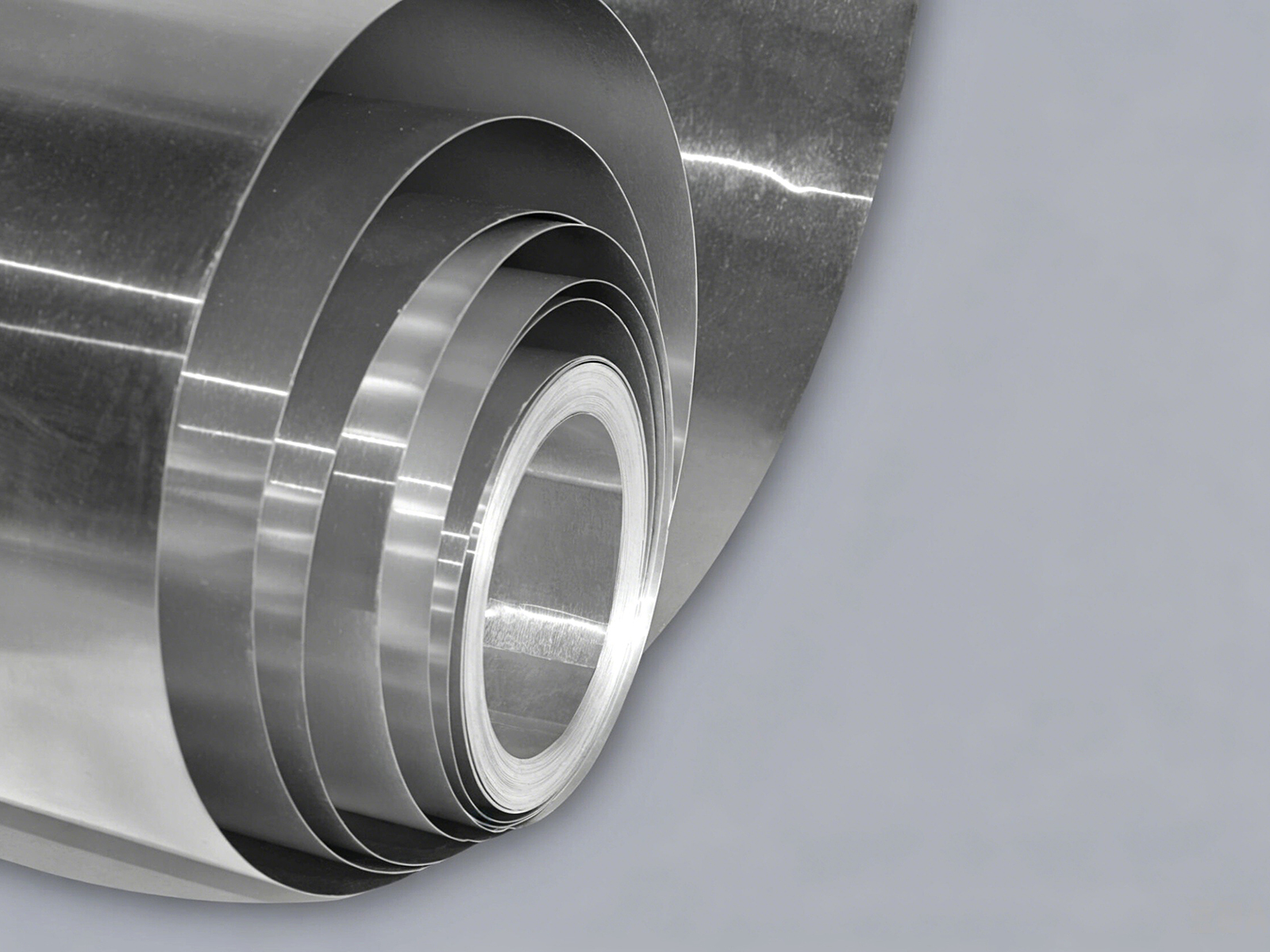
When engineers face demanding scenarios such as aerospace structural components, precision electronics shielding, or high-end composites, material selection often determines the success or failure of a project. Ti-15V-3Al-3Cr-3Sn titanium foil has attracted attention among various metal foils for its near-beta alloy characteristics. In the beta-annealed condition, it offers good cold formability and can complete complex bending and stamping operations; after forming, aging treatment substantially raises its strength, reaching final strength levels comparable to or higher than Gr5 titanium alloy. This staged property-control logic of “form first, strengthen later” is one of the core reasons for choosing it in high-performance applications.
1. Microstructural Characteristics and Cold-Forming Advantages of Near-Beta Alloys
(1) Cold Formability Enabled by the Near-Beta Structure
The beta phase has a body-centered cubic (BCC) crystal structure with more operable slip systems, allowing substantial plastic deformation at room temperature without easy cracking. Compared with alpha+beta dual-phase alloys, near-beta alloys exhibit a more moderate work-hardening rate during cold rolling of thin gauges, providing a viable processing window for multi-pass precision rolling of ultra-thin, wide foil.
(2) Synergistic Effects of Alloying Elements
Alloying Element | Primary Function | Typical Effect |
V (15%) | Beta-phase stabilizer | Expands the beta phase field and improves cold formability |
Al (3%) | Alpha-phase stabilizer | Improves matrix strength and increases specific strength |
Cr (3%) | Beta-phase stabilizer | Suppresses martensitic transformation and improves hardenability |
Sn (3%) | Neutral element | Improves corrosion resistance and thermal stability |
Vanadium and chromium together lower the beta transus temperature, so the alloy is predominantly a metastable beta phase at room temperature; aluminum and tin improve matrix strength without significantly reducing formability. The proportions of these four elements have been validated through long-term engineering practice, making this one of the more balanced near-beta titanium alloy systems in overall performance.
(3) Competitiveness in Density and Specific Strength
Ti-15V-3Al-3Cr-3Sn titanium foil has a density of approximately 4.76 g/cm³, lower than stainless steel (about 7.9 g/cm³) and nickel-based alloys (about 8.2 g/cm³). In the aged condition, its tensile strength can exceed 1200 MPa, and the tensile strength is generally higher than the yield strength. On a specific-strength basis, the alloy is competitive among metal foils of the same thickness and is well suited to aerospace and precision instrumentation scenarios with strict weight-reduction requirements.
2. Engineering Value of Staged Performance Control
(1) Beta-Annealed Condition: Opening a Window for Complex Forming
In the beta-annealed condition, the alloy retains a large amount of metastable beta phase, exhibiting lower yield strength and higher elongation. This condition is suitable for complex bending, deep drawing, or multi-step forming. The risk of fracture during processing is significantly lower than for alpha+beta alloys such as Gr5 (Ti-6Al-4V), with lower die wear and scrap rates.
(2) Aging Treatment: Activating the Strengthening Mechanism
After forming, an aging heat treatment (typically holding in the 480–560℃ range) causes fine, dispersed alpha-phase particles to precipitate in the alloy, which pin dislocation movement and substantially increase strength. Aging temperature and holding time can adjust the final strength level within a certain range; however, in industrial production, results are affected by furnace temperature uniformity, loading configuration, and cooling rate, so the outcome should be verified batch by batch rather than described as “precise control.”
(3) Manufacturing Economics Gained from Performance Control
Condition | Typical Strength | Elongation | Applicable Operations |
Beta-annealed | Yield strength approx. 700–850 MPa | 10%–20% | Stamping, bending, deep drawing |
Aged | Yield strength approx. 1100–1300 MPa; tensile strength approx. 1200–1450 MPa | 8%–12% | Load-bearing structures, fatigue service |
This staged-control strategy reduces the probability of forming failures caused by hard, brittle material and avoids the higher cost of secondary machining of high-strength material. For small-batch, high-value aerospace parts, this process logic provides direct economic value.
3. Analysis of Typical Application Scenarios
(1) Lightweight Applications in Aerospace Structural Components
Large thin-walled aerospace structural components often face challenges of excess weight, forming difficulty, and poor consistency. Ti-15V-3Al-3Cr-3Sn titanium foil can be formed into complex curved shapes in the beta-annealed condition and meet high-strength service requirements after aging, while its density of approximately 4.76 g/cm³ contributes significantly to aircraft structural weight reduction. The US standards AMS 4983 and AMS 4984 provide clear specifications for this alloy and can serve as a reference for material selection within an aerospace quality management system.
(2) Precision Requirements in Electronics Components and Electromagnetic Shielding
In large-area electromagnetic shielding applications, excessive seams, signal leakage, and uneven thickness are common pain points. Wide Ti-15V-3Al-3Cr-3Sn titanium foil reduces the number of joining seams; being paramagnetic with a relative permeability close to 1, it does not readily disturb precision electronic signals. Its good dimensional stability helps ensure batch-to-batch thickness consistency, suiting precision electronics and battery manufacturing scenarios with demanding uniformity requirements.
(3) Structural Integrity in Precision Sensors and Composites
In precision sensor housings and composite laminates, ultra-thin titanium foil must not undergo severe warping or dimensional drift during processing. After precision leveling, Ti-15V-3Al-3Cr-3Sn titanium foil has low residual stress and supports stable high-precision stamping. In laminate applications, the surface wetting tension after plasma or corona treatment is typically no lower than 40 dyn/cm, helping reduce the risk of interfacial discontinuities and uneven bond strength.
4. Quality Control Points in Industrial Production
(1) Multi-Roll Precision Rolling and Thickness Control
Industrial production should use multi-roll precision rolling mills with closed-loop thickness control to achieve stable production of thin gauges and suppress edge waviness and center buckles in wide strip. Equipment capability depends on the specific product gauge, and a single rolling speed or rolling force should not be used as the basis for judging material performance.
(2) Surface Contamination Control
Near-beta titanium alloys are sensitive to oxidation; oxidation during transitions between multiple processing steps degrades surface performance and affects subsequent heat treatment results. Production should employ inert gas shielding across the entire process, with key parameters such as protective atmosphere type, residual oxygen content, and dew point clearly defined. The typical control direction is high-purity argon shielding with low residual oxygen and low dew point; specific parameters should be validated against furnace conditions and product gauge. Ultrasonic cleaning is primarily used to remove oils and contaminants, after which plasma or corona treatment stably raises the surface wetting tension to above 40 dyn/cm, significantly reducing the risk of performance variation caused by surface oxidation.
(3) Continuous Annealing and Precision Slitting
Continuous annealing requires close attention to temperature uniformity, speed matching, and cooling rate to avoid localized overheating or uneven properties. Precision slitting should control width tolerance and edge quality to reduce burrs and processing deformation, improving batch consistency and yield.
5. Comparison with Titanium Alloys of Similar Grade
(1) Key Differences from Gr5 (Ti-6Al-4V)
Gr5 is the most widely used titanium alloy in the world and is an alpha+beta dual-phase type with poor cold formability; complex parts often require hot forming or multiple intermediate anneals. Ti-15V-3Al-3Cr-3Sn titanium foil has significantly better cold formability than Gr5 in the beta-annealed condition and can be directly stamped into complex shapes; after aging, its strength equals or exceeds Gr5 with lower overall manufacturing cost. Actual formability should be determined by minimum bend radius, forming limit diagrams, or Erichsen cupping tests rather than qualitative judgment alone.
(2) Positioning Relative to Commercially Pure Titanium Foils (Gr1/Gr2/Gr4)
Material | Strength Level | Cold Formability | Typical Applications |
Gr1 | Lowest | Very good | Extreme forming, chemical linings |
Gr2 | Medium | Good | General industrial, medical |
Gr4 | Highest of the pure titanium grades | Fair | Load-bearing applications using pure titanium |
Gr5 | High | Poor | High-strength structural parts; cold forming difficult |
Ti-15V-3Al-3Cr-3Sn | High (tunable) | Good, clearly better than Gr5 | Aerospace structures, precision electronics |
Note: Formability ratings are relative comparisons; actual performance should be verified by bend radius, forming limit diagrams, or Erichsen cupping values.
(3) Corrosion Resistance Competitiveness in Special Environments
Ti-15V-3Al-3Cr-3Sn titanium foil performs well in most marine and oxidizing media, outperforming certain stainless steels in some scenarios; however, in reducing acids or certain halide-containing environments, it is not necessarily superior to nickel-based alloys. When used for chemical equipment linings or precision electronic components, corrosion verification should be carried out under the actual medium conditions.
6. Conclusion
Ti-15V-3Al-3Cr-3Sn titanium foil combines a favorable cold-working window with an adjustable high-strength final state, offering the dual attributes of “process-friendly and performance-tunable.” In scenarios demanding light weight, precision, and high reliability—such as aerospace, precision electronics, and high-end composites—it is a thin-gauge titanium material worth systematic evaluation.
FAQ
1. What are the core advantages of Ti-15V-3Al-3Cr-3Sn titanium foil?
It has good cold formability in the beta-annealed condition and can complete complex bending and stamping; after aging, strength increases significantly, with tensile strength exceeding 1200 MPa, comparable to or higher than Gr5.
2. Why is staged performance control used for this alloy?
The beta-annealed condition is suited to forming, while the aged condition provides high strength. Managing processing and service performance separately reduces the risk of forming fracture and lowers secondary machining costs.
3. What are the differences compared with Gr5 (Ti-6Al-4V)?
Gr5 is an alpha+beta dual-phase alloy with poor cold formability; complex parts often require hot forming. Ti-15V-3Al-3Cr-3Sn has significantly better cold formability, with comparable or higher strength after aging.
4. Which application scenarios are suitable for this titanium foil?
Aerospace thin-walled structural components, electronic components and electromagnetic shielding, precision sensor housings, and high-end composite laminate structures.
Contact Us
If you are looking for a Ti-15V-3Al-3Cr-3Sn titanium foil supplier, contact Titanium Valley. We supply Ti-15V-3Al-3Cr-3Sn titanium foil in conformance with AMS 4983/AMS 4984, along with material certificates, inspection reports, and OEM customization services. Send your inquiry to: sales@titaniumvalleys.com
References
- Zhang Xiyan, Zhao Yongqing, Bai Chenguang. Titanium Alloys and Applications [M]. Beijing: Chemical Industry Press, 2005.
- Wang Jinyou, Ge Zhiming, Zhou Yanbang. Titanium Alloys and Their Applications [M]. Beijing: Metallurgical Industry Press, 1985.
- National Technical Committee on Nonferrous Metals Standardization. Titanium and titanium alloy sheets and plates: GB/T 3621—2007 [S]. Beijing: China Standards Press, 2007.
- National Technical Committee on Nonferrous Metals Standardization. Terminology of titanium and titanium alloys: GB/T 6611—2008 [S]. Beijing: China Standards Press, 2008.