
What Standards Should Nickel 200 Nickel Wire Comply With?
- Nickel 200 Nickel Wire
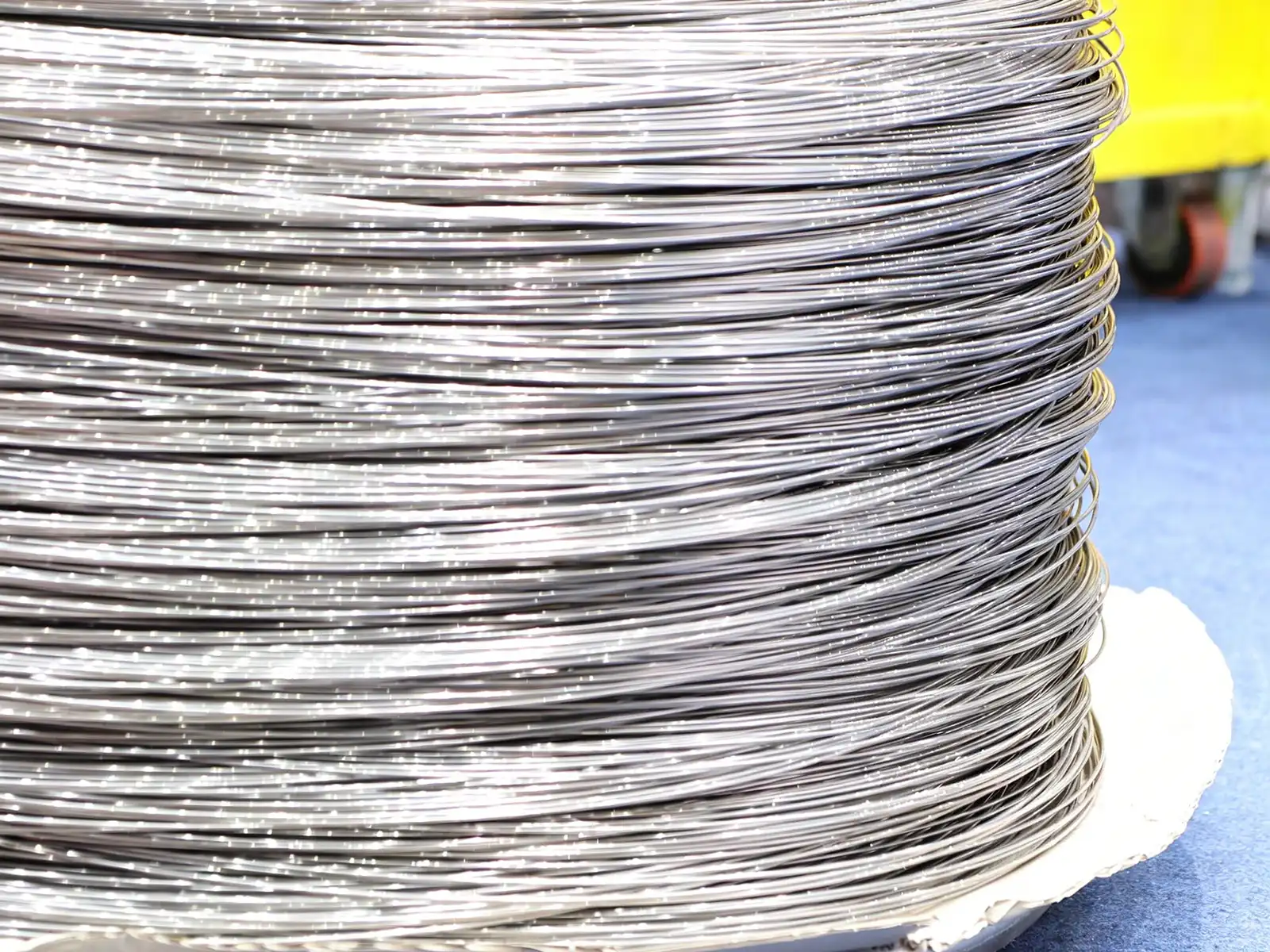
Nickel 200 (UNS N02200) is an industrially pure nickel material widely used in applications such as caustic soda production, electronic components, vacuum tubes, corrosion-resistant parts, and heat-conducting components. Its basic composition criterion is not a minimum nickel content of 99.5%; instead, a Ni+Co content of ≥ 99.0% is commonly used as the grade criterion. For Nickel 200 wire, common market references such as ASTM B166 and JIS H 4551 often reflect errors in the scope of standard coverage. This article reviews the material selection basis that more closely matches practical acceptance in terms of the standards system, chemical composition, mechanical properties, dimensions and surface condition, service-environment boundaries, and supplier verification.
1. The Main Standards System for Nickel 200 Wire: Distinguishing Wire from Bar First
Different countries and markets do not reference standards for Nickel 200 wire in a fully consistent way. During procurement and acceptance, the first step is to confirm whether the chosen standard actually covers the product form of wire.
(1) ASTM Standards: Avoiding Common Misreferences
- ASTM B160: Generally applies to nickel and nickel alloy bars and rods and does not directly cover wire. It can be used as a chemical composition reference, but cannot alone serve as the acceptance standard for finished nickel wire.
- ASTM F72: Applies to nickel strip/wire for electron tubes, and is not a universal medical standard for “fine nickel wire for medical devices and the electronics industry.”
- ASTM B166: Does not cover commercially pure nickel UNS N02200/Nickel 200 and should not be used as an acceptance basis for Nickel 200 wire.
In actual trade, the U.S. market often lacks a single fully matching ASTM wire product standard for Nickel 200 wire. A more reliable approach is to use standards such as ASTM B160 as the composition basis and to have the supplier and buyer agree on wire diameter, tolerances, surface condition, and mechanical properties in the purchase order; for domestic procurement, wire standards such as GB/T 21653 can also be referenced.
(2) European Standards: Carefully Distinguishing Grades and Certificates
- DIN 17740 / EN 18143: DIN 17740 is a historic German standard related to nickel materials, and the correspondence between Ni99.5/2.4060 and Nickel 200 cannot be assumed to be a simple equivalence; the specific product form, edition, and composition limits must be confirmed. The applicability of EN 18143 to commercially pure nickel materials should also be verified against the current edition.
- EN 10204 3.1 / 3.2: EN 10204 is not a product standard but a specification governing the format of quality certificates. Under it, a 3.1 certificate is issued by the manufacturer’s internally authorized inspection personnel, while only a 3.2 certificate is issued by an independent third-party inspection body. European customers requiring a third-party inspection certificate should specify 3.2.
(3) Japanese Standards: Sheet and Strip Standards Cannot Be Used for Wire
JIS H 4551 normally covers nickel and nickel alloy plates, strips, and foils and does not include wire. Therefore, JIS H 4551 cannot be used as the acceptance basis for Nickel 200 nickel wire. If wire is required in the Japanese market, the applicable wire standard or a bilateral technical agreement should be confirmed.
2. Chemical Composition and Mechanical Properties: Core Quality Indicators of Nickel 200
(1) Chemical Composition: Base on Common UNS N02200 Limits
Typical chemical composition limits for Nickel 200 are shown in the table below. The table is not identical across all standards, but it is more consistent with the common ASTM/UNS N02200 requirements.
Element | Ni + Co | Fe | Cu | Mn | Si | C | S |
Content (wt%) | ≥ 99.0 | ≤ 0.40 | ≤ 0.25 | ≤ 0.35 | ≤ 0.35 | ≤ 0.15 | ≤ 0.01 |
Describing Nickel 200 as having “a nickel content of not less than 99.5%” or applying limits such as Fe≤0.10, Cu≤0.10, Mn≤0.05, Si≤0.05, and S≤0.005 to Nickel 200 actually reflects a high-purity nickel grade and is not supported by general standards. Procurement should follow the specific product standard or the grade and composition table stated in the purchase order.
(2) Mechanical Properties: Wire Varies Considerably and Should Not Be Judged by a Single Hardness Value
Common reference ranges for the mechanical properties of annealed Nickel 200 wire are approximately:
- Tensile strength: approximately 350–550 MPa
- Yield strength: approximately 100–150 MPa
- Elongation: approximately 30%–45%
Data will vary significantly with wire diameter and processing condition, so the values above can only serve as typical references for soft-condition wire. A hardness of 85–95 HB is not appropriate for nickel wire; hardness testing is generally used for bars or thick-section materials. If hardness is required for wire acceptance, the test method, load, diameter range, and standard basis must be clearly specified.
(3) Physical Properties: Useful for Material Selection, but Should Not Be Mixed into Mechanical Property Acceptance
Physical properties are useful references for thermal conductivity, electrical resistance, and thermal design:
Physical parameter | Typical value |
Density | Approx. 8.89 g/cm³ |
Melting range | Approx. 1435–1445℃ |
Electrical resistivity | Approx. 6.8 × 10⁻⁸ Ω·m (20℃) |
Thermal conductivity | Approx. 70 W/(m·K) |
The melting point of Nickel 200 should not be simply written as the pure nickel melting point of 1453–1455℃. Commercially pure nickel is usually expressed as a melting range, and specific values should follow the material supplier’s data sheet or the applicable standard.
3. Dimensional Specifications and Surface Quality: Precision Requirements Must Match the Product Form
(1) Diameter Range and Tolerance Grade
The common diameter range for Nickel 200 wire is roughly φ0.1 mm to φ6 mm. φ4 mm can be regarded as coarse wire or wire rod, but φ200 mm already falls into the bar category and cannot be called wire. Guaranteeing a ±0.01 mm tolerance on a φ200 mm diameter is likewise unrealistic.
The tolerance grade should vary with diameter and product standard. Fine wire can achieve ±0.01 mm or better, but tolerances for large-diameter bars are typically much looser. Specific values should reference GB/T 21653 or the technical agreement between supplier and buyer, rather than broadly stating an extremely high precision.
(2) Straightness and End Face Quality
A straightness of ≤1 mm/m is normally specified for straight bars and is not suitable as a general acceptance criterion for coiled nickel wire. End face cutting quality is meaningful only for straight bars, cut-to-length material, or bars intended for subsequent automated assembly.
(3) Surface Finish Condition
Common surface conditions in the industry include bright annealed, pickled, and polished, but “bright, semi-bright, pickled, polished” is not a unified classification across all standards. Different standards systems and manufacturers may use different terms.
Generalizations such as “polished is mandatory for medical devices and pickled is mandatory for chemical electrodes” are too absolute. The surface condition should be determined according to the specific application, installation method, and customer requirements, and specified in the purchase order or technical agreement, rather than simply inferred from industry practice.
4. Applicability and Limitations in Special Service Conditions
(1) Applicable Service Conditions
Nickel 200 generally offers good corrosion resistance in strong alkaline media such as NaOH, reducing acids, seawater, and salt spray environments. Its good ductility and low-temperature toughness allow its use in cryogenic service.
It is important to note that Nickel 200, as a commercially pure nickel, is ferromagnetic at room temperature and must not be used in non-magnetic environments such as those associated with MRI. The earlier statement that it is “completely non-magnetic” was incorrect.
(2) Service Conditions to Avoid
- Hot oxidizing acids, such as hot nitric acid: corrosion resistance decreases significantly; not recommended.
- High-temperature sulfur-bearing atmospheres (>315℃): sulfur embrittlement may occur.
- Strongly oxidizing chloride media: a pitting risk exists. In such cases, a more highly alloyed corrosion-resistant alloy containing Cr and Mo, such as an Ni-Cr-Mo series alloy, should be used instead of vaguely recommending a “nickel-based alloy.”
(3) Combine Standard Compliance with Service-Condition Verification
Standard certification indicates that the material’s composition, dimensions, and conventional properties meet a given specification requirement, but it does not guarantee long-term service under all operating conditions. For critical equipment, corrosion coupon testing or simulated service-condition testing should be performed in addition to standard certification.
5. How Can You Verify Whether a Supplier Truly Meets the Standards?
(1) Request and Verify Material Certificates
The supplier should be able to provide a material report for each batch covering chemical composition, mechanical properties, heat treatment condition, and dimensional inspection data. For European customers, the certificate type must also be specified:
- EN 10204 3.1: Issued by the manufacturer’s internally authorized inspection personnel.
- EN 10204 3.2: Issued by an independent third-party inspection body.
Do not mislabel a 3.1 report as a “third-party certification report.”
(2) Assess the Production Process and Equipment Capability
Wire diameter uniformity and batch consistency depend largely on the drawing, annealing, and surface treatment equipment. Before purchasing, buyers may request information on the supplier’s key production equipment and, if necessary, conduct a plant audit.
(3) Pay Attention to Batch Consistency and Long-Term Supply Capability
Meeting requirements in a single batch does not equal long-term stability. The supplier’s quality management system, raw material supply stability, and actual delivery record should be assessed, especially for users with continuous production.
6. Conclusion
Standards compliance for Nickel 200 commercially pure nickel wire is not simply a single “pass/fail” judgment. It requires distinguishing among the product forms covered by the standard, wire diameter range, chemical composition, mechanical properties, surface condition, and actual service conditions. Avoiding the misapplication of bar, plate, strip, and foil standards to wire is key to reducing procurement errors and quality disputes.
FAQ
(1) Q1: What are the main differences between Nickel 200 wire and Nickel 201 wire in terms of standards?
Both are industrially pure nickel; the main difference lies in carbon content: the common limit for Nickel 200 is C≤0.15%, while Nickel 201 (UNS N02201) is typically C≤0.02%. Nickel 201 is more suitable for high-temperature service above 315℃ to reduce the risk of grain-boundary carbide precipitation.
(2) Q2: Which documents must be requested when purchasing Nickel 200 wire?
At minimum, the material report, dimensional inspection report, heat treatment condition statement, and statement of standard conformity should be requested. For European orders, an EN 10204 3.1 or 3.2 certificate should be explicitly required, noting that 3.1 is issued in-house by the manufacturer while 3.2 is issued by a third party.
(3) Q3: Does ASTM F72 apply to ultra-fine commercially pure nickel wire?
ASTM F72 is a standard for nickel strip/wire used in electron tubes; it is not a universal standard for all fine nickel wire in the medical and electronics industries. For fine medical wire or ultra-fine nickel wire for precision electronics, the inspection specification should be defined by the specific product standard or a bilateral technical agreement.
Contact Us
If you are looking for a Nickel 200 nickel wire supplier, please contact Titanium Valley. We supply Nickel 200 nickel wire conforming to ASTM B160 (UNS N02200), along with material certificates, test reports, and OEM customization services. Please send your inquiry to: sales@titaniumvalleys.com
References
- National Technical Committee on Nonferrous Metals Standardization. GB/T 5235-2021 Wrought nickel and nickel alloys – Chemical composition and forms of products [S]. Beijing: Standards Press of China, 2021.
- National Technical Committee on Nonferrous Metals Standardization. GB/T 21653-2008 Nickel and nickel alloy wires and wire rods [S]. Beijing: Standards Press of China, 2008.
- Zuo Jingyi, Zuo Yu. Handbook of Corrosion Data and Material Selection [M]. Beijing: Chemical Industry Press, 2005.
- Huang Jianzhong, et al. Handbook of Corrosion-Resistant Metallic Materials [M]. Beijing: Chemical Industry Press, 2009.
Published by: Titanium Valleys
Technical review: General Manager of the Production Department
Quality review: Quality Inspection Department
Last reviewed: October 20, 2026 (before the latest content update; the updated content is pending review).