
Zirconium 702 Sheet: Flatness and Forming Acceptance
- Zirconium 702 Sheet
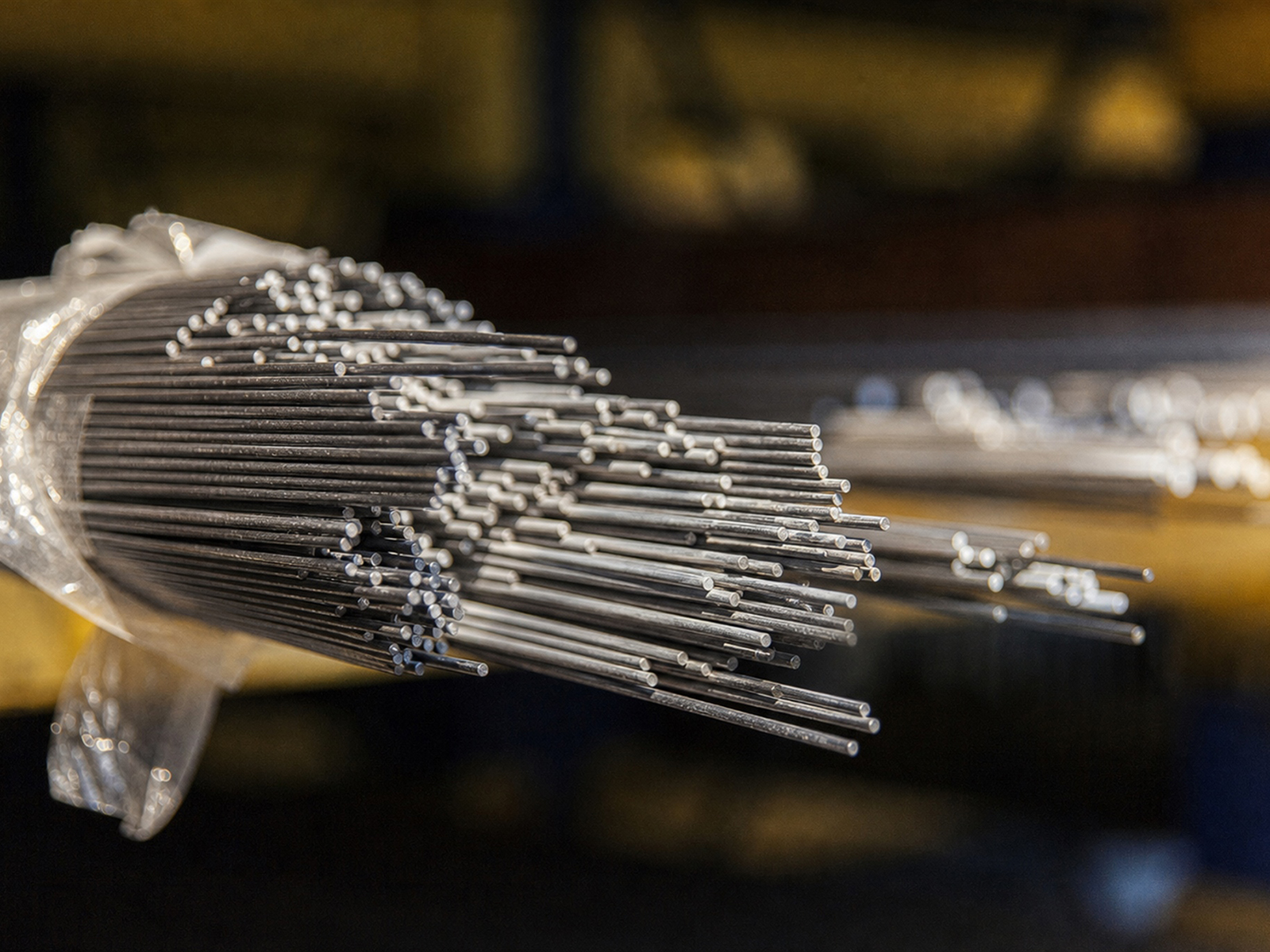
Zirconium 702 sheet orders for lining or formed parts depend on flatness, thickness variation and surface quality as well as chemistry. Review the delivered condition and the forming sequence before setting acceptance limits.
1. Selection and Acceptance Decisions
- Agree the flatness measurement method, support surface, measurement length and allowable deviation.
- Trial the intended bend or draw using the actual gauge, condition, direction and edge preparation.
- Describe scratches, dents and contamination that are unacceptable on functional faces, and specify how those faces will be protected.
Send a specification for this material with the grade, dimensions, quantity, intended use and the acceptance details listed above. Ask for confirmation of the quoted size, condition and documentation.
2. Properties
Property | Value |
Zr + Hf | ≥ 99.2% (Hf ≤ 4.5%) |
Tensile strength (min, annealed) | ≥ 379 MPa (55 ksi) |
Yield strength (min) | ≥ 207 MPa (30 ksi) |
Elongation (min) | 16% |
Density | 6.51 g/cm³ |
Melting point | ≈ 1852℃ |
Table 1 — Zr702 sheet requirements per ASTM B551 (annealed).
3. The Sheet-Specific Quality Triangle
Three checks define good zirconium sheet. Gauge profile: request across-width thickness distribution, not an average — formed parts care about the thin spot. Flatness: leveling practice against the flatness standard, because wavy sheet welds poorly and forms unpredictably. Edge quality: slit or sheared edges with burr limits, since burrs become crack starts in bending and contamination traps in service.
4. Forming Zr702 Sheet
Annealed Zr702 sheet bends, rolls and stamps like a moderately strong metal — similar discipline to titanium: generous bend radii, clean tooling, and springback compensation (zirconium’s elastic recovery is higher than steel’s). For tight-radius work, cut across the rolling direction where possible and trial-bend the batch before production.
Applications
- Vessel and tank liners — acid-proof inner layers in HCl and sulfuric service;
- Column trays and internals — formed corrosion-resistant internals for acid columns;
- Seals and expansion joints — formed Zr702 sheet in acid flanges and ducting;
- Electrolysis separators — acid-side barriers and shields.
FAQ
(1) What is the difference between Zr702 sheet and foil?
Thickness band and tolerance regime: foil is the thin band (≈ 0.02–0.8 mm commercial practice), sheet the thicker cold-rolled band up to the strip/sheet boundary of B551. Name the form per the drawing.
(2) Can Zr702 sheet be cold formed?
Yes — annealed sheet forms readily with titanium-like discipline: generous radii, clean tools, springback compensation and trial bends per batch.
(3) Is Zr702 sheet weldable?
Yes — TIG or electron-beam under inert-gas shielding, with clean oxide-free joints and hydrogen control.
(4) Which medium justifies zirconium sheet over titanium?
Non-fluoride reducing acids — hydrochloric, hot sulfuric, organic and mixed acids — where titanium’s film fails. Titanium remains lighter and cheaper in oxidizing or neutral chloride service.
(5) What should I check on the certificate?
Full chemistry including O/N/H, tensile and elongation for the actual gauge, condition, standard edition — plus the thickness profile and flatness data agreed in the order. Custom size, condition, tolerance and documentation can be reviewed to the purchase specification.
Related Resources and Inquiry
See the zirconium plate category or send your specification for a Zr702 sheet quote.
Baoji Titanium Valley Titanium Nickel Zirconium Material Processing Co., Ltd. produces zirconium foil, strip, sheet and plate per ASTM B551/B551M (R60702 / R60705) from vacuum-melted ingots on a 750 mm 20-high precision rolling line under ISO 9001 / ISO 13485. Send your specification to sales@titaniumvalleys.com — Custom size, condition, tolerance and documentation can be reviewed to the purchase specification.
5. Related Reading
- Zirconium 702 Sheet vs Plate: Form and Order Comparison
- Thin Zirconium Foil: Gauge, Pinholes and Packaging
References
1. ASTM B551/B551M, Standard Specification for Zirconium and Zirconium Alloy Strip, Sheet, and Plate.
2. ASTM E8/E8M, Standard Test Methods for Tension Testing of Metallic Materials.
3. GB/T 21183, Zirconium and Zirconium Alloy Sheet, Strip and Foil.
This article is a technical reference. It does not constitute a commercial offer; dimensions, tolerances and documentation are confirmed at order review.
Published by: Titanium Valley Technical Team. Technical and quality review: pending.