
Which standards should Gr2 titanium foil comply with?
- Gr2 titanium foil
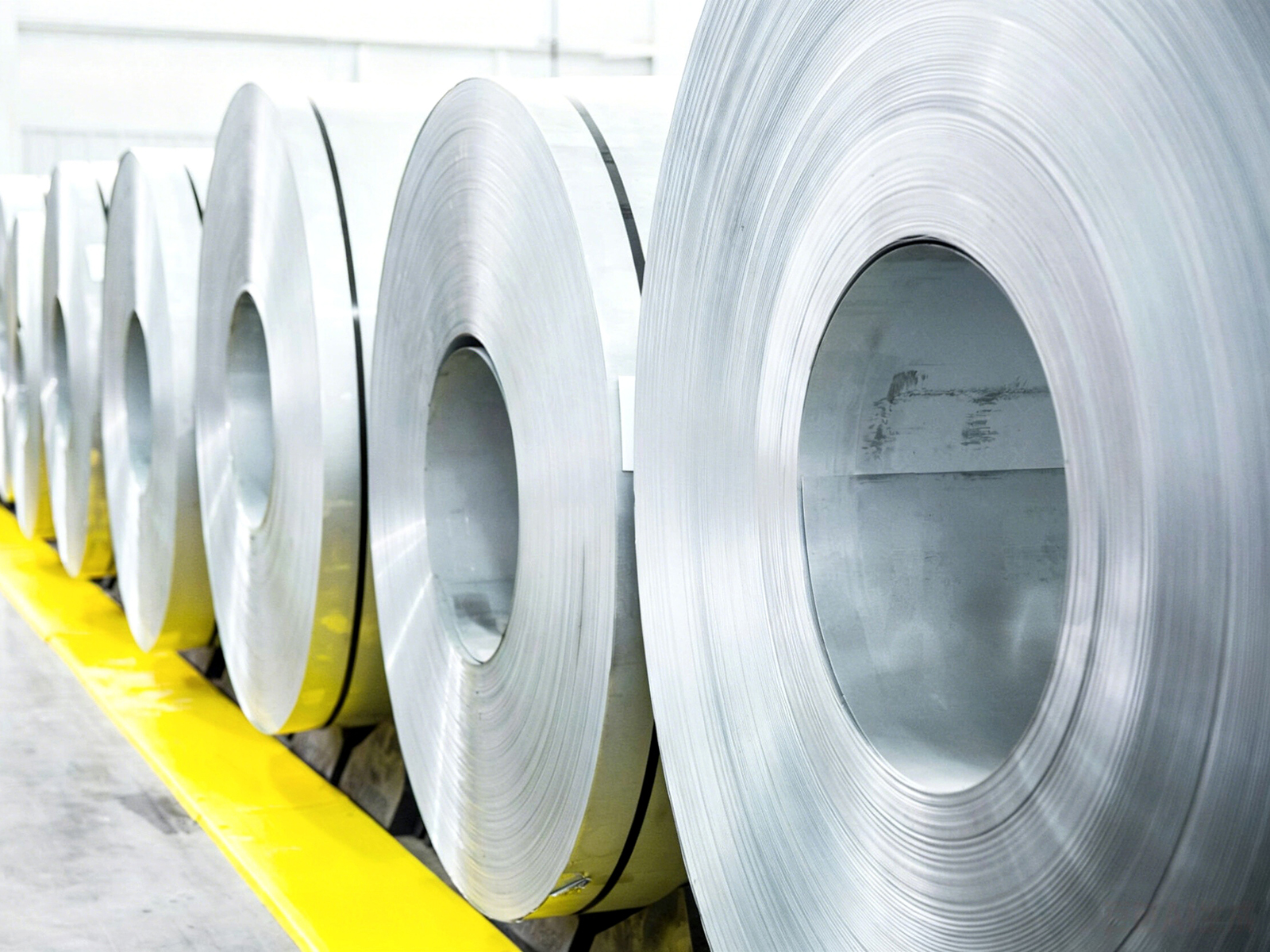
Direct engineering answer. Gr2 titanium foil should be evaluated against the finished component, product form, governing specification, downstream process and acceptance evidence. A general property value is an orientation tool; the released drawing, current certificate and inspection plan control the final decision.
Gr2 titanium foil (Grade 2 commercially pure titanium foil) selection and acceptance typically involves multiple international standards, principally the American ASTM B265, the Japanese JIS H4600, the international ISO 7209, the German DIN 17850, and the Russian GOST 19807. ASTM B265 is the most widely used in the procurement of titanium and titanium alloy sheet, strip, and plate, but it is not specifically intended for foil. The chemical composition and mechanical property requirements for Grade 2 across these standards are broadly similar but not identical: for example, ASTM B265 defines Grade 2 primarily by limiting the maximum levels of impurities such as Fe, O, N, C, and H, with Ti as the balance, rather than directly specifying “Ti ≥99.2%”; tensile strength is generally required to be ≥345 MPa, but elongation is specified by thickness grade, and ultra-thin gauges do not necessarily require ≥20%. Procurement should be based on the specific standard edition and applicable thickness grade rather than summarizing all standards with a single figure.
1. Main international standard systems for Gr2 titanium foil
(1) ASTM B265: The Most Widely Applied Standard for Titanium and Titanium Alloy Sheet and Strip
ASTM B265, Standard Specification for Titanium and Titanium Alloy Strip, Sheet, and Plate, is developed by the American Society for Testing and Materials and covers titanium and titanium alloy sheet, strip, and plate; it is not specifically intended for foil. Grade 2 (UNS R50400) is commercially pure titanium, and the standard primarily specifies maximum impurity limits (Fe ≤0.30%, O ≤0.25%, N ≤0.03%, C ≤0.08%, H ≤0.015%) together with minimum mechanical property requirements. The standard does not directly specify Ti ≥99.2%; titanium content is the balance. Converted from the typical impurity upper limits, titanium content is usually no lower than 99.2%, but this is best treated as an approximate value for commercial acceptance rather than a literal requirement of the ASTM B265 standard text. This standard is widely referenced across aerospace, chemical, and medical device industries and is the most common technical basis in international procurement contracts.
(2) JIS H4600: Class 2 in the Japanese Sheet/Strip Specification
JIS H4600: 2012 is the Japanese Industrial Standard specification for titanium and titanium alloy plate and strip. Class 2 broadly corresponds to ASTM Grade 2 in composition and properties but is not considered fully equivalent. The Japanese precision electronics industry, particularly semiconductor packaging and sensor manufacturing, tends to reference both JIS and ASTM in procurement documents to ensure cross-regional material recognition and dual verification.
(3) ISO 7209 and DIN 17850: International and German Sheet/Strip Standards
ISO 7209: 2023 is the international standard for titanium and titanium alloy strip, sheet, and plate, adopted identically in the United Kingdom as BS ISO 7209. DIN 17850 is the corresponding German delivery specification for titanium and titanium alloy strip, sheet, and plate, in which the designation 3.7035 corresponds to Grade 2. The dimensional tolerance and surface quality clauses of the two must be compared against the specific editions. Note in particular that EN 10095 is a standard for heat-resistant steels and nickel alloys, does not cover titanium, and should not be used as a procurement basis for Gr2 titanium foil.
Standard | Region/Adoption | Grade | Application Focus |
ASTM B265 | United States | Grade 2 / UNS R50400 | Aerospace, chemical, medical |
JIS H4600: 2012 | Japan | Class 2 | Precision electronics, sensors |
ISO 7209: 2023+A1: 2024 | International/UK | Grade 2 | Industrial and structural applications |
DIN 17850 | Germany | 3.7035 | Precision machining, chemical |
GOST 19807 | Russia | BT1-0 | General industrial |
2. Key Performance Indicators and Standard Requirements
(1) Chemical Composition: Standards Only Constrain Impurity Upper Limits
ASTM B265 Grade 2 sets upper limits for Fe, O, N, C, and H, with Ti as the balance. The so-called “Ti ≥99.2%” is a typical value calculated from the impurity upper limits, not a direct requirement of every standard. Oxygen is the key interstitial element affecting the strength and ductility of commercially pure titanium, and its strengthening effect is significant; however, it should not be described with a single linear value such as “an increase of 30–40 MPa per 0.1% oxygen.” The actual strengthening magnitude is affected by the oxygen content range, annealed/cold-worked condition, and grain size. Impurities such as iron, nitrogen, and carbon affect weld quality and formability and should be verified item by item against the material certificate.
(2) Mechanical Properties: Elongation Must Be Checked by Thickness Grade
ASTM B265 Grade 2 typically requires a tensile strength of ≥345 MPa and a yield strength of 275–450 MPa. Elongation is not uniformly ≥20% for all thicknesses but is specified by thickness grade; for ultra-thin gauges, the minimum elongation may be below 20%, or different gauge lengths and acceptance rules may apply. The thickness range and applicable standard edition should be clearly specified in the technical agreement to avoid broadly applying a single elongation figure. Compared with Grade 1 (tensile strength ≥240 MPa), Grade 2 offers higher strength while still maintaining good stamping, bending, and welding suitability.
(3) Dimensional Tolerances and Surface Cleanliness Requirements
Dimensional tolerances are specified in ASTM B265 by thickness and width class and are standardized product requirements. Surface cleanliness, dyne value, and water-film continuity are generally not routine clauses of ASTM B265 but additional requirements in the procurement technical agreement or for specific applications; they should not be described as the standard merely setting “a lower limit.” High-precision sensors may require thickness tolerances on the order of ±0.001 mm and surface tension of ≥40 dynes/cm; these are application-specific supplementary specifications that require supplier process-capability assurance.
3. Differentiated Standard Requirements by Application Scenario
(1) Aerospace: Batch Consistency, AMS, and Quality Systems
Aerospace thin-wall parts often require SAE AMS 4902 or an equivalent material specification in addition to ASTM B265, imposing stricter requirements on melting, heat treatment, nondestructive testing, and batch traceability. Suppliers are generally expected to hold AS9100/AS9120 quality system certification[9]. The delivery condition is typically annealed to maximize ductility for subsequent forming.
(2) New Energy and Electrochemistry: Surface Cleanliness and Electrical Uniformity
Gr2 titanium foil used for electrolysis electrodes or fuel cell bipolar plates demands higher surface oxide layer thickness and cleanliness than conventional industrial products. A surface tension of ≥40 dynes/cm after ultrasonic cleaning is commonly used as a control indicator for coating adhesion uniformity. The electrical resistivity of commercially pure titanium is typically about 0.42–0.56 μΩ·m (42–56 μΩ·cm); resistivity uniformity should be included in the procurement technical agreement rather than assessed simply against a single nominal value.
(3) Chemical Corrosion Protection: Corrosion Resistance and Weld Integrity
Chemical equipment linings and thin pipe sheets require materials to serve stably over the long term in media such as hydrochloric acid, sulfuric acid, and seawater. Gr2 titanium foil forms a dense TiO₂ passive film on its surface, which is the core mechanism of its corrosion resistance; in most oxidizing and chloride-containing environments, its corrosion resistance is superior to that of most stainless steels. For weldability, the joint strength after TIG, laser, or electron beam welding should be verified to reach more than 90% of the base metal.
(4) Medical Devices: Biocompatibility Must Be Assessed per ISO 10993
For medical device applications, in addition to chemical purity, biological evaluation standards such as ISO 10993-1 should be followed to assess risks including cytotoxicity, sensitization, and irritation[8]. Meeting ASTM B265 is only the chemical and mechanical baseline and cannot substitute for the biological safety assessment required for medical use.
Application Scenario | Priority Indicators | Typical Delivery Condition |
Aerospace thin-wall parts | Batch consistency, elongation, AMS/AS9100 traceability requirements | Annealed |
Precision electronics/sensors | Thickness tolerance, surface cleanliness | Cold worked or annealed |
New energy electrodes | Surface tension, resistivity uniformity | Annealed |
Chemical equipment lining | Corrosion resistance, weld joint strength | Annealed |
Medical devices | Biocompatibility, chemical purity, ISO 10993 | Annealed or cold worked |
4. How to Verify That Gr2 Titanium Foil Truly Meets the Standards
(1) Verifying the Core Information in the Mill Test Report (MTR)
A material certificate from a qualified supplier should include: the heat number, full chemical composition analysis (including O, Fe, N, H, and C), mechanical property test data (tensile strength, yield strength, elongation, and the corresponding thickness grade), heat treatment condition, and the applicable standard number. The certificate data must correspond strictly to the physical batch; any missing item warrants further inquiry.
(2) Third-Party Testing and Witness Testing
For high-value orders or long-term supply agreements, an independent third-party organization such as SGS, TÜV, or Intertek is recommended for independent sampling and testing. Witness testing allows the buyer’s representative to supervise the inspection of critical processes at the production site and is a common quality control practice in aerospace and medical procurement.
(3) On-Site Sampling of Dimensions and Surface
Thickness can be measured with a contact micrometer or a laser thickness gauge; the sampling plan may follow ISO 2859-1 or mutually agreed statistical sampling rules, with measurement data rounded in accordance with ASTM E29. Surface cleanliness can be quickly assessed with a water-film continuity test or a dyne pen. For ultra-thin foil below 0.1 mm in thickness, flatness can be checked with a high-precision surface plate, a feeler gauge, or a laser profilometer.
5. Supplier Evaluation: Process Capability and Quality Systems
(1) Process Capability Assessment
For high-precision Gr2 titanium foil, the key evaluation is whether the supplier can cover the target thickness range, whether it has stable cold rolling, annealing, and finishing capabilities, and whether it maintains critical process parameter records and process capability (Cpk/Ppk) data. On-site audits should focus on thickness tolerance consistency, annealing temperature uniformity, and surface cleanliness control measures rather than relying simply on equipment model parameters.
(2) Custom Specifications and Delivery Capability
High-end applications often require non-standard specifications such as ultra-thin foil or wide strip. Batch delivery capability should match the project scale: large-volume orders require stable capacity and consistent quality; for small-batch, high-precision, or special-specification orders, a supplier with lower capacity but specialized process expertise may be more suitable. Judgment should combine the supply track record, quality history, and batch traceability capability; annual capacity should not be used as the sole criterion.
(3) Quality Management Systems and Certifications
ISO 9001 is the basic threshold. The aerospace sector focuses on AS9100/AS9120; the medical device sector may focus on ISO 13485. Complete inspection records, pre-shipment retest data, a clear batch traceability mechanism, bilingual material certificates, and openness to third-party audits together constitute the substantive content of a quality system.
6. Conclusion
Gr2 titanium foil standard compliance spans chemical composition, mechanical properties, dimensional tolerances, and surface quality. Standards such as ASTM B265, JIS H4600, ISO 7209, DIN 17850, and GOST 19807 together form the technical language of global procurement, but they cannot be simply conflated with one another. True compliance depends not only on documented claims but also on the supplier’s sustained process capability and verifiable quality management. Material selection should combine standard requirements with the actual thickness, application scenario, and supplementary technical agreements to reduce procurement risk.
FAQ
(1) Q1: What are the core differences between Gr2 titanium foil and Gr1 titanium foil in standard requirements?
Both grades are commonly referenced against ASTM B265, but Grade 2 has a higher oxygen upper limit than Grade 1 (O ≤0.25% vs O ≤0.18%), so Grade 2 has a higher tensile strength requirement (≥345 MPa vs ≥240 MPa), while Grade 1 usually offers slightly better elongation. When higher strength is needed while retaining good formability, Grade 2 is the more balanced choice.
(2) Q2: When purchasing Gr2 titanium foil, which data items in the mill test report (MTR) must be verified?
Key items to verify include: full chemical composition analysis (especially O, Fe, N, H, and C), measured tensile strength and elongation values, the thickness grade corresponding to the elongation, heat treatment condition, applicable standard number, heat number, and test date.
(3) Q3: Does Gr2 titanium foil need to meet specific supplementary standards for chemical and new energy applications?
For chemical equipment, ASME SB265 is sometimes referenced in addition to ASTM B265 as the specification for pressure vessel materials. New energy electrode applications focus more on functional indicators such as surface cleanliness, dyne value, and resistivity uniformity, which are typically defined by the procurement technical agreement and cannot be fully covered by a single material standard; medical device applications should additionally follow the ISO 10993 series for biological evaluation.
Contact Us
Looking for a reliable manufacturer, supplier, or processing service for Gr2 titanium foil (Grade 2 commercially pure titanium foil, UNS R50400)? A professional titanium enterprise with full-process capability from vacuum melting, multi-pass precision cold rolling, and protective-atmosphere annealing to precision slitting can supply in accordance with standards such as ASTM B265, JIS H4600, ISO 7209, and DIN 17850, and provide material certificates (MTR), full chemical composition analysis, measured mechanical property data, thickness distribution and shape inspection reports, and batch traceability documentation. For differentiated applications such as aerospace, precision electronics, new energy electrodes, and chemical corrosion protection, supplementary indicators including surface cleanliness, dyne value, and resistivity uniformity can be defined in the technical agreement. Contact us at: sales@titaniumvalleys.com
References
- American Society for Testing and Materials. ASTM B265/B265M, Standard Specification for Titanium and Titanium Alloy Strip, Sheet, and Plate [S]. West Conshohocken, PA: ASTM International, current edition.
- Japanese Standards Association. JIS H4600: 2012, Titanium and Titanium Alloys — Plate and Strip [S]. Tokyo: Japanese Standards Association, 2012.
- International Organization for Standardization. ISO 7209: 2023+A1: 2024, Titanium and Titanium Alloys — Strip, Sheet, and Plate [S]. Geneva: ISO, 2024.
- DIN German Institute for Standardization. DIN 17850, Titanium and Titanium Alloys — Technical Delivery Conditions for Strip, Sheet, and Plate [S]. Berlin: DIN, current edition.
- Russian Federation Standardization Organization. GOST 19807—91, Rolled Titanium and Titanium Alloy Plates [S]. Moscow: GOST, 1991.
- Leyens C., Peters M. Titanium and Titanium Alloys [M]. Beijing: Chemical Industry Press, 2005.
Engineering specification and verification framework
For Gr2 titanium foil, state grade, ordered product form, condition, nominal dimensions, tolerances, surface requirement, quantity and documentation in one controlled RFQ. The applicable product-form reference is ASTM B265, subject to the current edition and project-specific requirements. When tensile evidence is required, define the test method and sampling basis; ASTM E8/E8M or ISO 6892-1 may apply where consistent with the order.
| RFQ field | Required detail | Reason |
|---|---|---|
| Material identity | Grade, form, ASTM B265, condition | Prevents unintended substitution. |
| Geometry | Nominal size, tolerance, length or coil form | Defines production and inspection scope. |
| Process context | Forming, machining, joining, etching or assembly | Relates supply condition to actual manufacture. |
| Verification | Certificate, dimensional checks, lot identity | Creates a traceable acceptance plan. |
Risk review and incoming control
Common avoidable risks include tolerance stack-up, unclear condition, surface damage, undocumented substitution and loss of lot identity after cutting. At receipt, reconcile the purchase order, packing label and certificate before release to production. Define any supplementary testing, sampling and report format before quotation rather than after shipment.
Technical FAQ
Can catalogue values approve the material?
No. Final approval must use the ordered form, condition, standard, drawing, process route and service boundary.
What should an RFQ include?
Provide the drawing where available, grade and standard, dimensions, tolerance, condition, quantity, process context, service information and documentation requirement.
Product resources and technical quotation
Review the relevant titanium foil product category. For a drawing-based review, request a technical quotation with the full specification.
References and use note
- ASTM B265, applicable edition, for the ordered product form.
- ASTM E8/E8M or ISO 6892-1 where the project specifies tensile verification.
- Project drawing, purchase specification, certificate and agreed inspection plan.
This engineering note supports procurement specification. It does not replace component design validation or the governing contractual standard.