
Grade 9 Titanium Foil (Ti-3Al-2.5V): Properties and Formability
- Grade 9 Titanium Foil
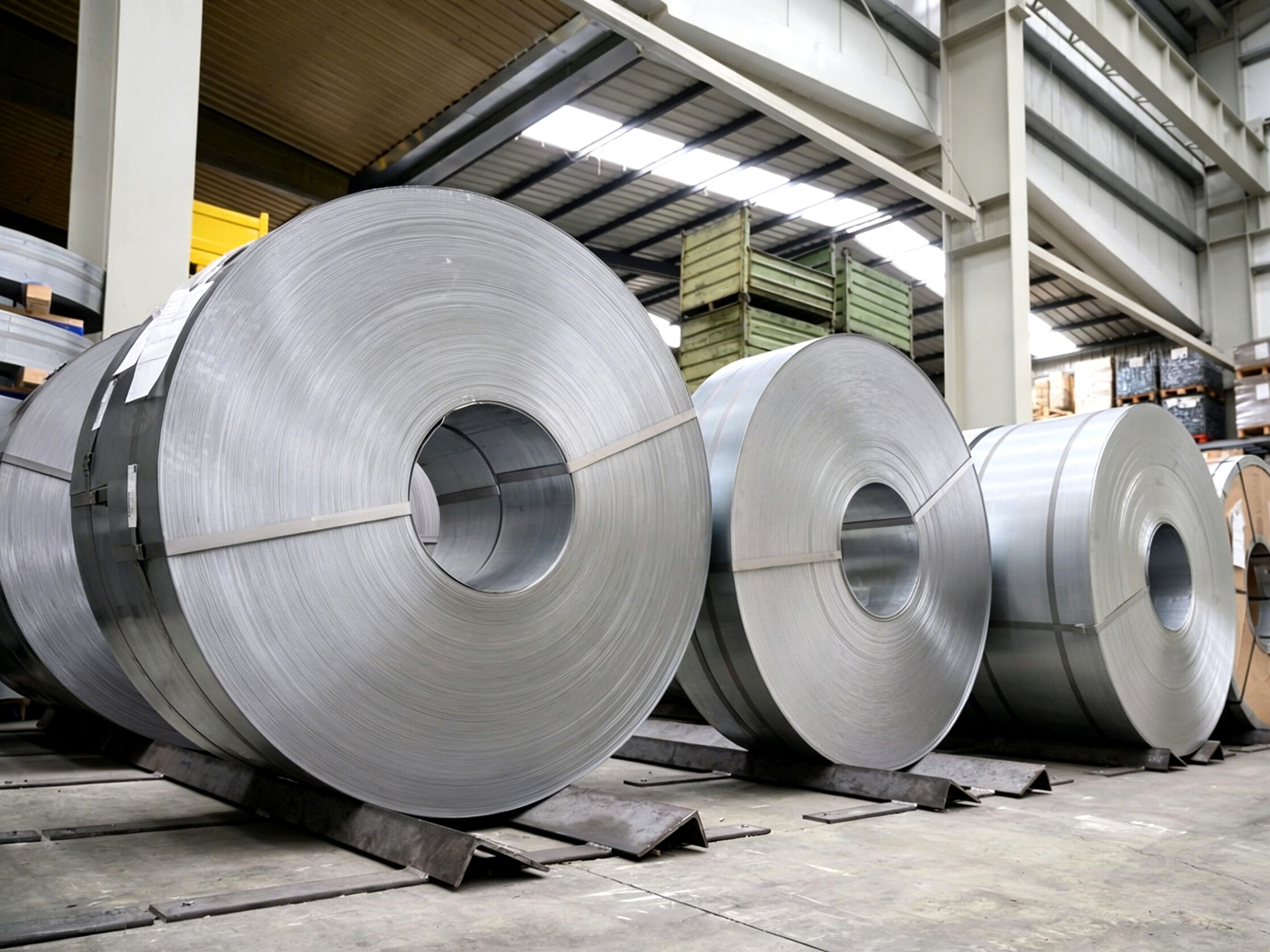
Grade 9 titanium foil is a Ti-3Al-2.5V option when a part needs an alloy grade and forming remains a priority. Compare the ordered condition and gauge against Grade 5, and use trial bends or stampings to qualify the process. Request a Grade 9 foil quote.
Composition
Element | Content (%) |
Aluminum (Al) | 2.50–3.50 |
Vanadium (V) | 2.00–3.00 |
Iron (Fe) | ≤ 0.25 |
Oxygen (O) | ≤ 0.12 |
Titanium (Ti) | Balance |
Table 1 — Ti-3Al-2.5V composition limits per ASTM B265 Grade 9 / AMS 4943 (confirm residual limits against the contracted edition).
Mechanical and Physical Properties
Property | Value |
Tensile strength (min) | ≥ 620 MPa (90 ksi) |
Yield strength (min) | ≥ 483 MPa (70 ksi) |
Elongation (min) | 15% |
Density | 4.48 g/cm³ |
Structure | Near-α |
Magnetism | Non-magnetic |
Table 2 — Annealed properties per ASTM B265 Grade 9 / AMS 4943.
The Formability Advantage
Grade 9 occupies the sweet spot between Grade 2 and Grade 5: roughly 80% more tensile strength than Grade 2 foil, yet it still bends, beads and draws cold — something Grade 5 (10% elongation) resists. Springback sits between the two, and because the alloy welds and resists corrosion on par with CP titanium, a single material can serve the entire part lifecycle from forming to welded assembly.
Applications by Thickness Band
Application | Typical thickness | Process | Key requirement |
Precision springs and clips | 0.2–0.4 mm | Cold-hard (temper) strip + forming | Elastic fatigue life, non-magnetic |
Exhaust bellows / EGR ducts | 0.15–0.3 mm | Corrugated forming + hydroforming | High-temperature strength, thermal-stress tolerance, damping |
Heat-exchanger thin-wall tubes and plates | 0.2–0.5 mm | Roll-welded thin-wall tube from strip | Chloride-ion resistance, good heat transfer |
Eyeglass frames and hinges | 0.3–0.5 mm | Bending + anodized coloring (β-Ti / Ti-6Al-4V) | Light, corrosion-resistant, skin-friendly, elastic |
Table 3 — Strip band (0.2–0.5 mm): springs, bellows, welded tube stock and eyeglass frames.
Application | Typical thickness | Process | Key requirement |
Sports equipment | 0.5–1.0 mm | Forming / machining | Light, strong, weatherproof, good feel |
Marine / seawater heat exchange and structure | 0.5–1.0 mm | Forming / welding | Seawater corrosion resistance, anti-fouling |
Table 4 — Sheet band (0.5–1.0 mm): sports equipment and marine structures.
1. Deep Dive: Precision springs and clips
Precision springs and clips rolled to cold-hard temper at 0.2–0.4 mm exploit the alloy’s formability plus fatigue strength: roughly 40% lighter than steel springs, non-magnetic and corrosion-free — the combination that aerospace clamps, medical instruments and precision mechanisms specify where steel would rust, weigh or interfere.
2. Deep Dive: Exhaust bellows / EGR ducts
Exhaust bellows and flexible ducting at 0.15–0.3 mm absorb thermal expansion and vibration in exhaust and EGR systems. Grade 9’s cold formability makes the corrugation forming practical, and its weldability and thermal-cycling toughness keep the assembly alive where stainless alternatives crack.
3. Deep Dive: Heat-exchanger thin-wall tubes and plates
Thin-wall heat-exchanger tubes roll-welded from 0.2–0.5 mm strip put Grade 9’s weldability to work in seawater and chlorinated duty — desalination and marine condensers where the tube seam must be as corrosion-resistant as the tube body.
4. Deep Dive: Eyeglass frames and hinges
High-end eyeglass frames and hinges bent from 0.3–0.5 mm strip use β-titanium or Ti-6Al-4V heritage springs and Grade 9’s formability for the frame itself: light, hypoallergenic, corrosion-proof against skin oils, and anodizable in multiple colors.
Standards and Designations
Grade 9 foil is ordered to ASTM B265 Grade 9 or AMS 4943; designations include UNS R56320, DIN 3.7195 and the nickname “half 6-4” (its Al and V contents are roughly half of Ti-6Al-4V).
FAQ
(1) What is the difference between Grade 9 and Grade 5 foil?
Grade 9 (Ti-3Al-2.5V) gives 620 MPa tensile with 15% elongation and easy cold forming and welding; Grade 5 (Ti-6Al-4V) gives 895 MPa with 10% elongation and needs hot or carefully controlled forming. Choose Grade 9 when formability and weldability decide the design.
(2) Is Grade 9 foil weldable?
Yes — it is among the most weldable titanium alloys, welding like CP titanium under inert-gas shielding with sound as-welded joints.
(3) How does Grade 9 corrosion resistance compare with pure titanium?
Very close: the passivating oxide film behaves like CP titanium in seawater, chlorides and oxidizing media, so Grade 9 is treated as a corrosion-resistant alloy for marine and chemical service.
(4) Can Grade 9 foil be anodized?
Specify the required anodic process and acceptance criteria with the processor. Use an approved appearance sample for decorative color and qualify the surface preparation for bonded assemblies.
(5) What thicknesses are available?
Alloy foil is typically quoted case by case against the standard 0.02–1.0 mm capability; gauge, tolerance and condition are confirmed at order review. Custom size, condition, tolerance and documentation can be reviewed to the purchase specification.
(6) Why do eyeglass frames use titanium strip?
Weight on the face, hypoallergenic skin contact, sweat resistance and anodized color options — Grade 9 adds the formability to bend complex hinge and temple shapes cold.
(7) Can Grade 9 replace Grade 2 in welded assemblies?
Where the extra ~80% strength pays for the alloy premium, yes — Grade 9 welds nearly as easily and corrodes nearly as well, while cutting section thickness.
(8) Which condition should springs order?
Cold-hard (temper) strip, typically 0.2–0.4 mm; the temper level is set against the spring’s target force and fatigue life at order review.
Related Resources and Inquiry
Compare alloys in the titanium foil category or send your specification for a Grade 9 order review.
Baoji Titanium Valley Titanium Nickel Zirconium Material Processing Co., Ltd. operates a 750 mm 20-high titanium foil line (3, 000 t/yr, ISO 9001 / ISO 13485) covering the full 0.02–1.0 mm range with etching, stamping and welding compatibility. Send your specification to sales@titaniumvalleys.com — Custom size, condition, tolerance and documentation can be reviewed to the purchase specification.
References
1. ASTM B265, Standard Specification for Titanium and Titanium Alloy Strip, Sheet, and Plate.
2. ASTM E8/E8M, Standard Test Methods for Tension Testing of Metallic Materials.
3. SAE AMS 4943, Titanium Alloy Sheet, Strip, and Plate, 3Al-2.5V, Annealed.
4. Baoji Titanium Valley: 0.02–1.0 mm Titanium and Titanium Alloy Strip and Foil — Application Introduction (internal application deck).
5. Titanium Valley product data: titanium foil product pages (titaniumvalleys.com).
This article is a technical reference. It does not constitute a commercial offer; dimensions, tolerances and documentation are confirmed at order review.
Published by: Titanium Valley Technical Team. Technical and quality review: pending.