
How Can R60705 Zirconium Bars Be Cut Without Damaging the Material?
- R60705 Zirconium Bars
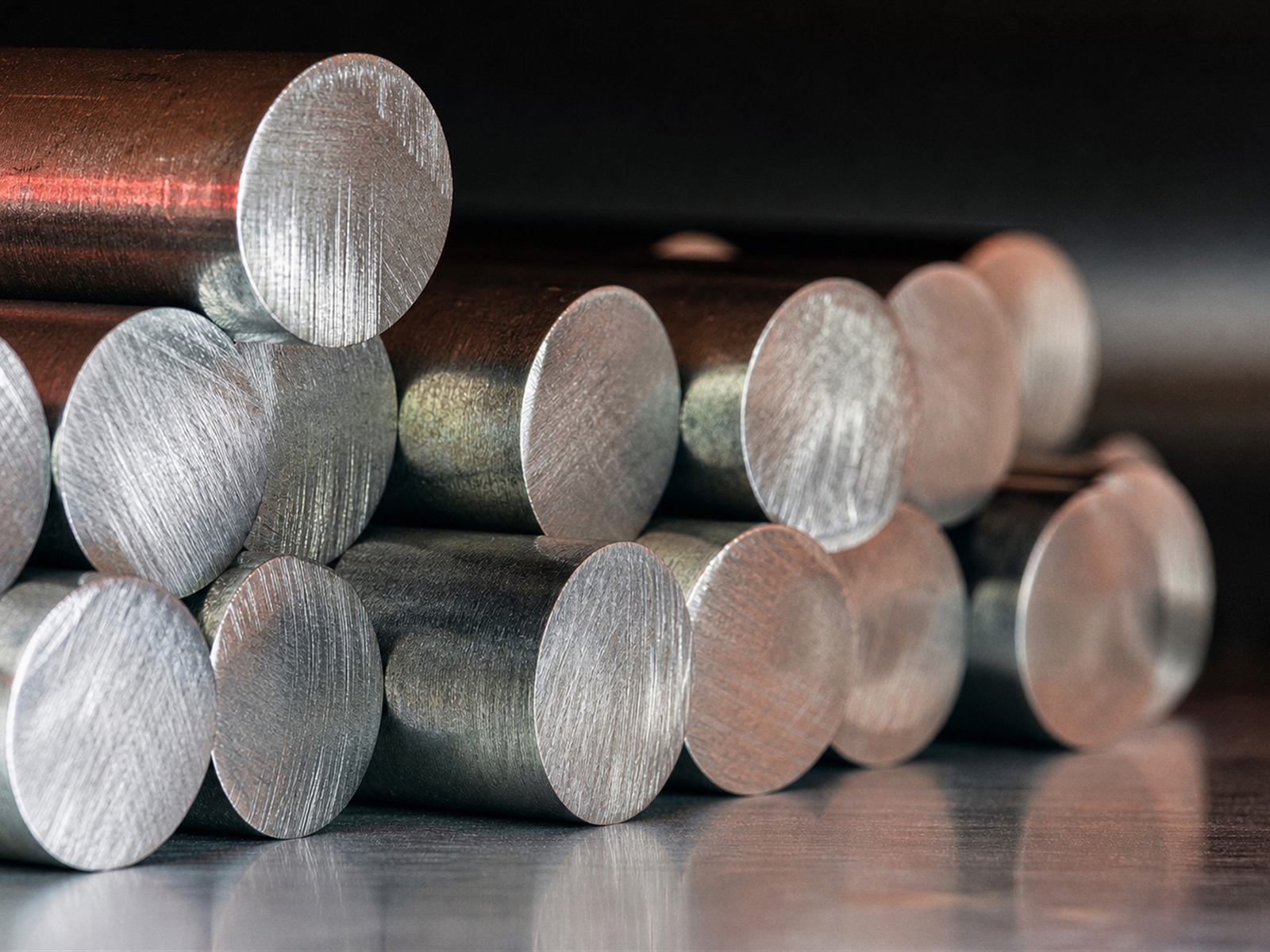
Cutting R60705 zirconium bar (UNS R60705, Zr-2.5Nb alloy) is not a casual operation. This zirconium-niobium alloy has a nominal niobium content of approximately 2.5%, offering higher strength than commercially pure zirconium and excellent corrosion resistance, and it is used mainly in chemical corrosion-resistant equipment, heat exchangers, and nuclear-industry related components. Because of its relatively low thermal conductivity and high chemical reactivity under high-temperature processing conditions, cutting is prone to localized overheating, surface oxidation, hydrogen-related risks, residual stress accumulation, and the risk of zirconium chip ignition. To minimize material damage, tool selection, cooling and lubrication, cutting parameters, and cut-face post-processing must be rationally controlled according to the damage mechanisms of the different processes, including sawing, turning, abrasive cutting, and wire EDM.
1. Understanding the Material Characteristics of R60705 Zirconium Bar Is a Prerequisite for Correct Cutting
(1) The Dual Challenge of High Strength and Low Thermal Conductivity
R60705 has a tensile strength higher than that of commercially pure zirconium R60702, while its thermal conductivity is typically about 17 W/m·K, markedly lower than the typical value of pure zirconium. Cutting heat is concentrated in the cutting zone and dissipates slowly, readily forming localized high temperatures. 200℃ is not a strict oxidation onset temperature, and brief exposure to 200℃ cannot be equated with severe oxidation of the material. The actual degree of oxidation depends on factors such as temperature, duration, surface condition, and surrounding atmosphere. During processing, sustained localized high temperatures should be avoided, and in particular, pronounced blue, gray, or black oxidation discoloration on the cut surface must be prevented. For fine zirconium chips and powder, the ignition risk in air also merits special attention.
(2) Reactivity of Zirconium and Hydrogen-Related Risks
Zirconium is highly sensitive to hydrogen. During cutting, attention should be given to high-temperature processing, pickling, cleaning, and other steps that may introduce hydrogen. Hydrogen that enters zirconium may form hydrides, affecting the material’s ductility and fracture behavior. It should be noted that this does not mean the use of water-based cutting fluid in ordinary mechanical cutting will necessarily cause significant hydrogen pickup. The actual risk is related to factors such as cutting fluid composition, processing temperature, contact time, and subsequent surface treatment. For applications with strict requirements on hydrogen content or surface cleanliness, verified cooling and cleaning processes should be preferred.
(3) The Tendency Toward Work Hardening Cannot Be Ignored
R60705 exhibits a certain degree of work hardening during cutting. Excessively slow feed rates and continued machining with a dull tool both increase friction and localized hardening in the cutting zone, accelerating tool wear and potentially increasing residual stress in the cut cross-section. Commercially pure zirconium R60702 likewise has a non-negligible work-hardening tendency and should not simply be assumed to have a low one.
Property | R60705 (Zr-2.5Nb) | Commercially Pure Zirconium R60702 | Remarks |
Tensile Strength (MPa) | ≥550 | ≥380 | R60705 has higher strength |
Thermal Conductivity (W/m·K) | Approx. 17 | Approx. 22 | Lower for R60705; poorer heat dissipation |
Work Hardening Tendency | Moderately high | Moderate | Non-negligible for both materials |
Hydrogen Sensitivity | High | High | Cooling medium and processing method must be chosen with care |
Pronounced Oxidation Tendency | Pronounced under sustained high temperature | Pronounced under sustained high temperature | More critical above approx. 300℃; 200℃ is not a strict threshold |
Mechanical property requirements are related to the material condition and the applicable standard. As an example, ASTM B550/B550M sets a minimum tensile strength of 550 MPa for the corresponding R60705 bar.
2. Selection of Cutting Tools and Equipment
(1) Sawing: The Applicability Boundaries of Band Saws and Circular Saws
Band saws are common equipment at the cut-to-length stage and suit high-volume cutting of larger-diameter R60705 round bars. Bimetal band saw blades are commonly used, but the specific blade material and tooth pitch must be matched to the bar diameter, cross-section shape, and equipment conditions; a fixed TPI cannot simply cover all diameters. For solid round bar, a sufficient number of teeth should be engaged in the cut, while avoiding too fine a tooth pitch that causes poor chip evacuation or tooth binding. Large-diameter bars especially require attention to chip evacuation and cooling. Circular saws suit certain small-batch scenarios with higher cut-face quality requirements, but the blade must be kept sharp with adequate cooling.
(2) CNC Turning Cut-Off: The Preferred Method for Precision and Surface Quality
For R60705 zirconium bar with high cut-face accuracy requirements, CNC lathe cut-off is one of the recommended processes. Uncoated, positive-rake carbide tooling suitable for reactive metal machining is a preferred choice of tool material. The specific tool grade and geometry should be validated by trial cutting according to the tool manufacturer’s recommendations for zirconium and zirconium alloys. The cut-off blade must be kept sharp with geometry favorable to cutting and chip evacuation. Cut-off blade width should be selected according to bar diameter and machine rigidity to ensure smooth chip evacuation. Tool width, nose geometry, and the cut-off method should be determined in combination with bar diameter, machine rigidity, tool overhang, and cut-off depth, rather than specifying a uniform dimension independent of equipment conditions.
(3) Abrasive Wheel Cutting and Wire EDM in Special Situations
An angle grinder fitted with a metal cutting disc clearly conflicts with the safety requirement of “preventing sparks” and should not be recommended as a regular practice. If a small number of temporary on-site cut-offs is truly necessary, dedicated tools confirmed suitable for zirconium or other reactive metals should be used and operated in a controlled area; if the on-site specification requires avoiding sparks, angle-grinder type abrasive cutting equipment should not be used at all. Slow-feed wire EDM offers low macroscopic machining stress and high precision, but water-based dielectric fluid and machining conditions require consideration of hydrogen-related risks, and EDM may also produce a re-solidified layer and heat-affected zone that affect cut-face integrity. Unless the affected zone can subsequently be removed by machining or other verified surface treatment and the product requirements confirmed, wire EDM is not recommended as a routine cut-to-length method.
Cutting Method | Typical Equipment Diameter Capacity | Cut-Face Precision | Application Scenario | Key Risks and Considerations |
Band Saw | 20–200 mm | Moderate | High-volume cut-to-length | Match tooth pitch to bar diameter; maintain adequate cooling |
CNC Lathe Cut-Off | 10–100 mm | High | Cut-to-length prior to precision machining | Uncoated positive-rake tools, small nose radius |
Abrasive Wheel Cutting | 5–50 mm | Low to moderate | Occasional on-site cut-off | Fire risk from sparks and zirconium fines; generally not recommended |
Slow-Feed Wire EDM | 1–80 mm | Very high | Precision/complex cross-sections | Risks of hydrogen absorption and a re-solidified layer; post-processing required |
Note: The specific applicable range is affected by equipment capability, bar dimensions, tooling, and process conditions; the classification above is provided as a reference for process selection and does not represent a fixed material processing boundary.
3. Cooling Strategies and Lubrication Management
(1) Selection of Cutting Fluid Type
Zirconium alloys generally have good corrosion resistance, and chloride ions should not simply be equated with corrosion risk for R60705. The real concerns are the chemical stability of the cutting fluid at machining temperatures, the additive composition, and compatibility with subsequent cleaning and surface treatment. Verified water-soluble or fully synthetic cutting fluids are recommended, controlled at the concentration and usage range recommended by the supplier. For high-cleanliness or specialty applications, cutting fluids validated for material compatibility should be preferred, and unverified halogenated, sulfur-containing, or other reactive additive systems should be avoided. The pH should not be mechanically specified as a fixed range applicable to all products; it should be controlled within the supplier’s recommended range in conjunction with the specific cutting fluid type, dilution ratio, and on-site monitoring method.
(2) Cooling Methods
High-flow, continuous flood application is recommended to keep the tool-workpiece contact zone continuously covered by cutting fluid, rapidly carrying away cutting heat and promoting chip evacuation. Coolant flow rate should not be mechanically specified as a single value suitable for all equipment; it should be matched to the cutting method, bar diameter, cut width, tooling, and machine conditions. High-pressure cooling in itself generally helps control cutting temperature and does not necessarily cause thermal-shock microcracks; whether to use high-pressure delivery should be an engineering judgment based on the machine, tooling, material, and cut width.
(3) Risks of Dry Cutting and Contingency Measures
Dry cutting should be avoided for zirconium alloy cutting where possible. Dry cutting increases the temperature in the cutting zone, localized oxidation, and the ignition risk of fine zirconium chips; reducing speed and using intermittent feed alone cannot completely eliminate these risks. Short-duration dry cutting may be considered only under exceptional, controlled conditions where cutting fluid cannot be used, with strict chip evacuation, ventilation, and fire-prevention measures in place. For processes that may generate large quantities of fine chips or dust, verified dedicated machining and dust-collection solutions should be preferred. An infrared thermometer can serve only as a supplementary monitoring aid and cannot accurately reflect the instantaneous temperature of the cutting contact zone. If blue or black oxidation discoloration appears, it indicates significant heat input in the cutting zone, and the tool, cutting parameters, and cooling condition should be promptly checked.
4. Cutting Parameters and Cross-Section Quality Control
(1) Reference Ranges for Cutting Speed and Feed Rate
The following parameters serve only as starting references for turning cut-off of medium-diameter bars with uncoated positive-rake carbide tooling, adequate cooling, and good conditions: cutting speed Vc can be controlled at 30–60 m/min, and feed rate f maintained at 0.05–0.15 mm/r. In actual machining, adjustments should be made according to tool material, insert width, machine rigidity, bar diameter, and cooling effectiveness. These parameters should be understood as the starting range for trial cutting rather than a fixed process applicable to all R60705 bars and equipment. In production, they should be progressively optimized through trial cuts. Band saw blade speed should likewise be determined according to the blade manufacturer’s recommended values for zirconium alloys. Recommended speeds can differ significantly with blade material, tooth pitch, and equipment conditions, so a single blade speed should not be used as a universal parameter for all sawing conditions.
(2) Cross-Section Post-Processing: Deburring and Necessary Surface Treatment
After cutting, burrs and small torn zones are usually present at the cut-face edges, and should be removed using clean tools suited to zirconium alloys or verified abrasives. For high-cleanliness applications, abrasive tools shared with iron-based materials that could cause cross-contamination should be avoided. For parts with high corrosion resistance requirements, the cut faces may be cleaned and, where necessary, surface-treated after deburring according to product requirements. A 10–20% dilute nitric acid solution alone cannot reliably remove the heat-affected layer of the cut, nor should it be treated as a universal passivation method. Zirconium alloy pickling may use nitric acid-HF systems, but the specific ratio, time, and temperature must be performed strictly according to a verified process card. Because HF is a high-hazard corrosive medium, the specific solution ratio should not simply be adopted as a generic blog parameter.
(3) Finished Product Inspection
For high-end applications, such as chemical corrosion-resistant equipment, nuclear-industry related components, and heat exchanger parts, the cut faces of R60705 zirconium bar should undergo visual inspection and dimensional measurement, supplemented where necessary by dye penetrant testing (PT) to check for open surface defects on the cut face. If notable oxidation, cracks, abnormal discoloration, or mechanical damage occurs during cutting, subsequent machining and the necessary material testing should confirm that the affected zone has been removed.
Process Parameter | Reference Range/Conditions | Risk When Exceeded |
Turning Speed Vc | 30–60 m/min, uncoated K-class carbide, adequate cooling | Too high: thermal damage; too low: work hardening |
Feed Rate f | 0.05–0.15 mm/r | Too high: rough cut face; too low: increased frictional heat |
Band Saw Blade Speed | 40–60 m/min, bimetal blade, suitable tooth pitch, for reference only | If mismatched: chip clogging, overheating, tooth wear |
Coolant Supply | Match to cutting method, bar diameter, and cut width; maintain continuous delivery to the contact zone | If insufficient: oxidation discoloration, risk of microcracks |
Pickling Solution | HNO₃-HF mixture, controlled per the process card | Improper ratio or time: over-etching or hydrogen absorption |
5. Safety Operating Procedures
(1) Collection and Disposal of Zirconium Chips
Zirconium chips generated by cutting must not be mixed with iron or aluminum chips; they should be collected separately and stored and disposed of in accordance with the material supplier’s SDS, the company’s EHS procedures, and local regulations. For fine zirconium chips and powder, large accumulations, heat buildup, and hazardous environments where gas could accumulate should be avoided. Wet zirconium chips should not be casually spread out to dry or stored in enclosed containers without understanding their safety status. The specific collection containers and disposal methods should be determined according to chip form, liquid content, and the on-site safety procedures.
(2) Personal Protective Equipment for Operators
Operators should wear work clothing, splash-proof safety goggles, and appropriate cut-resistant protective gloves that meet the on-site risk requirements. Cutting work must not be performed in flammable fiber clothing, and the personal protective requirements specified by rotating equipment manufacturers must be followed. The work site should be equipped with fire-extinguishing facilities suitable for metal fires based on the risk assessment and the company’s fire procedures. Water-based extinguishing equipment should not be used directly on burning zirconium chips; the specific extinguishing agent should be determined according to the on-site safety procedures, SDS, and fire protection requirements.
(3) Work Area Cleanliness and Ventilation
Cutting work surfaces should be kept clean, with accumulated metal chips removed regularly. The work area should be equipped with ventilation and dust-collection measures matched to the machining process to prevent long-term accumulation of fine metal particles. After cutting is complete, the workbench should be cleaned promptly, and residual zirconium chips must not be left near heat-generating equipment, spark sources, or other potential ignition sources.
6. Conclusion
The essence of cutting R60705 zirconium bar lies in the coordinated management of “heat control, chemistry control, and stress control.” Different cutting methods have different damage mechanisms: sawing and turning involve mainly mechanical shearing and frictional heat; abrasive cutting is additionally accompanied by abrasive and spark risks; and wire EDM involves hydrogen-related risks and a re-solidified layer. Well-cooled turning cut-off or properly matched band saw cut-to-length should be preferred, while abrasive wheel cutting and wire EDM should be carefully evaluated. Only with the right tool, cooling, and parameters, together with sound cut-face post-processing and safety management, can the corrosion resistance and mechanical integrity of each section of R60705 bar be preserved as much as possible.
FAQ
(1) Q1: Does a Blue or Black Oxide Layer on the Cut Face of an R60705 Zirconium Bar Affect Subsequent Use?
A blue or black oxide layer on the cut face indicates high localized heat input during cutting and that notable oxidation has occurred. The surface condition of this zone may be affected. We recommend first removing the affected zone by machining and then performing subsequent surface treatment and inspection according to the product requirements. Whether the material is damaged cannot be judged solely by “exceeding 200℃,” because the actual degree of oxidation is also related to temperature duration, atmosphere, and surface condition.
(2) Q2: Can a Standard Stainless Steel Cutting Disc Be Used to Cut R60705 Zirconium Bars?
A standard stainless steel cutting disc is not recommended as a routine cutting tool for R60705 zirconium bar. Abrasive wheel cutting may generate sparks, fine zirconium chips, and high localized heat input, so on-site safety risks must be specially assessed. Different processing methods should be distinguished: for turning cut-off, a sharp carbide cut-off tool suited to zirconium and zirconium alloys should be selected; for saw cut-to-length, a saw blade suited to zirconium alloys should be selected, with a proper tooth pitch, blade speed, and cooling conditions.
(3) Q3: Does an R60705 Zirconium Bar Need to Be Annealed Immediately After Cutting?
General cut-to-length cutting does not require dedicated annealing as a result of the cutting itself. If improper parameters lead to high residual stress, or subsequent operations have special requirements for the material condition, a heat treatment process can be developed according to the material condition, bar size, and final product requirements. It is not recommended to directly apply a uniform annealing temperature and holding time. For high-requirement R60705 products, processing should follow the applicable material specifications and verified heat treatment processes.
Contact Us
Looking for a reliable Zirconium R60705 Rod manufacturer, Zr705 zirconium bar supplier, or R60705 zirconium alloy factory? Titanium Valley (Baoji Titanium Valley Nickel Zirconium Material Precision Processing Co., Ltd.) supplies R60705 zirconium bar per ASTM B550/B550M, supports custom sizes and surface specifications, and can provide the corresponding material quality documents and inspection reports per order requirements. Please contact us at: sales@titaniumvalleys.com
References
- ASTM B550/B550M, Standard Specification for Zirconium and Zirconium Alloy Forgings, Plate, Sheet, and Bar for Nuclear Application.
- ASTM International, material requirements and mechanical property specifications for R60705 zirconium-niobium alloy.
- Technical references related to the processing and safety of zirconium and zirconium alloys, including professional reference materials in the materials and processing fields.
- Safety data sheets (SDS) and manufacturer technical recommendations related to zirconium and zirconium alloy processing, cutting fluid use, and metal chip handling.