
How Do Gr12 Titanium Wire and Stainless Steel Wire Compare in Performance?
- GR12 Titanium Wire
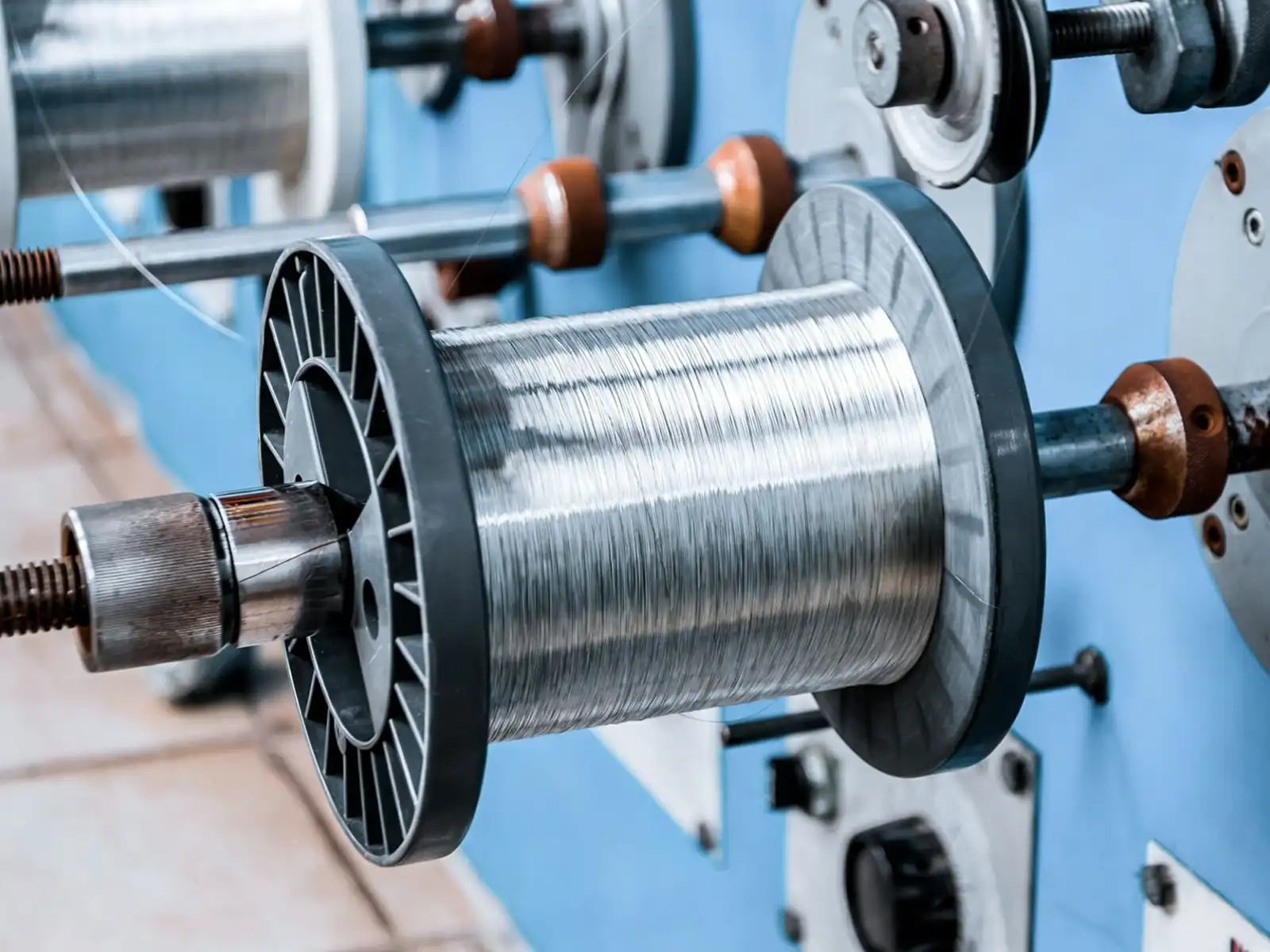
In chemical, marine engineering, and oil & gas pipeline applications, a wrong material selection often means equipment perforation, production shutdown for remediation, and even major safety incidents. Gr12 titanium wire (Ti-0.3Mo-0.8Ni) and stainless steel wire (such as 316L) have long been listed side by side on engineers’ candidate lists. Their prices differ significantly, and their performance does not compete on the same dimensions. This article systematically breaks down the essential differences between the two across four dimensions—corrosion resistance, mechanical performance, workability, and lifecycle cost—to help purchasing engineers and material decision-makers make more rational and safer selection decisions in complex service conditions.
1. Corrosion Resistance: Differences in Chloride and Reducing Media
(1) Comparison of Chloride Pitting
The critical pitting temperature (CPT) of 316L stainless steel in chloride environments is significantly affected by the test standard, chloride concentration, pH, and surface condition. Under common standards such as ASTM G48, in test conditions such as 6% FeCl₃, the CPT of 316L is commonly found in the 10–25℃ range, but actual service conditions may yield lower or higher values, and a single number should not be cited without reference to the test conditions. Gr12 titanium wire benefits from the synergistic alloying of Mo (0.20%–0.40%) and Ni (0.60%–0.90%), which improves passivation film stability and repassivation ability, giving it markedly superior pitting resistance to 316L in chloride-containing environments.
(2) Crevice Corrosion Resistance
Crevice corrosion is an insidious threat in structures such as heat exchangers and flange joint faces. Gr12 titanium wire has better crevice corrosion resistance than commercially pure titanium grades Grade 1/Grade 2 and is also clearly superior to 316L. The synergistic effect of Mo and Ni is mainly expressed in improving passivation/repassivation behavior in occluded zones, rather than simply “suppressing the local acidification process within the crevice.” This advantage gives Gr12 higher engineering reliability in chloride-containing crevice service conditions.
(3) Performance in Reducing Acid Media
In dilute, moderate-to-low-temperature hydrochloric acid and sulfuric acid, as well as media containing H₂S/CO₂, 316L stainless steel may undergo significant uniform corrosion or stress corrosion cracking (SCC), while Gr12 titanium wire generally performs better. It should be noted, however, that titanium alloys are not incorrodible in high-temperature, high-concentration reducing acids; corrosion may still be significant as hydrochloric and sulfuric acid concentration and temperature increase. Therefore, material selection for this scenario must be based on the specific medium concentration, temperature, and corrosion test data.
2. Table 1: Comparison of corrosion resistance between Gr12 titanium wire and 316L stainless steel wire
Corrosion type | 316L stainless steel wire | Gr12 titanium wire (Ti-0.3Mo-0.8Ni) |
Chloride pitting | CPT affected by standard/medium conditions; commonly about 10–25℃, moderate resistance | Significantly higher pitting resistance |
Crevice corrosion | Relatively sensitive; high structural design requirements | Excellent, superior to 316L; advantageous over Grade 1/Grade 2 in chloride-containing crevice service |
Reducing acids (HCl, H₂SO₄) | Prone to uniform corrosion or SCC | Good in dilute solutions at moderate-to-low temperatures; may corrode at high temperatures and concentrations |
Seawater / salt-spray environments | Risk of localized corrosion during long-term service | Excellent, comparable to commercially pure titanium, superior to stainless steel |
Overall high-temperature corrosion performance | Corrosion rate may accelerate noticeably at high temperature | Good corrosion resistance within a certain temperature range; high-temperature strongly reducing acids require evaluation |
3. Mechanical Properties: Strength, Ductility, and Temperature Response
(1) Comparison of Strength Ranges
The strength of Gr12 titanium wire varies greatly with the wire condition. For annealed-condition wire, the minimum tensile strength is typically about 483 MPa and the minimum yield strength about 345 MPa; cold-drawn-condition wire can reach a tensile strength of 690 MPa or more, depending on the cross-sectional reduction ratio and intermediate heat treatment. Therefore, “≥690 MPa” should not be treated as a general minimum for all Gr12 wire. Annealed (soft) 316L stainless steel wire typically has a tensile strength of about 515–690 MPa, and cold-drawn wire can exceed this range. Gr12 has a density of 4.51 g/cm³, far below the 7.98 g/cm³ of 316L, giving it a clear specific-strength advantage.
(2) Ductility and Workability
Gr12 titanium wire offers excellent elongation and reduction of area, supporting multi-pass cold drawing and precision straightening without wire breakage. This is closely related to its drawing—intermediate annealing—straightening process. While stainless steel wire can also be drawn, it work-hardens more rapidly at large deformations and is more sensitive to die wear and lubricant contamination.
(3) High-Temperature Mechanical Stability
In the 300–500℃ range, 316L may show a noticeable decline in strength. Gr12 titanium alloy often shows good strength retention in this temperature range, but its creep resistance is significantly affected by load, temperature, and duration and should not be simply asserted to be superior to all austenitic stainless steels. It should be evaluated against specific temperature and loading conditions.
4. Table 2: Comparison of mechanical and processing properties between Gr12 titanium wire and 316L stainless steel wire
Property | 316L stainless steel wire | Gr12 titanium wire (Ti-0.3Mo-0.8Ni) |
Density (g/cm³) | Approx. 7.98 | 4.51 |
Typical tensile strength (MPa) | Approx. 515–690 annealed; higher for cold drawn | ≥483 annealed; can be ≥690 cold drawn |
Specific strength | Moderate | High (clear advantage) |
High-temperature mechanical stability | Relatively noticeable thermal softening at moderate-to-high temperature | Good strength retention at moderate temperatures; creep performance requires condition evaluation |
Weldability | Good; low-carbon design reduces intergranular corrosion sensitization, but pitting/crevice corrosion/SCC remain the main concerns in chloride-containing media | Good; inert gas protection required; generally no post-weld heat treatment, stress relief may be needed for thick sections/high restraint |
Work hardening rate | Relatively high | Relatively low, good ductility, less prone to wire breakage |
5. Weldability and Manufacturing Suitability
(1) Comparison of Welding Processes
Gr12 titanium wire is suitable for mainstream titanium equipment manufacturing processes such as TIG and plasma arc welding, but welding must be performed under full inert gas (argon) protection to prevent high-temperature oxidation contamination. The weld can retain the corrosion resistance of the base metal. Whether post-weld stress relief is performed depends on thickness, restraint, and service conditions; it is generally not required for thin-wall or low-restraint conventional joints, but may be needed for thick sections, high restraint, or special corrosive service conditions. 316L uses a low-carbon design, so the risk of intergranular corrosion sensitization after welding is low; however, in chloride-containing media, welded joints may still develop pitting, crevice corrosion, and stress corrosion cracking, which must be carefully controlled in design and manufacture.
(2) Flexibility of Surface Treatments
Gr12 titanium wire can be supplied with a wide variety of surface treatments—pickling, bright, grit blasting, wire drawing, passivation, black oxide, and anodizing—covering the full range from general industrial parts to high-end precision components. Stainless steel wire also offers a variety of surface treatments, but its passivation layer maintenance and electrochemical stability are less durable than those of titanium alloys.
(3) Dimensional Accuracy and Batch Consistency
Gr12 titanium wire is produced on industrial continuous rolling lines, with diameters covering φ0.1–φ6.5 mm and a straightness of ≤ 2/1000. Batch management is implemented throughout production, chemical composition and mechanical properties are traceable, and each batch is accompanied by an inspection report.
6. Lifecycle Cost: Initial Price ≠ Total Cost
(1) Maintenance Frequency and Replacement Costs
At high chloride concentrations or under severe corrosive conditions, 316L equipment may fail by localized corrosion within a short period, requiring frequent inspection and repair or replacement. Gr12 generally has a longer service life under equivalent conditions. The degree of life extension is affected by the medium, temperature, flow velocity, and structural design and should not be given as a blanket fixed multiple; it must be evaluated against the specific service conditions.
(2) Safety Compliance and Acceptance Requirements
In highly regulated industries such as chemical, marine, and oil & gas, material batch reports are a hard requirement for equipment acceptance and safety compliance. Gr12 titanium wire generally follows international standards such as ASTM B863 and ASTM B348, with traceable test data per batch, which facilitates project acceptance. If substitute materials with incomplete quality documentation are used, the rectification costs and schedule delays often far exceed the price difference of upgrading the material.
(3) System-Level Benefits of Weight Reduction
In weight-sensitive scenarios such as aerospace and marine equipment, a Gr12 titanium wire density of about 56% that of stainless steel means that the same load-bearing structure can be nearly halved in weight. This weight-saving benefit cascades through the system design chain—lighter structural components, smaller support frames, and lower operating energy consumption—comprehensively reducing total project investment.
7. Table 3: Comparison of lifecycle cost factors between Gr12 titanium wire and 316L stainless steel wire
Cost factor | 316L stainless steel wire | Gr12 titanium wire |
Raw material unit price | Lower | Higher |
Replacement frequency after corrosion failure | May fail relatively quickly in severe conditions | Generally longer life under equivalent conditions |
Downtime and maintenance losses | Higher | Lower |
Compliance certification and quality documents | Depends on the supplier | Per ASTM B863/B348 and other standards; batch traceable |
System-level weight-saving benefit | None | Significant (≈44% weight reduction) |
Overall lifecycle cost | High hidden costs in severe conditions | Better overall cost for long-term use |
8. Conclusion
Gr12 titanium wire is not a simple substitute for stainless steel; it is a precise material selection for the combined requirements of severe corrosion × moderate-to-high strength × lifecycle reliability. In scenarios with high chloride concentrations, wide temperature fluctuations, and stringent compliance requirements, its overall competitiveness significantly exceeds that of 316L stainless steel wire. However, all judgments of corrosion resistance, strength, and service life should be based on specific medium conditions, temperature, structural state, and test data, avoiding absolute conclusions divorced from service conditions.
FAQ
(1) Q1: Between Gr12 titanium wire and 316L stainless steel wire, which has the longer service life in seawater environments?
In chloride-containing seawater, Gr12 titanium wire relies on the stable passivation film formed through Mo–Ni alloying to deliver markedly better pitting and crevice corrosion resistance than 316L stainless steel and generally has a longer service life. However, the specific life should be evaluated based on actual seawater temperature, flow velocity, biofouling, and structural design; blanket multiples should not be given.
(2) Q2: Does welding Gr12 titanium wire require special protection measures, and how does its complexity compare with welding stainless steel?
Gr12 titanium wire must be welded under full inert gas (argon) protection to prevent oxidation contamination at high temperature. Compared with stainless steel, the process requirements are stricter, but the Gr12 weld fully retains the corrosion resistance of the base metal. Post-weld heat treatment is generally not required, but stress relief may be needed for thick sections, high restraint, or special corrosive service conditions.
(3) Q3: Is Gr12 titanium wire suitable for medical devices or precision electronics?
Gr12 titanium wire is non-magnetic, high-purity (vacuum melted with strict impurity control), moderate-to-high strength, and highly ductile, making it applicable to industrial and certain precision non-implant fields. For medical devices such as orthopedic ligature wire and spinal correction guidewires that may contact human tissue over the long term, dedicated titanium alloy grades that conform to surgical implant standards and have completed biological evaluation should be used; Gr12 is not a typical surgical implant grade.
9. Contact Titanium Valley—Professional Gr12 Titanium Wire Manufacturer and Supplier
Need sample testing, gauge customization, or a bulk purchase quotation? As a Gr12 titanium wire factory, Titanium Valley offers custom services in multiple gauges from φ0.1 to φ6.5 mm and a variety of surface conditions, with complete inspection reports. Please contact us at: sales@titaniumvalleys.com
References
- Zhang Xiyan, Zhao Yongqing, Bai Chenguang. Titanium Alloys and Applications. Beijing: Chemical Industry Press, 2005.
- Lu Shiying. Introduction to Stainless Steel. Beijing: Chemical Industry Press, 2004.
- ASTM International. ASTM B863-23. Standard Specification for Titanium and Titanium Alloy Wire. West Conshohocken, PA: ASTM International, 2023.
- ASTM International. ASTM A580/A580M-23. Standard Specification for Stainless Steel Wire. West Conshohocken, PA: ASTM International, 2023.