
Why Is Main Industrial Applications of UNS R60705 Zirconium Wire Important?
- UNS R60705 Zirconium Wire
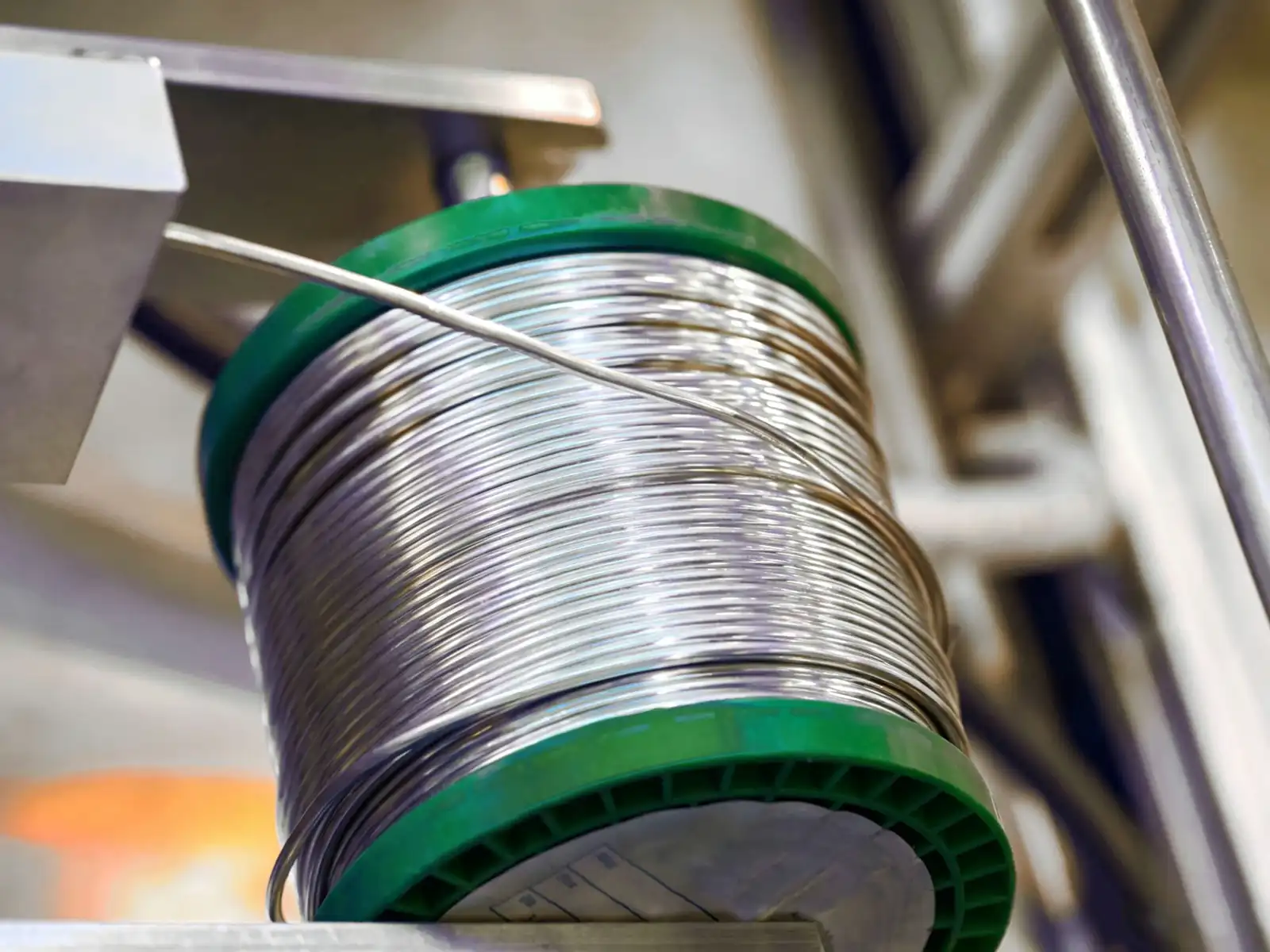
UNS R60705 zirconium wire (Zr705) is a high-performance zirconium-niobium alloy wire containing 2.0-3.0% niobium, widely used in extreme operating conditions in the nuclear power industry, chemical processing, medical devices, and aerospace. This material combines the excellent corrosion resistance of pure zirconium with the high mechanical strength provided by niobium reinforcement, enabling long-term stable service in strong acid, high-temperature, and high-stress environments. Compared to pure zirconium, R60705 zirconium wire has about 40% higher strength while maintaining excellent plasticity and weldability. Its corrosion resistance in media such as hydrochloric acid, wet chlorine, and organic acids far exceeds that of titanium alloys and stainless steel, making it particularly suitable for key components such as heat exchanger fasteners, reactor internal components, precision elastic elements, and medical guide wires, and it is an ideal choice for addressing material bottlenecks in high-end equipment.
1. Why Is Key Applications in the Nuclear Power Industry Important?
(1) What Should You Know About Reactor Internal Components and Fuel Assemblies?
R60705 zirconium alloy wire plays a crucial role in nuclear reactors. Due to zirconium’s very low thermal neutron absorption cross-section (only 0.18 barns), and the addition of niobium does not significantly affect this property, making this material the preferred choice for nuclear fuel assemblies. In pressurized water reactors and boiling water reactors, R60705 zirconium alloy wire is processed into grid springs, spacer grids, and support structures, which need to operate for several years in high-temperature and high-pressure water environments (about 320-350℃, 15MPa) without significant corrosion or hydrogen embrittlement.
(2) What Should You Know About Heat Exchange System Fasteners?
The heat exchangers of auxiliary systems in nuclear power plants typically handle cooling water containing trace amounts of chloride ions and dissolved oxygen. Traditional stainless steel fasteners are prone to stress corrosion cracking and pitting in this environment. Bolts, spring washers, and clamps made from R60705 zirconium wire can completely resist this type of localized corrosion, ensuring equipment sealing reliability. Zirconium wires with diameters of 2.0-4.0mm can be cold-headed into various fasteners, with a tensile strength of over 550 MPa, sufficient to meet structural load requirements.
(3) What Should You Know About Stability in Irradiated Environments?
In high radiation fields, materials undergo irradiation hardening and creep. The niobium element in R60705 alloy can refine grains and pin dislocations, effectively suppressing irradiation-induced dimensional changes and degradation of mechanical properties. Experimental data show that after fast neutron irradiation of 10²² n/cm² (E>1MeV), the material’s elongation still remains above 15%, far superior to ordinary zirconium. This allows elastic components made of zirconium wire to maintain stable clamping force throughout the entire fuel cycle.
Performance indicators | R60705 Zirconium Wire | Pure Zirconium R60702 | Stainless Steel 316L |
Tensile Strength (MPa) | 550-690 | 380-450 | 515-690 |
Corrosion resistance in 320℃ water | Excellent | Excellent | general |
Thermal neutron absorption cross section (barn) | ~0.20 | ~0.18 | ~2.5 |
Stress Corrosion Cracking Resistance | Extremely strong | Extremely strong | Medium |
2. Why Is Corrosion-resistant Applications in the Chemical and Petrochemical Fields Important?
(1) What Should You Know About Hydrochloric Acid and Wet Chlorine Process Unit?
The wet chlorine environment (chlorine gas containing water vapor) in the chlor-alkali industry and PVC production is extremely challenging for metallic materials. UNS R60705 Zirconium Wire shows almost no corrosion in a wet chlorine environment with hydrochloric acid concentrations ≤ 38% and temperatures ≤ 150℃, with an annual corrosion rate of less than 0.05 mm/year. Heating coils, agitator shaft sealing springs, and filter screen frames made from this material can have a service life of over 15 years, which is 3 to 5 times longer than that of titanium.
(2) What Should You Know About Organic Acid Production Equipment?
Organic acids such as acetic acid and formic acid are highly corrosive to most metals at high temperatures. Chemical companies use elastic sealing rings and corrugated compensators made of R60705 zirconium wire in distillation columns, condensers, and pump bodies, which can withstand long-term exposure to glacial acetic acid at 180℃. Fine zirconium wire with a diameter of 0.5-1.5 mm can also be woven into sensitive components of corrosion monitoring sensors, allowing real-time monitoring of equipment status.
(3) What Should You Know About High-purity System Contaminated by Chlorides?
In the production of pharmaceuticals, fine chemicals, and semiconductor materials, even trace amounts of metal ion precipitation can lead to product rejection. The dense oxide film (ZrO₂) formed on the surface of R60705 zirconium wire is extremely chemically inert and remains stable across a pH range of 1-14. Reactors, agitator blades, temperature sensor protective sleeves, and sampling probes made from this material can ensure ultra-high purity of process media, with metal contaminants controlled at the ppb level.
Application scenario | Medium conditions | Recommended wire diameter (mm) | Typical component |
Chlor-alkali electrolysis | Wet chlorine, ≤ 150℃ | 2.0-4.0 | Anode hooks, fasteners |
Acetic Acid Distillation | Glacial acetic acid, 180℃ | 0.8-2.0 | Sealing ring, spring |
High-purity pharmaceuticals | pH 2-13, 120℃ | 1.0-3.0 | Stirring paddle, sensor |
Storage and Transportation of Hydrochloric Acid | Concentrated hydrochloric acid, room temperature | 3.0-6.0 | Pipe supports, clamps |
3. Why Is Medical and Biotechnological Applications Important?
(1) How Should Interventional Therapy Guidewire and Stent?
Modern interventional cardiology and neurosurgical procedures rely on ultra-fine, high-strength guidewires. R60705 zirconium wires with diameters of 0.06-0.3mm, after special drawing and heat treatment, can achieve a tensile strength of over 800 MPa and excellent flexibility. These guidewires can navigate through tortuous blood vessels to reach lesions while maintaining sufficient pushability and torsional resistance. The biocompatibility of the zirconium alloy has been certified according to ISO 10993, and it does not trigger immune reactions or tissue necrosis when implanted in the human body.
(2) What Should You Know About Orthopedic Implant Processing?
Artificial joints, spinal internal fixation systems, and maxillofacial repair plates require materials with high strength, low modulus, and long-term corrosion resistance. The elastic modulus of R60705 zirconium wire (95 GPa) is between that of titanium alloy (110 GPa) and human bone (20 GPa), which can reduce stress shielding effects. By using laser welding or electron beam welding, zirconium wire can be processed into complex three-dimensional mesh structures to promote bone tissue ingrowth.
(3) What Should You Know About Surgical Instruments and Precision Components?
The elastic components in dental implant torque wrenches, ophthalmic microsurgery forceps, and neurosurgical micro-clamps require materials that are non-magnetic, resistant to repeated sterilization, and have a stable tactile feel. Torsion springs and clamping sheets made from R60705 zirconium wire can withstand high-pressure steam sterilization at 134℃ over 500 times without failure. Their completely non-magnetic property also allows the instruments to be used in magnetic resonance environments, preventing imaging artifacts and equipment damage.
4. What Should You Know About Aerospace and Defense Equipment?
(1) What Should You Know About High-temperature Components of Aircraft Engines?
Although zirconium alloys are traditionally not used for high-temperature load-bearing structures, R60705 zirconium wire demonstrates unique value under specific conditions. In aircraft engine fuel and hydraulic systems, filter skeletons and sensor springs made from zirconium wire need to withstand both oxidation and corrosion from high-temperature fuel (150-200℃). The material’s oxidation resistance at these temperatures is superior to that of titanium alloys, and it does not react with sulfides in aviation fuel.
(2) What Should You Know About Rocket Propellant Tank Welding?
Propellants used in liquid rockets, such as unsymmetrical dimethylhydrazine and nitrogen tetroxide, are highly corrosive. The heat-affected zone of the tank weld joint is prone to becoming a weak point for corrosion. Using R60705 zirconium wire as the filler material for argon arc welding, the corrosion resistance of the weld is comparable to that of the base metal, and the strength coefficient of the welded joint reaches over 0.92. Welding wires with a diameter of 1.6-2.4 mm have stable feeding, enabling automatic high-quality welding.
(3) What Should You Know About Corrosion-resistant Fasteners for Naval Equipment?
Shipborne equipment is exposed to a marine atmosphere containing salt spray for long periods, and traditional fasteners have prominent problems with crevice corrosion and galvanic corrosion. Bolts and rivets cold-headed from R60705 zirconium wire maintain their original luster even after more than 10 years of service in seawater splash zones. Their potential difference with titanium and aluminum alloys is small (about 100 mV), which can effectively inhibit galvanic corrosion between dissimilar metals. Precision elastic components in submarine sonar equipment also commonly use this material to ensure long-term stability and non-magnetic properties.
Equipment Type | Application site | Key performance requirements | R60705 Advantages |
Aero engine | Fuel filter | High-temperature fuel corrosion | Stable at 200℃ for long-term |
Rocket storage tank | Weld joint | Propellant-resistant | Weld and base metal have the same performance |
Shipborne equipment | fastener | Resistant to seawater and salt spray | More than 10 years of lifespan |
Underwater sonar | Elastic element | Non-magnetic Corrosion-resistant | Completely non-magnetic response |
5. Why Is Emerging Applications and Technology Trends Important?
(1) What Should You Know About Hydrogen Energy Equipment Sealing Materials?
The rapid development of the hydrogen energy industry has posed new challenges for materials. Hydrogen embrittlement under high-pressure hydrogen environments limits the application of many traditional materials. R60705 zirconium wire has low hydrogen solubility, and the addition of niobium increases the density of hydrogen traps, significantly reducing the tendency for hydrogen-induced cracking. In 70 MPa hydrogen compressors and high-pressure valves at hydrogen refueling stations, C-shaped seals and bellows expansion joints made from zirconium wire exhibit excellent sealing reliability and long service life.
(2) What Should You Know About Hydrometallurgical Extraction Equipment?
Wet metallurgical processes such as lithium battery recycling and rare earth extraction use large amounts of strong acids, alkalis, and mixed organic solvents. Extraction tank stirrer shafts, spray heads, and liquid distributors made of R60705 zirconium wire can resist both chemical corrosion and particle wear. In a sulfuric acid-hydrochloric acid mixed acid environment (pH < 0), the maintenance cycle of zirconium wire equipment is more than five times that of titanium equipment, significantly reducing production costs.
(3) What Should You Know About 3D Printing and Additive Manufacturing?
Laser powder bed fusion and arc additive manufacturing technologies have opened new avenues for the application of zirconium alloys. Using R60705 zirconium wire as the wire feed material for arc additive manufacturing, corrosion-resistant linings for large, complex chemical equipment and worn parts can be directly fabricated. This technology avoids the coarse microstructure issues associated with traditional casting, and the deposited material, after heat treatment, achieves strength and ductility close to that of wrought material. The high-precision zirconium wire from Baoji Titanium Valley (tolerance ± 0.01mm) is especially suitable for automated additive manufacturing systems.
(4) What Should You Know About Electrochemical Sensor Electrode?
Environmental monitoring and industrial process analysis require electrochemical sensors that can operate stably for long periods in harsh media. R60705 zirconium wire, after surface activation treatment, can serve as the substrate material for pH electrodes, dissolved oxygen sensors, and heavy metal detection electrodes. Its wide electrochemical window (-1.5V to 1.0V vs. SCE) and extremely low background current give the sensor high sensitivity and long calibration intervals. In wastewater treatment and flue gas desulfurization monitoring, the service life of zirconium wire electrodes is more than ten times that of glass electrodes.
6. What Is the Conclusion?
UNS R60705 zirconium wire, with its niobium-strengthened high strength, excellent corrosion resistance, and superior biocompatibility, has become an indispensable key material in high-end fields such as nuclear power, chemical engineering, medical, and aerospace. With the development of emerging industries like hydrogen energy, hydrometallurgy, and additive manufacturing, the application scope of this high-performance alloy wire continues to expand. Choosing high-quality zirconium wire that meets the ASTM B551 standard, combined with advanced processing technology, can significantly enhance equipment reliability and reduce total lifecycle costs.
FAQ
Q1: What are the performance differences between R60705 zirconium wire and pure zirconium R60702?
R60705, by adding 2.0-3.0% niobium, increases tensile strength to 550-690 MPa, about 40% higher than that of pure zirconium R60702, making it more suitable for high-stress conditions. Both have similar corrosion resistance, but R60705 maintains excellent corrosion resistance while offering higher mechanical strength and creep resistance, making it particularly suitable for manufacturing corrosion-resistant components that need to bear structural loads.
Q2: Why does the nuclear power industry prioritize zirconium alloys over titanium alloys?
Zirconium’s thermal neutron absorption cross-section is only 0.18 barns, far lower than titanium’s 5.6 barns and stainless steel’s 2.5 barns, so its use in reactors does not significantly consume neutrons, ensuring nuclear reaction efficiency. Zirconium alloys also have better corrosion resistance and radiation resistance in high-temperature, high-pressure water compared to titanium alloys. These unique advantages make it the preferred choice for nuclear fuel cladding and in-core components.
Q3: How is the biological safety of small-diameter R60705 zirconium wire ensured in the medical field?
Medical-grade R60705 zirconium wire strictly controls impurity content (iron ≤ 0.20%, carbon ≤ 0.05%), and the surface is treated with electrolytic polishing and passivation to form a stable zirconium oxide protective layer. The material has passed the full set of ISO 10993 biocompatibility tests, including cytotoxicity, sensitization, and implantation reaction assessments, confirming no adverse effects on human tissues. It can be used for long-term implantation or blood contact applications.
How Should Looking for Reliable UNS R60705 Zirconium Wire Suppliers?
Baoji Titanium Valley Titanium-Nickel-Zirconium Materials Processing Co., Ltd. has a Danieli full-process production line and 40 years of experience in processing rare metals. We can provide R60705 zirconium wire in full specifications of φ0.06-10.0mm, with an annual production capacity of 5, 000 tons. Our products meet the ASTM B551 international standard, come with a complete 3.1 quality certificate, and support customized processing and fast global delivery. Contact us now to obtain technical datasheets and quotations: sales@titaniumvalleys.com
References
- Zhao Wenjin, Li Qiang. Progress in the Application of Zirconium Alloys in the Nuclear Power Industry. Rare Metal Materials and Engineering, 2021, 50(3): 1125-1133.
- Motta A.T., Couet A., Comstock R.J. Corrosion of zirconium alloys for nuclear fuel cladding. Annual Review of Materials Research, 2015, Vol. 45: pp. 311-343.
- Zhang Jianjun, Wang Haizhou. Research Status and Development Trends of Medical Zirconium Alloys. The Chinese Journal of Nonferrous Metals, 2019, 29(8): 1701-1712.
- Cox B. Some Thoughts on the Corrosion Mechanism of Zirconium Alloys in Reactors [J]. Journal of Nuclear Materials, 2005, 336(2-3): 331-368.