
What Is Zirconium R60705 Rod? What Are Its Main Industrial Applications?
- Zirconium R60705 Rod
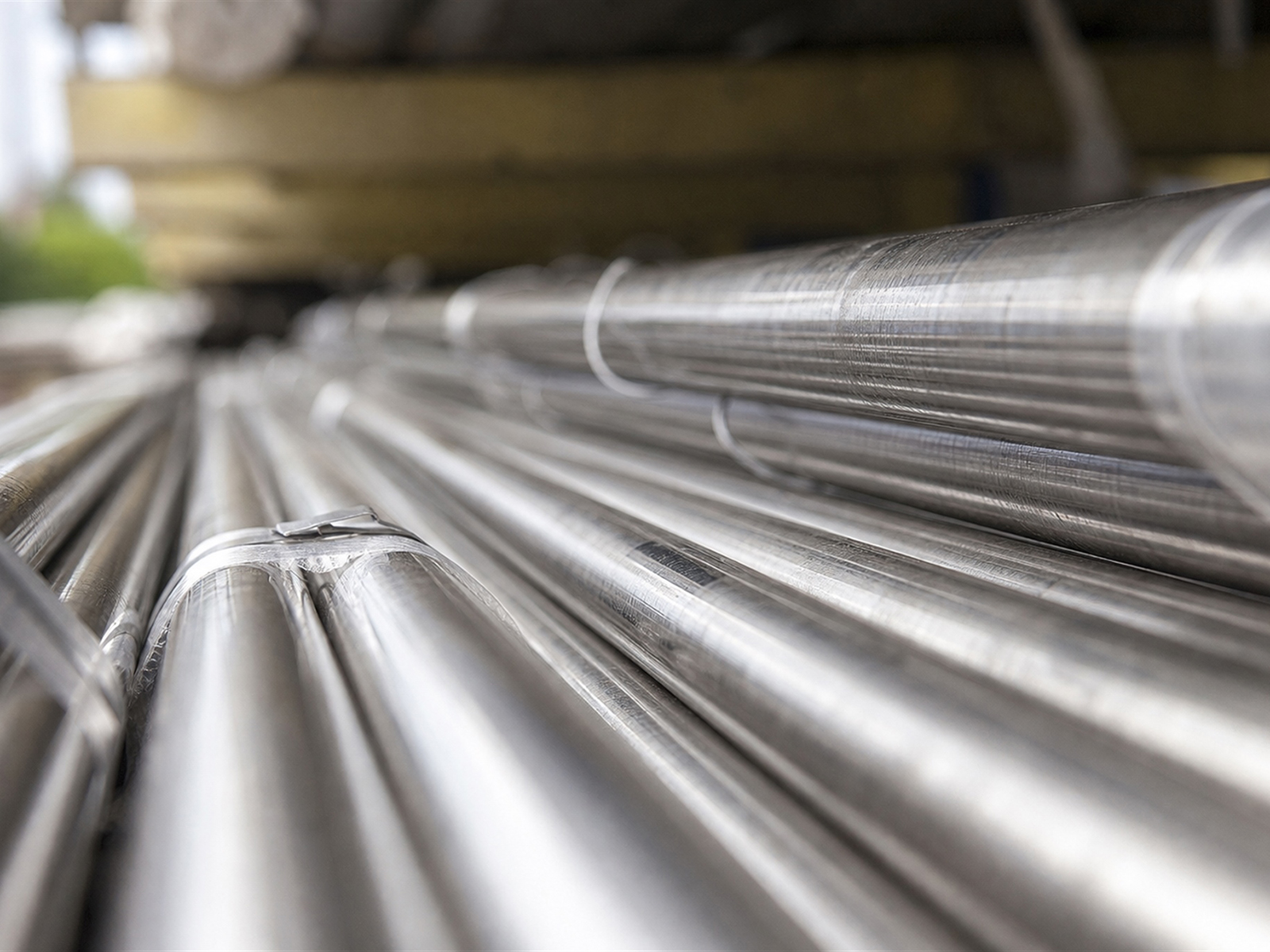
Zirconium R60705 Rod is a high-performance zirconium-niobium alloy solid rod based on the UNS R60705 standard, containing approximately 2.5% niobium and compliant with ASTM B550 specifications. This alloy optimizes the material’s microstructure by adding niobium, enhancing mechanical strength and creep resistance while maintaining the excellent corrosion resistance of zirconium metal. R60705 rods are widely used in highly corrosive environments such as chemical, petrochemical, nuclear power, and marine engineering fields, performing exceptionally well in strong acidic media (hydrochloric acid, sulfuric acid), high-chloride environments, seawater desalination systems, and high-temperature corrosive conditions. Compared with pure zirconium R60702, this alloy has significant advantages in high-stress structural components, long-shaft parts, and pressure vessels, making it a key choice for addressing material failure under extreme conditions.
1. What Should You Know About Material Properties and Composition of Zirconium R60705 Rod?
(1) What Should You Know About Core Alloy Composition and Strengthening Mechanism?
The chemical composition of Zirconium R60705 alloy is precisely designed, with the total content of zirconium and hafnium making up the remainder, and the niobium content controlled within the range of 2.0-3.0% (typical value 2.5%), which is its key strengthening element. The hafnium content is limited to below 4.5%, and impurity elements such as iron, carbon, oxygen, nitrogen, and hydrogen are strictly controlled. The alloying effect of niobium can improve the structural stability of the zirconium matrix, enhancing the material’s strength and creep resistance. Compared with pure zirconium R60702, R60705 exhibits better structural stability under high stress and complex corrosive environments.
(2) What Should You Know About Microscopic Tissue and Metallographic Structure?
After vacuum double remelting and homogenization heat treatment, R60705 bars exhibit a uniform α-phase matrix structure, with niobium elements evenly distributed in the zirconium matrix. The grain size remains uniform after heat treatment and processing optimization, which helps improve the overall material performance. Cold drawing finishing and vacuum annealing processes further optimize the grain boundary structure, eliminate internal stress, and give the material good plasticity and toughness. Metallographic examination shows no abnormal precipitates or inclusions in the structure, and the purity reaches the highest industrial standards, which is crucial for high-purity applications such as pharmaceuticals and semiconductors.
(3) What Should You Know About Physical and Mechanical Performance Parameters?
The density of R60705 bar is approximately 6.6 g/cm³, with a melting point as high as 1855℃. It has a relatively low thermal expansion coefficient (5.9×10⁻⁶/K) and moderate thermal conductivity. At room temperature, its yield strength is ≥ 380 MPa, tensile strength is ≥ 550 MPa, and elongation is ≥ 16%, significantly superior to pure zirconium R60702 (yield strength approximately 240 MPa). This mechanical performance advantage allows it to withstand higher working pressures and loads, making it a replacement for pure zirconium in high-stress components such as long shafts, pressure vessel internals, and mixing shafts, avoiding deformation and fracture risks due to insufficient strength.
Performance parameters | R60705 (Zr-2.5Nb) | R60702 (Pure Zirconium) | Performance improvement |
|---|---|---|---|
Yield Strength (MPa) | ≥ 380 | ≥ 240 | +58% |
Tensile Strength (MPa) | ≥ 550 | ≥ 410 | +34% |
Elongation (%) | ≥ 16 | ≥ 20 | Moderately reduce |
High-temperature strength retention rate (300℃) | Excellent | Medium | Significant advantage |
2. What Should You Know About Manufacturing Process and Quality Assurance System of R60705 Bar?
(1) What Should You Know About Full Process Control From Raw Materials to Finished Products?
The production of R60705 bars begins with the precise blending of high-purity zirconium sponge and niobium alloy, followed by double melting in a vacuum consumable arc furnace to ensure uniform composition and purity. After the ingots undergo homogenization heat treatment, they are processed into billets of various specifications through hot forging, hot rolling, or extrusion. The cold drawing finishing process can control the diameter precision within ± 0.05 mm and achieve a surface roughness of Ra 0.8. Vacuum annealing relieves machining stress and restores material ductility. The final products, after straightening, polishing, and pickling-passivation, feature a bright silver-white surface, meeting the requirements for precision machining and direct use.
(2) What Should You Know About Diverse Surface Treatments and Specification Options?
According to application requirements, R60705 bars are available in four surface conditions: black forged surface is suitable for large-diameter billets with sufficient material for subsequent machining; turned surface is obtained through CNC turning, with high dimensional accuracy, suitable for general machining; peeled surface is precisely turned to remove the surface layer, free of cracks and spalling, meeting high-quality structural component requirements; polished surface is treated with grinding and polishing, achieving very high smoothness, suitable for sealing components and appearance parts. Bar shapes include round bars, square bars, and hexagonal bars, with diameters ranging from 5 mm to 300 mm, and lengths customizable up to 6000 mm, meeting the diversified needs of various industries.
(3) What Should You Know About Strict Quality Inspection and Certification Standards?
Each batch of R60705 rods must undergo chemical composition spectroscopy analysis, tensile testing, hardness testing, grain size inspection, and metallographic examination. Non-destructive testing is carried out using ultrasonic testing (UT) or eddy current testing (ET) to ensure there are no internal cracks, inclusions, or delamination defects. Corrosion resistance is verified through hydrochloric acid, sulfuric acid, and seawater immersion tests, with a corrosion rate required to be less than 0.1 mm/year. The product comes with an EN 10204 3.1 material certificate, traceable to the original raw material batch and production process parameters, meeting the requirements of U.S. ASTM B550, ASME SB550, as well as international nuclear industry standards, providing reliable quality assurance for high-end applications.
3. Why Is Application Practice of R60705 Bars in Key Industrial Fields Important?
(1) What Should You Know About Corrosion Protection Solutions for the Chemical and Petrochemical Industry?
The core challenge faced by the chemical industry is the rapid corrosion of equipment in strong acidic media (concentrated hydrochloric acid, mixed acids, wet chlorine) and high chloride ion environments. Stainless steel and titanium alloys are prone to pitting, crevice corrosion, and stress corrosion cracking under these conditions. R60705 bars, due to their excellent stability in both reducing and oxidizing acids, are widely used in the manufacture of reactor agitator shafts, heat exchanger tube sheets, tower internals, pump and valve shafts, and pipeline connectors. Under conditions of hydrochloric acid concentration ≤ 38% and temperature ≤ 110℃, the annual corrosion rate of R60705 is less than 0.05 mm, and equipment lifespan can reach over 20 years, significantly reducing downtime maintenance frequency and material replacement costs.
(2) What Should You Know About High-reliability Components in the Nuclear Power and Energy Sector?
Nuclear power plants have extremely high requirements for the neutron absorption cross-section of materials, radiation resistance, and long-term reliability. R60705-type Zr-Nb alloys have attracted attention in some nuclear industry components and high-reliability structural applications due to their good corrosion resistance and creep resistance. In a 300℃ high-temperature water environment, R60705 maintains excellent corrosion resistance and mechanical strength, with no risk of hydrogen embrittlement. Compared with pure zirconium, R60705 improves creep resistance by 50% in high-stress components, ensuring long-term safe operation of nuclear power plants and meeting the stringent requirements of international nuclear safety standards.
(3) What Should You Know About Marine Engineering and Seawater Desalination Systems?
Chloride corrosion in seawater and salt spray environments is a fatal weakness for conventional metal materials. R60705 bars have better corrosion resistance in seawater than titanium alloys, showing no pitting or crevice corrosion, and have completely non-magnetic properties. They are suitable for high-pressure pump shafts in seawater desalination reverse osmosis (RO) systems, heat exchanger tube bundle supports in multi-effect distillation (MED) units, as well as fasteners and drive shafts on offshore platforms. Under conditions of seawater temperature of 60-80℃ and chloride concentration of 19, 000 ppm, the corrosion rate of R60705 is nearly zero, allowing equipment to operate for 10 years without replacement, significantly reducing the operation and maintenance costs and safety risks in marine engineering.
Application field | Typical operating conditions | Conventional material failure modes | R60705 Performance Advantages |
|---|---|---|---|
Hydrochloric acid medium treatment | Concentration 30%, 90℃ | Stainless steel pitting corrosion perforation | Annual corrosion rate <0.05mm |
Nuclear reactor core components | 300℃ high-temperature water | Creep deformation of pure zirconium | Intensity increased by 50% |
Seawater desalination | Chloride ion 19000 ppm | Titanium alloy crevice corrosion | Zero corrosion rate |
Hydrometallurgy | sulfate chloride | Severe corrosion of carbon steel | Lifespan extended by 10 times |
(4) Why Is Pharmaceutical and Semiconductor High-purity Application Scenarios Important?
The synthesis of pharmaceutical intermediates, fine chemicals, and semiconductor manufacturing require extremely high material purity, and any release of metal ions can contaminate products, leading to substandard quality. R60705 bars undergo strict purity control and surface passivation treatment, with metal release below 0.01 ppm, meeting FDA and SEMI standards. They are used for manufacturing reaction kettle agitators, pharmaceutical pump shafts, ultrapure water system fittings, and semiconductor etching equipment components, ensuring that process media remain uncontaminated. The completely non-magnetic property of R60705 also makes it suitable for structural parts in nuclear magnetic resonance (NMR) equipment, precision electronic instruments, and medical implant devices.
(5) What Should You Know About Hydrometallurgy and Extreme Conditions in Mining?
The leaching, extraction, and electrolysis processes in hydrometallurgy involve complex corrosive environments with sulfuric acid, hydrochloric acid, chlorides, and fluorides, combined with slight wear from solid particles. Ordinary alloys require frequent replacement under these conditions, resulting in high operating costs. The high strength and excellent corrosion resistance of R60705 bars make them perform exceptionally in components such as leach tank agitator shafts, extractive tower internals, and electrolytic cell anode guides. Under conditions of 60% sulfuric acid concentration, 80℃ temperature, and the presence of silica sand particles, the service life of R60705 is 8-10 times longer than that of 316L stainless steel, reducing overall costs by over 60% and making it the preferred material upgrade solution in the hydrometallurgy industry.
4. Why Is Technical Advantages of R60705 Bar Material and Breakthroughs in Industry Pain Points Important?
(1) What Should You Know About Super Strong Corrosion Resistance Breaks the Limits of Traditional Materials?
R60705 demonstrates excellent stability in both reducing acids (hydrochloric acid, dilute sulfuric acid), oxidizing acids (nitric acid, aqua regia), and mixed acidic environments. Its corrosion rate in boiling hydrochloric acid (37%) is less than 0.02 mm/year, and it experiences almost no corrosion in 100℃ sulfuric acid (≤ 70%). This all-around corrosion resistance allows it to replace Hastelloy and tantalum materials, ensuring performance while reducing procurement costs. Particularly in the chlor-alkali industry, chloride hydrometallurgy, and organic chloride synthesis fields, R60705 thoroughly solves the corrosion problems caused by wet chlorine gas, hydrogen chloride, and hypochlorite.
(2) What Should You Know About High Strength Characteristics Meet the Demands of High-stress Working Conditions?
Pure zirconium R60702 is prone to bending and fracture under high stress, long shafts, and high-pressure components, which limits its range of applications. By optimizing the alloy microstructure with niobium elements, R60705 achieves higher yield strength and creep resistance, enabling it to withstand greater mechanical loads and impacts. In applications such as pressure vessel flange bolts, high-pressure reactor agitator shafts, and deep well pump drive shafts, substituting pure zirconium with R60705 increases the equipment safety factor by 40% and reduces the failure rate by 75%, significantly enhancing production continuity and equipment reliability.
(3) What Should You Know About High-temperature Performance and Antioxidant Capacity Ensure Long-term Stability?
Conventional metal materials are prone to oxidation, intergranular corrosion, and performance degradation in high-temperature corrosive environments. R60705 exhibits extremely low oxidation weight gain in air environments below 350℃, forming a dense oxide film that passivates and protects the surface. Under conditions of high-temperature organic acids, high-temperature salt solutions, and high-temperature humid chlorine, R60705 maintains stable mechanical properties and corrosion resistance, slowing the aging of equipment, extending maintenance cycles to 5-8 years, and significantly reducing downtime repair losses.
(4) What Should You Know About Non-magnetic Properties and High Purity with Zero Precipitation Meet Special Requirements?
The complete non-magnetic nature of R60705 makes it indispensable in nuclear magnetic resonance equipment, magnetic-sensitive instruments, precision electronics manufacturing, and medical diagnostic devices. Its high purity and zero metal leaching characteristics ensure the quality stability of pharmaceutical intermediates, electronic-grade chemicals, and semiconductor process media, preventing product spoilage and certification failure due to material contamination, providing reliable material support for high-end manufacturing industries.
Performance indicators | Traditional materials (316L/Ti) | R60705 | Advantage Quantification |
|---|---|---|---|
Hydrochloric acid corrosion resistance (37%, boiling) | Severe corrosion | <0.02 mm/year | Lifespan extended by 20 times |
Yield Strength (MPa) | 170-310 | ≥ 380 | Increase by 40%-120% |
High-temperature oxidation (350℃) | Rapid oxidation | Extremely low weight gain | Antioxidant capacity increased tenfold |
Metal precipitation (ppm) | 0.1-1 | <0.01 | Purity increased by 10-100 times |
5. What Should You Know About Key Considerations for Selecting High-Quality R60705 Bar Stock?
How Should Supplier Qualification and Production Capacity Assessment?
When selecting R60705 bars, it is essential to focus on the supplier’s production equipment level and quality system certification. Advanced vacuum melting furnaces, precision cold drawing equipment, and automated annealing furnaces are the foundation for ensuring product stability. Suppliers should possess ISO 9001 quality management certification, ASME nuclear-grade material manufacturing authorization, and the capability to issue EN 10204 3.1 material certificates. In terms of production capacity, large-scale manufacturers with an annual output of over 2, 000 tons can better ensure supply stability and batch consistency, avoiding the risk of performance fluctuations caused by small-batch production.
(2) What Should You Know About Material Traceability and Third-Party Testing Verification?
High-end application fields require materials to have a complete quality traceability chain, where the batch of raw materials, smelting records, heat treatment parameters, and finished product inspection reports should all be traceable. When purchasing, suppliers should be asked to provide chemical composition analysis, mechanical performance tests, grain size inspections, and non-destructive testing reports. For key projects, it is recommended to entrust a third-party authoritative institution to re-inspect the materials to confirm compliance of the composition and the performance standards, thereby avoiding the risk of counterfeit or substandard products.
(3) What Should You Know About Customized Service and Technical Support Capabilities?
Different working conditions have differentiated requirements for bar diameter, length, surface condition, and heat treatment status. High-quality suppliers should provide flexible customized processing services, including non-standard size cutting, surface finishing, vacuum packaging, and processing into parts according to drawings. In terms of technical support, suppliers should be able to provide material selection recommendations, welding process guidance, corrosion environment adaptability analysis, and failure case analysis to help customers optimize design schemes, reduce material selection risks, and improve the overall cost-effectiveness of equipment.
6. What Is the Conclusion?
The Zirconium R60705 Rod, with its niobium-strengthened high strength, all-around corrosion resistance, high-temperature stability, and non-magnetic high purity characteristics, has become an indispensable key material in the chemical, nuclear power, marine engineering, and high-end manufacturing sectors. It effectively addresses industry pain points such as strong acid corrosion, high-stress deformation, chloride ion erosion, and high-purity medium contamination, significantly extending equipment lifespan, reducing operation and maintenance costs, and enhancing production safety. With the global industry moving towards high-end and green development, the market demand for R60705 rods will continue to grow.
FAQ
Q1: What are the core performance differences between R60705 and pure zirconium R60702?
R60705, by adding 2.5% niobium, has a yield strength about 60% higher than R60702 (380 MPa vs 240 MPa), with significantly improved creep resistance and high-temperature strength, making it more suitable for high-stress, high-temperature, and pressure vessel applications, while R60702 has better ductility and is more suitable for cold forming processes.
Q2: Why does R60705 perform better than titanium alloy in a chloride environment?
R60705 has advantages in certain reducing acids and high-chlorine environments, whereas titanium alloys perform well in oxidizing media and seawater environments. Material selection needs to be combined with specific working conditions.
Q3: Which welding processes are suitable for R60705 bars?
R60705 has good welding performance and is recommended to use tungsten inert gas (TIG) welding or plasma welding. The welding area needs argon protection to prevent oxidation, and vacuum annealing should be performed after welding to relieve stress. The weld performance is comparable to that of the base material, meeting the welding specifications for pressure vessels and nuclear-grade equipment.
7. What Should You Know About Call to Action?
Baoji Titanium Valley Titanium-Nickel-Zirconium Material Processing Co., Ltd. (Titanium Valley) is a leading Chinese manufacturer and supplier of zirconium alloy bars. It features an Italian Danieli precision rolling production line and a full-process quality control system, with an annual production capacity exceeding 20, 000 tons. We specialize in the precision processing of R60705 high-strength zirconium bars, offering customized sizes, surface treatments, and technical support services. Our products have been exported to high-end markets such as the United States, Germany, and Japan. For information on R60705 bar specifications, prices, and application solutions, please contact us at: sales@titaniumvalleys.com.
References
1. Xu Jianhua, Li Minghui. “Zirconium Alloy Materials and Their Applications in the Chemical Industry.” Journal of Chemical Materials, 2021.
2. Smith, J.R., & Anderson, T.P. Corrosion resistance of zirconium alloys in acidic environments. Corrosion Science Journal, 2020.
3. Japan Society of Nuclear Engineers. “Characteristics and Evaluation of Zirconium Alloys for Nuclear Reactors.” Nuclear Materials Technology Report, 2019.
4. National Association of Corrosion Engineers (NACE). Materials Selection Guide for Chloride Environments. NACE International Publications, 2022.