
Why Do Engineers Choose Gr12 Titanium Wire Over Traditional Materials?
- GR12 Titanium Wire
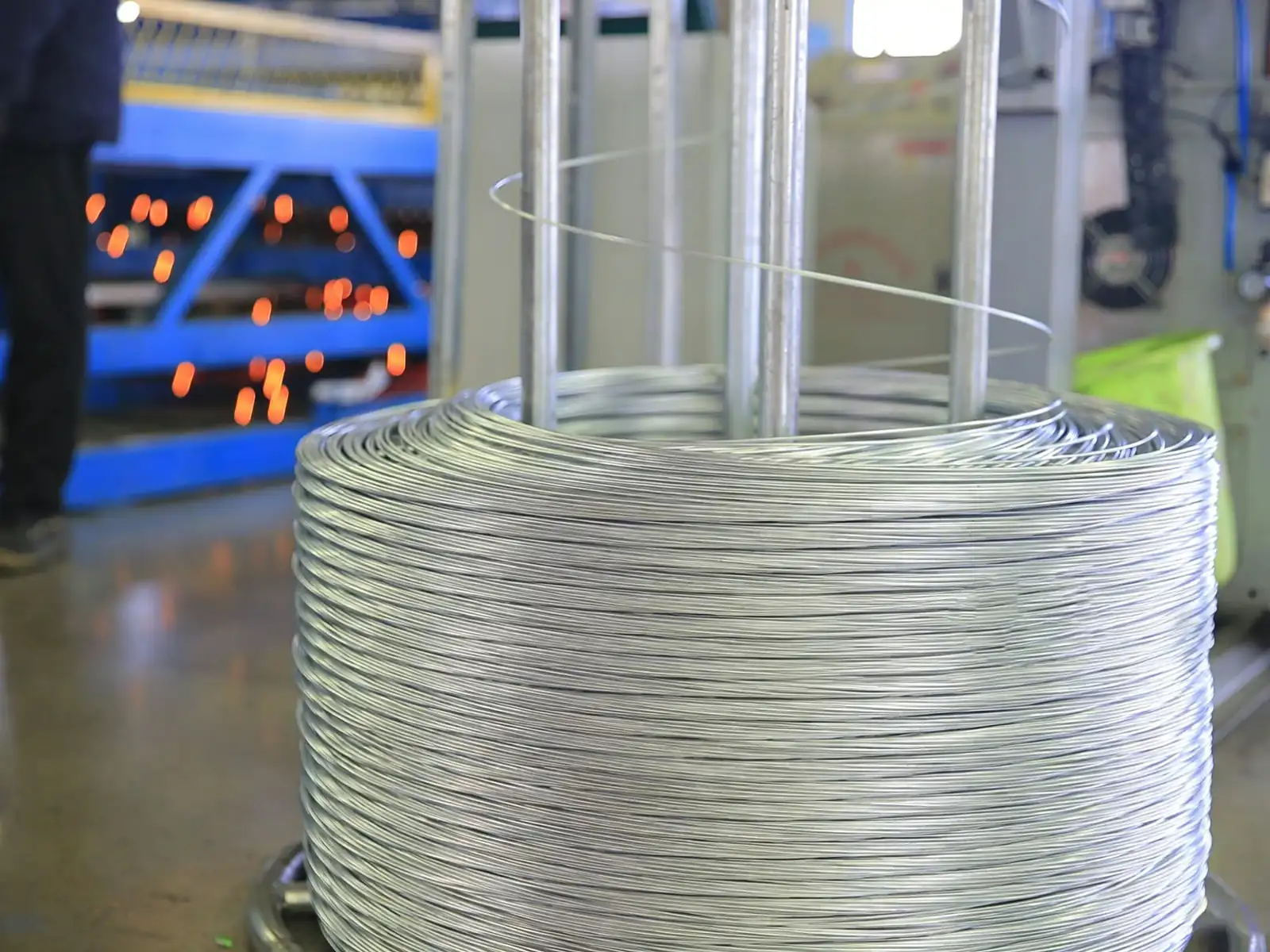
In industrial scenarios where strong corrosion, high temperatures, and complex media coexist, material selection requires a comprehensive judgment involving medium, concentration, temperature, flow velocity, equipment life, and cost. Gr12 Titanium Wire (ASTM Grade 12 / UNS R53400, Ti-0.3Mo-0.8Ni alloy wire) is increasingly used in chemical equipment, marine engineering, oil and gas pipelines, and flue gas desulfurization units, but typically as one candidate material rather than the first choice for all service conditions. Compared with 316L stainless steel, Hastelloy C-276, or commercially pure titanium, the main value of Gr12 titanium wire lies in its potentially favorable crevice corrosion resistance and overall cost in conditions where chloride-containing oxidizing media and dilute reducing media coexist, together with lower density and good processing adaptability. Material selection, however, cannot be separated from the specific service conditions, nor should Gr12 be simply regarded as capable of covering all harsh corrosive environments.
1. Alloying Effects and Corrosion-Resistance Mechanisms of Gr12 Titanium Wire
(1) Role of Molybdenum: Improving Repassivation of the Passive Film and Crevice Corrosion Performance
Molybdenum (Mo, 0.20%–0.40%) improves the stability of the titanium surface oxide film in chloride-containing environments. It should be noted that commercially pure titanium generally already offers good pitting resistance in chloride-containing oxidizing environments; the main contribution of Mo in Gr12 lies more in increasing the repassivation rate and improving crevice corrosion behavior and stability in locally acidic environments, rather than converting titanium from pitting-sensitive to pitting-resistant. The extent of improvement is affected by temperature, chloride ion concentration, pH, flow velocity, and crevice geometry and cannot be generalized without boundary conditions.
(2) Role of Nickel: Improving Corrosion Resistance in Dilute Reducing Media
The main contribution of nickel (Ni, 0.60%–0.90%) is improved corrosion resistance in certain reducing media. In conditions such as dilute sulfuric acid and dilute hydrochloric acid, Ni helps titanium maintain surface stability and reduce the tendency toward activation. However, in strongly reducing acids, high-temperature high-concentration acids, or complex acidic chloride environments, the corrosion resistance of Gr12 is still significantly lower than that of nickel-based alloys such as Hastelloy C-276 and cannot simply be equated with higher-grade nickel-based alloys.
(3) Synergistic Effect of Mo + Ni: Selectively Widening the Applicable Medium Spectrum
The combined Mo and Ni alloying gives Gr12 titanium wire better crevice corrosion and acidic medium adaptability than commercially pure titanium in service conditions where chlorides and weakly reducing media coexist. The synergistic effect, however, does not mean the material outperforms pure titanium or nickel-based alloys in all corrosion types, nor does it represent a step-change in which the corrosion resistance boundary is fundamentally redefined. It is better understood as providing an engineering option positioned between commercially pure titanium and nickel-based alloys.
2. Engineering Comparison with Traditional Materials
Engineers must make cross-comparisons based on test conditions when selecting materials. The comparison below is a routine qualitative description, intended only as an initial material selection reference, and cannot replace test verification against the actual medium, concentration, temperature, flow velocity, crevice condition, and service-life requirements.
(1) Qualitative Comparison of Corrosion Resistance
Performance Dimension | 316L Stainless Steel | TA2 Commercially Pure Titanium | Hastelloy C-276 | Gr12 Titanium Wire |
Chloride ion tolerance (ambient temperature, neutral chlorides) | Fair; sensitive to pitting/crevice corrosion | Excellent (good pitting resistance) | Excellent | Excellent |
Crevice corrosion resistance (enclosed crevices, ambient temperature chlorides) | Poor | Fair to good | Excellent | Good |
Reducing acid tolerance (dilute acids, low temperature) | Poor | Poor | Excellent | Moderate to good |
Seawater/brine environments (flowing, fully immersed, ambient temperature) | Fair | Good to excellent | Excellent | Good to excellent |
High-temperature corrosion stability (temperature and medium must be specified) | Fair | Fair to good | Excellent | Good (limited temperature range) |
Note: The terms good and excellent in the table are relative ratings and are given without specifying concentration, temperature, flow velocity, or crevice condition; they are not rigorous engineering grade classifications. Actual selection should be verified by testing.
(2) Comparison of Mechanical and Processing Properties
Performance Dimension | 316L Stainless Steel | TA2 Commercially Pure Titanium | Hastelloy C-276 | Gr12 Titanium Wire |
Density (g/cm³) | 7.93 | 4.51 | 8.89 | 4.51 |
Typical minimum yield strength (MPa) | 170–205 (per standard) | 275 | 283–355 (per standard) | 345 |
Specific strength (yield strength/density, MPa·cm³/g) | 21–26 | 61 | 32–40 | 76 |
Weldability | Excellent | Good (requires strict shielding) | Good (narrow process window) | Good (requires strict gas shielding) |
Relative cost level | Low | Low to medium | High | Medium |
Note: The mechanical properties are taken from common annealed-condition minimum values or typical standard values; actual values vary with standard revision, wire diameter, and heat treatment condition. Relative cost magnitude is generally: 316L < TA2 < Gr12 < C-276. Specific strength is approximated as yield strength/density.
The comparisons above show that in chloride-containing oxidizing environments at ambient temperature, the pitting resistance of Gr12 is generally at the same good level as TA2; in conditions involving crevices or dilute reducing media, Gr12 can exhibit better adaptability than TA2, although it does not reach the level of C-276 in strongly reducing acids, high-temperature corrosion, or complex acidic chloride environments. Compared with C-276, Gr12 has lower density, higher specific strength on a weight basis, and usually lower procurement cost, but the specific price depends on wire diameter, order quantity, surface quality, and market fluctuations.
(3) Overall Cost-Performance Analysis
Hastelloy C-276 covers a broader corrosion range but has high raw-material cost and processing difficulty. Gr12 titanium wire is better suited as a candidate to fill the gap between commercially pure titanium and nickel-based alloys and is particularly suitable for equipment that is weight-sensitive and exposed to crevice corrosion risk in non-strongly-reducing-acid, non-high-temperature service. Whether it offers a cost-performance advantage must be judged on whole-lifecycle cost and equipment maintenance intervals, rather than material unit price alone.
3. Typical Application Conditions and Boundary Conditions
(1) Chemical Equipment: Heat Exchangers and Tower Internals
In media such as dilute sulfuric acid, dilute hydrochloric acid, and chloride solutions, Gr12 titanium wire used for lashing, spring retention, and connecting components may offer better crevice corrosion tolerance than commercially pure titanium under suitable conditions. The concentration and temperature of the sulfuric or hydrochloric acid, and whether oxidizing impurities are present, must be clearly defined. Gr12 is generally not suitable for high-temperature, high-concentration strongly reducing acids. Suitability must be confirmed by corrosion testing or field coupon exposure.
(2) Marine Engineering: Desalination and Offshore Structures
Seawater has a high chloride ion concentration. Commercially pure titanium has very good pitting resistance in ambient-temperature flowing seawater and most seawater conditions, but crevice corrosion may occur in deposits, biofouling, and enclosed crevices. In such crevice-containing marine environments, Gr12 titanium wire may offer better tolerance than TA2 and can therefore be considered as a candidate for support wire mesh, filter screen frames, and fasteners. Grade 2, Grade 7, and other palladium-bearing titanium materials are also common in seawater service; the specific selection should be determined by design conditions.
(3) Flue Gas Desulfurization and Environmental Protection Facilities
Flue gas desulfurization (FGD) systems involve high temperature, high humidity, high chloride ion levels, and sulfurous acid media. Gr12 titanium wire may be suitable for fixing some absorber tower internals and nozzle hangers, but temperature, medium, and chloride/fluoride ion concentrations must be strictly bounded. It should not be described as an unreplaceable preferred material; Hastelloy, other corrosion-resistant titanium grades, and lining materials are all competitive in different FGD environments. Titanium may also suffer hydrogen embrittlement under high-temperature hydrogen pickup conditions, which should be evaluated.
4. Processing and Welding Performance
(1) Drawing Performance: Good Ductility, but Process Evaluation Should Be Based on Actual Practice
The near-α microstructure of Gr12 titanium alloy gives it a certain degree of ductility in multi-pass cold drawing, and under reasonable process conditions, fine-diameter drawing typically exhibits a low wire-breakage rate. Drawing performance, however, is closely related to wire diameter, surface lubrication, pass reduction, and annealing schedule and cannot be generalized without specifying process parameters.
(2) Weldability: Grade 12 Matching Filler Wire for GTAW/TIG
Gr12 titanium wire can serve as matching filler wire for the manufacture of ASTM Grade 12 equipment, with chemical composition closely matched to the base metal. Under GTAW/TIG welding conditions, weld metal composition is stable and the heat-affected zone has a low tendency toward grain growth, provided the welding process is tightly controlled. Titanium and titanium alloys are generally welded with GTAW/TIG; MIG welding is rarely used because droplet transfer and shielding gas quality are difficult to control, and it should be employed cautiously only in specific automated conditions—it should not be listed alongside TIG as a routine process. Wire diameters cover φ0.8 mm–φ3.0 mm, meeting most manual and automatic TIG requirements, but the joint form and welding procedure qualification must be confirmed; the capability should not simply be described as all-scenario.
(3) Straightening and Forming: Dimensional Accuracy Units Must Be Specified
Straight-cut Gr12 wire after precision straightening can achieve straightness of ≤2 mm/m (or ≤0.2 mm/100 mm, per the specification), satisfying the feed requirements of most automatic welding machines and CNC winding machines. For fine-diameter wire (e.g., ≤φ0.8 mm), seamless long coils up to approximately 3000 m can be supplied; coarse-diameter wire is limited by coil weight and coil diameter, so lengths are considerably shorter and should be confirmed by size.
5. Quality Control and Batch Consistency
(1) Full-Process Inspection Matrix from Bar Billet to Finished Wire
Inspection Stage | Inspection Item | Standard Basis |
Raw material intake | Chemical composition (ICP), macro/microstructure | ASTM B348 (chemical composition); metallography per ASTM E3/E407 or internal control |
Rolling process | Closed-loop temperature monitoring, in-line dimensional measurement | Internal process specification |
Finished product inspection | Mechanical properties, wire diameter accuracy, straightness | ASTM B863 |
Surface quality | Visual inspection, surface finish | ASTM B863 / customer specification |
Non-destructive testing | Eddy current testing (fine wire); ultrasonic testing (coarse wire, where applicable) | ASTM E426 / ASTM E2375 or internal procedures |
Corrosion testing | Pitting/crevice corrosion testing | ASTM G61 / ASTM G48 or as agreed for the service condition |
Note: Salt spray testing offers limited differentiation for titanium alloys and is not normally used alone as a corrosion acceptance criterion for titanium welding wire; pitting potential and crevice corrosion tests should be performed in accordance with a specified standard or the mutual agreement of the parties.
(2) Vacuum Melting and Stable Microstructure
Gr12 titanium alloy is normally produced by vacuum arc remelting (VAR) or another qualified melting process, with strict control of interstitial elements such as O, N, and H. Common ASTM Grade 12 maximums are: O ≤ 0.25%, N ≤ 0.03%, H ≤ 0.015%. A stable near-α microstructure promotes batch-to-batch performance consistency, which is an important criterion when evaluating material suppliers for chemical pressure vessels and corrosion-service projects. Gr12 is not typically an aerospace structural material, so its engineering track record should be assessed more on the basis of chemical, marine, and environmental applications.
(3) Test Reports and Traceability
Each batch of Gr12 titanium wire should be accompanied by a material test report (MTR) covering chemical composition, mechanical properties, heat treatment condition, and heat/batch numbers, enabling traceability from the raw bar billet to the finished wire. For chemical equipment and export projects, complete quality records help shorten procurement verification lead times, but final acceptance is governed by the relevant standards and procurement specifications.
6. Conclusion
Through combined Mo-Ni alloying, Gr12 titanium wire provides an engineering material option between commercially pure titanium and nickel-based alloys for specific chloride, crevice corrosion, and dilute reducing medium conditions. Its advantages do not hold in every corrosive environment, nor should it be viewed as a universal solution covering multiple harsh service conditions with a single material. Selection should take into account the specific medium, concentration, temperature, flow velocity, crevice condition, service life, and cost and should be confirmed by testing or field validation.
FAQ
(1) Q1: How Much Better Is the Crevice Corrosion Resistance of Gr12 Titanium Wire Compared with TA2 Commercially Pure Titanium Wire?
In enclosed chloride-containing crevices or under deposits at ambient temperature, Gr12 typically shows better crevice corrosion resistance than TA2 commercially pure titanium, mainly because Mo improves repassivation and Ni buffers local acidic environments. The extent of the difference, however, is strongly dependent on crevice geometry, temperature, chloride ion concentration, and flow velocity and should not be expressed through general empirical multiples such as several times the life. Engineering decisions should be based on tests or coupon data from actual service conditions.
(2) Q2: Can Gr12 Titanium Wire Be Used Directly to Weld Grade 12 Titanium Alloy Equipment, and What Welding Process Is Required?
Gr12 titanium wire can be used for matching welding of Grade 12 equipment, but weld quality is highly dependent on process control. In addition to adequate leading-face argon shielding, back shielding and trailing shielding should be provided, shielding gas purity and dew point controlled, and the base metal and filler wire thoroughly cleaned before welding; inter-pass temperature should be kept low, and post-weld surface color should be inspected and judged against engineering specifications. Where necessary, the procedure should be confirmed by welding procedure qualification.
(3) Q3: Is Gr12 Titanium Wire Suitable for High-Temperature Corrosive Environments?
Gr12 titanium wire has good stability in oxidizing and weakly reducing corrosive environments over a certain temperature range, but it is not indefinitely applicable in high-temperature corrosion. The upper temperature limit, medium composition, pH, chloride/fluoride ion concentrations, and potential hydrogen pickup conditions must all be defined. If the recommended service temperature is exceeded, or the material is exposed for extended periods to acidic/reducing atmospheres where hydrogen pickup can occur, titanium may undergo hydrogen embrittlement or performance degradation; targeted material evaluation is therefore required, and claims such as no embrittlement or no degradation should not be made without qualification.
Contact Us
To further verify applicable Gr12 titanium wire sizes, obtain standard documentation, or request an actual quotation, please contact Titanium Valley. When making an inquiry, we recommend providing the working medium, concentration, temperature, pressure, flow velocity, crevice condition, and expected service-life requirements so that a preliminary material feasibility assessment can be conducted. Email: sales@titaniumvalleys.com
References
- Standardization Administration of China. GB/T 3620.1—2016 Designations and chemical composition of titanium and titanium alloys [S]. Beijing: Standards Press of China, 2016.
- Standardization Administration of China. GB/T 3623—2007 Titanium and titanium alloy wire [S]. Beijing: Standards Press of China, 2007.
- Standardization Administration of China. GB/T 150.1—2011 Pressure vessels – Part 1: General requirements [S]. Beijing: Standards Press of China, 2011.
- Tianhua Chemical Machinery and Automation Research & Design Institute. Corrosion and Protection Handbook: Volume 2 Corrosion-Resistant Metallic Materials and Anti-Corrosion Technologies [M]. Beijing: Chemical Industry Press, 2006.