
Why Choose Titanium Valley as Your Gr12 Titanium Bar Manufacturer and Exporter?
- GR12 Titanium Bar
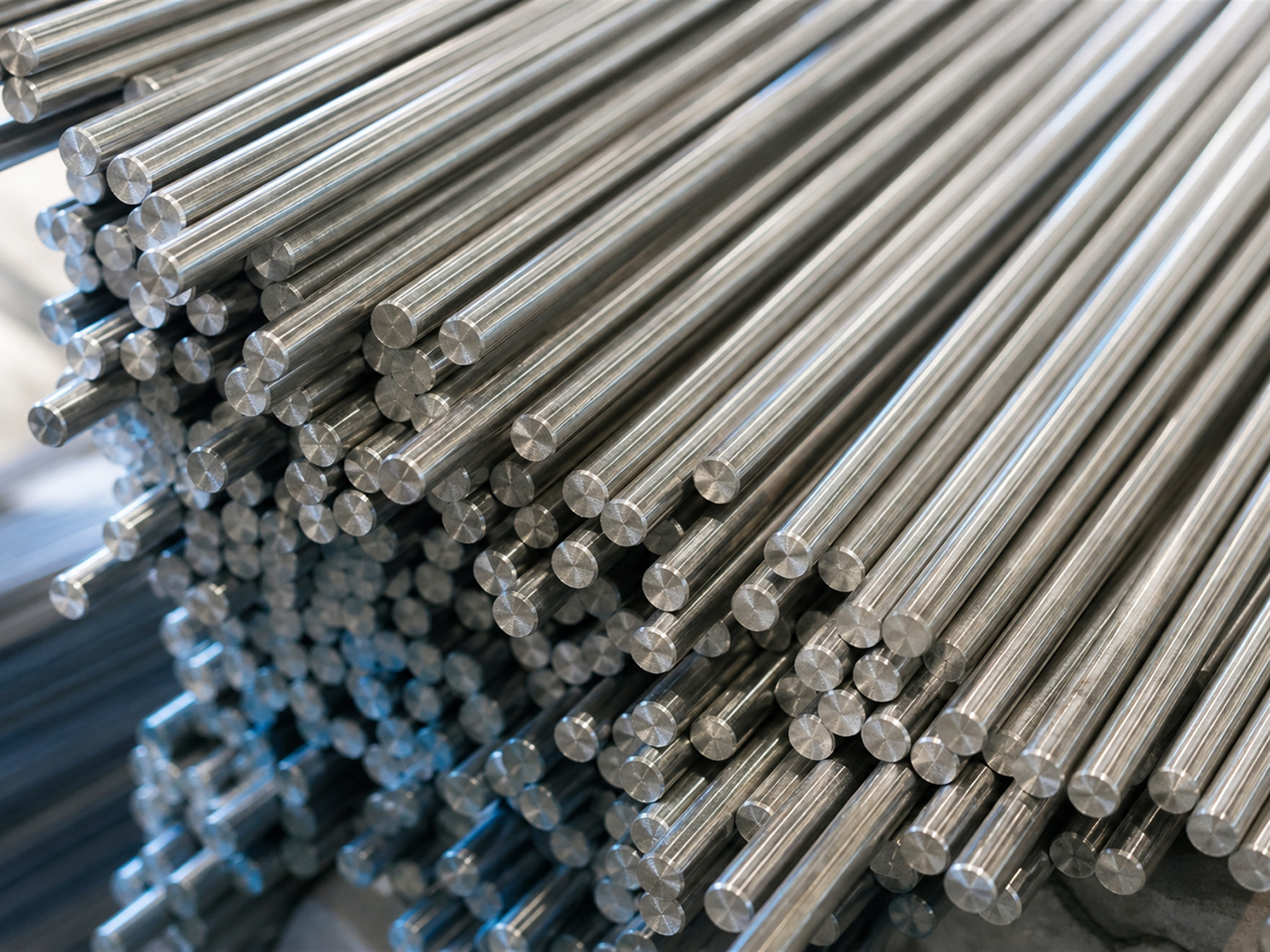
In combined service conditions involving chloride attack, dilute reducing acids, and moderate-to-high temperature corrosion, material failure is often the root cause of equipment downtime and even safety incidents. With its titanium alloy formulation, Gr12 titanium bar (Ti-0.3Mo-0.8Ni, UNS R53400) creates differentiated advantages in specific performance dimensions such as pitting resistance, crevice corrosion resistance, and hydrogen embrittlement resistance. Strictly producing to the ASTM B348 standard, it supplies Gr12 titanium bar products with uniform composition, stable batch quality, and traceable inspection to the chemical, marine engineering, and energy power industries.
1. The Alloying Logic of Gr12 Titanium Bar: Why Add Mo and Ni?
(1) The Role of Molybdenum: Stabilizing the Passivation Film and Improving Corrosion Resistance in Weakly Reducing Acid Environments
Commercially pure titanium relies on the surface TiO₂ passivation film for corrosion protection in oxidizing environments. However, in weakly reducing or low-oxygen environments such as dilute sulfuric acid and dilute hydrochloric acid, this passivation film is easily damaged. The addition of Mo (0.20%–0.40%) improves the stability of the passivation film in low-oxygen or weakly reducing media. Under low-concentration, moderate-to-low-temperature reducing acids or mixed acids containing dissolved oxygen or oxidizing impurities, Gr12 usually maintains passivation more readily than pure titanium; however, in high-concentration, high-temperature strongly reducing acids, Gr12 may still undergo significant corrosion and must be evaluated against the specific medium conditions.
(2) The Role of Nickel: Suppressing Hydrogen Embrittlement and Improving Crevice Corrosion Resistance
The addition of Ni (0.60%–0.90%) is particularly critical to the safety contribution of Gr12 titanium bar. Hydrogen embrittlement is an insidious cause of cracking in metals in hydrogen-containing media; Ni helps reduce the hydrogen embrittlement risk by adjusting the alloy’s electrochemical behavior and slowing the penetration rate of hydrogen atoms in the crystal lattice. At the same time, Ni works synergistically with Mo to improve Gr12’s resistance to localized corrosion in narrow crevices (such as flange contact surfaces and thread roots), which is especially important for seawater systems.
(3) Gr12 Composition Specification Overview
Element | Content range | Remarks |
Ti | Balance | Base element |
Mo | 0.20%–0.40% | Stabilizes the passivation film |
Ni | 0.60%–0.90% | Suppresses hydrogen embrittlement |
Fe | ≤0.30% | Impurity control |
O | ≤0.25% | Affects ductility |
C | ≤0.08% | Impurity control |
N | ≤0.05% | Impurity control |
H | ≤0.015% | Indicator of hydrogen embrittlement risk |
Note: The composition ranges are quoted from the ASTM B348-19 requirements for Gr12 [1].
Precise composition control is the cornerstone of Gr12’s performance consistency. Batch-to-batch composition deviation is often the most easily overlooked yet highest-impact variable in field corrosion failure incidents.
2. In-Depth Analysis of Four Performance Dimensions: What Makes Gr12 Titanium Bar Stand Out?
(1) Pitting and Crevice Corrosion Resistance: A Clear Advantage over Conventional Stainless Steel
Pitting and crevice corrosion are the primary failure modes of 304/316 stainless steel in high-chloride environments. The synergistic effect of Mo and Ni gives Gr12 a higher critical pitting potential than conventional stainless steel at the same chloride concentration [3][4]. For scenarios such as seawater desalination systems and chlor-alkali industry piping, under equivalent chloride concentration, temperature, and structural crevice conditions, Gr12 typically exhibits lower localized corrosion risk than conventional stainless steel. However, actual equipment life also depends on integrated factors such as the medium, flow velocity, temperature, design, and maintenance and cannot be inferred from material type alone.
(2) The Balance Between Moderate Strength and Good Ductility
Per the typical requirements of ASTM B348 for annealed Gr12, its tensile strength is no less than 483 MPa, its specified proof strength no less than 345 MPa, and its elongation no less than 18% [1]. This strength level is higher than that of commercially pure titanium (Gr1, Gr2) while retaining appreciable ductility, giving it practical engineering value in pressure-bearing structural components and precision mechanical parts. Compared with high-strength titanium alloys such as Ti-6Al-4V, Gr12 has more favorable processing characteristics, with higher yield rates in turning, milling, cold drawing, and other operations and lower reject rates in batch production.
(3) Performance Comparison of Gr12 with Common Materials
Property | Gr12 titanium bar | 316L stainless steel | Commercially pure titanium Gr2 |
Chloride pitting resistance | Excellent | Moderate | Good |
Crevice corrosion resistance | Excellent | Poor | Good |
Reducing acid tolerance | Good at low concentration and moderate-to-low temperature | Poor | Relatively poor (limited in low-concentration, weakly reducing acids) |
Hydrogen embrittlement resistance | Good (in non-high-pressure hydrogen environments) | Good | Moderate |
Weldability | Good (inert gas protection required) | Good | Good |
Moderate-temperature stability | Good (≤250℃ requires service verification) | Moderate | Moderate |
Note: This table is a qualitative comparison under neutral/weakly acidic chloride-containing media at temperatures ≤80℃ and atmospheric or low positive pressure; “reducing acids” refers to low-concentration, moderate-to-low-temperature conditions. High-concentration strongly reducing hot acids and high-temperature, high-chloride acidic environments should be verified by separate testing [2][3].
(4) Excellent Weldability and Connection Reliability
Gr12 supports TIG welding and other inert-gas-shielded welding processes, and the corrosion resistance of the weld zone is close to that of the base metal. This is a significant engineering advantage for large heat exchangers and reactor structures that require on-site field joining. The argon shielding envelope must be strictly controlled during welding to prevent oxidation of the weld and heat-affected zone—a core technical requirement in Gr12 fabrication specifications.
(5) Application Boundaries and Non-Appropriate Service Conditions
Gr12 is not suitable for all corrosive environments. The following conditions require cautious selection or mandatory service verification:
- High-concentration, high-temperature strongly reducing acids, such as hot concentrated hydrochloric acid and hot concentrated sulfuric acid;
- High-temperature, high-concentration acidic chloride environments;
- Hydrogen-containing or high-chloride environments above 250–300℃;
- Media that can cause stress corrosion cracking in titanium alloys, such as fuming nitric acid and hot methanol.
Only within the boundaries defined above can Gr12 more accurately demonstrate its engineering value.
3. Overview of Main Application Scenarios: Which Industries Really Need Gr12?
(1) Chemical and Petrochemical: The Reliable Backbone of Acid-Media Equipment
Reactors, heat exchangers, and piping systems operating in mixed sulfuric acid, hydrochloric acid, and chloride media are typical application fields for Gr12 titanium bar. In some moderate-concentration, moderate-to-low-temperature chloride-containing or weakly reducing acid environments, Gr12 can provide corrosion control performance approaching that of high-nickel alloys; however, in strongly reducing hot acids or strongly oxidizing high-temperature environments, nickel-based alloys such as Hastelloy C-276 generally have the advantage. Material selection must therefore be comprehensively evaluated against the specific medium, concentration, and temperature.
(2) Marine Engineering and Seawater Desalination: Long-Term Protection in Chloride Environments
Seawater systems simultaneously present high chloride concentration, microbiological corrosion, and crevice structures, and the combination of these three factors readily triggers localized corrosion. ASTM B348 is a material specification for titanium and titanium alloy bars and billets, not an application selection standard; the application of Gr12 in seawater condensers, desalination plants, and marine structures is based mainly on the corrosion data and engineering practice of titanium materials in chloride-containing media [2][4]. In simulated seawater environments, the crevice corrosion rate of Gr12 is generally lower than that of conventional duplex stainless steel; compared with super duplex stainless steel, comparison must be made per specific grade, test conditions, and medium conditions and cannot be stated categorically.
(3) Energy and Environmental Protection: A Corrosion-Resistance Workhorse for FGD and Denitrification Systems
In wet flue gas desulfurization (FGD) systems in coal-fired power plants, the flue gas contains high concentrations of sulfurous acid, chlorides, and high-temperature steam, imposing strong combined corrosion on metallic materials. Gr12’s moderate-temperature stability and acid corrosion resistance make it a candidate material for absorber internals, circulation pump shafts, and agitator shafts. The widespread use of chlorine-based disinfectants in wastewater treatment likewise gives Gr12 a clear technical advantage in this sector. However, specific applications must still be evaluated against parameters such as flue gas temperature, acid dew point, and chloride concentration.
(4) Moderate-Temperature Application Boundary: Not to Be Confused with a “High-Temperature Alloy”
Gr12 generally shows good stability in chloride-containing, weakly acidic wet environments at approximately 150–250℃; above 250–300℃, however, the risks of titanium oxidation, hydrogen pickup, and chloride corrosion rise, and service verification is mandatory. Therefore, Gr12 should not be casually regarded as a general high-temperature alloy; its applicability at elevated temperatures must be strictly limited.
4. Titanium Valley’s Manufacturing Capability and Quality Assurance System
This production line provides strong assurance of dimensional accuracy, surface quality, and microstructural uniformity and can stably produce round, square, and hexagonal bars, covering a size range from fine-diameter precision bars to large structural bars, and matching the billet or finished states required for different forming processes such as hot rolling, forging, and cold drawing.
(2) Full-Process Quality Control: A Closed-Loop System from Melting to Shipment
The Gr12 titanium bar production flow covers: raw material and electrode preparation → multi-pass vacuum arc remelting (VAR, typically two or three passes to ensure composition uniformity) → forging and billet preparation → rolling → heat treatment (annealed condition) → finishing → non-destructive testing → inspection and delivery. Strict process parameter control and quality sampling mechanisms are implemented at every node to ensure that composition uniformity, mechanical property consistency, and surface integrity meet requirements [5]. Each batch is supplied with complete material test certificates (MTC), with composition and property data traceable to the melting heat.
(3) Customization Service Capability and Specification Reference
For non-standard requirements from precision manufacturing customers, Titanium Valley offers custom diameters, fixed lengths, and special surface treatments (ground, pickled, polished). For precision shaft parts or sealing components with special tolerance requirements, the cold-drawing process can control dimensional tolerances within a narrow range, reducing secondary machining losses at the customer end.
Parameter category | Conventional range | Remarks |
Diameter (round bar) | 6 mm–200 mm | Cold-drawn/hot-rolled/forged stock |
Cross-section shape | Round, square, hexagonal | Custom as required |
Length | 500 mm–6000 mm | Fixed or random lengths |
Surface condition | Pickled, ground, polished | Selected by application |
Execution standard | ASTM B348 | Material specification |
Delivery condition | Annealed | Standard delivery condition |
5. Key Decision Points When Purchasing Gr12 Titanium Bar
(1) Composition Certification and Batch Traceability: Quality Documents Cannot Be “Decorations”
A qualified Gr12 titanium bar supplier should be able to provide a spectrochemical analysis report issued by a third-party accredited laboratory, confirming that the Mo and Ni contents fall within the ranges specified by ASTM B348. Batch traceability means that the composition data of any single bar can be linked to the specific melting heat, rather than merely being a general certificate of conformity. This is the foundation of project acceptance and downstream issue traceability.
(2) Non-Destructive Testing (NDT): The Hidden Risk of Internal Defects
A bar with a clean surface may still contain metallurgical defects such as shrinkage, inclusions, or cracks in its interior. Ultrasonic testing (UT) is the standard inspection method for Gr12 bars before shipment and can effectively identify internal discontinuities. During procurement, buyers should explicitly require the supplier to provide NDT reports and confirm that the execution standard and acceptance level conform to the project specification requirements.
(3) Delivery Lead Time and Stock Availability
For projects on tight schedules, the depth of a supplier’s in-stock inventory directly affects project milestones. Titanium Valley maintains stable stock of Gr12 titanium bar in conventional gauges, supporting rapid fulfillment and split deliveries, while also possessing large-scale custom production capability, making it suitable for large equipment manufacturing projects in chemical and marine engineering that are sensitive to delivery schedules.
6. Conclusion
With its precise alloy formulation, Gr12 titanium bar demonstrates stable and verifiable engineering value in severe service conditions involving strong corrosion, combined media, and moderate-to-high strength. From composition design to manufacturing process, every stage directly determines the product’s actual performance in the field. Choosing a manufacturer with a complete quality system and traceable delivery capability is a key step in converting material performance into engineering reliability.
FAQ
(1) Q1: What is the essential difference in corrosion resistance between Gr12 titanium bar and Gr5 (Ti-6Al-4V)?
Gr12 is designed with corrosion resistance as the primary goal; the addition of Mo and Ni specifically strengthens pitting resistance, crevice corrosion resistance, and resistance to weakly reducing acid attack. Gr5 is dominated by high strength and is suited to scenarios such as aerospace structural components that require low-corrosion, high-specific-strength performance. In chloride-containing, low-pH chemical media with dilute reducing acids, the overall corrosion resistance of Gr12 is generally superior to that of Gr5; however, in low-corrosion, high-specific-strength applications, Gr5 remains the more appropriate structural material. The corrosion resistance of the two should not be compared in general terms without reference to the medium conditions.
(2) Q2: Does the corrosion resistance of the weld zone of Gr12 titanium bar decrease significantly after welding?
Provided that the inert-gas-shielded welding process is strictly followed, the corrosion resistance of the Gr12 weld zone is essentially equivalent to that of the base metal. The key is that the shielding gas (argon) coverage must be sufficient to prevent oxidation discoloration of the weld and heat-affected zone—this is the core operational point for maintaining welded joint performance.
(3) Q3: When purchasing Gr12 titanium bar, how can you tell whether the supplier’s composition report is authentic and credible?
Ask the supplier to provide a spectrochemical analysis report issued by a third-party laboratory with ISO/IEC 17025 accreditation, and verify the correspondence between the heat/lot number in the report and the product marking. Also require non-destructive testing (UT) reports to comprehensively assess the product’s internal quality.
Contact Us
Titanium Valley—a professional manufacturer and exporter focused on precision processing of titanium, nickel, and zirconium—provides global customers with volume supply of Gr12 titanium bar, custom processing, and factory-direct sales. Whether you are a chemical equipment manufacturer, a marine engineering contractor, or a precision component supplier, please contact us at: sales@titaniumvalleys.com
References
- ASTM B348-19. Standard Specification for Titanium and Titanium Alloy Bars and Billets [S]. ASTM International, 2019.
- Zhang Xiyan, Zhao Yongqing, Bai Chenguang. Titanium Alloys and Applications [M]. Beijing: Chemical Industry Press, 2005.
- Liu Yonghui, Zhang Peifen. Principles of Metallic Corrosion [M]. Beijing: Aviation Industry Press, 1993.
- Yang Dejun, Shen Zhuoshen. Metallic Corrosion Science [M]. Beijing: Metallurgical Industry Press, 1999.
- Huang Boyun, Li Chenggong, Shi Likai, et al. China Materials Engineering Canon: Vol. 4, Nonferrous Metals Materials Engineering [M]. Beijing: Chemical Industry Press, 2006.
Published by: Titanium Valleys
Technical review: General Manager of the Production Department
Quality review: Quality Inspection Department
Last reviewed: October 20, 2026