
What Are the Factors That Affect the Performance of Nickel 201 Foil?
- Nickel 201 Foil
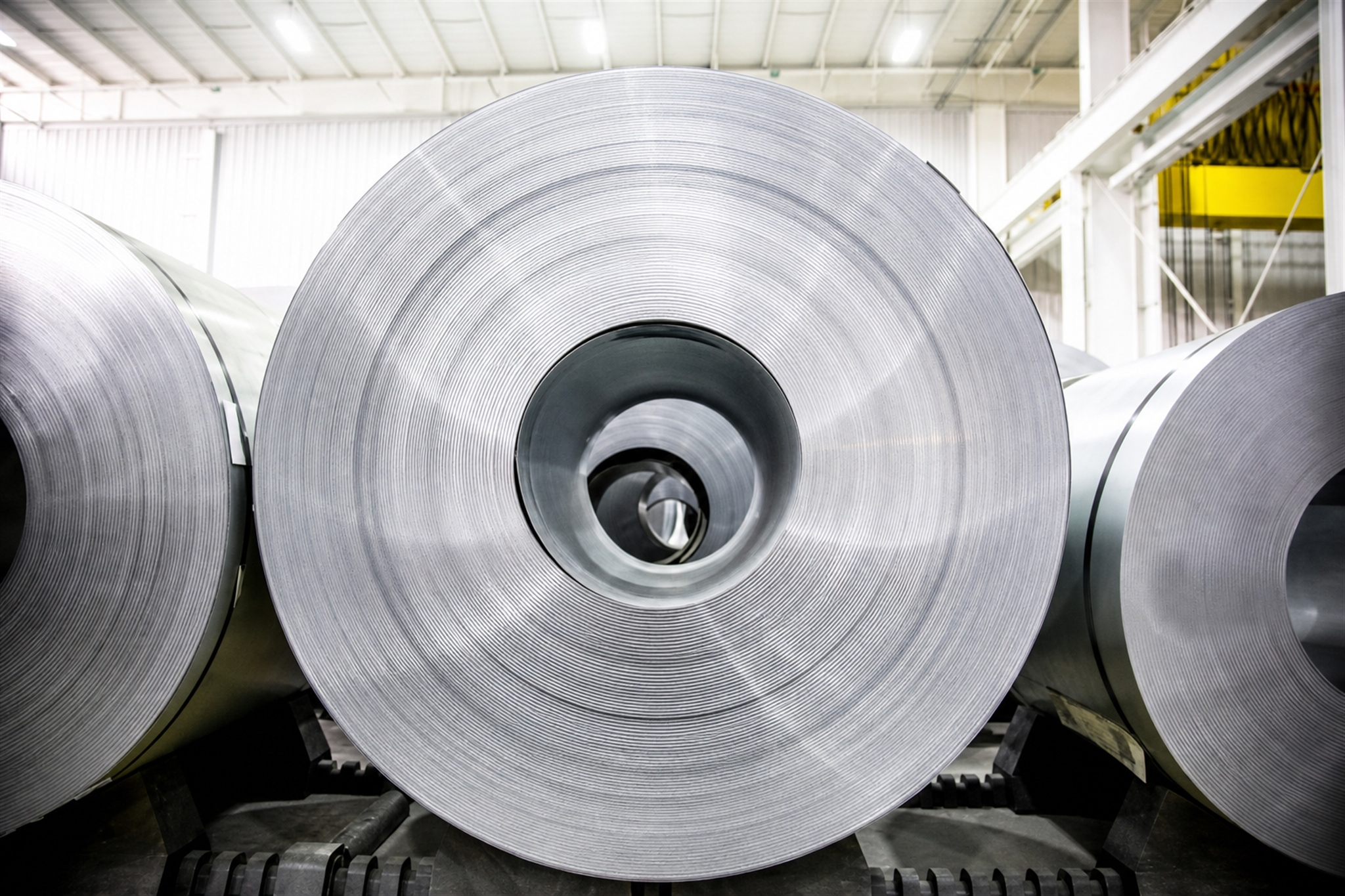
The core factors affecting the performance of Nickel 201 foil (Ni201 foil, UNS N02201) span multiple dimensions: the chemical composition purity of the material itself (especially the carbon content C≤0.02%), the precision of the rolling process, the temperature uniformity and atmosphere protection of annealing, surface cleanliness and edge quality, and final dimensional tolerance stability. These factors do not exist in isolation but are interrelated and mutually constrained. A deviation in any one step can lead to reduced electrical conductivity, mechanical property variation, surface contamination, or processing cracks. Understanding these factors is a prerequisite for correctly selecting Ni201 foil for battery tabs, electrolytic electrodes, or high-temperature conductive structures.
1. Chemical Composition: Low Carbon Content Is the Foundation of Ni201 Foil Performance
(1) Decisive Effect of Carbon Content on High-Temperature Performance
Per the requirements of standards such as GB/T 5235-2021 and ASTM B162 (UNS N02201), the carbon content of Ni201 is strictly controlled to C≤0.02%, while the carbon limit for Ni200 is 0.15%. When the temperature exceeds 315℃, carbon in Ni200 readily precipitates at grain boundaries to form graphite, causing embrittlement and a significantly higher risk during long-term operation. The low carbon content requirement of Ni201 suppresses this phenomenon at its root, allowing the material to generally maintain a fairly stable microstructure at service temperatures up to 600℃ in service conditions without significant carburizing atmospheres, oxidizing atmospheres, or prolonged loading.
(2) Synergistic Effect of Nickel Purity and Impurity Elements
The standard composition requirements for Ni201 are specified by GB/T 5235-2021 and ASTM B162 (UNS N02201): Ni≥99.0%, with strict limits of Fe≤0.40%, Mn≤0.35%, Si≤0.35%, Cu≤0.25%, and S≤0.01%. Sulfur content control is particularly critical: at high temperature, sulfur forms low-melting-point eutectics with nickel, readily causing hot shortness. The coordinated control of the various impurity elements together establishes the reliability of Ni201 foil under demanding service conditions.
(3) Effect of Composition Stability on Batch Consistency
In large-scale industrial production, small batch-to-batch composition variations directly affect the material’s electrical conductivity, ductility, and welding performance. Using high-purity nickel feedstock with strict composition control can keep batch-to-batch composition deviations within a small range, ensuring a high degree of physical and chemical consistency in each batch of Ni201 foil, which is critical to the stable operation of automated production lines.
Element | Nickel 200 | Nickel 201 | Control Significance |
C | ≤0.15% | ≤0.02% | Suppresses high-temperature graphitization and prevents grain-boundary embrittlement |
S | ≤0.01% | ≤0.01% | Prevents hot shortness and weld cracking |
Fe | ≤0.40% | ≤0.40% | Controls magnetic behavior and mechanical uniformity |
Ni | ≥99.0% | ≥99.0% | Ensures the foundation for electrical conductivity and corrosion resistance |
2. Rolling Process: Precision Determines the Usability of Ultra-Thin Foil
(1) Multi-Pass Cold Rolling and Thickness Tolerance Control
Rolling ultra-thin nickel foil requires multiple passes of precision cold rolling, with the reduction, tension, and speed of each pass precisely controlled. Using a multi-roll precision rolling mill, the thickness tolerance for the thin-gauge range of 0.03–0.1 mm can be stably controlled to about ±0.001 mm; for thicker gauges, the standard tolerances of ASTM B162 (UNS N02201) or agreement between the parties apply. This level of precision has direct engineering value for dimensionally highly sensitive applications such as battery tabs and EMI shielding layers.
(2) Shape Control and Residual Stress Management
Wide foil, with a standard supply width of about 350–670 mm and a maximum width of 670 mm, is prone to shape defects such as edge waviness and center buckles during rolling, which directly affect subsequent stamping and automated feeding accuracy. Precise tension distribution control and roll profile optimization can effectively suppress uneven residual stress distribution and ensure the flatness of large-diameter coils across the full width.
(3) Balancing Work Hardening and Ductility
During cold rolling, the material work hardens, causing elongation to decrease. In the cold-worked (Y) condition, the mechanical properties of Ni201 foil vary with the amount of reduction; common typical values are a tensile strength of about 500–600 MPa and an elongation of ≥8%, and the specific values should be confirmed with the supplier based on the hardness grade or reduction. Rationally setting the per-pass reduction allows an optimal balance between strength and ductility, providing a sound microstructural basis for subsequent annealing.
3. Annealing: The Core Guarantee of Microstructural Uniformity
(1) Special Significance of Protective-Atmosphere Annealing for Low-Carbon Materials
For low-carbon nickel materials with C≤0.02%, atmosphere control during annealing is especially critical. If carburizing gases are present in the annealing environment, surface carburization can occur, negating the low-carbon advantage of Ni201. Continuous annealing under argon shielding, with controlled protective atmosphere purity and dew point, can reduce surface carburization and oxidation; at the same time, zone-based temperature control and furnace temperature uniformity management prevent localized overheating, ensuring that the material’s low-carbon characteristic is maintained throughout the entire production process.
(2) Direct Effect of Annealing Condition on Mechanical Properties
In the fully annealed (M) condition, Ni201 foil typically has a tensile strength of 350–420 MPa and an elongation of ≥25%, exhibiting excellent formability suitable for deep drawing, precision stamping, and complex bending. A uniform annealed microstructure also significantly reduces anisotropy, keeping the foil’s properties consistent in different directions, which is extremely important for precision manufacturing applications.
(3) Improvement of Surface Condition and Overall Performance by Bright Annealing
In electronic-grade applications that require both appearance consistency and cleanliness, bright annealing further improves the plasticity-to-strength match of Ni201 foil while keeping the surface uniform and clean, satisfying the surface quality requirements of subsequent coating, welding, and precision assembly. Key process parameters should be recorded during annealing to ensure the heat treatment condition of every coil is traceable.
Supply Condition | Tensile Strength | Elongation | Typical Application Scenarios |
Annealed, M | 350–420 MPa | ≥25% | Precision stamping, electrode forming, welded assemblies |
Cold-worked, Y | Approx. 500–600 MPa, varies with reduction | ≥8%, typical value | Elastic connectors, high-strength structural conductive strips |
Note: The mechanical properties in the table are typical values; the material certificate prevails. ASTM B162 provides corresponding acceptance values for the annealed condition, while cold-worked properties vary with the amount of reduction.
4. Surface Quality, Cleanliness, and Edge Quality
(1) Engineering Value of Combined Ultrasonic and Alkaline Cleaning
Oils, metal debris, and rolling lubricant residue on the foil surface are major obstacles for electronic-grade applications. Through a combined ultrasonic and alkaline cleaning process, the surface wetting tension can be stably maintained at a high level—for example, 44 dyn/cm, i.e., 44 mN/m, measured under standard conditions by the wetting tension test method—which indicates low organic contamination on the surface and helps improve coating adhesion and welding consistency. For EMI shielding and precision electrode applications, a stable surface condition helps reduce contact resistance and assembly defect rates.
(2) Effect of Surface Condition on Contact Resistance
Pure nickel itself has excellent electrical conductivity, but the presence of a surface oxide film significantly increases contact resistance, causing energy losses in applications such as battery tabs and electrolytic electrodes. Bright surface treatment can keep oxide layer thickness to a minimum, while a matte surface provides increased mechanical bonding with coatings through microscopic roughness; each surface condition offers its own advantages for different application scenarios.
(3) Effect of Edge Quality on Automated Processing
Ultra-thin nickel foil is highly prone to burrs and edge deformation during slitting, which not only affects the feed accuracy of subsequent automated stamping but can also create a short-circuit risk in battery packaging. Although edge quality is a slitting process attribute, it directly affects downstream assembly and safety. By optimizing slitting tool parameters and pressure control, edge burr height can be kept to the micrometer level, meeting the demanding edge quality requirements of high-speed automated production lines.
5. Dimensional Tolerances and Specification Adaptability
(1) Thickness Coverage Range and Thin-Gauge Tolerances
The standard supply thickness is 0.03–0.8 mm, meeting the requirements of the vast majority of industrial conductive and structural applications. For ultra-thin precision gauges of 0.005–0.01 mm, production difficulty rises significantly, requiring the overcoming of multiple technical hurdles such as strip breakage, thickness variation, and loss of flatness control. Mature thin-gauge rolling processes and high-precision tension control systems are the core technical support for the stable mass production of such gauges. In the thin-gauge range of 0.03–0.1 mm, the thickness tolerance can be controlled to about ±0.001 mm; for thicker gauges, ASTM B162 (UNS N02201) or mutual agreement applies.
(2) Effect of Width and Flatness on Downstream Efficiency
The standard supply width is about 350–670 mm, with a maximum width of 670 mm. Wide Ni201 foil can greatly improve material utilization and blanking efficiency for downstream users compared with narrower products. Wide-width production places higher demands on the rolling mill’s roll profile control and shape adjustment capability, which directly affect the flatness of wide products and downstream blanking stability.
Specification Dimension | Standard Range | Custom Range | Applicable Scenarios |
Thickness | 0.03–0.8 mm | 0.005–0.03 mm | Ultra-thin precision electronics / industrial conductive structures |
Width | 350–670 mm | Custom on request | Wide-blank stamping / electrolytic electrode plates |
Thickness tolerance | 0.03–0.1 mm: ±0.001 mm; 0.1–0.8 mm: per ASTM B162 or mutual agreement | Negotiable | Automated high-precision stamping lines |
(3) Standard Conformance and Inspection Reports
Conformance to ASTM B162 (UNS N02201) and the provision of complete material certificates and inspection reports are the basic entry conditions for Ni201 foil into aerospace, medical, and high-end electronics supply chains. Standard conformance represents not only compliance of chemical composition and dimensional tolerances but, more importantly, provides a traceable basis for batch consistency. A complete full-process inspection system—covering dimensions, surface, mechanical properties, and chemical composition—is an important foundation for ensuring batch consistency and supporting customer audits.
6. Conclusion
The performance of Nickel 201 foil is jointly determined by the core factors of chemical composition, rolling precision, annealing process, surface and edge quality, and dimensional tolerances. Optimization of any single dimension is insufficient to support its reliable application in high-temperature electrochemistry, precision electronics, and new energy batteries. Only by systematically integrating these dimensions can the engineering value of Ni201 as a low-carbon, high-purity nickel material be fully realized.
FAQ
(1) Q1: What Are the Main Differences Between Nickel 201 Foil and Nickel 200 Foil in High-Temperature Applications?
The carbon content of Ni201 is strictly controlled to C≤0.02%, significantly lower than Ni200’s 0.15%. This allows Ni201 to effectively suppress grain-boundary carbon precipitation in high-temperature environments above 315℃ that are free of oxidizing media or carburizing atmospheres, avoiding graphitization embrittlement. In reducing or inert atmospheres, it can generally be used long-term for high-temperature conductive and electrochemical applications; in hot oxidizing air, surface oxidation and service life should be evaluated.
(2) Q2: What Key Challenges Does Ultra-Thin Nickel 201 Foil, Such as 0.03 mm, Present in Production?
Ultra-thin gauges face multiple challenges, including a high risk of strip breakage, difficulty in ensuring thickness uniformity, difficult flatness control, and slitting burrs. A high-precision multi-roll rolling mill, an accurate tension system, and an optimized slitting process must work together to achieve stable mass production.
(3) Q3: Why Is the Surface Cleanliness of Nickel 201 Foil So Important for Electronics and Battery Applications?
Residual oils and oxide films on the surface increase contact resistance and affect welding quality and coating adhesion. A high surface wetting tension, such as 44 dyn/cm, i.e., 44 mN/m, generally indicates low organic contamination on the surface, which directly relates to EMI shielding effectiveness, electrode stability, and the long-term electrical reliability of battery tabs.
Contact Us
If you are looking for an Ni201 foil supplier, contact Titanium Valley. We supply Ni201 foil in conformance with ASTM B162 (UNS N02201), along with material certificates, inspection reports, and OEM customization services. Send your inquiry to: sales@titaniumvalleys.com
References
- State Administration for Market Regulation, Standardization Administration of China. GB/T 2072-2020 Nickel and nickel alloy strip and foil [S]. Beijing: China Standards Press, 2020.
- State Administration for Market Regulation, Standardization Administration of China. GB/T 5235-2021 Wrought nickel and nickel alloy grades and chemical composition [S]. Beijing: China Standards Press, 2021.
- ASTM International. ASTM B162-2019 Standard Specification for Nickel Plate, Sheet, and Strip [S]. West Conshohocken, PA: ASTM International, 2019.