
What Are the Composition, Properties, and Applications of Ti-15V-3Al-3Cr-3Sn Titanium Foil?
- Ti-15V-3Al-3Cr-3Sn Titanium Foil
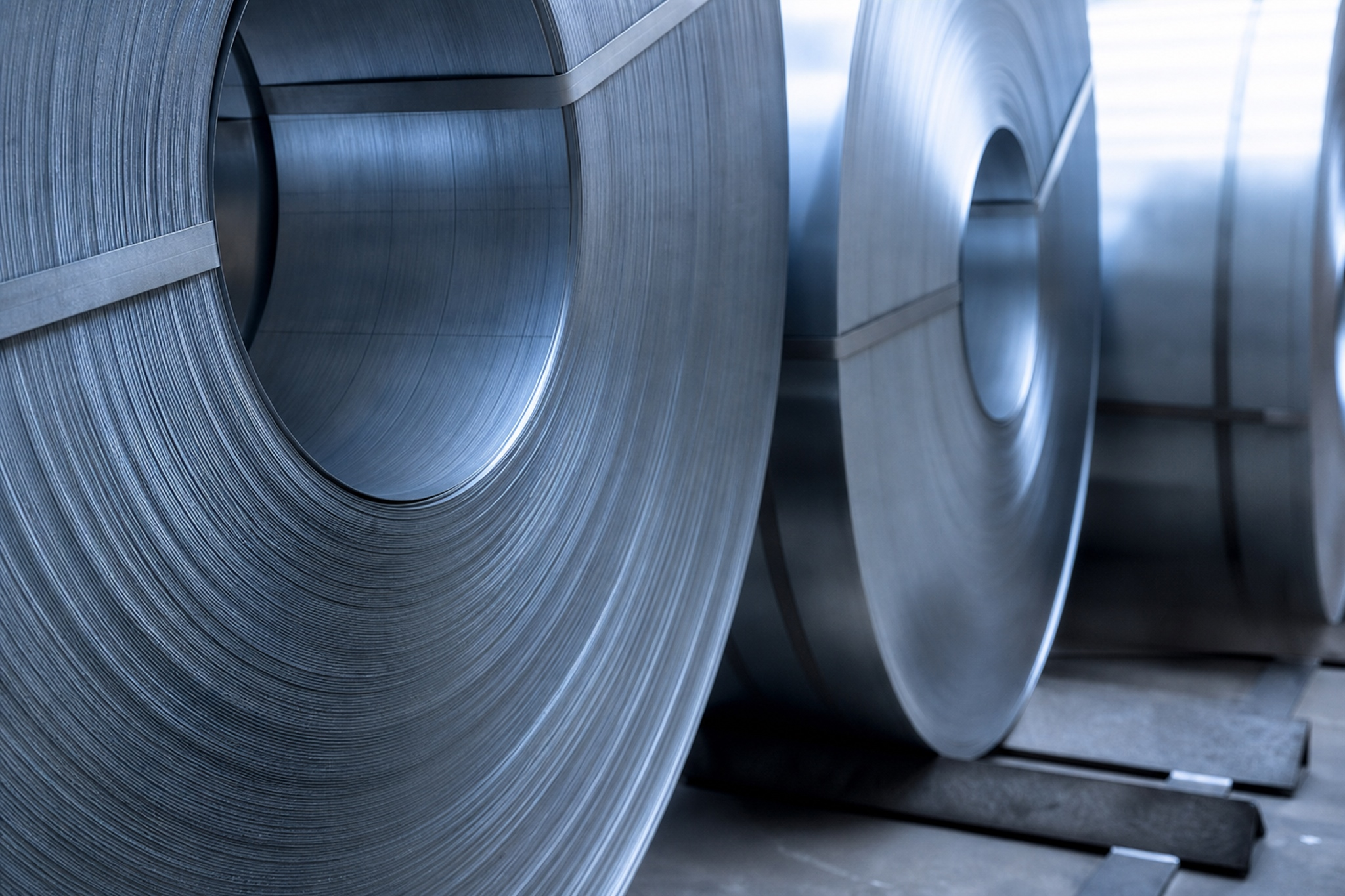
In high-end manufacturing, Ti-15V-3Cr-3Al-3Sn titanium foil, a near-beta titanium alloy foil, is notable for using different heat treatment conditions to achieve good cold formability and relatively high final strength, respectively. Its nominal composition is 15% V, 3% Cr, 3% Al, and 3% Sn, and it offers good cold forming potential in common production thicknesses of 0.02 mm and above, with strength that can be further increased by aging.
It should be noted that “conventional ultra-thin sizes” in this article are defined with 0.02 mm as the lower limit for stable bulk supply; thinner sizes fall within special development or custom-made scope and require item-by-item confirmation of flatness, thickness tolerance, mechanical properties, and workability, and cannot simply be equated with the forming capability of the 0.02 mm size.
1. Alloy Composition Analysis: What Is the Actual Role of Each Element?
(1) Vanadium (V): The Core Framework for Beta-Phase Stabilization
Vanadium is the highest-content alloying element in this alloy, at 15% by mass. As a strong beta stabilizer, vanadium allows large amounts of metastable beta phase to be retained after beta-phase-region annealing and fast cooling, giving the alloy good cold forming capability. The high vanadium content gives the beta-annealed alloy forming behavior close to that of certain high-ductility materials, facilitating stamping and bending of complex structural parts while providing the microstructural basis for subsequent precipitation strengthening by aging.
(2) Aluminum (Al): Alpha-Stabilizing Effect and Aging Strengthening
Aluminum at 3% acts mainly as an alpha stabilizer in this alloy, promoting alpha-phase precipitation during aging and increasing alloy strength. Aluminum has a lower density than titanium, but a 3% content has only a limited effect on reducing overall density; because the alloy contains higher-density alloying elements such as V, Cr, and Sn, its actual density is higher than that of pure titanium, so aluminum should not be regarded as a significant density reducer. Its more definite role is to work together with aging temperature and time in influencing the amount, size, and distribution of the alpha phase.
(3) Chromium (Cr) and Tin (Sn): Fine Tuning of Phase Stability and Strength-Toughness
Chromium (3%) is a eutectoid-type beta stabilizer; in combination with vanadium it can improve beta-phase stability, but if the process is not properly controlled it may also promote the precipitation of intermetallic compounds. The benefit of “widening the processing window” should therefore be evaluated in combination with homogenization, cooling rate, and subsequent thermomechanical processing.
Tin (3%) is a neutral element whose main role is matrix strengthening. Claims that tin can “suppress aging embrittlement” lack sufficient engineering basis and should not be treated as a key performance guarantee for this alloy. The effect of tin on toughness should be judged in combination with the specific aging schedule and the actual part operating conditions.
Table 1: Comparison of the Functional Roles of the Principal Elements in the Ti-15V-3Cr-3Al-3Sn Alloy
Alloying element | Content (wt%) | Phase-stabilizing type | Primary function |
Vanadium (V) | 15 | Beta stabilizer (isomorphous) | Retains metastable beta phase, improves cold formability |
Aluminum (Al) | 3 | Alpha stabilizer | Promotes alpha precipitation on aging, raises aged strength; limited effect on reducing overall density |
Chromium (Cr) | 3 | Beta stabilizer (eutectoid) | Stabilizes the beta phase in synergy with V, but precipitation of brittle intermetallic phases must be prevented |
Tin (Sn) | 3 | Neutral element | Matrix strengthening, improves toughness; inhibition of aging embrittlement should not be guaranteed |
2. Core Property Analysis: How Can Cold Formability and High Strength Be Achieved Together?
For most high-strength titanium alloys, strength and formability are often difficult to satisfy simultaneously. The feature of Ti-15V-3Cr-3Al-3Sn titanium foil is that formability-oriented or strength-oriented conditions can be obtained at different heat treatment stages, allowing forming and load bearing to be achieved in separate stages within the manufacturing flow.
(1) Beta-Phase-Region Annealed Condition: The Microstructural Basis for Good Cold Formability
After beta-phase-region annealing and fast cooling, the alloy structure is predominantly metastable beta phase, with good room-temperature ductility that permits complex stamping, deep drawing, and repeated bending. This condition is suitable for processing complex thin-walled structural parts and shaped-cross-section components, reducing the die design difficulty and scrap rate.
It should be noted that the good formability in this condition applies mainly to common production thicknesses, such as 0.02 mm and above. For special custom sizes at the 0.005 mm level, workability, fracture risk, and dimensional stability must be evaluated separately.
(2) Aged Condition: The Mechanism and Range of Strength Increase
Aging is usually recommended in the 480–540℃ range. For thin foils, the upper limit should be tightened to about 530–540℃ to avoid entering the over-aging zone, where strength drops rapidly. During aging, fine plate-like or acicular alpha phase precipitates within the metastable beta phase, producing a precipitation-hardening effect.
After typical aging, the tensile strength of the alloy is generally in the 1000–1240 MPa range. Strength data above 1240 MPa require a specific aging schedule, sampling orientation, and test conditions and should not be used as routine guaranteed values. The alloy has a density of approximately 4.76 g/cm³, higher than pure titanium, but thanks to its aged strength and lower work-hardening tendency it still competes well in specific strength.
(3) Comparison with Comparable Alloys
Compared with Gr5 (Ti-6Al-4V), the room-temperature formability of Ti-15V-3Cr-3Al-3Sn in the beta-annealed condition is usually markedly better; compared with the pure titanium series, its aged strength is significantly higher. Its strength can be adjusted within a certain range through the aging schedule, but the adjustable range must be based on the measured process window and should not be loosely described as “arbitrarily customizable.”
Table 2: Performance Comparison of Titanium Foils of Different Grades
Performance indicator | Gr1 pure titanium foil | Gr4 pure titanium foil | Gr5 (Ti-6Al-4V) foil | Ti-15V-3Cr-3Al-3Sn foil |
Room-temperature cold formability | Excellent | Moderate | Poor | Good in the beta-annealed condition |
Typical tensile strength/MPa (common condition) | 240–370 (annealed) | 480–655 (annealed) | 900–1100 (annealed) | 1000–1240 (typical aging) |
Response to heat treatment strengthening | No | No | Essentially none/limited | Yes |
Typical engineering positioning | Extreme forming, corrosion-resistant lining | General industrial parts | Aerospace structural parts, standard fasteners | Complex thin-walled aerospace/high-end instrumentation structures |
3. Production Process and Size Capability: Key Control Points for Ultra-Thin Wide Foils
(1) 20-High Precision Cold Rolling: Thickness and Flatness Control
Titanium Valley is equipped with a 750 mm 20-high precision rolling mill with a maximum rolling speed of 400 m/min and a maximum rolling force of 3500 kN. The 20-high configuration distributes the rolling force and resists roll-stack deflection, helping to improve the cross-sectional uniformity of wide strip at thicknesses on the order of 0.02 mm.
For conventional products in the 0.02–0.05 mm thickness range, thickness tolerances can typically be controlled at roughly ±0.002 mm (about 2 μm); for thinner sizes or wider widths, tolerances must be evaluated case by case together with the specific size and surface condition. The closed-loop thickness control system compensates for roll thermal expansion and elastic deflection, improving batch consistency.
(2) Continuous Annealing and Atmosphere Protection: Surface and Microstructure Control
The continuous annealing line uses 7-zone electric heating; its maximum equipment temperature of 1100℃ only represents the heating capability limit and is not the recommended heat treatment temperature for this alloy. For Ti-15V-3Cr-3Al-3Sn, the beta transus temperature is typically around 760–800℃, and beta-phase-region annealing or continuous annealing temperatures generally need to be controlled in the approximate 790–820℃ range, with the exact value determined by foil thickness and the target downstream properties.
Inert-gas or vacuum protection throughout the process is mainly used to reduce surface oxidation and contamination and cannot replace the control of composition uniformity during melting and rolling. The surface wetting tension after cleaning can provide a certain reference for surface cleanliness, but the value must be interpreted in light of the test method and surface condition and should not be used as a core performance indicator.
(3) Standard Sizes and Customization Capability
The conventional bulk supply thickness range is 0.02–1.0 mm with widths of 15–680 mm, and the surface condition is divided into bright and matte finishes. 0.02 mm is the lower limit for stable bulk supply in the conventional series; for special fields such as microelectronics and optics, custom sizes down to 0.005 mm can be evaluated, but flatness, dimensional tolerances, mechanical properties, and forming capability at this thickness require separate confirmation and are not given as conventional performance guarantees.
Products can be delivered as coils, cut-to-length sheets, or narrow strips. For standard selection, the applicable ASTM titanium and titanium alloy sheet/strip specification or a mutual technical agreement should first be confirmed based on the product form and intended use; AMS standards that may not match this product form should not be applied directly.
Table 3: Summary of Standard Size Parameters for Ti-15V-3Cr-3Al-3Sn Titanium Foil
Parameter | Size range/description |
Standard thickness | 0.02–1.0 mm |
Custom thickness | Down to 0.005 mm; requires separate review |
Width range | 15–680 mm |
Surface condition | Bright / matte finish |
Delivery form | Coil / cut-to-length sheet / narrow strip |
Applicable standard | General sheet/strip specifications such as ASTM B265, or a mutual technical agreement; for aerospace applications, confirm the applicable standard per order requirements |
Density | Approx. 4.76 g/cm³ |
Magnetic properties | Non-magnetic |
4. Typical Engineering Applications and Applicability Boundaries
(1) Complex Thin-Walled Structural Components for Aerospace
The aerospace field has strong demand for weight reduction and complex thin-walled parts, such as engine nacelle liners, fuselage skin reinforcing members, and missile wing panels. If these parts were made from conventional high-strength titanium alloys such as Gr5, there would be a high risk of cracking during cold forming. Ti-15V-3Cr-3Al-3Sn has good ductility in the beta-annealed condition and can be deep-drawn and formed with multiple bend angles; after aging, its strength reaches the range of high-strength structural materials.
Its actual application usually requires qualification for the specific part and specification, including verification of mechanical properties, fatigue, and corrosion resistance; it should not be simply stated that all aerospace structural specifications directly approve it.
(2) Non-Magnetic Precision Structural Parts and Positioning in the Electronics Field
In precision instrumentation, medical devices, and electronics manufacturing, certain structural parts require non-magnetic behavior, corrosion resistance, and relatively high specific strength. Ti-15V-3Cr-3Al-3Sn can serve as an engineering candidate for non-magnetic elastic elements, connectors, and support structural components.
It should be emphasized that titanium alloys have relatively poor electrical conductivity, and non-magnetic behavior does not equal high electromagnetic shielding effectiveness. If used for electromagnetic shielding, a highly conductive coating on the surface or combination with other highly conductive materials is usually required. Non-magnetic behavior must not be directly equated with high-frequency shielding performance.
(3) Applicability Boundaries in Chemical Corrosion Protection and Composite Laminates
This alloy can meet the requirements of some mildly corrosive or oxidizing environments, but in strongly corrosive or complex media, whether its corrosion resistance is superior to that of pure titanium or dedicated corrosion-resistant titanium alloys must be confirmed by testing in the specific media; it should not be generalized as an ideal material for chemical corrosion protection components.
In composite laminate applications, uniform thickness and a clean surface help improve the consistency of metal-composite interfacial bonding; however, delamination and stress concentration are affected by multiple factors including the resin system, curing process, surface treatment, and interface design, and cannot be eliminated by foil thickness and cleanliness alone.
5. Conclusion
The value of Ti-15V-3Cr-3Al-3Sn titanium foil lies mainly in obtaining good cold formability in the beta-annealed condition and then higher strength through aging, so that forming and load bearing are achieved in separate stages of the manufacturing flow. It does not simultaneously reach maximum formability and maximum strength in all conditions, nor should it be described as a universal material for all high-end applications. In actual selection, verification should address part thickness, processing route, heat treatment schedule, and service conditions.
FAQ
(1) Q1: What is the essential difference in properties between the beta-phase-region-annealed condition and the aged condition of Ti-15V-3Cr-3Al-3Sn titanium foil?
The beta-annealed condition is predominantly metastable beta phase, with high ductility and moderate strength, suitable for complex forming operations; after aging, fine plate-like or acicular alpha phase precipitates in the matrix, and the tensile strength is typically raised to 1000–1240 MPa, suitable for load-bearing structures. The two conditions should be selected in stages according to the part manufacturing flow, and it is not possible to obtain maximum formability and maximum strength simultaneously in the same stage.
(2) Q2: Is this titanium foil suitable for electronic equipment with strict electromagnetic shielding requirements?
It is not recommended to use Ti-15V-3Cr-3Al-3Sn foil directly as a high-efficiency electromagnetic shielding material. Titanium alloys have relatively poor electrical conductivity, and non-magnetic behavior is not equivalent to shielding effectiveness. If used in electronic equipment, its role as a non-magnetic precision structural part should be the primary consideration, or a composite shielding design with a high-conductivity surface coating should be adopted. Its uniform thickness control can provide a consistent basis for subsequent coating or composite structures, but it cannot by itself guarantee shielding performance.
(3) Q3: Compared with Gr5 (Ti-6Al-4V), is the processing cost of Ti-15V-3Cr-3Al-3Sn titanium foil higher?
The initial material cost may be slightly higher than that of Gr5, but cold formability in the beta-annealed condition is usually better than Gr5, reducing hot forming operations, die wear, and scrap rate. The actual total cost depends strongly on part complexity, batch size, and heat treatment schedule, and should be based on trial production data rather than a blanket judgment.
Contact Us
For further information on the available sizes, process windows, and performance data of Ti-15V-3Cr-3Al-3Sn titanium foil, contact Titanium Valley: sales@titaniumvalleys.com.
References
- Wang Jinyou, Ge Zhiming, Zhou Yanbang. Titanium Alloys for Aerospace Applications. Shanghai: Shanghai Scientific & Technical Publishers, 1985.
- Zhang Xiyan, Zhao Yongqing, Bai Chenguang, et al. Titanium Materials and Their Applications. Beijing: Chemical Industry Press, 2005.
- Zhao Yongqing, Hong Quan, Ge Peng, et al. Heat Treatment of Titanium and Titanium Alloys. Beijing: Metallurgical Industry Press, 2017.
- Editorial Committee of China Materials Engineering Canon. China Materials Engineering Canon, Vol. 4: Nonferrous Metals Materials Engineering. Beijing: Chemical Industry Press, 2006.
Published by: Titanium Valleys
Technical review: General Manager of the Production Department
Quality review: Quality Inspection Department
Last reviewed: October 20, 2026