
What Are the Chemical Composition and Mechanical Properties of Gr12 Titanium Wire?
- GR12 Titanium Wire
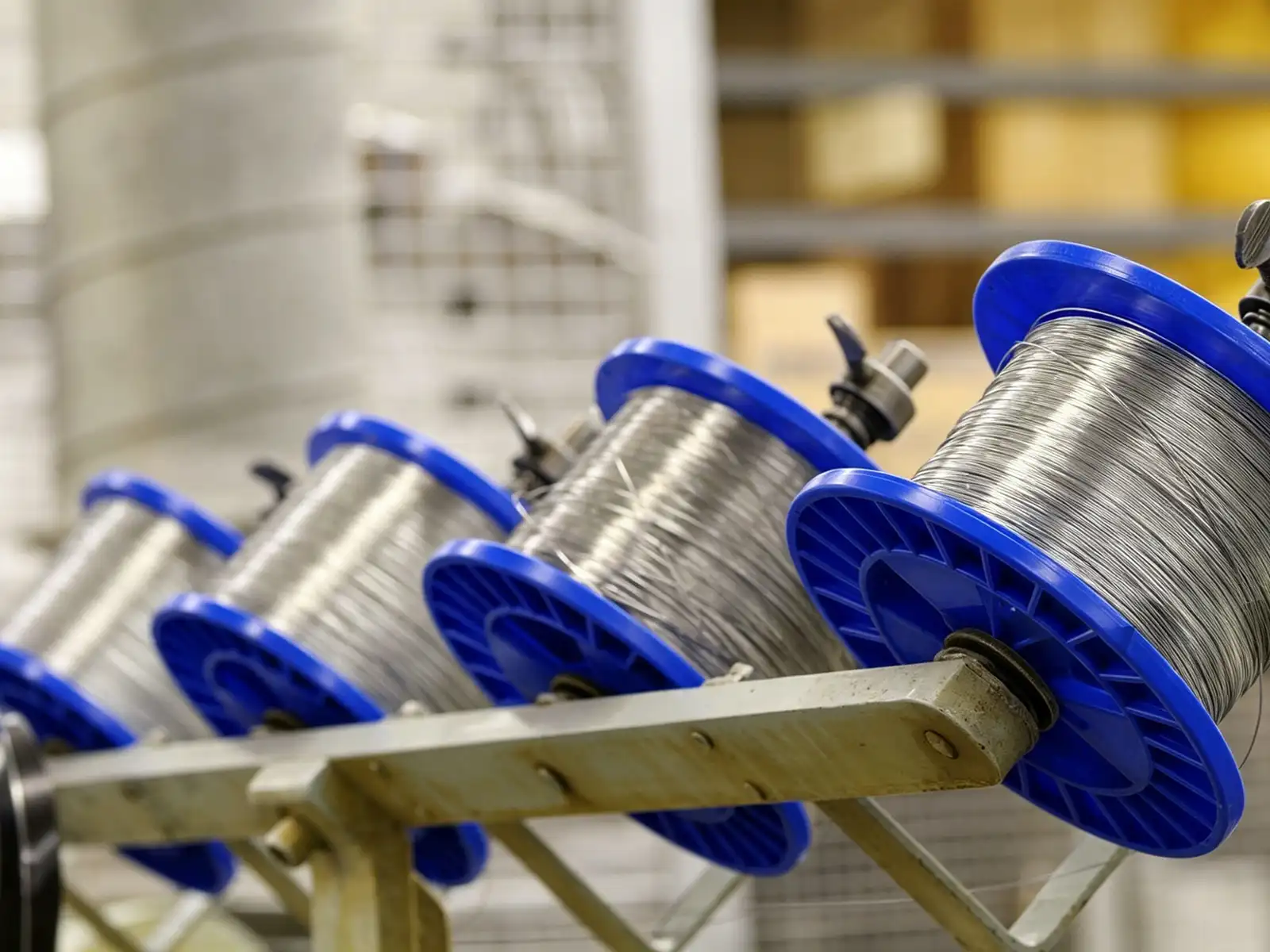
Gr12 titanium wire (Ti-0.3Mo-0.8Ni) is a near-α corrosion-resistant titanium alloy wire. Through combined alloying with molybdenum (Mo) and nickel (Ni), it retains the good ductility of commercially pure titanium while improving resistance to reducing media, chloride ions, and crevice corrosion. Its nominal composition is Mo 0.20%–0.40% and Ni 0.60%–0.90%, with the balance titanium, while O, N, C, H, and Fe are strictly controlled. Mechanically, the alloy combines medium strength with good ductility and is already used in the chemical, marine, oil and gas, and flue gas desulfurization industries. This article uses ASTM B863 as the primary product acceptance framework to analyze its chemical composition and mechanical properties and to define material selection boundaries.
1. Chemical Composition of Gr12 Titanium Wire: Element Roles and Standard Basis
(1) Alloying Elements: The Synergistic Effect of Mo and Ni
Element | Content Range | Main Role |
Molybdenum (Mo) | 0.20%–0.40% | β-stabilizing element; maintains a predominantly α-phase microstructure even at low content; improves corrosion resistance in reducing media and reduces pitting susceptibility |
Nickel (Ni) | 0.60%–0.90% | Promotes passive film stability and self-repair, improving crevice corrosion resistance in chloride environments |
Mo is a β-stabilizing element, but within the 0.20%–0.40% range it does not significantly change Gr12’s predominantly α-phase microstructure. The trace Mo addition effectively improves the corrosion resistance of the titanium alloy in reducing media such as hydrochloric acid and sulfuric acid. The Ni addition targets a key weakness of pure titanium—its susceptibility to crevice corrosion in chloride-containing media. Ni promotes self-repair of the surface passive film, providing long-term protection under localized corrosion conditions. Together, the two elements give Gr12 better applicability in complex corrosion scenarios that a single alloying element cannot cover.
(2) Impurity Elements: Interstitial Elements and Substitutional Impurities
O, N, C, and H are interstitial elements with significant effects on the ductility and toughness of titanium alloys; Fe is a substitutional impurity in titanium and should not be grouped together with interstitial elements. Impurity control depends primarily on ingot melting and billet quality; cold drawing and intermediate annealing at the wire mill cannot fundamentally eliminate inhomogeneities originating from melting.
Element | Maximum Requirement | Element Type | Risk If Exceeded |
Oxygen (O) | ≤0.25% | Interstitial element | Reduced ductility, increased cracking risk in cold working |
Iron (Fe) | ≤0.30% | Substitutional impurity | May affect localized corrosion resistance and microstructural uniformity |
Nitrogen (N) | ≤0.03% | Interstitial element | Marked embrittlement, increased cracking risk in weld heat-affected zone |
Carbon (C) | ≤0.08% | Interstitial element | Carbide precipitation, increased localized brittleness |
Hydrogen (H) | ≤0.015% | Interstitial element | May contribute to hydrogen-induced delayed cracking under specific stress, microstructure, and environmental conditions |
Titanium Valley strictly inspects chemical composition during the billet acceptance stage and maintains process quality and traceability throughout subsequent cold drawing and intermediate annealing, thereby reducing batch-to-batch impurity variability risk.
(3) Standard Basis for Composition: ASTM B863 Is the Directly Applicable Wire Specification
The composition and mechanical properties of Gr12 titanium wire should primarily conform to ASTM B863, Standard Specification for Titanium and Titanium Alloy Wire. ASTM B348 covers bar/billet products and does not apply to wire product acceptance; ISO 5832 mainly addresses surgical implant materials and does not include Grade 12. Automatic equivalence across different market systems therefore should not be assumed. For orders supplied to multiple target markets, each customer specification, grade, and revision should be checked item by item, avoiding direct extension of ASTM B863 compliance to other standards.
2. Mechanical Properties of Gr12 Titanium Wire: Annealed Minimums per ASTM B863
(1) Typical Mechanical Property Data
Property | Annealed Minimum or Typical Range | Notes |
Tensile strength (UTS) | ≥483 MPa | Minimum requirement for annealed Gr12 in ASTM B863 |
Yield strength (YS, 0.2%) | ≥345 MPa | Suitable for general load-bearing components |
Elongation after fracture (A) | ≥18% | Actual value depends on wire diameter and specimen type; per standard clauses |
Modulus of elasticity | Approx. 100–105 GPa | Lower than most steels; whether it is “better” depends on the stiffness requirements of the application |
This mechanical window allows Gr12 wire to serve both as weld filler for pressure-bearing piping and in components requiring repeated deformation, but the strength data of Gr12 should not be confused with that of Ti-3Al-2.5V/Grade 9.
(2) Lateral Comparison with Pure Titanium and High-Strength Titanium Alloys
Gr12 is positioned as a “bridging material,” filling part of the performance gap between commercially pure titanium and high-strength α+β alloys.
- Versus Grade 2: Based on minimum ASTM tensile strength, annealed Grade 2 is approximately 345 MPa while annealed Gr12 is approximately 483 MPa—Gr12’s minimum UTS is about 40% higher. In addition, Gr12 generally offers better crevice corrosion resistance than Grade 2 in chloride-containing and reducing media.
- Versus Grade 5 (Ti-6Al-4V): Gr12 has lower strength than Grade 5, but cold workability, weldability, and subsequent processing are generally simpler.
- Versus 316L stainless steel: Gr12 has a density of about 4.51 g/cm³, roughly 57% of stainless steel, and typically offers superior corrosion resistance in chloride environments.
(3) Qualitative Engineering Significance of Corrosion Resistance in Dynamic Service
In service conditions involving both corrosive media and dynamic loads, such as chemical pump shafts and seawater heat exchanger tube support wire, corrosion pits are often key sites for fatigue crack initiation. By improving pitting and crevice corrosion resistance through Mo and Ni, Gr12 may help reduce corrosion-related failure risk. However, it must be clear that fatigue limits, high-temperature strength, and maximum service temperature must be determined per specific grades, product specifications, and test data and cannot be extrapolated directly from room-temperature tensile properties.
3. The Intrinsic Relationship Between Chemical Composition and Mechanical Properties: From Elements to Service Characteristics
(1) Combined Influence of Mo on Strength and Corrosion Resistance
As a β-stabilizing element, Mo at the low Gr12 content does not significantly alter the predominantly α-phase microstructure. Its addition improves the stability of the passive film in reducing media such as hydrochloric acid and sulfuric acid and enhances pitting resistance. Mo atoms entering the α-Ti lattice can provide a certain strengthening effect, but the specific increment depends on oxygen content, annealing temperature, cold work amount, and other factors and should not be generalized as a fixed value. The 0.20%–0.40% composition window is a compromise among corrosion resistance, processability, and weldability.
(2) Role of Ni in Ductility and Crevice Corrosion Resistance
Ni’s direct contribution to strength is usually less pronounced than Mo’s; its main role is promoting self-repair of the passive film in chloride environments and improving crevice corrosion resistance. For cold-working ductility, the annealing regimen, deformation amount, and impurity content often have a more direct influence than the Ni content alone. Ni therefore should not simply be described as improving ductility through grain refinement.
(3) Effects of Impurity Elements on Microstructure and Properties Require Boundary Conditions
Interstitial elements significantly affect the mechanical properties of titanium alloys. Some literature reports that higher oxygen content tends to increase strength and reduce ductility, but the magnitude of the change depends strongly on the alloy system, oxygen content range, annealing conditions, and grain size, and fixed formulas should not be applied. The effects of hydrogen are equally complex; whether hydrogen-induced cracking occurs must be evaluated in combination with hydrogen content, stress state, microstructure, temperature, and hydrogen trap characteristics. Titanium Valley reduces batch-to-batch impurity variability through billet acceptance inspection and process quality control, ensuring that the measured data on each coil of wire is consistent with the quality assurance report.
4. Typical Application Scenarios and Material Selection Boundaries for Gr12 Titanium Wire
(1) Chemical Processing and Flue Gas Desulfurization Equipment
In chemical piping, heat exchanger tube bundles, and reactor vessel linings containing hydrochloric acid, sulfuric acid, and hot chlorides, Gr12’s Mo-Ni dual alloying provides corrosion resistance in reducing media that pure titanium cannot achieve. In flue gas desulfurization (FGD) units, the wire can be used for grids, connectors, and weld filler. Compared with commercially pure titanium, Gr12 generally offers better tolerance in reducing media and under crevice corrosion conditions. However, specific service life differences should be assessed through service simulation, coupon testing, or existing operating data; fixed multipliers should not be used in technical commitments.
(2) Marine Engineering and Oil and Gas Extraction
Seawater has a total salinity of about 3.5%, dominated by NaCl and also containing MgCl₂, sulfates, and other constituents along with dissolved oxygen. Gr12 wire can be used for connector mesh in seawater desalination units, weld filler for subsea pipelines, and sealing springs at oil and gas wellheads, among other applications. Its pitting and crevice corrosion resistance, combined with weldability approaching that of pure titanium, gives it certain advantages in marine engineering. Material selection should still be verified against the specific medium, temperature, flow rate, and crevice geometry.
(3) Applicability Boundaries in Medical and Aerospace Applications
Gr12 contains Ni, which raises biocompatibility concerns for long-term implantation, and it is not currently a mainstream titanium alloy for surgical implants. Using Gr12 in long-term implant scenarios such as fracture fixation wire, spinal correction guidewires, or dental implant connectors lacks adequate industry standard support. Long-term implants should prioritize materials supported by established implant-grade specifications, such as pure titanium, Ti-6Al-4V ELI, or Ti-6Al-7Nb, and must be evaluated per the applicable implant material standards.
The titanium alloy commonly used in aerospace hydraulic lines is Ti-3Al-2.5V (Grade 9), which differs from Gr12 in composition, strength, and acceptance criteria. There is no standard basis for using Gr12 in hydraulic line springs or actuator return springs. Entry into the aerospace market requires the corresponding material specifications and airworthiness certification and cannot simply be extrapolated from chemical industry experience.
5. Conclusion
Gr12 titanium wire, through its Mo-Ni alloying composition design, strikes a robust engineering balance between medium strength and corrosion resistance. Understanding the relationship between chemical composition and mechanical properties, and strictly distinguishing ASTM B863 from other standards and annealed from cold-worked conditions, forms the basis for reliable material selection decisions. For critical service conditions, final confirmation should be based on test data and standards compliance documents.
FAQ
(1) Q1: How large is the corrosion resistance gap between Gr12 titanium wire and Grade 2 pure titanium wire?
Through Mo+Ni alloying, Gr12 generally offers better corrosion resistance than Grade 2 in reducing media containing chlorides and hydrochloric acid, with particularly better crevice corrosion resistance. The specific difference must be evaluated in light of media, temperature, flow rate, and crevice geometry; fixed multipliers should not be used.
(2) Q2: What are the main differences in mechanical properties between annealed and cold-worked Gr12 titanium wire?
Annealed wire offers higher elongation, suiting applications requiring bending, coiling, or welding; cold-worked (strain-hardened) wire has higher strength and hardness, suiting elastic components and high-stress structural parts. The actual choice should be based on an integrated assessment of the specific fabrication methods and service loads.
(3) Q3: How can the chemical composition and mechanical properties of a batch of Gr12 titanium wire be verified?
Compliant Gr12 wire should ship with third-party or in-house test reports covering chemical composition, tensile properties, hardness, and non-destructive inspection results, checked item by item against the Gr12 requirements of ASTM B863. Buyers should require traceable heat numbers and verify that the measured Mo and Ni values fall within the standard windows. If a customer has special standard requirements, the specific revision and clauses should be confirmed by both parties; ISO 5832 does not apply to Gr12.
6. Partner with Titanium Valley
Looking for a professional Gr12 titanium wire manufacturer, a Grade 12 titanium wire supplier, or a Ti-0.3Mo-0.8Ni wire factory? Titanium Valley offers full-process custom services from raw material to finished product, with complete quality inspection reports to meet the delivery requirements of global high-end markets. Contact us now: sales@titaniumvalleys.com
References
- Zhang Xiyan, Zhao Yongqing, Bai Chenguang. Titanium Alloys and Their Applications [M]. Beijing: Chemical Industry Press, 2005.
- Zou Wuzhuang, et al. Titanium Handbook [M]. Beijing: Chemical Industry Press, 2012.
- Huang Boyun, Li Chenggong, Shi Lika, et al. China Materials Engineering Canon, Vol. 4: Nonferrous Metals Materials Engineering (I) [M]. Beijing: Chemical Industry Press, 2006.
- Zhao Yongqing, Hong Quan, Ge Peng. Metallographic Atlas of Titanium and Titanium Alloys [M]. Changsha: Central South University Press, 2011.
- ASTM International. ASTM B863 Standard Specification for Titanium and Titanium Alloy Wire [S]. West Conshohocken, PA: ASTM International, latest edition.
- National Technical Committee on Nonferrous Metals Standardization. GB/T 3620.1—2016 Designation and chemical composition of titanium and titanium alloys [S]. Beijing: Standards Press of China, 2016.
Published by: Titanium Valleys
Technical review: General Manager of the Production Department
Quality review: Quality Inspection Department
Last reviewed: October 20, 2026