
What Are the Characteristics, Advantages, and Selection Boundaries of Gr1 Titanium Bar in Industrial Applications?
- Gr1 Titanium Bar
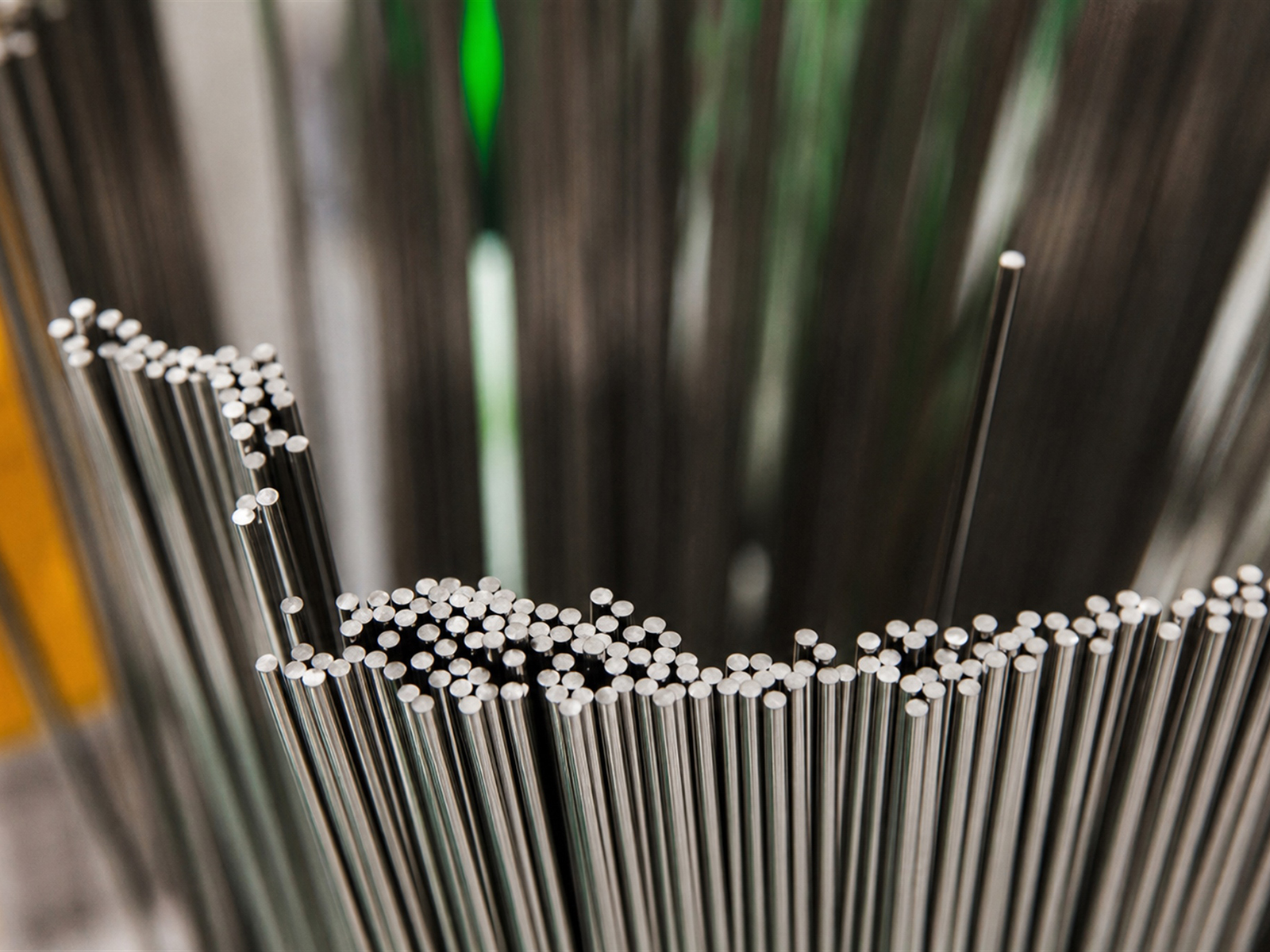
In demanding sectors such as chemical corrosion protection, marine engineering, medical devices, and precision electronics, material selection directly affects equipment service life and operating costs. Gr1 titanium bar (Grade 1 Titanium Rod) corresponds to UNS R50250 in ASTM B348; it is a commercially pure titanium grade, with titanium as the balance, extremely low impurity levels, and a combination of good ductility, corrosion resistance in chloride environments, and biocompatibility.
However, it must be made clear that Gr1 is a low-strength commercially pure titanium and is not suitable for highly loaded structural components; its corrosion resistance is outstanding in oxidizing acids, neutral environments, and chloride-containing media, but it has clear limitations in non-oxidizing acids such as hydrochloric and sulfuric acid. This article objectively reviews the advantages, limitations, and applicable boundaries of Gr1 titanium bar from the perspectives of material characteristics, processing and forming, corrosion resistance mechanisms, typical applications, and selection essentials, helping procurement engineers and technical decision-makers make more reliable material selections.
1. Material Characteristics of Gr1 Titanium Bar: Purity, Microstructure, and Physical Properties
(1) Extremely Low Impurities and Stable Material Quality
Gr1 titanium bar corresponds to UNS R50250 in ASTM B348 and is equivalent to the internationally recognized CP (Commercially Pure) Grade 1. Per the correspondence between ASTM B348 and GB/T 3620.1-2016, the chemical composition of Gr1 is expressed with titanium as the balance, with a commonly used simplified acceptance control value of Ti ≥ 99.30%, while strictly limiting impurity levels: Fe ≤ 0.20%, O ≤ 0.18%, N ≤ 0.03%, C ≤ 0.08%, H ≤ 0.015%.
The strict control of impurity levels makes batch-to-batch properties highly consistent, reducing the risk of localized embrittlement or property fluctuation caused by impurity concentration, and supports stable production of precision components. Note, however, that titanium contents of “≥99.5%” and “≥99.30%” should not be used interchangeably in the same context; ASTM B348 Grade 1 is normally expressed with titanium as the balance rather than using two different lower limits at once.
(2) α-Type Microstructure and Mechanical Property Boundaries
Near room temperature, Gr1 pure titanium is in the α phase, with a hexagonal close-packed (HCP) crystal structure. It should be particularly noted that pure titanium is not “phase-transformation-free”: it undergoes an α→β allotropic transformation at approximately 882℃. If only the room-temperature microstructure is discussed, a qualifier should be added; it cannot be simply described as “no phase transformation.”
Moreover, the HCP crystal itself exhibits mechanical property anisotropy, and whether an overall bar behaves isotropically depends on texture and processing history, so Gr1 bar cannot be broadly described as having “mechanically isotropic properties.” Gr1 has a stable microstructure and good batch consistency that support property predictability, but its fatigue strength as a commercially pure titanium is not high, and the α-type microstructure should not be directly equated with “good fatigue resistance.”
In terms of mechanical properties, the minimum tensile strength of Gr1 in the annealed condition is about 240 MPa, minimum yield strength about 170 MPa, and elongation no less than 24%. Its strength is clearly lower than Ti-6Al-4V and most load-bearing structural steels; therefore, strength and fatigue checks are mandatory in any structural selection involving load, and the material should not be chosen solely on the basis of corrosion resistance or ductility advantages.
(3) Well-Rounded Physical Properties, but High-Temperature Applications Require Caution
Physical Parameter | Typical Value for Gr1 Titanium Bar | Typical Low-Carbon Steel Reference |
Density (g/cm³) | 4.51 | 7.85 |
Melting Point (°C) | ≈ 1660–1680 | ≈ 1425–1530 (depending on carbon content) |
Magnetic Properties | Nonmagnetic | Magnetic |
Coefficient of Thermal Expansion (×10⁻⁶/°C) | ≈ 8.6 | ≈ 11.7 |
The density of Gr1 is about 57% that of steel, making it competitive in weight-sensitive scenarios such as aerospace and marine. Its relatively high melting point permits brief exposure to elevated temperatures, but this cannot simply be equated with “good dimensional stability in high-temperature service,” because sustained load-bearing at high temperature is limited by strength degradation, creep, and oxidation. Nonmagnetic properties are an important advantage in precision instruments, medical devices, and semiconductor manufacturing.
2. Processing and Forming Characteristics of Gr1 Titanium Bar: Ductility, Weldability, and Machining Process Control
(1) Good Ductility Among Same-Class Commercially Pure Titanium and Cold-Working Friendliness
The annealed elongation of Gr1 titanium bar is generally no less than 24%, making it one of the more ductile commercially pure titanium grades. This means the material is less prone to cracking in cold working operations such as cold drawing, bending, stamping, and stretching, which is favorable for forming complex shaped parts. However, the actual forming limit still depends on bar condition, bend radius, and forming route and cannot be judged by elongation alone.
(2) TIG and Electron Beam Welding Can Both Be Used for Joining, but the Heat-Affected Zone Needs Control
Under well-controlled inert gas shielding, Gr1 titanium bar is compatible with TIG and electron beam welding. The corrosion resistance of welded joints can approach that of the base metal in most corrosive environments, but corrosion resistance approaching the base metal does not mean mechanical properties do not degrade.
The heat-affected zone of pure titanium welds may undergo grain coarsening, which can have some effect on strength, ductility, or fatigue performance. Therefore, absolute statements such as “no performance degradation from welding heat-affected zone grain coarsening” should not be used. In practice, heat input should be controlled, and post-weld treatment or supplementary mechanical evaluation should be performed if necessary.
(3) Machining Process Control
Gr1 pure titanium has low thermal conductivity, making tools prone to overheating and built-up edge during machining. Sharp carbide tools, ample coolant, appropriately reduced cutting speeds, and increased feed rates are recommended to minimize work-hardening risk.
Regarding surface roughness, it should be clarified that surface roughness of Ra≤1.6 can be achieved after cylindrical grinding, finish grinding, or polishing, with the specific value depending on process and equipment; ordinary finishing operations such as turning or milling do not necessarily reach this level, so “Ra≤1.6 after finishing” cannot be stated across the board.
3. Corrosion Resistance Mechanism of Gr1 Titanium Bar: Natural Oxide Film and Media Boundaries
(1) Self-Healing Oxide Film: a Natural Barrier, but Not Stable in All Acids
After contact with oxygen or water, the surface of Gr1 titanium bar spontaneously forms a dense TiO₂ oxide film about 2–10 nm thick, firmly bonded to the substrate. When the surface is cut or scratched, the oxide film generally re-heals fairly quickly in air or oxygen-containing media, but the healing time is affected by temperature, oxidant content, surface contamination, and media conditions, so it should not be uniformly described as “self-repairing within seconds to minutes.”
This oxide film gives titanium bar good corrosion resistance in seawater, alkaline solutions, oxidizing acids, and most chloride-containing media, usually without additional coating. However, in non-oxidizing acids such as dilute hydrochloric and sulfuric acid, the oxide film may not remain stable and the corrosion resistance of titanium drops markedly; therefore, the broad statement “stable long-term service in weak acids” cannot cover all acid types.
(2) Corrosion Resistance Comparison
Corrosive Media | Gr1 Titanium Bar Performance | 304 Stainless Steel Performance |
Seawater (3.5% NaCl) | Excellent corrosion resistance; no pitting tendency | Pitting may occur |
Chloride-containing neutral/weakly alkaline solutions | Highly stable | Pitting and stress corrosion risks |
Alkaline solutions (NaOH) | Stable | Stable |
Oxidizing acids (nitric acid) | Extremely stable, depending on concentration and temperature | Stable |
Non-oxidizing acids (hydrochloric, sulfuric) | Generally not resistant, unless oxidants or inhibitive conditions are present | Depends on concentration; noticeable corrosion possible |
For chloride-dominated scenarios such as coastal plants, seawater desalination units, and electroplating shops, the chloride corrosion resistance of Gr1 titanium bar is generally superior to 304 stainless steel. However, this advantage should not be extended to all corrosive media; service-condition testing is mandatory, particularly in reducing acid environments.
(3) High-Temperature Oxidation Stability and Dimensional Stability Limits
Gr1 can maintain a stable oxide film in air up to about 300℃ and has reasonably good short-term resistance to high-temperature oxidation. However, its high-temperature strength is low, and it should not be used for load-bearing hot-section aerospace structural components; such parts typically require high-temperature titanium alloys or Ti-6Al-4V.
At the same time, the statement “negligible dimensional change under sustained service ≤300℃” is not rigorous. The coefficient of thermal expansion of titanium is about 8.6×10⁻⁶/°C; over a 300℃ temperature difference, each meter of length changes by about 2.58 mm, which can be a noticeable deviation for precision parts. Therefore, designs involving dimensional stability should calculate the thermal expansion and implement compensation or temperature control measures rather than simply calling it “negligible.”
4. Typical Applications and Limitations of Gr1 Titanium Bar in Key Industries
(1) Chemical and Marine Engineering
In chemical corrosion protection, Gr1 titanium bar can be used for heat exchanger tubesheets, titanium tie rods, reactor agitator shafts, and flange fasteners. In seawater desalination units, titanium fittings and titanium electrode bars typically outlast ordinary stainless steel parts. Nonmagnetic structural parts in marine monitoring instruments also often use Gr1 pure titanium. Note, however, that Gr1’s advantage in chloride environments does not mean it suits all chemical media. Media type, concentration, temperature, and flow velocity should be defined before selection, in particular ruling out reducing acids and certain high-temperature, high-pressure conditions.
(2) Medical and Biocompatibility
Medical-grade Gr1 titanium bar should normally be evaluated and supplied per standards such as ASTM F67, ISO 5832-2, or GB/T 13810; stating simply that the material itself “meets biocompatibility” is incomplete. Compared with the alloyed Gr5 (Ti-6Al-4V), Gr1 is of greater interest to medical device engineers in non-load-bearing parts that directly contact blood or soft tissue because of its fewer alloying elements. However, Gr1 has low strength and is not suitable for high-load orthopedic implant bodies.
(3) Electronics, Semiconductor, and Precision Instrument Industries
Industry | Typical Application | Core Advantage of Gr1 Titanium Bar | Limitations to Note |
Semiconductor manufacturing | Vacuum chamber components, sputter target supports | Nonmagnetic, low outgassing, high purity | High-temperature/load-bearing applications need evaluation |
Precision instruments | Sensor shafts, nonmagnetic connecting rods | Nonmagnetic, good thermal stability | Low strength |
Food/pharmaceutical | Agitator shafts, fixtures, clamps | Biocompatible, resistant to cleaning media | Reducing acids should be avoided |
Electroplating anodes | Titanium electrode bars, titanium racks | Outstanding function as corrosion-resistant carrier | Titanium conductivity is clearly lower than copper and aluminum |
In semiconductor thin-film deposition equipment, Gr1 titanium bar can be used for components requiring nonmagnetic properties, low outgassing, and cleanliness. However, if higher temperature and load-bearing requirements also exist, the material strength should be rechecked; suitability should not be inferred simply from a low thermal expansion coefficient and high melting point.
In electroplating anode applications, titanium’s core value lies in its stability as a corrosion-resistant carrier and rack, not in “reliable electrical conductivity.” The conductivity of titanium is clearly lower than copper and aluminum, so it should not be described as a highly conductive material.
5. Quick Reference for Sizing, Surface Condition, and Tolerance Selection
(1) Comparison of Four Surface Conditions and Their Applicable Scenarios
Gr1 titanium bar can be classified into four categories by surface treatment:
- Black surface bar (hot rolled/forged): diameters generally above φ20 mm, with oxide scale on the surface, suitable for subsequent turning or milling. For small-diameter black surface bar, the tolerance can reference ±1.0 mm, but the actual supply tolerance of φ100–φ300 mm hot-rolled/forged large-diameter bar is usually larger and should be determined by mutual agreement rather than directly applying ±1.0 mm.
- Turned bar (hot worked + turning): diameters generally above φ10 mm, Ra about 3.2–6.3, can be used directly for assembly and welding, with the tolerance referencing ±0.3–0.5 mm or per drawings.
- Polished bar (cold drawn / finish ground): diameters generally φ4–φ50 mm, Ra≤1.6. Outer diameter precision can be specified as lowercase h7/h8, but should not be written as hole tolerances H7/H8, nor should h7/h8 be simply equated to ±0.05–0.2 mm. Specific tolerances should be determined by diameter, standard, and process capability.
- Pickled bar: pickling removes oxide scale and reveals the metallic base color, but the surface is not “mark-free.” Rough traces from prior hot working or machining may remain after pickling, and surface roughness depends on the preceding process.
(2) Quick Reference for Sizing Selection
Application Type | Recommended Surface Condition | Common Diameter Range | Tolerance Requirements |
Precision shafts / sensor structural parts | Polished bar | φ4–φ30 mm | Per h7/h8 or drawings; to be confirmed |
Chemical flanges / agitator shafts | Turned bar | φ20–φ100 mm | ±0.3–0.5 mm or per drawings |
Forged large-diameter structural parts | Black surface bar | φ100–φ300 mm | By mutual agreement; usually greater than ±1.0 mm |
Welded pipe fittings / electrode bars | Pickled bar | φ8–φ80 mm | Per drawings |
(3) Custom Processing and Certification Support
Gr1 titanium bar can be custom-made to drawings for diameter, length, and surface condition, and material test certificates (MTC) and third-party inspection reports can be provided. For bar standards, ASTM B348 and GB/T 2965 can be cited; for medical use, ASTM F67, ISO 5832-2, or GB/T 13810 can be referenced. AMS 4901 should not be used as the primary standard for Gr1 titanium bar, because AMS 4901 is typically used more for titanium sheet/strip.
For buyers with special metallurgical requirements, melt traceability records for double vacuum arc remelting (VAR×2) can be provided. However, melt records only reflect the melting process and raw material source and cannot alone replace finished-product performance testing and standard conformity verification; material certificates, third-party inspection reports, and batch performance data remain the governing documents.
6. Conclusion
The advantages of Gr1 titanium bar mainly include: high purity, low impurities, good ductility, outstanding corrosion resistance in seawater and chloride-containing neutral/oxidizing environments, nonmagnetic properties, and good biocompatibility. Its limitations must also be acknowledged: low strength, low fatigue strength, limited corrosion resistance in reducing acids, machining requires control of built-up edge and overheating, and tolerances and roughness under different surface conditions must be agreed per standard or drawing. Therefore, Gr1 is better suited to low-stress service where corrosion resistance, ductility, nonmagnetic properties, or biocompatibility are the primary requirements, and it should not be used as a high-strength load-bearing material. Correctly recognizing its applicable boundaries allows its performance potential to be realized while reducing life-cycle service risk.
FAQ
(1) Q1: What are the main differences between Gr1 and Gr5 titanium bar, and which is more suitable for my project?
Gr1 is commercially pure titanium with good ductility, strong corrosion resistance, and low strength, suitable for chemical, medical, and low-stress welded structural parts. Gr5 (Ti-6Al-4V) has higher strength and is suitable for load-bearing structures, but its corrosion resistance is generally not as good as Gr1. The choice depends on the relative weighting of strength versus corrosion resistance in the service conditions.
(2) Q2: Is Gr1 titanium bar necessarily more durable than 316L stainless steel in chloride-containing corrosive environments?
In most near-neutral, chloride-containing environments, Gr1 is generally more resistant to pitting and stress corrosion than 316L. However, factors such as temperature, pH, flow velocity, crevices, and the presence of reducing acids must also be considered. Corrosion coupon tests or electrochemical testing should be performed under special service conditions, and absolute judgments should be avoided.
(3) Q3: Gr1 titanium bar tends to have built-up edge in precision machining; what practical advice is there?
Sharp PVD-coated carbide tools can be used, with a common empirical cutting speed range of 40–80 m/min; actual parameters should be adjusted per bar diameter, machine rigidity, and tool overhang. Generous coolant flow is also recommended to avoid dry cutting, and increased feed with reduced depth of cut helps lower built-up edge and work-hardening risk.
Contact Us
For Gr1 titanium bar technical documentation, material certificates, or custom gauge support, contact a professional supplier for service-condition evaluation: sales@titaniumvalleys.com
References
- National Technical Committee on Nonferrous Metals Standardization. GB/T 2965-2007 Titanium and Titanium Alloy Bars [S]. Beijing: China Standards Press, 2007.
- National Technical Committee on Nonferrous Metals Standardization. GB/T 3620.1-2016 Designation and Composition of Titanium and Titanium Alloys [S]. Beijing: China Standards Press, 2016.
- National Technical Committee on Nonferrous Metals Standardization. GB/T 13810-2007 Wrought Titanium and Titanium Alloys for Surgical Implants [S]. Beijing: China Standards Press, 2007.
- Zhang Xiyan, Zhao Yongqing, Bai Chenguang. Titanium Alloys and Their Applications [M]. Beijing: Chemical Industry Press, 2005.
- Wu Chengjian, Chen Guoliang, Qiang Wenjiang. Metal Materials Science [M]. Beijing: Metallurgical Industry Press, 2000.
- Huang Boyun, Li Chenggong, Shi Likai, et al. China Materials Engineering Canon, Volume 4: Nonferrous Metals Materials Engineering [M]. Beijing: Chemical Industry Press, 2006.
- Zhao Yongqing, Chen Yonglai, Zhang Xuemin, et al. Phase Transformations and Heat Treatment of Titanium Alloys [M]. Changsha: Central South University Press, 2012.
- National Technical Committee on Nonferrous Metals Standardization. GB/T 3620.2-2007 Permissible Deviations in Chemical Composition for Wrought Titanium and Titanium Alloy Products [S]. Beijing: China Standards Press, 2007.
Published by: Titanium Valleys
Technical review: General Manager of the Production Department
Quality review: Quality Inspection Department
Last reviewed: October 20, 2026