
How Long Is the Shelf Life of Gr1 Titanium Wire?
- Gr1 Titanium Wire
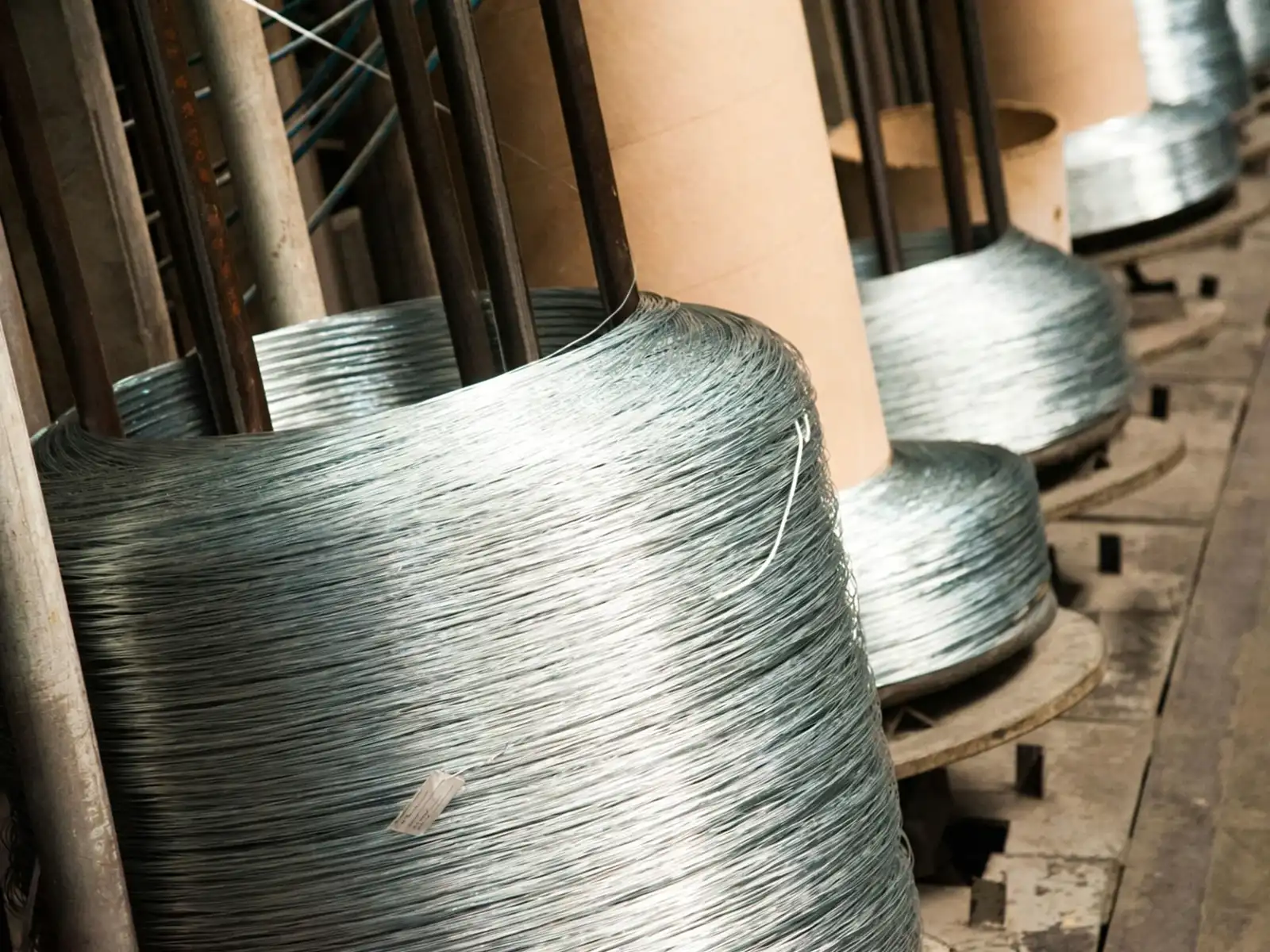
Many purchasing engineers and R&D personnel ask this question during inquiries—does Gr1 titanium wire have a definite shelf life? To answer directly: under proper storage and normal use conditions, Gr1 titanium wire has no fixed “expiration date.” The metal itself is extremely stable chemically, and the naturally formed titanium oxide passivation film on its surface is self-healing; in dry, light-shielded environments free of strongly corrosive gases, it can be stored for extended periods without performance degradation. But this does not mean it may be ignored indefinitely. Surface contamination, localized stress concentration, or changes in processing state caused by improper storage are the real variables affecting the actual service life of titanium wire. The following sections break down these key factors one by one.
1. Material Stability of Gr1 Titanium Wire: Why Is Its Durability So Outstanding?
(1) The Natural Passivation Mechanism of High-Purity Titanium
Gr1 (Grade 1) is one of the commercially pure titanium grades with the strictest impurity control. ASTM controls Gr1 through impurity upper limits and does not directly specify the titanium content; commercially, a nominal purity of ≥99.5% is often cited, but this should be treated only as a commercial reference, not as a standard value. Typical requirements include an oxygen content of ≤0.18% and an iron content of ≤0.20%. The instant titanium is exposed to air, a TiO₂ passivation film approximately 2–10 nm thick spontaneously forms on its surface. This film is dense, stable, and self-healing; even if the surface is locally damaged, it rapidly re-forms in an oxygenated environment, fundamentally blocking the intrusion of corrosive media.
(2) Comparative Advantages over Ordinary Metals
Material | Atmospheric corrosion resistance | Salt-spray resistance | Resistance to acidic media | Magnetism |
Gr1 titanium wire | Excellent, rust-free over the long term | Superior to stainless steel | Good resistance to oxidizing acids, most organic acids, and weak bases; not resistant to strongly reducing acids such as hydrochloric and sulfuric acid—must be judged in combination with concentration and temperature | Non-magnetic |
304 stainless steel wire | Good | Fair | Moderate resistance to oxidizing acids; prone to pitting in chloride-containing media | Solution-annealed condition is usually non-magnetic/weakly magnetic; may become magnetic after cold working |
Copper wire | Prone to oxidation discoloration | Poor | Poor | Non-magnetic |
Aluminum wire | Good | Fair | Poor (corroded by strong alkalis) | Non-magnetic |
As can be seen from the table above, Gr1 titanium wire is clearly superior to most engineering metals in overall corrosion resistance, which is the material foundation for its long-term service. However, acid resistance cannot be discussed in general terms without reference to concentration, temperature, and acid type, and in particular does not apply to strongly reducing acids such as hydrochloric and sulfuric acid.
(3) Time Stability of Mechanical Properties
Per ASTM B863, typical minimum mechanical properties for annealed Gr1 titanium wire are a tensile strength of ≥240 MPa, a yield strength of ≥170 MPa, and an elongation of ≥24%. These mechanical indicators do not naturally decay over time under normal storage conditions—metal fatigue requires cyclic loading as a precondition, and static storage by itself does not consume the mechanical margin. The common hardness range is approximately HV 120–170, which varies somewhat with the annealing process and gauge. The grain structure is thermodynamically stable at room temperature, so there is no need to worry about embrittlement caused by “natural aging.”
2. Key Variables Affecting the “Effective Service Life” of Gr1 Titanium Wire
Although titanium wire itself is stable, real-world storage and handling environments are not ideal. The following variables are the most common in engineering practice, but their risk levels differ: some arise from mechanical damage, others from surface contamination or the warehousing environment.
(1) Surface Contamination and Cleanliness Risks
Titanium has good tolerance to chloride ions, but under extreme conditions where high temperature (>260℃) coexists with high chloride concentration, the passivation film may be locally damaged. It should be clarified that sodium chloride in hand perspiration during room-temperature storage does not form electrochemical micro-cell corrosion on the wire surface; its main effect is to reduce surface cleanliness, which in turn affects subsequent welding quality, medical device cleaning/sterilization compliance, and the visible cleanliness of bright surfaces. Pickled bright surfaces (Ra ≤0.4 μm) more readily show fingerprints, water marks, and residues and require additional packaging protection—but this does not mean bright surfaces are more susceptible to corrosion.
(2) Processing Condition and Residual Stress
Gr1 titanium wire is supplied in three conditions: annealed, half-hard, and hard. Hard-condition wire has higher internal residual stress; if it is stored in a non-standard coiled manner over long periods, the main risks are localized plastic deformation, shape recovery or relaxation, and packaging impressions, rather than spontaneous microcracking at room temperature. At room temperature and in the absence of corrosive media or hydrogen, the risk of spontaneous cracking from residual cold-work stress in commercially pure titanium is very low. By contrast, the residual stress in annealed wire has been relieved by heat treatment, giving it better storage stability.
Supply condition | Tensile strength (MPa) | Yield strength (MPa) | Elongation (%) | Storage sensitivity |
Annealed | ≥240 (ASTM B863 minimum) | ≥170 | ≥24 | Low |
Half-hard | Approx. 300–450 (typical) | Per order requirements | ≥15 | Medium |
Hard | Approx. 400–550 (typical) | Per order requirements | ≥10 | Relatively high |
Note: Half-hard and hard condition properties are typical engineering reference ranges; actual values should comply with the ordered specification and the technical requirements confirmed by both parties.
(3) The Particular Fragility of Ultra-Fine Wire Diameters
For ultra-fine titanium wire with a diameter of ≤0.2 mm (e.g., φ0.06 mm, φ0.08 mm, φ0.1 mm), the cross-sectional area is extremely small, and any mechanical impact or improper handling may cause bending or breakage points. The “effective service life” of ultra-fine wire is limited more by physical damage than by chemical corrosion. In medical devices and precision electronics, management of packaging integrity for ultra-fine titanium wire is more critical than management of storage age.
(4) Temperature, Humidity, and Warehousing Environment
The low-temperature use range of titanium wire can reach −253℃; long-term high-temperature use is generally controlled below about 300℃, with oxidation, surface discoloration, and reduced high-temperature strength to be considered. Short-term exposure at 450℃ should not be treated as an unconditional general limit, because oxidation in air becomes markedly more severe at this temperature. During storage, humidity deserves more attention: high humidity (>85%) may accelerate the aging of packaging materials, indirectly causing failure of the outer protection and raising the risk of oxidation discoloration on exposed surfaces. Slight interference coloring generally does not affect substrate mechanical properties, but whether it is acceptable should be determined by the product specification, sterilization method, and acceptance criteria; medical implant parts should not be blanket-rejected as nonconforming.
3. Assessment of Expected Service Life in Different Application Scenarios
(1) Welding Filler Wire (ERTi-1)
When used as a welding consumable, Gr1 titanium wire corresponds to filler wire grade ERTi-1; ERTi-2 corresponds to Gr2, and the two should not be interchanged. Titanium filler wire is highly sensitive to surface contamination, moisture pickup, and thickening of the oxide film. If an opened spool is not used up promptly, it is recommended to reseal it in a polyethylene bag with desiccant and prioritize its use within 12 months. Unopened, properly packaged product can be stored stably for 3–5 years or more under standard warehousing conditions. For opened coils, a sealed bag with desiccant is more practical than full vacuum or inert-gas sealing.
(2) Chemical and Marine Engineering Structural Components
For titanium wire springs, filter screens, and fasteners used in corrosive media, the service life depends on the medium, concentration, temperature, flow velocity, and load in the actual service conditions, rather than on storage time alone. Gr1 exhibits excellent corrosion resistance in seawater, chloride solutions, and most oxidizing media, but the specific life must be determined in combination with the design fatigue life and corrosion allowance; year-based commitments without defined service conditions should not be given.
(3) Medical Devices and Implant Components
Sterilized medical titanium wire products are typically managed according to the validity period of the device registration certificate, which is often 2–5 years depending on product type, packaging, sterilization method, and validation data, and must be re-evaluated upon expiry. This is a medical regulatory requirement, not a failure of material properties.
(4) Precision Electronics and Elastic Elements
For titanium wire used in non-magnetic springs, sensor leads, and high-frequency shielding components in environments free of corrosive gas and with stable temperature, the elastic modulus is approximately 103 GPa and the room-temperature electrical resistivity is typically about 0.42 μΩ·m (42 μΩ·cm), both remaining stable over the long term. The actual service life can run in step with the equipment’s design life and is generally determined by the equipment’s design life rather than by material aging.
4. Proper Storage and Maintenance: Practical Points for Extending the Service Life
(1) Packaging and Sealing Standards
Gr1 titanium wire is typically shipped with vacuum shrink film or nitrogen-filled inner packaging, plus moisture-proof cartons or wooden cases. If buyers do not use it promptly after receipt, the original packaging should be kept intact; if already opened, the wire must be resealed in a polyethylene bag with desiccant and stored on indoor shelving at a relative humidity of <60% and a temperature of 10–25℃. Storage together with contamination sources such as oils/grease, rust, and hard particles should be specifically avoided; solid chlorides at room temperature present an extremely low corrosion risk to titanium and need not be separately listed as prohibited storage items.
(2) Handling Practices and Surface Protection
Clean cotton gloves should be worn during handling to avoid bare-hand contact with bright surfaces and to prevent chloride and oil contamination from perspiration. Coiled products should be stored upright to avoid deformation from stacking; straight wire products must be laid flat on racks to prevent stress concentration from local bending. Ultra-fine gauge products must be packaged and isolated separately and must not be stored together with hard tools.
(3) Inventory Rotation and Incoming Inspection
A first-in, first-out (FIFO) inventory management system is recommended for stored titanium wire, recording the receipt date, heat number, gauge, and surface condition for each batch. Long-term stock should be visually inspected periodically (recommended every 12 months), focusing on whether the surface shows non-uniform oxidation stains (acceptability to be assessed against the contract specification, color level, or surface contamination grade), whether packaging is damaged, and whether coils are loose or deformed.
5. Common Misconceptions: Typical Misunderstandings About Storage, Strength, and Discoloration
(1) Misconception 1: Titanium Wire Does Not Rust and Needs No Protective Packaging
Titanium wire indeed does not rust like steel, but this does not mean it can be stored exposed. Oil contamination, perspiration residue, and slight oxidation discoloration can all affect the fusion quality of welded joints and the compliance of medical-grade products, especially for types with strict surface roughness requirements (Ra ≤0.4 μm bright surface).
(2) Misconception 2: Hard-Condition Wire Gets Stronger the Longer It Is Stored
This is a misunderstanding about metal aging. Gr1 is a non-heat-treatable commercially pure titanium with no precipitation-hardening mechanism and undergoes no natural aging at room temperature. The strength of hard-condition wire comes from the dislocation density introduced by cold working; this state essentially remains unchanged during room-temperature storage—it neither naturally strengthens nor decays during short-term storage.
(3) Misconception 3: Discolored Titanium Wire Has Damaged Properties and Cannot Be Used
Light yellow and light blue oxidation colors on the wire surface are interference colors caused by variations in the thickness of the TiO₂ passivation film and do not indicate damage to the substrate properties. For welding applications, the surface oxide layer must be removed by pickling before use; for non-welding structural applications, slight oxidation color does not affect mechanical properties, but whether it is within the permissible range must be judged against the specific specification.
6. Conclusion
Gr1 titanium wire has no fixed “shelf life”; the metal itself can remain performance-stable over long periods under proper storage conditions. What truly determines its service life is the level of warehouse management, the severity of the application conditions, and the integrity of surface protection. Understanding these variables is the key to achieving optimal cost and controllable quality across the entire chain of procurement, storage, and use.
FAQ
(1) Q1: How many years can unopened Gr1 titanium wire be stored?
Under standard warehousing conditions that are dry, light-shielded, and free of corrosive gases, unopened Gr1 titanium wire can typically be stored stably for more than 5 years with no obvious decline in metallic properties; it is recommended to periodically visually inspect packaging integrity based on the actual application.
(2) Q2: How much longer can Gr1 titanium wire for welding be used after the package is opened?
After opening, it is recommended to prioritize use within 12 months and to store the wire in a sealed polyethylene bag with desiccant to reduce the risks of surface contamination, moisture pickup, and oxide film thickening. Slight oxide films formed during room-temperature storage can usually be removed by pickling; if the surface still cannot be restored after pickling or shows obvious contamination or abnormal surface layers, continued use in applications with strict joint quality requirements is not recommended.
(3) Q3: Does the appearance of blue or yellow on the surface of Gr1 titanium wire mean it must be scrapped?
Slight interference oxidation colors do not mean the substrate properties are damaged. The wire can continue to be used for structural applications; for welding applications, the surface must be pickled before use. The acceptance criterion is the surface quality grade requirement in the actual specification.
Contact Us
Baoji Titanium Valley Titanium-Nickel-Zirconium Materials Processing Co., Ltd.—a professional Gr1 titanium wire manufacturer and supplier providing customized gauges, surface treatments, and stable volume supply services. For purchasing requirements, please contact us at: sales@titaniumvalleys.com
References
- National Technical Committee on Nonferrous Metals Standardization. GB/T 3620.1—2016 Titanium and titanium alloys—Designation and chemical composition [S]. Beijing: Standards Press of China, 2016.
- National Technical Committee on Nonferrous Metals Standardization. GB/T 3623—2022 Titanium and titanium alloy wire [S]. Beijing: Standards Press of China, 2022.
- Zhang Xiyan, Zhao Yongqing, Bai Chenguang. Titanium Alloys and Applications [M]. Beijing: Chemical Industry Press, 2005.
- Huang Boyun, Li Chenggong, Shi Likai, et al. China Materials Engineering Canon: Vol. 4, Nonferrous Metals Materials Engineering (Part 1) [M]. Beijing: Chemical Industry Press, 2006.
- National Technical Committee on Biological Evaluation of Medical Devices. GB/T 16886.1—2022 Biological evaluation of medical devices—Part 1: Evaluation and testing within a risk management process [S]. Beijing: Standards Press of China, 2022.
Material procurement note
For a controlled material order, specify the grade, dimensions and tolerances, condition, surface requirement, delivery form, quantity, service context and applicable documentation. The supplied material should be reviewed against the project specification and finished-component requirements.
See the related material category or request a technical quotation with the drawing, material specification and required documentation.