
What Are the Key Properties of Ti-15V-3Al-3Cr-3Sn Titanium Foil That Engineers Should Know?
- Ti-15V-3Al-3Cr-3Sn Titanium Foil
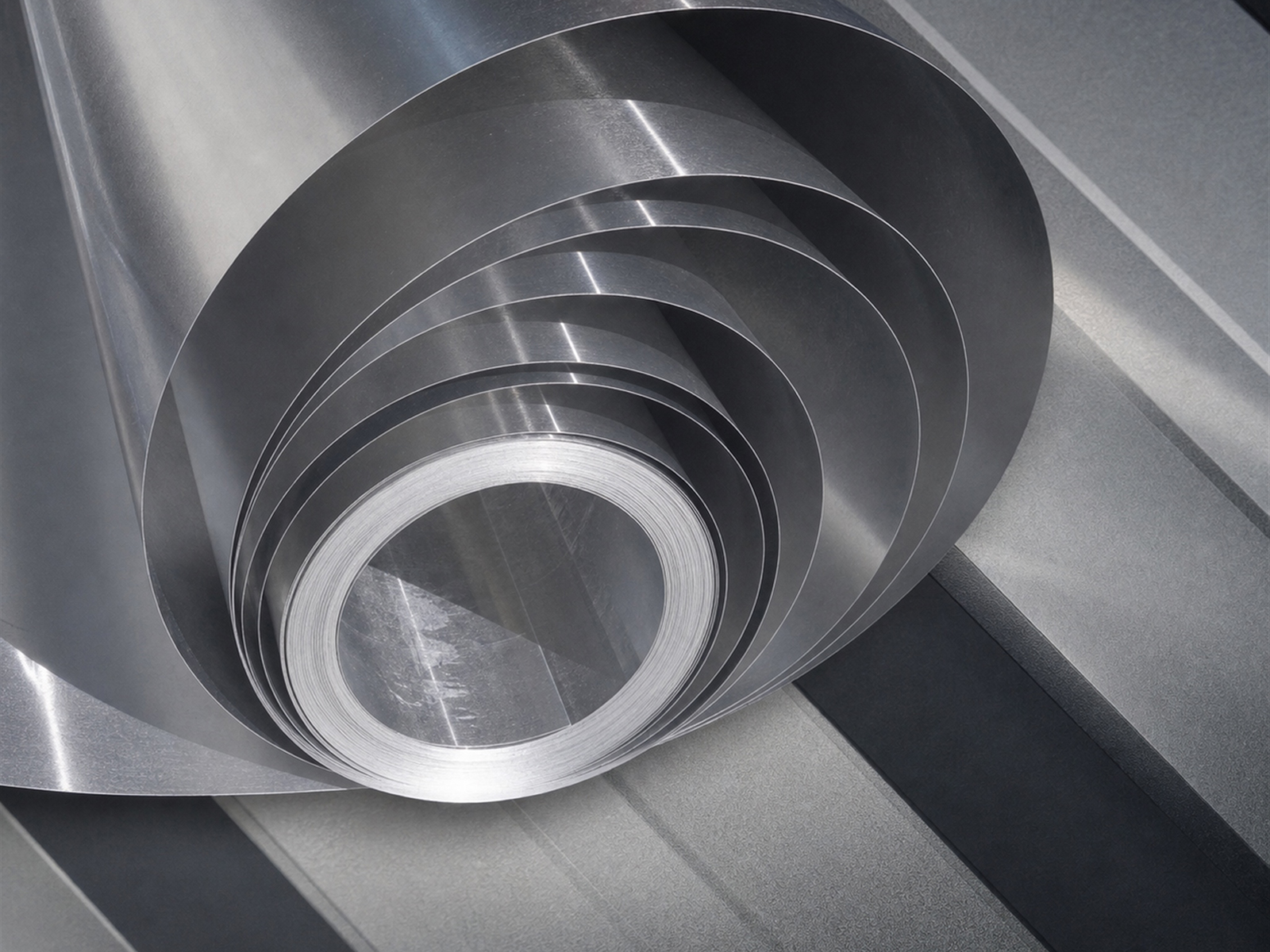
Direct engineering answer. Ti-15V-3Al-3Cr-3Sn Titanium Foil should be evaluated against the finished component, product form, governing specification, downstream process and acceptance evidence. A general property value is an orientation tool; the released drawing, current certificate and inspection plan control the final decision.
For engineers working on aerospace structural parts, precision electronic devices, or high-end manufacturing, material-selection decisions directly affect product performance ceilings and production yields. Ti-15V-3Al-3Cr-3Sn titanium foil is a near-β titanium alloy that offers good cold formability in the rapidly cooled condition from the β-phase field (β condition) and high strength after aging treatment. Its main engineering value is that the forming stage and the final-strength stage can be controlled separately, a clear difference from conventional titanium alloys such as Gr5. This article organizes the key information engineers need for real projects, from alloy characteristics and process logic to application scenarios and selection recommendations.
1. Alloy Fundamentals: Why the Near-β Structure Determines Everything
(1) Effects of Alloying Elements on Phase Structure
In this alloy, V (vanadium) and Cr (chromium) are the main β-stabilizing elements, allowing the β phase to be retained to room temperature through rapid cooling. Sn (tin) is generally a neutral or weakly α-stabilizing element in titanium alloys; in this alloy system it mainly strengthens the β matrix and improves thermal stability. Al (aluminum), as an α stabilizer, promotes the fine, dispersed precipitation of α phase in the β matrix during aging, thereby significantly increasing strength.
(2) Microstructural Differences Between the β Condition and the Aged Condition
After heating and holding in the β-phase field and rapid cooling, the alloy is dominated by metastable β phase; dislocation motion encounters lower resistance and slip systems are relatively easy to activate, giving plastic deformation capability markedly superior to that of typical α+β alloys. After aging heat treatment, fine α phase precipitates dispersedly in the β matrix, forming an age-hardened microstructure. This transformation is controllable and is the basis for exploiting the alloy’s property adjustability in engineering.
(3) Engineering Value of Density and Specific Strength
Ti-15V-3Al-3Cr-3Sn has a density of about 4.76 g/cm³, slightly higher than commercially pure titanium and Gr5. Its real value lies in the fact that complex forming is possible in the β condition, and high strength can be achieved after aging. For weight-sensitive aerospace thin-walled structural parts, this “form first, strengthen later” process route is often more meaningful from an engineering standpoint than a simple density comparison.
2. Staged Control of Processing and Properties: The Core Logic to Understand Most
(1) The Cold-Forming Window Afforded by the β Condition
In the β condition, Ti-15V-3Al-3Cr-3Sn foil has good cold bending, stamping, and forming capability and can be shaped into relatively complex geometries without readily cracking. This forming window is practically meaningful for thin-walled structural parts, curved skins, or multi-layer laminated materials. Compared with Gr5 — which exhibits greater springback and a higher tendency to crack during cold forming — Ti-15V-3Al-3Cr-3Sn offers better formability at suitable thicknesses and process conditions, without sacrificing subsequent age-hardening potential.
(2) Achieving Strength Enhancement Through Aging Treatment
After complex forming is completed, the part can be strengthened by aging heat treatment. During aging, fine α phase precipitates from the β matrix, and strength parameters can be adjusted over a fairly wide range through aging temperature and time. This means engineers can tailor the final mechanical properties of a part to end-use load requirements without having to pay a forming-difficulty penalty to maintain high strength during processing.
(3) Comparison with Gr5: Why Conventional High-Strength Titanium Alloys Are Limited in Ultra-Thin Foil Applications
Comparison Item | Gr5 (Ti-6Al-4V) | Ti-15V-3Al-3Cr-3Sn |
Alloy Type | α+β | Near-β |
Cold Forming Capability | Large springback, higher cracking tendency | Good; can form complex parts |
Strength Adjustability | Can be adjusted to a certain extent through heat treatment and work hardening | β-condition forming and age hardening; wide adjustment range |
Ultra-Thin Foil Production Difficulty | Higher; pronounced work hardening during cold rolling | Lower; high cold-rolling ductility reserves |
Typical Application Positioning | General high-strength structural parts | Aerospace precision structures and thin-walled parts |
Gr5 can be adjusted to a certain extent through heat treatment and work hardening, but its cold-forming ductility reserves are lower than those of Ti-15V-3Al-3Cr-3Sn. By combining β-condition forming with age hardening, Ti-15V-3Al-3Cr-3Sn places “ease of processing” and “high strength” in different process stages, reducing the conflict between forming complex thin-walled parts and achieving final performance.
3. Foil Specifications, Tolerances, and Surface Quality
(1) Standard Specification Range and Thickness Tolerance Tiers
Parameter | Standard Range | Custom Range or Notes |
Thickness | 0.02–1.0 mm | ≥0.005 mm |
Width | 15–680 mm | Customer-customizable |
Supply Form | Coil / strip / cut-to-length sheet | Customizable |
Surface Condition | Bright / matte | Selected per application |
Thickness Tolerance | Controlled in thickness brackets | ≤0.05 mm: ±0.003 mm; 0.05–0.2 mm: ±0.01 mm; 0.2–1.0 mm: ±0.05 mm |
The customizable lower thickness limit of 0.005 mm means this material can enter the microelectronics and optical precision-device fields. For engineers in precision electronics or battery manufacturing, thickness consistency and flatness control in ultra-thin gauges are key evaluation criteria.
(2) Core Equipment and Process Assurance
The production line’s 750 mm 20-high precision cold rolling mill can reach a maximum rolling speed of 400 m/min and a maximum rolling force of 3500 kN, and is used primarily for thickness reduction and flatness control of ultra-thin, wide strip. For the 0.02 mm gauge, a closed-loop thickness-control system is required to ensure batch dimensional consistency. The continuous annealing line uses 7-zone electric heating control, with equipment capable of a maximum temperature of 1100℃ and temperature-control accuracy of ±2℃. It should be noted that 1100℃ is the equipment capability ceiling; the actual annealing or β-phase-field treatment temperature for titanium alloys must be set according to the alloy’s transformation temperature and target microstructure, not used directly at this ceiling.
(3) Engineering Significance of Surface-Quality Control
After the ultrasonic cleaning line, surface wetting tension can reach 40 dynes/cm (40 mN/m) or higher, at a maximum line speed of 30 m/min. High surface activity directly affects subsequent processes such as coating adhesion, bonding/lamination, or precision welding. A grinding line is used to improve surface uniformity and interfacial bonding performance. Inert-gas or vacuum protection is applied throughout the process to suppress oxidation contamination and surface-property variation, which is critical in batch production of precision parts.
4. Typical Engineering Application Scenarios
(1) Aerospace Thin-Walled Structural Parts
Large thin-walled structural parts often face weight-reduction challenges, forming difficulty, and insufficient dimensional consistency. Ti-15V-3Al-3Cr-3Sn foil can be cold-formed into relatively complex shapes in the β condition and then brought to aerospace-grade mechanical properties through aging treatment. This process route can reduce hot-forming tooling costs and improve part geometric accuracy and lot consistency, making it of reference value for aerospace structural-part programs with dimensional-consistency requirements.
(2) Electromagnetic Compatibility and Precision Electronic Devices
Titanium alloys have lower electrical conductivity than copper and aluminum and are therefore not suitable as primary materials for efficient electromagnetic shielding. However, in certain electronic devices that require a combination of lightweighting, corrosion resistance, and some degree of electrical conductivity, Ti-15V-3Al-3Cr-3Sn titanium foil can serve as part of a shielding lining, ground plane, or structural shielding layer. Its non-magnetic character helps reduce additional interference to magnetically sensitive devices, but non-magnetism itself does not directly determine shielding effectiveness. For large-area shielding layers, using wide foil reduces the risk of seam leakage caused by joint gaps — an advantage of its dimensional offering.
(3) Composite Materials and Laminated Structures
In multi-layer laminated structures, interfacial discontinuities, uneven bond strength, and poor structural stability are common problems. Titanium foil surfaces treated by grinding and cleaning exhibit higher bonding activity, improving interfacial bond quality with polymer matrices or other metal layers. In the development of hydrogen-energy equipment and novel composite structures, this surface quality is of practical significance for bonding reliability.
5. Side-by-Side Comparison with Mainstream Titanium Alloy Foils and Selection Recommendations
(1) Essential Differences Between Commercially Pure Titanium Foil and Alloy Foil
Material Grade | Strength Level | Cold Formability | Typical Applications |
Gr1 titanium foil | Lowest | Best | Extreme forming operations |
Gr2 titanium foil | Medium | Good | General industrial applications |
Gr4 titanium foil | Relatively high among CP titanium | Reduced | Applications with higher load-bearing requirements |
Gr5 titanium foil | High | Poor | General high-strength structural parts |
Ti-15V-3Al-3Cr-3Sn | High (adjustable) | Good | Aerospace precision structures and thin-walled devices |
(2) Core Decision Logic for Material Selection
Ti-15V-3Al-3Cr-3Sn titanium foil is generally the better choice when an engineering project simultaneously meets the following conditions: complex part geometry, a need for relatively high strength after forming, weight sensitivity, and high requirements for tolerance consistency and surface quality in batch production. If the part geometry is simple and the strength requirement is moderate, Gr2 or Gr4 offers better cost-effectiveness.
(3) Compliance and Certification Standards
Ti-15V-3Al-3Cr-3Sn corresponds to UNS number R58030, not R56400; R56400 corresponds to Ti-6Al-4V (Gr5). Sheet, strip, and foil of this alloy can generally be supplied in accordance with ASTM B265, “Standard Specification for Titanium and Titanium Alloy Strip, Sheet, and Plate,” or the ordering specification agreed between supplier and purchaser. For aerospace applications, the applicable AMS or SAE specifications should be further confirmed.
6. Conclusion
Ti-15V-3Al-3Cr-3Sn titanium foil’s core value is that it integrates forming freedom and strength controllability in a single material system, giving engineers greater room for optimization between design and manufacturing. For developers of precision structural parts, lightweight aerospace components, or large-area functional devices, this material is worth adding to the material-selection candidate list.
FAQ
(1) Q1: What strength level can Ti-15V-3Al-3Cr-3Sn titanium foil reach after aging treatment, and can its strength be adjusted for specific load requirements?
The mechanical properties of Ti-15V-3Al-3Cr-3Sn titanium foil can be adjusted through the aging schedule. In the β condition, ultimate tensile strength is typically on the order of 800–1000 MPa; after a typical aging treatment, ultimate tensile strength can reach about 1000–1240 MPa, with typical yield strength of about 900–1150 MPa, depending on thickness, aging temperature, and holding time. Engineers can match a wide range of load requirements by adjusting the aging parameters.
(2) Q2: Compared with Gr5 (Ti-6Al-4V) titanium foil, what substantive process advantages does Ti-15V-3Al-3Cr-3Sn offer in batch production of ultra-thin, wide-gauge material?
Ti-15V-3Al-3Cr-3Sn is a near-β alloy with higher cold-rolling ductility reserves than Gr5, so the risk of edge cracking and strip breakage during multi-pass precision cold rolling is relatively lower, making it better suited to batch production of ultra-thin, wide strip at the 0.02 mm level. Equipment capabilities such as closed-loop thickness control are a guarantee of quality consistency, but the material’s inherent cold-rolling adaptability is the more fundamental difference.
(3) Q3: Is Ti-15V-3Al-3Cr-3Sn titanium foil suitable for composite-structure applications requiring coating or bonding? What effects does surface condition have on subsequent processes?
After grinding and ultrasonic cleaning, surface wetting tension can reach 40 dynes/cm (40 mN/m) or higher, improving coating adhesion and interfacial bond strength for bonding. Both bright and matte surfaces can be selected according to application needs, making the material suitable for engineering scenarios with demanding surface-quality requirements such as composite lamination, functional coatings, and precision bonding.
Contact Us
Looking for a professional Ti-15V-3Al-3Cr-3Sn titanium foil manufacturer, supplier, or plant? Titanium Valley offers a full range of custom services from 0.005 mm ultra-thin gauges to wide strip. Contact us: sales@titaniumvalleys.com
References
- Zhang Xiyan, Zhao Yongqing, Bai Chenguang. Titanium Alloys and Applications [M]. Beijing: Chemical Industry Press, 2005.
- Wang Jinyou, Ge Zhiming, Zhou Yanbang. Aerospace Titanium Alloys [M]. Beijing: Metallurgical Industry Press, 1985.
- National Nonferrous Metals Standardization Technical Committee. GB/T 3620.1—2016 Designation and Chemical Composition of Titanium and Titanium Alloys [S]. Beijing: Standards Press of China, 2016.
- National Nonferrous Metals Standardization Technical Committee. GB/T 3621—2007 Titanium and Titanium Alloy Plates [S]. Beijing: Standards Press of China, 2007.
- National Nonferrous Metals Standardization Technical Committee. GB/T 3622—2012 Titanium and Titanium Alloy Strip and Foil [S]. Beijing: Standards Press of China, 2012.
Engineering specification and verification framework
For Ti-15V-3Al-3Cr-3Sn Titanium Foil, state grade, ordered product form, condition, nominal dimensions, tolerances, surface requirement, quantity and documentation in one controlled RFQ. The applicable product-form reference is ASTM B265, subject to the current edition and project-specific requirements. When tensile evidence is required, define the test method and sampling basis; ASTM E8/E8M or ISO 6892-1 may apply where consistent with the order.
| RFQ field | Required detail | Reason |
|---|---|---|
| Material identity | Grade, form, ASTM B265, condition | Prevents unintended substitution. |
| Geometry | Nominal size, tolerance, length or coil form | Defines production and inspection scope. |
| Process context | Forming, machining, joining, etching or assembly | Relates supply condition to actual manufacture. |
| Verification | Certificate, dimensional checks, lot identity | Creates a traceable acceptance plan. |
Risk review and incoming control
Common avoidable risks include tolerance stack-up, unclear condition, surface damage, undocumented substitution and loss of lot identity after cutting. At receipt, reconcile the purchase order, packing label and certificate before release to production. Define any supplementary testing, sampling and report format before quotation rather than after shipment.
Technical FAQ
Can catalogue values approve the material?
No. Final approval must use the ordered form, condition, standard, drawing, process route and service boundary.
What should an RFQ include?
Provide the drawing where available, grade and standard, dimensions, tolerance, condition, quantity, process context, service information and documentation requirement.
Product resources and technical quotation
Review the relevant titanium foil product category. For a drawing-based review, request a technical quotation with the full specification.
References and use note
- ASTM B265, applicable edition, for the ordered product form.
- ASTM E8/E8M or ISO 6892-1 where the project specifies tensile verification.
- Project drawing, purchase specification, certificate and agreed inspection plan.
This engineering note supports procurement specification. It does not replace component design validation or the governing contractual standard.