
Why Do Desalination Plants Use Gr2 Titanium Rods?
- Gr2 Titanium Rods
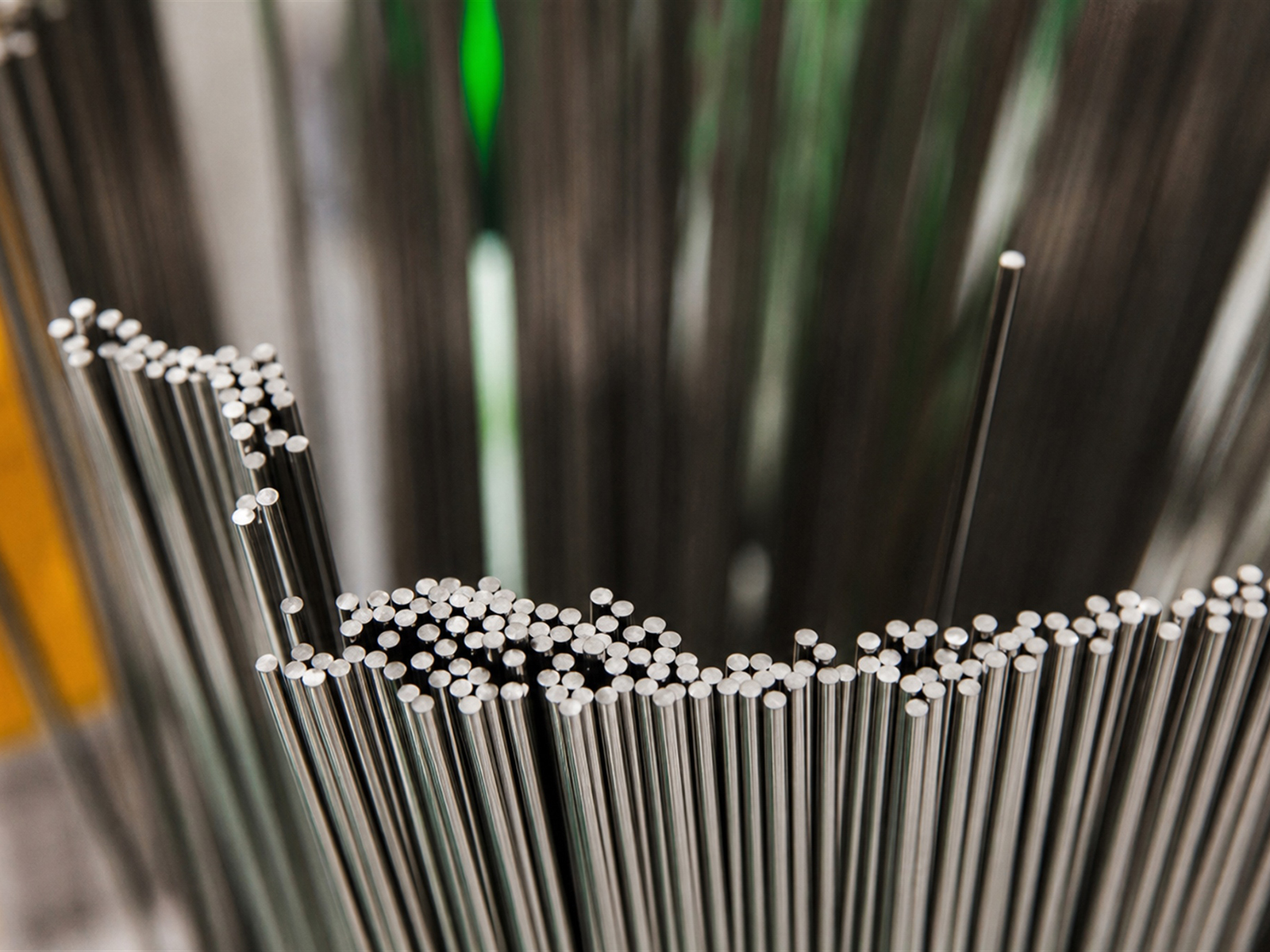
Direct engineering answer. Gr2 Titanium Rods should be evaluated against the finished component, product form, governing specification, downstream process and acceptance evidence. A general property value is an orientation tool; the released drawing, current certificate and inspection plan control the final decision.
Desalination plants are immersed for extended periods in highly corrosive media with high chloride concentrations and high salinity, imposing extremely demanding corrosion-resistance requirements on structural materials. Gr2 titanium rod (commercially pure titanium Grade 2, UNS R50400) has become one of the most competitive metal materials in desalination thanks to its self-healing surface oxide film, a density of just 4.51 g/cm³ that offers clear weight-saving advantages, and good weldability and processability. This is the core reason why mainstream desalination projects worldwide select Gr2 commercially pure titanium rod.
1. The Corrosive Nature of Seawater: Why Do Ordinary Metals Fail Faster Here?
Seawater is not simply “salt water.” It is a complex corrosive electrolyte containing chloride ions (Cl⁻), sulfate ions (SO₄²⁻), bromides, dissolved oxygen, and a variety of microorganisms. It is precisely this complex chemical environment that dramatically shortens the service life of most industrial metals in seawater.
(1) Chloride-Induced Pitting: The Damage Stainless Steel Can Least Withstand
Chloride ions have a small hydrated radius and high mobility, giving them strong penetrative ability to break down the passive film on stainless steel surfaces and initiate localized pitting. In the reverse osmosis (RO) high-pressure piping and evaporator internal walls of desalination plants, uneven flow velocity, pressure fluctuations, and high chloride concentration combine to significantly increase the pitting and crevice corrosion risk of 316L stainless steel; under high-temperature evaporation and brine concentration conditions, stress corrosion cracking (SCC) may also be induced, causing premature component failure.
(2) Crevice Corrosion: Hidden Risks at Flange and Bolted Connections
Desalination equipment contains numerous flange sealing faces, bolt holes, and tube-to-tubesheet expansion regions in heat exchangers. Within these geometric crevices, dissolved oxygen is rapidly consumed and localized acidification intensifies, forming an “oxygen concentration cell” that drives continued crevice corrosion. Carbon steel and low-alloy steel under such conditions often undergo progressive wall thinning and require frequent maintenance or replacement.
(3) Synergistic Acceleration by Biofouling and Microbially Influenced Corrosion (MIC)
Sulfate-reducing bacteria (SRB) attached in seawater form a biofilm on metal surfaces, creating a locally acidic microenvironment that acts synergistically with electrochemical corrosion to accelerate metal dissolution. This phenomenon is especially pronounced in offshore platform piping and evaporative condensers, making the maintenance costs high for materials that rely on protective coatings.
2. Gr2 Titanium Rod Material Properties: Why Is It a Natural Fit for Desalination Service?
(1) Self-Healing Oxide Film: A Natural Barrier Requiring No Coating
Titanium immediately forms a dense TiO₂ oxide film, about 2–7 nm thick, in oxygen-containing environments. This film is extremely stable chemically in seawater; even if scratched or locally damaged, it can repassivate and restore its protective ability within a very short time upon contact with oxygen-containing media. The exact repair time depends on conditions such as the medium, temperature, and potential, but in oxygenated seawater the repassivation ability is far superior to that of stainless steel. This property allows Gr2 titanium rod to serve for long periods without any anti-corrosion coating in fully immersed, splash-zone, and tidal-zone service.
(2) High Tolerance to Chloride Ions: Extremely Low Pitting Tendency
Titanium’s tolerance of chloride ions far exceeds that of stainless steel. In ambient-temperature seawater (pH 7–8, Cl⁻ concentration of about 19, 000 mg/L), the pitting potential of Gr2 titanium is far above its corrosion potential, so the actual pitting tendency is extremely low. In hot concentrated seawater (multi-effect distillation, MED process, temperatures up to 70℃), Gr2 still exhibits a low tendency toward uniform corrosion and pitting; however, in hot concentrated brine, the risk of crevice corrosion may increase if tight crevices, deposits, or low-oxygen conditions are present, so designs should avoid narrow gaps and deposits [2].
(3) Combined Advantage of Light Weight and Structural Strength
The density of Gr2 titanium rod is only 4.51 g/cm³, about 57% that of stainless steel (about 7.96 g/cm³). On large desalination platforms, weight reduction translates into lower foundation loads and easier offshore lifting and maintenance operations. At the same time, Gr2 has a tensile strength of ≥345 MPa and elongation of ≥20%, providing adequate structural rigidity while remaining lightweight, and is not easily deformed by ordinary mechanical impact or water-hammer effects.
Property | Gr2 Titanium Rod | 316L Stainless Steel | Plain Carbon Steel |
Density (g/cm³) | 4.51 | 7.96 | 7.85 |
Tensile strength (MPa) | ≥345 | ≥485 | ≥370 |
Elongation (%, gauge length per respective standard) | ≥20 | ≥40 | ≥26 |
Pitting tendency in seawater | Extremely low | Moderate to high | Extremely high |
Chloride ion tolerance | Excellent | Limited | Poor |
Relative density (316L = 1) | 0.57 | 1.00 | 0.99 |
Note: The mechanical property data for 316L and ordinary carbon steel are taken from common international standards or engineering material data; because elongation varies with gauge length and standard, direct cross-comparison is not recommended.
3. Specific Applications of Gr2 Titanium Rod in Desalination Equipment
(1) Heat Exchanger Tube Bundles and Tubesheet Support Structures
In multi-effect distillation (MED) and multi-stage flash (MSF) plants, tube bundles are subjected to long-term thermal stress and brine erosion, and tubesheet bolts and support bars must combine corrosion resistance with fatigue resistance. After precision turning, Gr2 titanium round bars are used as support shafts and spacer bars; they withstand mechanical loads without requiring additional corrosion protection, greatly reducing maintenance frequency.
(2) Pump Shafts / Drive Shafts, Agitator Shafts, and Impeller Connectors
In seawater lift pumps and deaerator tower agitation systems, rotating shafts operate continuously in high-salinity liquid and face combined requirements of wear resistance, corrosion resistance, and low density (to reduce bearing loads). After being machined into solid or hollow shafts, Gr2 titanium rod offers advantages in chloride corrosion resistance, light weight, and coating-free operation, and its good weldability allows direct argon arc welding to titanium pump bodies without dissimilar-metal transition pieces. However, its strength is lower than that of duplex stainless steel, so load verification is required when it is selected.
(3) Pipe Flanges, Fasteners, and Valve Stems
In the reverse osmosis (RO) high-pressure section, pipe flanges, bolts, and valve stems are subjected to working pressures of 6–8 MPa while in contact with concentrated seawater. Bolts and pins machined from Gr2 titanium rod typically have a corrosion life of more than 15 years in these locations, whereas carbon steel fasteners often need replacement every 2–3 years — a very significant difference in life-cycle cost.
Application Location | Size Requirement (Diameter φ, mm) | Key Service Challenges | Gr2 Titanium Rod Advantages |
Heat exchanger tube support bars | φ8–φ40 | Thermal stress + brine erosion | Corrosion resistance + low thermal expansion |
Pump shafts / drive shafts / agitator shafts | φ30–φ150 | Rotational fatigue + chloride corrosion | Lightweight + corrosion resistance; strength verification required |
Flange bolts / valve stems | φ8–φ50 | High pressure + concentrated seawater | Long service life + low maintenance frequency |
Tubesheet fixing pins | φ10–φ30 | Crevice corrosion risk | Extremely low pitting tendency, but narrow gaps should still be avoided |
4. Comparison with Stainless Steel and Duplex Steel: How Should You Weigh Your Options?
In actual engineering procurement, project teams often compare Gr2 titanium, 316L stainless steel, and 2205 duplex stainless steel against one another. Each material has its own application boundaries, and understanding these boundaries is essential to sound material selection.
(1) Corrosion Life and Life-Cycle Cost: Titanium’s Hidden Advantage
The initial purchase cost of Gr2 titanium rod is indeed higher than that of stainless steel, but once the corrosion failure cycle is included in the calculation, the conclusion is often reversed. Taking heat-exchanger support structures as an example, titanium rods require no replacement within 20 years, while stainless steel may need to be replaced 4–6 times; the accumulated downtime losses and labor costs far exceed the material price difference.
(2) Machining and Welding Suitability: Titanium’s Operational Threshold
The cold formability of Gr2 titanium is better than that of most commercially pure titanium grades (Grade 1 has even better cold formability), and its overall machinability and weldability are good. High-quality welds can be produced in titanium and titanium alloys by TIG welding, but the weld area must be strictly cleaned and both nozzle shielding and back-gas shielding are required; otherwise the weld is prone to contamination and embrittlement. In comparison, welding duplex stainless steel requires tight control of heat input and interpass temperature, leaving a narrow operating window.
(3) Non-Magnetic Properties and Suitability for Special Scenarios
The relative permeability of Gr2 titanium is close to 1, so it can be treated as non-magnetic for engineering purposes. This property has limited impact on the desalination equipment itself, but in automated control systems incorporating electromagnetic flow meters, magnetic sensors, or requirements for protection against magnetic-field interference, titanium structural parts can effectively avoid magnetic coupling errors. Some austenitic stainless steels are also nearly non-magnetic, but carbon steel and many duplex stainless steels exhibit marked ferromagnetism, so titanium still holds an advantage in this respect.
5. Procurement and Specification Guide: What Parameters Should Engineers Focus On?
(1) Selecting the Right Diameter and Length
Standard market stock Gr2 titanium round bars range from φ8 to φ200 mm in diameter; precision cold-drawn polished bars cover φ4–φ30 mm, and large forged bars can reach φ300 mm (usually made to order). In terms of length, annealed material (ASTM B348 annealed) is typically supplied in random lengths of 300–3000 mm, while hot-worked or cold-worked material can reach 6000 mm. Pump shafts and valve stems in desalination equipment usually require cut-to-length supply, so it is recommended to specify length tolerance (typically +20 mm) and cutting allowance (5 mm per cut) at the time of purchase, and to define diameter tolerance, straightness, and surface roughness per ASTM B348 or the project technical agreement.
(2) Clarifying Surface Condition and Inspection Standards
Desalination equipment places high demands on surface cleanliness; residual iron contamination can create galvanic corrosion nuclei on titanium surfaces and accelerate localized corrosion. Gr2 titanium rod supplied by reputable manufacturers should be pickled or turned/ground, with surfaces free of oxide scale and embedded iron. Compliant products should be accompanied by a material test certificate (MTC) covering chemical composition (Ti ≥99.2%, O ≤0.25%, Fe ≤0.30%) and mechanical properties; non-destructive testing records are usually provided separately, and the UT/ET test methods, acceptance criteria, and coverage should be specified and must conform to ASTM B348.
(3) Assessing Supply-Chain Stability and Lead Times
Desalination projects are usually large in scale with tight delivery schedules, so a supplier’s production capacity stability and quality consistency directly affect project progress. Selecting a manufacturer with a stable quality system and third-party testing capability can significantly reduce delivery and quality risks. It is also important to verify whether the supplier holds comprehensive quality-system certifications, supports project-specific cross-section and length customization, and can provide independent third-party inspection reports — all key dimensions in assessing supply-chain reliability.
6. Conclusion
The requirements placed on materials in desalination equipment boil down to three points: resistance to chloride corrosion, light weight, and low maintenance frequency. Gr2 titanium rod fully meets these requirements through its self-healing oxide film, low density, and excellent machinability and weldability. From heat-exchanger supports to pump shafts and flanges, its life-cycle cost advantage becomes increasingly evident under highly corrosive conditions, making it a preferred material for structural components in desalination projects.
FAQ
(1) Q1: Does Gr2 titanium rod retain its corrosion resistance in hot seawater (e.g., the 70℃ MED process condition)?
Gr2 titanium rod generally has good corrosion resistance in seawater and concentrated brine at temperatures below 70℃. The TiO₂ oxide film is generally stable within this temperature range but is not absolutely immune to failure; mechanical scratches or strongly reducing environments can damage the film, and titanium restores protection through repassivation. Crevice corrosion risk should also be considered in hot concentrated brine.
(2) Q2: Which chemical composition indicators require the most attention when purchasing Gr2 titanium rod?
Increased oxygen content raises strength but reduces ductility; excessive iron content lowers corrosion resistance. Impurity levels such as N, H, and C should also be checked. At purchase, suppliers should be required to provide a material test certificate in accordance with ASTM B348, and third-party spectroscopic testing of batch samples is recommended.
(3) Q3: How do you choose between Gr2 titanium rod and 2205 duplex stainless steel for desalination applications?
2205 duplex steel has higher strength and suits high-stress load-bearing structures; Gr2 titanium rod offers superior chloride corrosion resistance and lower density, making it suitable for structural parts immersed long-term in high-chloride concentrated seawater. If used for pump shafts/drive shafts, its strength is lower than that of 2205, so shaft diameter, torsional strength, and fatigue checks are mandatory — it should not be substituted at equal size without verification. When life-cycle cost is considered, titanium rod is usually more economical under highly corrosive conditions.
Contact Us
Looking for a reliable Gr2 titanium rod (Grade 2 commercially pure titanium rod, UNS R50400) manufacturer, supplier, or processing service? Our professional titanium company has full-process capability from vacuum arc remelting (VAR), forging breakdown, hot rolling/precision forging to annealing, straightening, pickling, and turning/polishing, supporting custom specifications per ASTM B348, GB/T 2965, and other standards, covering diameters from φ4 to φ300 mm, with annealed random lengths of 300–3000 mm and hot-worked/cold-worked lengths up to 6000 mm, and offering turned bars, polished bars, pickled bars, and other surface conditions. We provide material test certificates (MTC, covering Ti, O, Fe, N, H, C chemical composition and mechanical properties), non-destructive test reports (UT/ET), and batch traceability documentation, and support custom cross-sections, lengths, and third-party testing as required by desalination projects. Contact us: sales@titaniumvalleys.com
References
- Zhang Xiyan, Zhao Yongqing, Bai Chenguang. Titanium Alloys and Their Applications [M]. Beijing: Chemical Industry Press, 2005: Chapters 3 and 5.
- Huang Jianzhong, Zuo Yu. Corrosion Resistance of Materials and Corrosion Data [M]. Beijing: Chemical Industry Press, 2002: Chapters 4 and 6.
- Xiao Jimei. Metallurgical Issues of Stainless Steel [M]. Beijing: Metallurgical Industry Press, 2006: Chapters 2 and 6.
- Zhu Zufang. Corrosion Resistance of Nonferrous Metals and Its Applications [M]. Beijing: Chemical Industry Press, 1994: Chapter 5.
Engineering specification and verification framework
For Gr2 Titanium Rods, state grade, ordered product form, condition, nominal dimensions, tolerances, surface requirement, quantity and documentation in one controlled RFQ. The applicable product-form reference is ASTM B348, subject to the current edition and project-specific requirements. When tensile evidence is required, define the test method and sampling basis; ASTM E8/E8M or ISO 6892-1 may apply where consistent with the order.
| RFQ field | Required detail | Reason |
|---|---|---|
| Material identity | Grade, form, ASTM B348, condition | Prevents unintended substitution. |
| Geometry | Nominal size, tolerance, length or coil form | Defines production and inspection scope. |
| Process context | Forming, machining, joining, etching or assembly | Relates supply condition to actual manufacture. |
| Verification | Certificate, dimensional checks, lot identity | Creates a traceable acceptance plan. |
Risk review and incoming control
Common avoidable risks include tolerance stack-up, unclear condition, surface damage, undocumented substitution and loss of lot identity after cutting. At receipt, reconcile the purchase order, packing label and certificate before release to production. Define any supplementary testing, sampling and report format before quotation rather than after shipment.
Technical FAQ
Can catalogue values approve the material?
No. Final approval must use the ordered form, condition, standard, drawing, process route and service boundary.
What should an RFQ include?
Provide the drawing where available, grade and standard, dimensions, tolerance, condition, quantity, process context, service information and documentation requirement.
Product resources and technical quotation
Review the relevant titanium bar or rod product category. For a drawing-based review, request a technical quotation with the full specification.
References and use note
- ASTM B348, applicable edition, for the ordered product form.
- ASTM E8/E8M or ISO 6892-1 where the project specifies tensile verification.
- Project drawing, purchase specification, certificate and agreed inspection plan.
This engineering note supports procurement specification. It does not replace component design validation or the governing contractual standard.