
Buying Titanium Strip: From a Useful Sample to a Repeatable Order

A titanium strip can meet its nominal thickness and still be awkward to use. It may not feed through your line, sit flat in a gap or leave the surface you need for the next operation. Before buying titanium strips for sale, define the job the material will do and the form in which you need to receive it. That makes the first sample more informative and gives purchasing a specification it can use again.
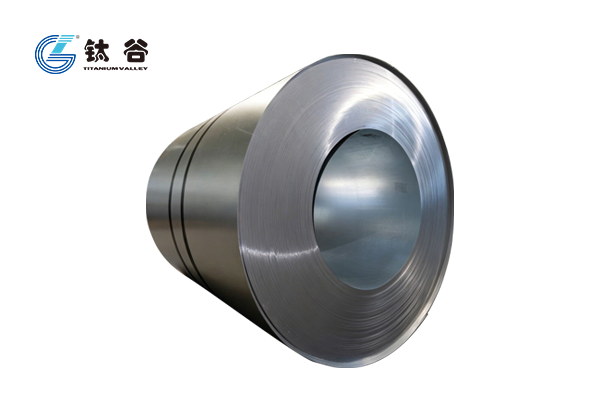
Begin with what the strip has to do
A continuous strip for automated forming, a cut strip used as a shim and a substrate for a later surface treatment are different purchases. The useful starting point is the feature that makes your part work: a controlled gap, a bend, a contact area or a repeatable feed through equipment. Explain that feature before adding tolerances that may not affect it.
“Titanium metal strips” identifies the material family, while the actual grade and condition define the material you are buying. If the drawing specifies an alloy, retain that designation. Where commercially pure titanium is being compared, the Gr1 foil and Gr2 foil listings provide starting material information, rather than approval for every strip application.
Titanium Valley’s foil and strip supply page is the place to discuss the finished raw-material form. The enquiry should make clear whether you want slit coil, straight cut lengths or blanks for your own conversion.
Read the gauge together with the tolerance and usable width
A request for 0.635mm titanium strip states a nominal thickness of 0.635 mm. It still leaves grade, thickness tolerance, width, condition and quantity undefined. Write those details in the same unit system, and identify which dimension is measured on incoming material and which applies after forming or finishing.
The Gr2 product currently publishes a regular raw-material route of 0.02–1.0 mm thickness and 15–680 mm width. A nominal 0.635 mm thickness sits within that published thickness interval, but this does not prove that your required width, tolerance and condition are immediately available. Ask for confirmation of the complete combination rather than treating a range as a stock list.
If the strip enters a controlled gap, local thickness variation may matter more than a single average. If parts are nested across the width, distinguish overall width from usable width after edge trimming. Agree the locations and sampling basis for measurements that determine acceptance.
When you are buying titanium shim stock
Titanium shim stock is feedstock for a spacing or fit requirement. Confirm whether the shim is intended to set a gap, adjust alignment or remain in a loaded assembly. The finished design determines the required thickness, contact geometry and service compatibility; the word shim does not establish those requirements.
For a cut shim, examine burrs and local distortion at the actual edge. A piece that measures correctly away from the edge may not sit as intended if the edge or a handling crease controls the fit. Include representative cutting and deburring in the sample evaluation, then check the part in the mating arrangement.
If the material will be stacked, identify the number of layers and the actual assembly check you intend to use. Do not assume that multiplying nominal gauges establishes the final assembled gap. Keep the accepted material and inspection basis with the drawing. Current stock and cut-size feasibility must be confirmed for the order.
Define the edges and delivery format around your next operation
| Requirement | What to explain to the supplier | What the trial should show |
|---|---|---|
| Slit coil for feeding | Usable width, edge condition, winding direction, core size, allowable joints and practical coil mass. | Whether representative coil material feeds and forms without the defects that matter to your part. |
| Straight strip or blanks | Cut length, squareness, flatness and which face or edge is functional. | Whether cutting, handling and packing preserve a usable blank. |
| Shim or fit material | Thickness tolerance, edge acceptance and the assembled fit requirement. | Whether the converted shim seats as intended in the actual mating arrangement. |
A short hand-selected strip may be enough to compare material response, but it may not answer a coil-feeding question. Match the sample format to the uncertainty you need to resolve. You can begin with a small drawing or a description of the operation if the final order specification is not yet complete.
A conductor strip needs an interface definition
A titanium conductor strip request should explain where current passes through the material and where it crosses a contact or joint. Bulk dimensions alone do not establish the electrical behaviour of those interfaces. Surface condition, the mating material, contact geometry and the operating environment should be part of the application review.
If you need gold plated titanium strips, separate the titanium substrate from the requested treatment. Identify the treated faces, exposed margins, joining regions and the properties the plated interface must achieve. A bare titanium certificate cannot verify a gold layer, and a product photograph cannot prove coating thickness or adhesion.
The website’s battery-development carbon-coated Gr1 foil is a separately described product configuration. It is not evidence of a gold-plating service or a universal conductor-strip solution. A gold-plated delivery requires its own feasibility review and agreed treatment evidence before it can be offered.
Choose a titanium alloy strip by its actual designation
A titanium alloy strip enquiry needs the alloy and supplied condition identified together. Gr5 and Ti-15V-3Al-3Cr-3Sn are different material routes; their names are not interchangeable merely because both appear in a foil range. Use the grade on the component drawing, or explain which forming and service requirements your team is still comparing.
If your team will form the strip, evaluate the representative bend or feature and inspect the result after release. Retain rolling direction and material identity with the trial. If your team owns a later heat-treatment or surface process, distinguish the incoming material requirement from the properties expected after that operation.
The foil and strip material range allows you to review existing product routes. Any additional alloy, special section or surface treatment still needs confirmation for the particular enquiry.
Turn the accepted sample into the next order
Keep the successful sample’s grade, lot, condition, gauge, width, surface and delivery format with your trial record. Record the conversion step that made the sample useful, and retain the agreed dimensional and edge checks. A repeat order should refer to this material definition rather than just “the same titanium strip”.
Compare quotations on the same delivered basis: usable dimensions, quantity unit, cutting or slitting, coil or blank form, inspection and documents. Ask which preparation is included and whether the offered quantity is gross material or the agreed usable delivery. A lower mass price may not reduce the cost of accepted parts if edge or handling losses change.
Use the published material data as a starting reference and confirm the actual order documents with the quotation. Availability and delivery timing apply to the defined combination, not to every material described by the word strip.