
If you are looking for titanium wire rope, braided titanium wire or titanium wire cable, first decide whether you need the individual titanium wire or the finished assembly. A wire supplier’s diameter and tensile data do not describe a complete cable. This guide focuses on choosing and evaluating titanium wire as feedstock, and on keeping the remaining assembly requirements visible.
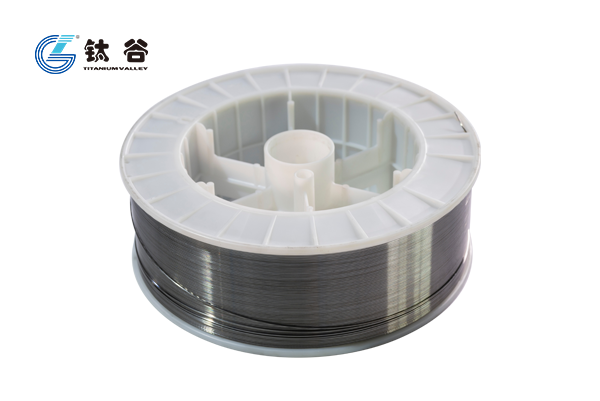
Separate the material purchase from the assembly purchase
Titanium wire rope is a stranded construction. A braid has its own arrangement of interlaced wires, and “cable” can refer to several finished constructions. The arrangement, constituent wire diameter and end fittings help determine the finished product. A single wire of the same outside diameter is a different item.
If you manufacture the assembly, your enquiry should identify the wire entering your equipment: alloy, individual wire diameter, condition, surface and delivery format. If you need a completed rope or braid, the supplier must review the finished construction and acceptance requirements separately. Do not infer that capability from a round-wire product listing.
Titanium Valley’s existing wire category presents titanium wire material. This guide does not announce a finished cable product, termination service or verified rope breaking load. Its purpose is to help a raw-material enquiry reach the right technical discussion.
Work backwards from the duty of the assembled product
Describe whether the assembly will flex, hold a position, transmit a load or form part of another component. Identify the exposure environment and any relevant contact with other materials. If repeated bending is involved, the bend geometry, tension and number of cycles matter to the finished assembly evaluation.
Then ask what the individual wire must tolerate during manufacture: feeding, bending around the construction geometry, contact with guides and any further treatment. Material that looks satisfactory as a loose sample may feed or form differently when the construction is assembled under tension.
For a medical, lifting or another safety-critical end use, the final product needs the applicable design, testing and approval route. A general titanium chemistry document does not establish finished-assembly fatigue life, load rating or clinical suitability. Those requirements should stay with the finished-product specification.
Specify the individual wire in a way that helps the process
| Material detail | Why it matters to the converter | What to agree |
|---|---|---|
| Alloy and supplied condition | Forming response and the final assembly requirement need to be considered together. | Actual alloy, condition and mechanical evidence relevant to delivered wire. |
| Constituent diameter and variation | Different individual diameters can change the assembled geometry and contact pattern. | Nominal diameter, tolerance, measurement basis and lot definition. |
| Surface and cleanliness | A scratch or residue can matter to feeding, contact or a subsequent treatment. | Finish, cleanliness and relevant defect inspection. |
| Winding and continuity | Coil set, joints or a different spool can interrupt a trial intended to evaluate material. | Spool dimensions, winding, usable continuous length and joint policy. |
For an initial investigation, choose the details that address the uncertainty you actually have. If feeding is the concern, a short straight piece will not reproduce spool behaviour. If an end connection is the concern, an identified material sample should pass through that joining or termination step before you judge the result.
Do not calculate a cable rating from a wire datasheet
The breaking load of a finished rope is not established simply by adding the nominal tensile capacities of its wires. Construction, how the assembly is loaded, manufacturing damage and terminations all affect the result. The finished assembly needs its own agreed test basis.
The same distinction applies to fatigue and stiffness. A wire tensile certificate is useful raw-material evidence, but it does not reproduce repeated bending or contact within the chosen construction. Keep the relevant assembly test with the actual geometry, end condition and duty used in the comparison.
An illustrative 7-wire or multi-strand sketch is useful for communication, but should not be interpreted as a stocked construction. If a buyer requests a finished assembly, ask for the construction drawing, dimensions, end fittings and acceptance basis before deciding who can supply it.
Use the existing titanium range without treating different alloys as substitutes
For commercially pure titanium feedstock, the Gr1 wire and Gr2 wire pages provide material starting points for review. The published round-wire range is a supply discussion reference; it does not confirm a particular fine-wire construction or assembled diameter.
Titanium alloys and nickel-titanium are separate material choices. If the design relies on a particular elastic response or a specified chemistry, retain that actual alloy in the enquiry. A generic titanium name does not justify replacing it with whichever grade is easiest to quote.
The titanium wire selection guide explains how grade, condition and form travel together into a sample evaluation. For stranding and braiding, extend that evaluation to the representative delivery format and your assembly route.
Make the successful trial repeatable
Keep the individual wire lot and supplied dimensions with the trial record. Record the delivery format and condition as well as the assembly construction. Inspect the wire before conversion and the assembly afterwards so the team can distinguish incoming damage from changes introduced during manufacture.
If the result is acceptable, carry the wire definition, continuous-length requirement, surface and relevant inspection into the repeat purchase. Decide which changes require review, including spool type, wire condition or an altered material source within the agreed supply route.
For quotation comparison, identify whether the price covers wire by mass or length, and whether special winding, inspection or packing is included. Any finished-assembly work should be separately identified. That prevents two different purchases being compared as if they were the same product.
A practical next step
Use the titanium wire supply page for a raw-material enquiry. Share the intended process and the specific question the next sample should answer. If you need a completed construction, say so directly rather than requesting a single-wire product and hoping it includes the rest.
Review Product Material Data for published material information and confirm the order’s actual documents with the quotation. Availability and delivery conditions remain tied to the defined material requirement.