
A wire sample can look right and still leave you unsure whether it is the right purchasing choice. Will it form into your part? Will the finished component meet its requirements? Can the supplier deliver the same defined material next time? Those questions are easier to answer when grade, condition, diameter and delivery form are considered together.
Begin with the finished part, even if the drawing is still developing
For a formed frame, clip, wire element or another precision component, the material has two jobs. It must pass through your process, and it must support the finished part’s requirements. A choice made only for easy forming can overlook the final duty; a choice made only for strength can make the forming route harder to establish.
Start by describing the geometry and service requirement that drive the decision. Explain which dimensions are formed, whether the wire will be bent or processed further, and which surface or mechanical characteristics matter in the finished part. If the grade is already fixed on the drawing, the supply discussion should work from that requirement.
For a project still choosing its grade, the existing Gr1 and Gr2 wire products provide two commercially pure titanium starting points. They allow a focused comparison without treating every titanium wire listing as the same material.
What the Gr1 and Gr2 comparison helps you decide
The Gr1 wire product is a starting point to evaluate when forming demand is central. The Gr2 wire product publishes higher annealed strength references within the commercially pure titanium choices. The question is which combination gives your component the right balance.
| Annealed reference on the existing product pages | Gr1 wire | Gr2 wire |
|---|---|---|
| Tensile strength | ≥240 MPa | ≥345 MPa |
| Yield strength | ≥138 MPa | ≥275 MPa |
| Elongation | ≥24% | ≥20% |
These are published product-page references, rather than results for a delivered lot. Use the applicable material specification, diameter, condition and test basis when agreeing acceptance requirements.
The figures are useful because they show why the decision has a trade-off. Gr1 has the higher listed annealed elongation reference, while Gr2 has the higher listed annealed strength references. Elongation in a material test does not predict the outcome of every bend geometry, so a representative forming trial remains important. The most useful sample is one you can identify and evaluate against your actual part.
The condition can matter as much as the grade name
A request for Gr1 or Gr2 alone still leaves an important choice open. The product pages distinguish annealed and cold-worked conditions. If you approve a sample in one condition, keep that condition clear in the repeat order. A change in condition deserves review even when the grade and nominal diameter stay the same.
Surface is another separate choice. Pickled and bright finish are the listed options on both product pages. Think about what the surface must do in your route: remain visible on the component, pass through tooling, receive a treatment, or meet a defined joining or contact requirement. Describe that need so the inspection and protection arrangements can match it.
A clear specification gives each item its own place: grade, mechanical condition, supplied diameter and tolerance, surface, and delivery form. It helps the supplier offer a defined material and helps your receiving team check the same material.
Decide how the wire should enter your process
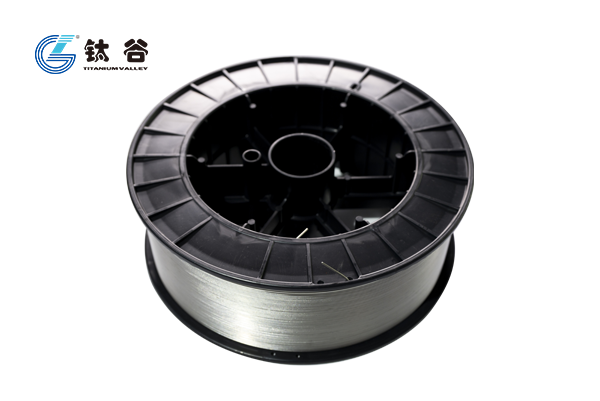
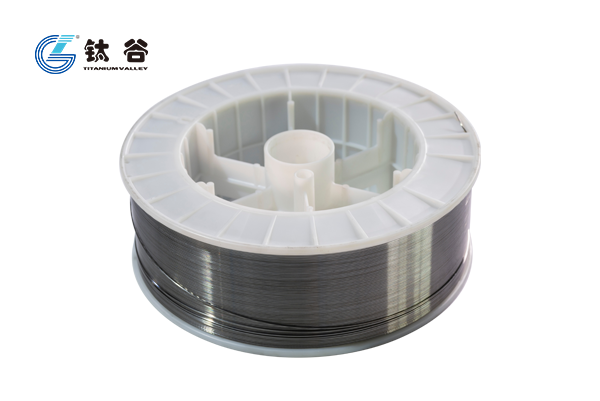
Straight lengths can make sense when your next operation uses a defined blank or assembled length. Coil delivery can suit a continuous process. A spool arrangement introduces an equipment interface that needs its own review. The standard Gr1/Gr2 product pages list straight wire and coil; the required spool configuration should be discussed for the enquiry.
| Your receiving route | What is worth resolving before purchase |
|---|---|
| Straight wire | The cut length, how straightness will be checked, the end condition and the way the pieces will be protected. |
| Coil wire | Coil dimensions and mass, orientation, restraints and the arrangement used to pay off the wire. |
| A specified spool | The spool drawing, winding direction, wire path, joint policy and package identity. |
This is a practical cost and usability decision. Two quotations for the same grade and diameter may leave you with different preparation work if the package or supplied length differs. Compare the delivery you can actually put into the next operation.
Both product pages publish a diameter route of 0.1–6.5 mm, with custom review up to 10.0 mm. That identifies a range to discuss. It does not establish current stock at every diameter, a common tolerance across the range or compatibility with your machine.
Ask a sample to prove the part, not just the appearance
A useful trial starts with a recorded material identity and the actual diameter, condition, surface and package. Run the relevant forming or feeding operation, then check the feature that matters after the part is released. That might be geometry, surface condition or another defined component requirement.
Keep an incoming reference sample alongside the processed one. If a mark, crack or dimensional problem appears, the comparison helps establish where the change occurred. It also gives the supplier evidence that is more useful than an isolated photograph of a finished part.
When the result is acceptable, record what was accepted and which variables need to stay controlled. That record gives purchasing a better basis for the next order than a message saying “same as the sample”. A package change, surface change or different condition can then be reviewed deliberately rather than discovered after receipt.
Look for evidence that supports a repeat order
The order should connect the material specification to the delivered lot and package. Agree the required inspection and material documents, the identity shown on the package, and the dimensions and surface criteria used at receipt. Ask which document demonstrates each requirement rather than collecting certificates without a purpose.
The website provides material documentation and traceability information and published certificate documents. Review their scope alongside the wire specification. For a welding-consumable or medical-material enquiry, begin with the specific applicable route and documents; a general wire description does not resolve those application requirements.
When comparing quotations, check whether quantity is stated by mass, length or cut pieces and what preparation is included. Keep grade, condition, tolerance, package and inspection basis consistent across the comparison. That reveals the supply offer behind the unit price.
Where to go from here
Use Gr1 titanium wire and Gr2 titanium wire as the first product comparison when those grades are relevant to the part. For particularly thin material, the fine-wire tolerance and surface guide provides a more focused discussion. Questions about uses, drawing or electrical resistance are covered in the existing technical wire guide.
The wire category shows the wider range, while wire supply capabilities provides the route for reviewing the finished requirement. You can start the conversation with the component and the information available today.