
You may already know that your project needs titanium foil. The harder question is which version will give you a useful result—and whether the material you approve today can be defined clearly enough to order again. Start with the job the foil needs to do in your electrode, then work through the surface, dimensions and evidence that support that choice.
Start with the decision your sample needs to help you make
A request for “titanium foil for batteries” can describe very different projects. One team wants a titanium substrate for its own coating process. Another wants to evaluate a carbon-coated interface. A third has already made an electrode and needs the material to fit a defined coating pattern and connection area.
Those projects need different conversations with a supplier. Before comparing foil specifications, put the immediate question into a sentence: “We want to compare our surface process on a bare titanium substrate,” or “We want to see whether this carbon-coated configuration works with our electrode.” That sentence helps identify a useful sample much faster than a long list of unrelated material properties.
The electrode chemistry, potential and electrolyte still determine whether titanium is appropriate in the first place. Once titanium is part of your material shortlist, the next decision is the complete foil configuration you want to evaluate. The commercially pure grade, metal thickness and surface all travel together into that evaluation.
Bare foil or carbon-coated foil: what are you actually buying?
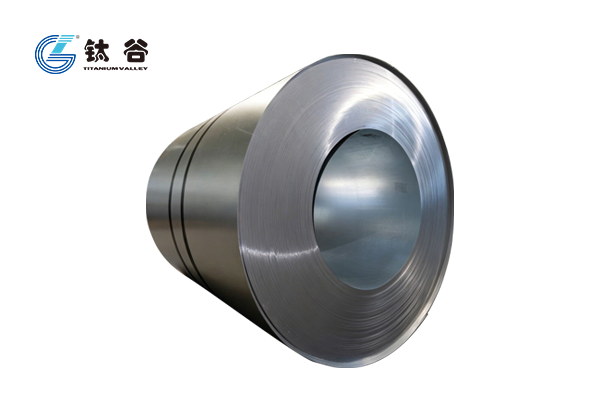
With bare Gr2 titanium foil, you are buying the titanium substrate for the next operation in your own process. Its surface, cleanliness, thickness and condition need to suit that operation. This route is worth discussing when your team wants to control the surface treatment or compare its own coating approach.
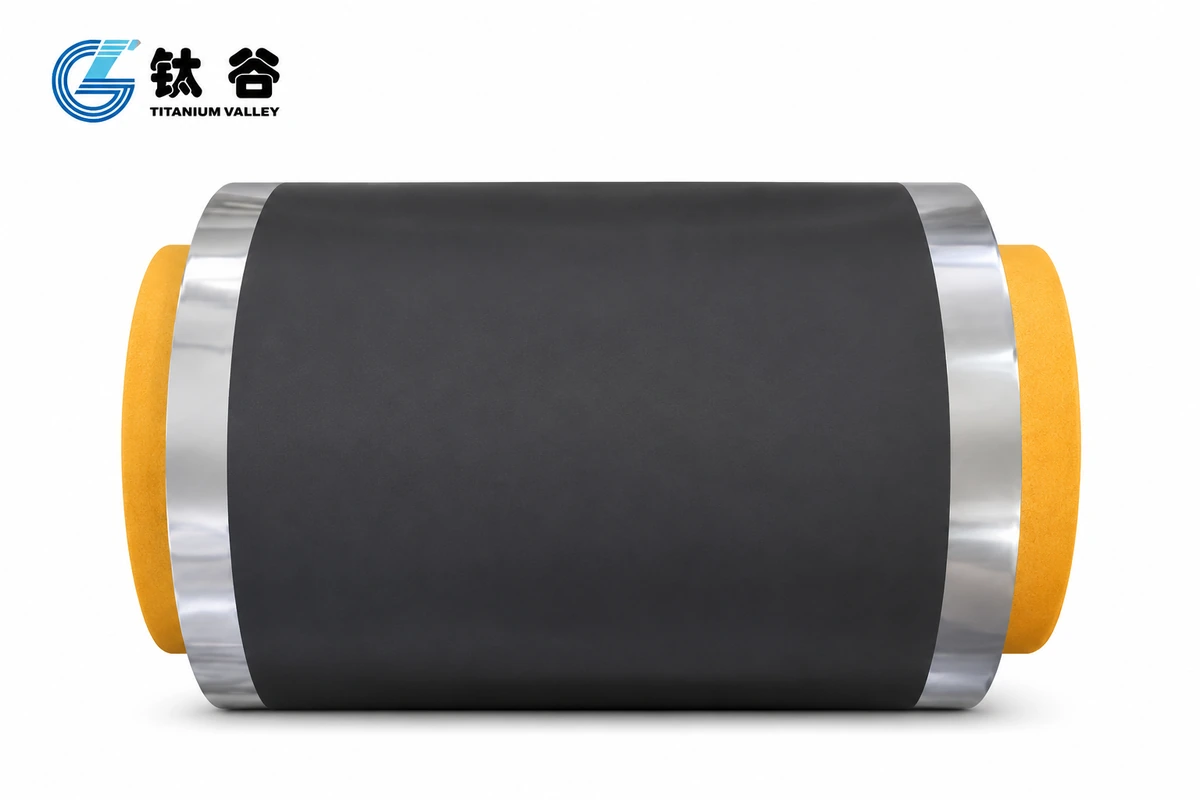
With carbon-coated Gr1 titanium foil, you are buying a substrate and a functional interface together. The coated area, exposed margins, alignment and coating integrity become part of the supplied product. Your evaluation should therefore cover the complete configuration, including what happens when you convert or assemble it.
The two existing products also use different titanium grades and have different published thickness references. A comparison between them evaluates two material configurations; it does not isolate the effect of carbon alone. If your experiment needs to isolate one variable, ask for a sample plan that keeps the other variables controlled.
| What you want to evaluate | A useful starting conversation |
|---|---|
| Your own coating or surface treatment | Discuss the bare titanium substrate, its grade and the surface condition entering your process. |
| A supplied carbon interface | Discuss substrate thickness, coated geometry, adhesion and the electrical measurement relevant to your electrode. |
| A defined connection margin | Share the electrode layout and identify which exposed area must remain usable after cutting and assembly. |
Read the dimensions as a working configuration
The Gr2 foil page publishes a regular route of 0.02–1.0 mm thickness and 15–680 mm width. The coated Gr1 page publishes a specific reference batch using a 10 μm substrate, 12 μm finished thickness and 150 mm total width. Those numbers answer different questions: one describes a product route; the other describes a particular coated configuration.
For a coated product, keep metal thickness and total thickness separate on the drawing. Also identify the working coated area and the exposed connection area. Overall width can be correct while the coating is positioned incorrectly for your assembly. That is why a sketch showing the coating and margins can be more helpful than an additional decimal place on the overall width.
Think about the sample after your next operation as well as when it arrives. If you will slit, punch, laminate or wind it, the useful question is whether the functional area and connection margin remain suitable after that step. An attractive incoming surface is only the beginning of that evaluation.
What can the existing batch record tell you?
The carbon-coated Gr1 product page includes reference batch 26081002, inspected on August 25, 2026. It records the substrate and finished thickness, coating configuration, appearance and selected inspection results. This gives you something concrete to discuss when deciding what to request for your own sample.
| Selected item | What the published record shows | How to use it in your decision |
|---|---|---|
| Substrate / finished thickness | 10 μm / 12 μm | Check which thickness your electrode design and measurements refer to. |
| Foil width and coating method | 150 mm; continuous coating | Compare the configuration with the width and pattern you need. |
| Alignment | Recorded deviation of 0.4 mm | Discuss the datum and registration requirement on your own layout. |
| Coating coverage and adhesion observation | No bare substrate and no peeling recorded | Ask which inspection basis should be carried into your trial and later order. |
These are results from the published reference batch, rather than a certificate for a future shipment. Their value is that they make the discussion specific. You can identify which characteristics matter to you and decide what evidence should accompany the material you actually receive.
For an electrical comparison, bring the measurement arrangement into the discussion. Contact geometry, pressure, test area and the chosen quantity affect what a resistance result means. A useful comparison uses a method relevant to your interface; a bare number from another setup can create false confidence. The complete product record provides the original context for the reference data.
Make the first trial useful to both development and purchasing
Before ordering a sample, decide what would count as a useful outcome. You might want to establish that a coating survives your converting step, that the connection zone fits the assembly, or that the interface behaves as required in your electrode test. Give the sample a clear purpose and retain its material identity.
Then record enough of the configuration to explain the result: substrate grade, thickness, coating layout, sample or lot identity, and the relevant processing and test conditions. Compare the incoming material with the material after your operation. If something changes, that comparison helps the supplier and your team discuss the same observation.
When a sample works, purchasing needs a way to repeat the material configuration—not just the product name. Carry the accepted dimensions, surface/coating definition and agreed checks into the next order. Decide which changes require review, especially a change in substrate, coating layout or delivery format. This is where a development result becomes a usable supply specification.
Compare the supply offer behind the product
A quotation becomes easier to assess when it describes the same substrate, coated geometry, quantity basis, delivery format and inspection evidence as your request. Check whether the offer is for bare material or a finished coated configuration, and which additional preparation or testing is included.
It also helps to separate the documents. A system certificate describes its stated management-system scope. A material document connects specified material information to a lot. Your electrode test establishes something about the configuration in your application. Each has a useful role, and each should be reviewed for the question it actually answers. The website’s certificates and reports and material documentation information are available for that review.
Availability needs the same clarity. The titanium foil inventory is a dated starting point for a bare-material enquiry. A balance listed there does not establish that the corresponding coated product is ready to ship. Ask for confirmation of the exact configuration and quantity you need.
A sensible next step
If your team wants to evaluate a supplied carbon interface, start with the carbon-coated Gr1 product. If you are developing your own surface process, start with the bare Gr2 foil route and explain the treatment that follows. For other grades or forms, use the titanium foil range and foil and strip supply information to frame the discussion.
You can begin with the application and the information already available. A useful first enquiry explains what the foil needs to do, which option you are considering and what you would like the sample or quotation to help you decide.