
Grade 23 Titanium Foil (Ti-6Al-4V ELI): Properties and Uses
- Grade 23 Titanium Foil
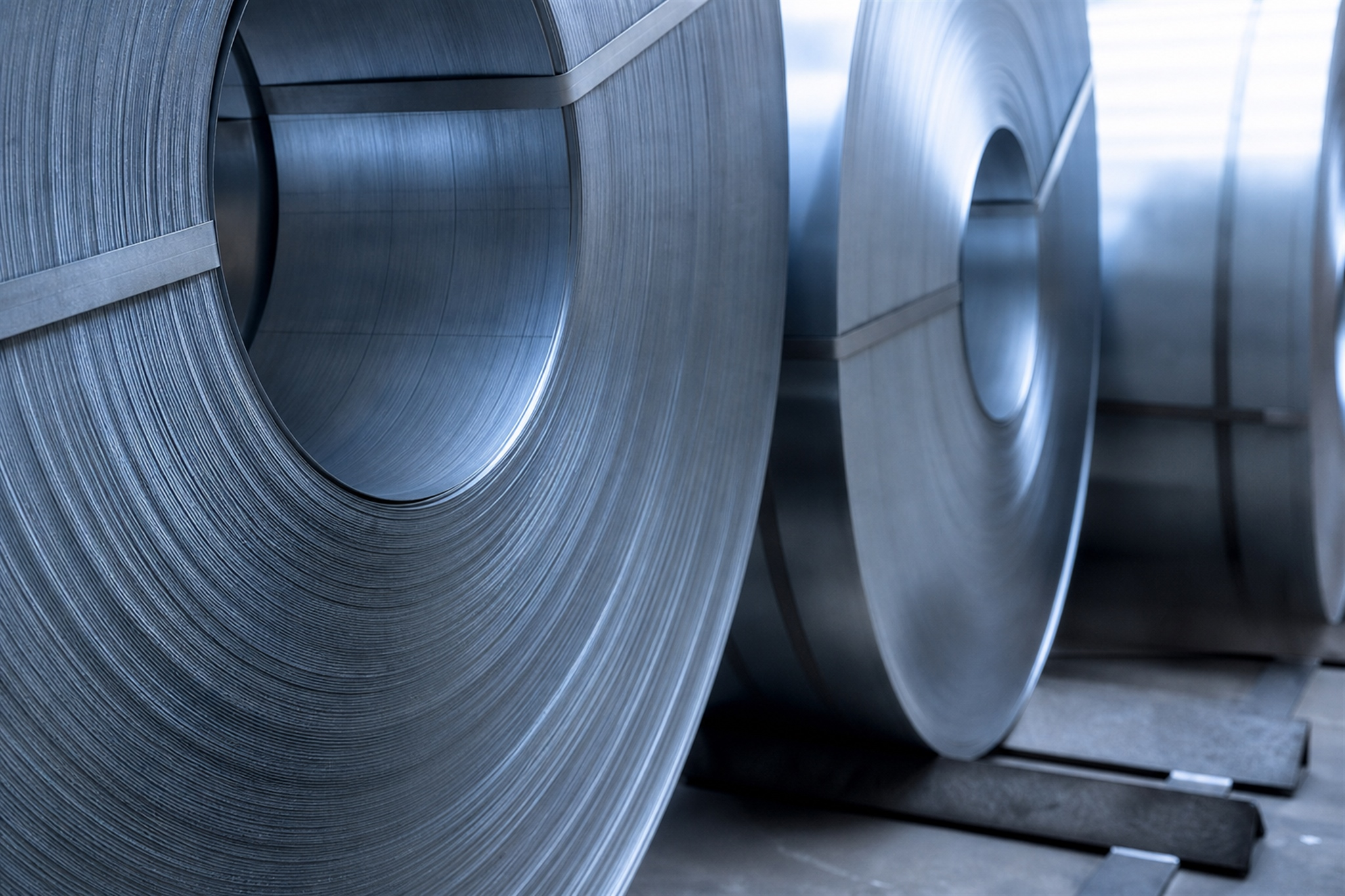
Grade 23 titanium foil belongs to the Ti-6Al-4V ELI family. Compare ASTM B265 Grade 23 (UNS R56407) and ASTM F136 (UNS R56401) by edition, product form and delivery condition before using a mechanical value in a specification. View related foil specifications.
Composition: ELI vs Standard Ti-6Al-4V
Element (max %) | Grade 5 | Grade 23 ELI |
Aluminum (Al) | 5.50–6.75 | 5.50–6.50 |
Vanadium (V) | 3.50–4.50 | 3.50–4.50 |
Iron (Fe) | 0.40 | 0.25 |
Oxygen (O) | 0.20 | 0.13 |
Carbon (C) | 0.08 | 0.08 |
Nitrogen (N) | 0.05 | 0.05 |
Hydrogen (H) | 0.015 | 0.012 |
Table 1 — The ELI difference is the interstitial budget: lower O and Fe, tighter H.
Mechanical Requirements by Standard
Requirement | ASTM F136 (implant) | ASTM B265 Grade 23 |
Tensile strength (min) | ≥ 860 MPa (125 ksi) | ≥ 828 MPa (120 ksi) |
Yield strength (min) | ≥ 795 MPa (115 ksi) | ≥ 760 MPa (110 ksi) |
Elongation (min) | 10% | 10% |
Density | 4.43 g/cm³ | 4.43 g/cm³ |
Table 2 — Annealed minimums; the two standards quote slightly different values, so name the standard in the order.
Why ELI Chemistry Matters
Interstitial oxygen and iron strengthen titanium but also embrittle it — they concentrate at slip bands and grain boundaries, where they blunt ductility and promote notch sensitivity. Removing them raises fracture toughness (typical annealed values of roughly 55–65 MPa·√m for Grade 5 versus about 75–95 MPa·√m for ELI material, literature ranges per heat), preserves ductility down to cryogenic temperatures, improves fatigue crack growth behavior, and keeps welds ductile. For an implant, the same chemistry delivers the biocompatibility and long-term stability regulators expect.
Applications by Thickness Band
Application | Typical thickness | Process | Key requirement |
Pacemaker / defibrillator housings | 0.2–0.4 mm | Deep drawing + laser seal welding | Biocompatibility, EMI shielding, hermetic closure |
Medical device housings and parts | 0.2–0.5 mm | Stamping / deep drawing | Biocompatible, non-magnetic, sterilization-resistant |
Table 3 — Strip band (0.2–0.5 mm): implantable device housings and surgical parts.
Application | Typical thickness | Process | Key requirement |
Bone plates / internal fixation | 0.6–1.0 mm | Stamping + machining + surface treatment | Elastic modulus near bone, non-magnetic, biocompatible |
Dental implants and abutments | 0.5–1.0 mm | Turning + threading + sandblasting/acid-etching | Osseointegration, saliva corrosion resistance, non-toxic |
Table 4 — Sheet band (0.5–1.0 mm): bone plates and dental implant stock.
1. Deep Dive: Pacemaker / defibrillator housings
Pacemaker and defibrillator housings are deep drawn from 0.2–0.4 mm strip and closed by laser seal welding. The ELI chemistry gives the welded seam the ductility and long-term in-vivo corrosion resistance the application demands, while the enclosure shields circuits from body fluids and external EMI. Implant supply is ordered to ASTM F136.
2. Deep Dive: Bone plates / internal fixation
Bone plates and internal fixation hardware stamped and machined from 0.6–1.0 mm Ti-6Al-4V ELI sheet combine implant-grade strength with a modulus far closer to bone than stainless steel or cobalt alloys, reducing stress shielding; non-magnetic behavior keeps patients eligible for post-operative imaging.
3. Deep Dive: Dental implants and abutments
Dental implants and abutments turned and threaded from 0.5–1.0 mm ELI or CP stock are sandblasted and acid-etched to promote osseointegration; Ti-6Al-4V ELI and CP titanium are the mainstream dental implant materials, chosen for bone bonding, saliva resistance and long-term safety.
Standards and Naming
ASTM B265 Grade 23 (Titanium Valley material documentation) uses UNS R56407. ASTM F136 (Titanium Valley material documentation) uses UNS R56401. Specify the required edition, product form and acceptance requirements on the order.
FAQ
(1) What is the difference between Grade 23 and Grade 5 foil?
Compare the requirements for the specified standard, edition, thickness and condition. Differences between published minimums do not quantify the effect of interstitial content on a particular heat.
(2) Which standard should I cite for implant-grade Grade 23 foil?
ASTM B265 Grade 23 (Titanium Valley material documentation) uses UNS R56407. ASTM F136 (Titanium Valley material documentation) uses UNS R56401. Specify the required edition, product form and acceptance requirements on the order.
(3) Is Grade 23 foil weldable?
Yes — ELI chemistry welds with TIG or laser under inert-gas shielding and retains more as-welded ductility than standard Grade 5, which is a key reason fracture-critical weldments use it.
(4) Does the UNS number change for ELI foil?
ASTM B265 Grade 23 (Titanium Valley material documentation) uses UNS R56407. ASTM F136 (Titanium Valley material documentation) uses UNS R56401. Specify the required edition, product form and acceptance requirements on the order.
(5) What documentation accompanies medical Grade 23 foil?
An MTR with full chemistry including O, N, H and Fe, tensile and elongation for the correct thickness band, condition and F136 edition, plus batch traceability; many programs add ISO 13485 supplier certification evidence. Custom size, condition, tolerance and documentation can be reviewed to the purchase specification.
(6) Which thickness band serves implant housings?
Pacemaker-class housings draw from 0.2–0.4 mm strip; bone plates use 0.6–1.0 mm sheet; dental stock uses 0.5–1.0 mm. The exact gauge is set at order review against the device design.
(7) Can Grade 23 serve aerospace damage-tolerant parts?
Yes — AMS 4907 sheet/strip practice covers Ti-6Al-4V ELI for fracture-critical and cryogenic aerospace applications where standard Grade 5 would be too notch-sensitive.
Related Resources and Inquiry
See the ASTM F136 Gr23 ELI foil page or compare the family in the titanium foil category. Send your specification.
Baoji Titanium Valley Titanium Nickel Zirconium Material Processing Co., Ltd. operates a 750 mm 20-high titanium foil line (3, 000 t/yr, ISO 9001 / ISO 13485) covering the full 0.02–1.0 mm range with etching, stamping and welding compatibility. Send your specification to sales@titaniumvalleys.com — Custom size, condition, tolerance and documentation can be reviewed to the purchase specification.
References
1. ASTM B265, Standard Specification for Titanium and Titanium Alloy Strip, Sheet, and Plate.
2. ASTM F136, Standard Specification for Wrought Titanium-6Aluminum-4Vanadium ELI Alloy for Surgical Implant Applications.
3. ASTM E8/E8M, Standard Test Methods for Tension Testing of Metallic Materials.
4. SAE AMS 4907, Titanium Alloy Sheet, Strip, and Plate, 6Al-4V, Extra Low Interstitial, Annealed.
6. Baoji Titanium Valley: 0.02–1.0 mm Titanium and Titanium Alloy Strip and Foil — Application Introduction (internal application deck).
7. Titanium Valley product data: ASTM F136 Gr5 ELI (Gr23) Titanium Foil product page (titaniumvalleys.com).
This article is a technical reference. It does not constitute a commercial offer; dimensions, tolerances and documentation are confirmed at order review.
Published by: Titanium Valley Technical Team. Technical and quality review: pending.