
When Should You Choose Nickel 200 Bar in Corrosive Service Conditions?
- Nickel 200 Bar
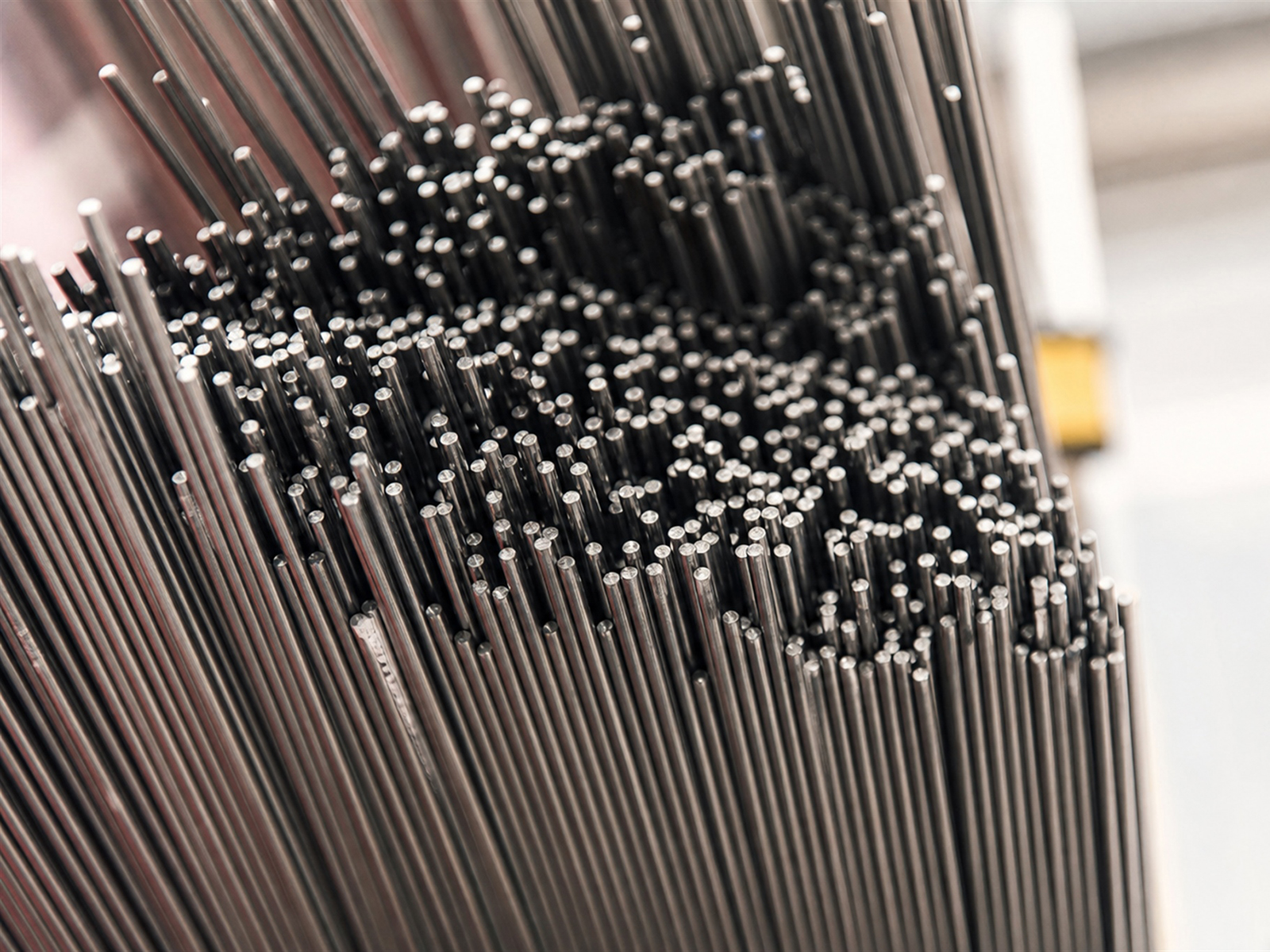
Direct engineering answer. Nickel 200 Bar should be evaluated against the finished component, product form, governing specification, downstream process and acceptance evidence. A general property value is an orientation tool; the released drawing, current certificate and inspection plan control the final decision.
When selecting Nickel 200 bar (UNS N02200, commonly referred to as Ni200 pure nickel bar) for corrosive service, the first step is to clarify its compositional limits and corrosion applicability. Ni200 has certain engineering value in strongly alkaline media, in some reducing media, and in process environments with demanding purity requirements, but it is not a –universal corrosion-resistant material.” ASTM B160 requires a minimum nickel-plus-cobalt (Ni+Co) content of 99.0% for Ni200; if a supplier claims a nickel content of ≥99.6%, this should be understood as the raw material selection or the supplier’s internal control level rather than a mandatory ASTM B160 requirement. Its material selection value mainly applies under specific temperature, concentration, and medium conditions and must be judged against engineering boundaries, rather than broadly assuming that Ni200 is always superior to stainless steel or carbon steel.
1. Corrosion Resistance Characteristics and Limitations of Ni200 Bar
(1) Chemical Composition and Impurity Control
Per ASTM B160, Ni200 (UNS N02200) has a Ni+Co minimum of 99.0%, with typical impurity limits of Fe ≤0.40%, Cu ≤0.25%, Mn ≤0.35%, Si ≤0.35%, C ≤0.15%, and S ≤0.01%. If a supplier claims Ni ≥99.6%, it should be regarded as the result of internal company control or specially selected raw materials, not as an ASTM B160 minimum requirement.
High purity helps reduce micro-galvanic cells and sources of inclusions, but it cannot by itself explain corrosion resistance. The performance of Ni200 in a specific medium is jointly influenced by factors such as temperature, concentration, oxygen content, flow velocity, and surface condition.
(2) Applicability Conditions in Alkaline Media
Ni200 has good corrosion resistance in alkaline media such as NaOH and KOH at appropriate temperatures and concentrations, which is related to the formation of a nickel-oxide passive film on its surface. However, it should not be described as –chemically inert” toward alkaline media, nor should it be assumed to remain stable across a broad range of temperatures and concentrations.
For service above approximately 315℃, the low-carbon grade Ni201 should be evaluated first. The typical risk of 304/316L stainless steel in hot concentrated caustic is caustic stress corrosion cracking rather than intergranular corrosion. Material selection should specify the caustic concentration, temperature, and impurity conditions.
(3) Boundaries in Reducing Media
In reducing media at low temperature, low oxygen, and appropriate concentration — such as dilute hydrochloric acid, hydrofluoric acid, acetic acid, and citric acid — Ni200 may exhibit some corrosion resistance. However, the corrosiveness of hydrochloric acid and hydrofluoric acid depends heavily on concentration, temperature, oxygen content, and flow velocity, and applicability cannot be judged from the medium name alone. Oxidizing impurities or elevated temperature can significantly change the corrosion behavior.
Nickel 200 bar in these environments should be evaluated based on actual corrosion data, potential-pH diagrams, and the specific service conditions, rather than explained by vague concepts such as –stable crystal structure.”
2. Comparison of Typical Corrosive Service Conditions
(1) Summary Table of Service Applicability
Service Condition | Representative Media/Conditions | Ni200 Suitability | Limitations and Notes |
Strongly alkaline environments | NaOH (<80%), KOH, low to moderate temperature | Suitable | High-temperature, high-concentration, and impurity-containing conditions require dedicated evaluation; consider Ni201 above approximately 315℃ |
Dilute reducing acids | Dilute hydrochloric acid, hydrofluoric acid, low temperature, low oxygen | Conditionally suitable | Sensitive to temperature, concentration, and oxygen content; cannot be generalized |
Neutral/slightly acidic | Pure water, acetic acid, citric acid | Suitable | Impurities and entrained oxidizers must be controlled |
Seawater and chlorides | Seawater, neutral chloride solutions | Conditionally suitable | Risk of pitting and crevice corrosion; use with caution in strongly oxidizing chloride environments |
Sulfuric acid environments | Concentrated sulfuric acid at room temperature, no significant oxidizers | Conditionally suitable | May corrode rapidly at high temperature, when aerated, or when oxidizers are present |
High-temperature oxidizing acids | Hot nitric acid, sulfuric acid with oxidizers | Not suitable | Evaluate high-nickel alloys, titanium, etc., considering temperature and concentration |
High-temperature sulfur-bearing atmospheres | H₂S > 315℃ | Not suitable | Risk of sulfidation embrittlement failure |
Note: The applicability judgments in the table are general engineering references only and should not be used directly for detailed design. Actual material selection must combine data on the medium, temperature, concentration, and oxygen availability, with reference to corrosion data.
(2) Differences by Equipment Location in the Chemical and Chlor-Alkali Industries
In the chlor-alkali industry, material selection varies considerably by equipment location. Ni200 and Ni201 are commonly used in heat-exchanger tubes of caustic evaporators, caustic heating or cooling components, and certain caustic-resistant parts. However, titanium, nickel-based alloys, stainless steel, and other materials each have their own applicability in electrolyzer anodes, cathodes, chlorine gas processing, and other locations.
Therefore, Ni200 should not be regarded as a –chlor-alkali industry exclusive material,” nor should electrolyzer plates, heating tubes, heat exchangers, and the like all be broadly lumped under Ni200. Carbon steel may still have applications in certain low-temperature, low-concentration caustic solutions, but can exhibit non-uniform corrosion or caustic embrittlement in hot concentrated caustic environments. Whether Ni200 can significantly extend equipment life should be verified with corrosion data or coupon testing, taking into account the equipment location, caustic concentration, temperature, chlorine-containing impurities, and flow velocity.
(3) Applicability in Electrochemical and Electronics Industries
One clarification: pure nickel is a ferromagnetic material with relatively high magnetic permeability at room temperature and is not a low-magnetic material. If the engineering goal is low magnetism, Ni200 is not the right choice. The use of Ni200 in certain electrochemical electrodes and vacuum electronic devices is based primarily on its purity, electrical conductivity, machinability, and stability in specific media, not on –low magnetic permeability.”
3. Comparison of Ni200 Bar with Similar Materials
(1) Key Differences Between Ni200 and Ni201
Parameter | Ni200 | Ni201 |
Carbon content | ≤0.15% | ≤0.02% |
Typical applicable temperature range | Below approximately 315℃ | Above approximately 315℃, depending on the medium and pressure |
Typical service | Ambient-to-moderate-temperature caustic, electrochemical, high-purity components | High-temperature caustic, conditions requiring reduced carbon transformation or graphitization |
Standard basis | ASTM B160 | ASTM B160 |
Note: Approximately 315℃ is an engineering experience boundary, not an absolute dividing line in all media. Actual material selection is also influenced by concentration, pressure, equipment life requirements, and medium impurities.
(2) Ni200 vs. 316L Stainless Steel
316L stainless steel may suffer caustic stress corrosion cracking in hot concentrated caustic, while Ni200 offers better caustic resistance over certain temperature and concentration ranges. However, in environments containing chloride ions or oxidizing chloride salts, the pitting resistance that 316L derives from its molybdenum content is not necessarily inferior to Ni200, so one cannot simply conclude that Ni200 has better chloride pitting resistance.
Material selection should be based on the specific medium: hot concentrated caustic service warrants evaluation of Ni200 or Ni201; acidic, chloride-containing oxidizing environments may require materials such as 316L, Alloy 20, or C-276. When comparing costs, life-cycle cost should be used rather than only the initial purchase price or vague replacement counts.
(3) Effect of Supply Condition on Corrosion Resistance
Ni200 bar supply conditions are described using terms such as annealed and cold-worked per ASTM B160, and single-letter condition codes such as R, M, or Y are not used. The annealed condition has lower residual stress and a more uniform structure, and is generally better suited to corrosive service; the cold-worked condition offers higher strength but may show increased stress corrosion susceptibility in specific environments due to residual stress. Whether to use the cold-worked condition should be evaluated in light of subsequent stress-relief treatment, the service medium, and loading conditions.
4. Material Selection Factors in Manufacturing and Quality Assurance
(1) Melting Route and Purity
Ni200 bar can be produced through various melting and remelting routes, such as vacuum induction melting, electroslag remelting, vacuum arc remelting (VAR), or combinations thereof. VAR is mainly used to reduce gas content, minimize inclusions, and refine the solidification structure, but it does not raise the nickel content from 99.0% to 99.6%. Nickel content is determined primarily by the raw materials and melting process selection. If a supplier claims Ni ≥99.6%, it should be confirmed as raw material selection or an internal control target, not attributed to the VAR process.
(2) Dimensions and Surface Quality
ASTM B160 specifies the chemical composition, dimensional tolerances, and other requirements for Ni200 bar. Roundness and surface roughness may depend on the ordered condition and subsequent processing methods, and some surface quality requirements need to be agreed between supplier and purchaser. In corrosive service, a smooth, low-defect surface does help reduce the risk of localized corrosion, but the surface condition and acceptance requirements should be specified in the procurement technical documents.
(3) Non-Destructive Testing
Ultrasonic testing (UT) or eddy-current testing (ET) are not default outgoing inspection items under ASTM B160. If the material is intended for high-reliability corrosive service, the order should specify the non-destructive testing method, acceptance criteria, and sampling ratio. Non-destructive testing can detect internal discontinuities, but it cannot replace corrosion testing or service performance evaluation.
5. Material Selection Decision Framework
(1) Three-Dimensional Medium-Temperature-Concentration Evaluation
Material selection should at minimum cover six categories of variables: medium type, temperature, concentration, oxygen content, flow velocity, and impurities. For NaOH, it is not appropriate to judge whether Ni200 is suitable using a fixed concentration and temperature threshold. At low temperature and low concentration, some stainless steels may be acceptable; at high temperature and high concentration, Ni200, Ni201, or higher-grade nickel-based alloys should be added to the candidates. Public corrosion data handbooks or professional databases can be referenced, and verification should be supplemented with field coupons or laboratory corrosion testing.
(2) Life-Cycle Cost Analysis
Life-cycle cost (LCC) includes initial material cost, processing cost, inspection cost, maintenance cost, and planned and unplanned shutdown losses. If the equipment has a long expected service life and the corrosive environment is demanding, amortizing the material price difference may make Ni200 economical; however, if the service conditions are not demanding, stainless steel or a lined solution may be more reasonable. Conclusions such as –often superior” or –particularly significant” should not replace specific calculations. Comparisons should be made on an established, comparable basis.
(3) Verification of Supply Documentation
When purchasing Ni200 bar, the material certificate should be checked against ASTM B160, confirming the chemical composition, supply condition, dimensions, agreed non-destructive testing, and third-party inspection reports. Supply specifications and certification are part of the material selection execution and should not replace the preceding corrosive service analysis.
6. Conclusion
Nickel 200 bar is reasonably positioned as a candidate material deserving serious evaluation in hot concentrated caustic below approximately 315℃, in certain reducing media, and in process environments with purity requirements. Above that temperature range, the low-carbon Ni201 or other corrosion-resistant alloys should be considered first. Final material selection should be based on service boundaries, reliable corrosion data, and life-cycle cost, rather than a broad assumption that Ni200 is superior to stainless steel or carbon steel.
FAQ
(1) Q1: How should Ni200 bar and Ni201 bar be distinguished for use in corrosive service?
Ni200 is typically used at temperatures below approximately 315℃. When the temperature exceeds approximately 315℃, the higher carbon content in Ni200 may cause carbide precipitation, graphitization, or grain-boundary weakening under long-term high-temperature exposure, leading to performance degradation; this is not equivalent to simple intergranular corrosion. In such cases, the low-carbon grade Ni201 should be preferred.
(2) Q2: Is Ni200 bar suitable for seawater environments containing chloride ions?
Seawater typically has a chloride ion concentration of about 19, 000 mg/L and cannot be considered a low-concentration chloride environment. Ni200 can be used in seawater under certain conditions, but there is a risk of pitting and crevice corrosion, which is related to temperature, flow velocity, oxygen content, and surface condition. The risk is higher in stagnant zones or strongly oxidizing chloride environments and should be assessed in light of the specific service conditions and corrosion testing.
(3) Q3: Why is annealed Ni200 bar more commonly recommended for corrosive service?
The annealed condition significantly reduces cold-work residual stress and lowers the stress corrosion tendency in specific alkaline or reducing media, but it does not completely eliminate stress corrosion cracking. Corrosion material selection still requires consideration of temperature, concentration, impurities, and loading conditions. ASTM B160 does not use single-letter condition codes; terms such as –annealed” or –cold-worked” should be used.
Contact Us
Looking for a reliable manufacturer, supplier, or processing service for Nickel 200 bar (UNS N02200 commercially pure nickel bar)? A professional nickel materials company with full-process capability from raw material selection, vacuum induction melting/electroslag remelting/VAR, to hot working, cold working, annealing, and surface treatment can support custom sizes to the ASTM B160 standard, supply bar in both annealed and cold-worked conditions, and agree on roundness, surface roughness, and ultrasonic/eddy-current testing requirements. It can provide material certificates (including Ni+Co, Fe, Cu, Mn, Si, C, and S chemical composition and mechanical properties), third-party inspection reports, and batch traceability documentation. For service conditions such as hot concentrated caustic, reducing media, and high-purity process environments, it can assist with three-dimensional medium-temperature-concentration material selection evaluations. Contact us at: sales@titaniumvalleys.com
References
- Zuo Jingyi, Zuo Yu. Corrosion Data and Materials Selection Handbook [M]. Beijing: Chemical Industry Press, 1995.
- Lu Shiying. Nickel-Based and Iron-Nickel-Based Corrosion-Resistant Alloys [M]. Beijing: Chemical Industry Press, 1987.
- Huang Jianzhong, Zuo Yu. Corrosion Resistance of Materials and Corrosion Data [M]. Beijing: Chemical Industry Press, 2003.
Engineering specification and verification framework
For Nickel 200 Bar, state grade, ordered product form, condition, nominal dimensions, tolerances, surface requirement, quantity and documentation in one controlled RFQ. The applicable product-form reference is ASTM B160, subject to the current edition and project-specific requirements. When tensile evidence is required, define the test method and sampling basis; ASTM E8/E8M or ISO 6892-1 may apply where consistent with the order.
| RFQ field | Required detail | Reason |
|---|---|---|
| Material identity | Grade, form, ASTM B160, condition | Prevents unintended substitution. |
| Geometry | Nominal size, tolerance, length or coil form | Defines production and inspection scope. |
| Process context | Forming, machining, joining, etching or assembly | Relates supply condition to actual manufacture. |
| Verification | Certificate, dimensional checks, lot identity | Creates a traceable acceptance plan. |
Risk review and incoming control
Common avoidable risks include tolerance stack-up, unclear condition, surface damage, undocumented substitution and loss of lot identity after cutting. At receipt, reconcile the purchase order, packing label and certificate before release to production. Define any supplementary testing, sampling and report format before quotation rather than after shipment.
Technical FAQ
Can catalogue values approve the material?
No. Final approval must use the ordered form, condition, standard, drawing, process route and service boundary.
What should an RFQ include?
Provide the drawing where available, grade and standard, dimensions, tolerance, condition, quantity, process context, service information and documentation requirement.
Product resources and technical quotation
Review the relevant nickel product category. For a drawing-based review, request a technical quotation with the full specification.
References and use note
- ASTM B160, applicable edition, for the ordered product form.
- ASTM E8/E8M or ISO 6892-1 where the project specifies tensile verification.
- Project drawing, purchase specification, certificate and agreed inspection plan.
This engineering note supports procurement specification. It does not replace component design validation or the governing contractual standard.