
What You Need to Know About Zr702 Foil: From Manufacturing to Application
- Zr702 foil
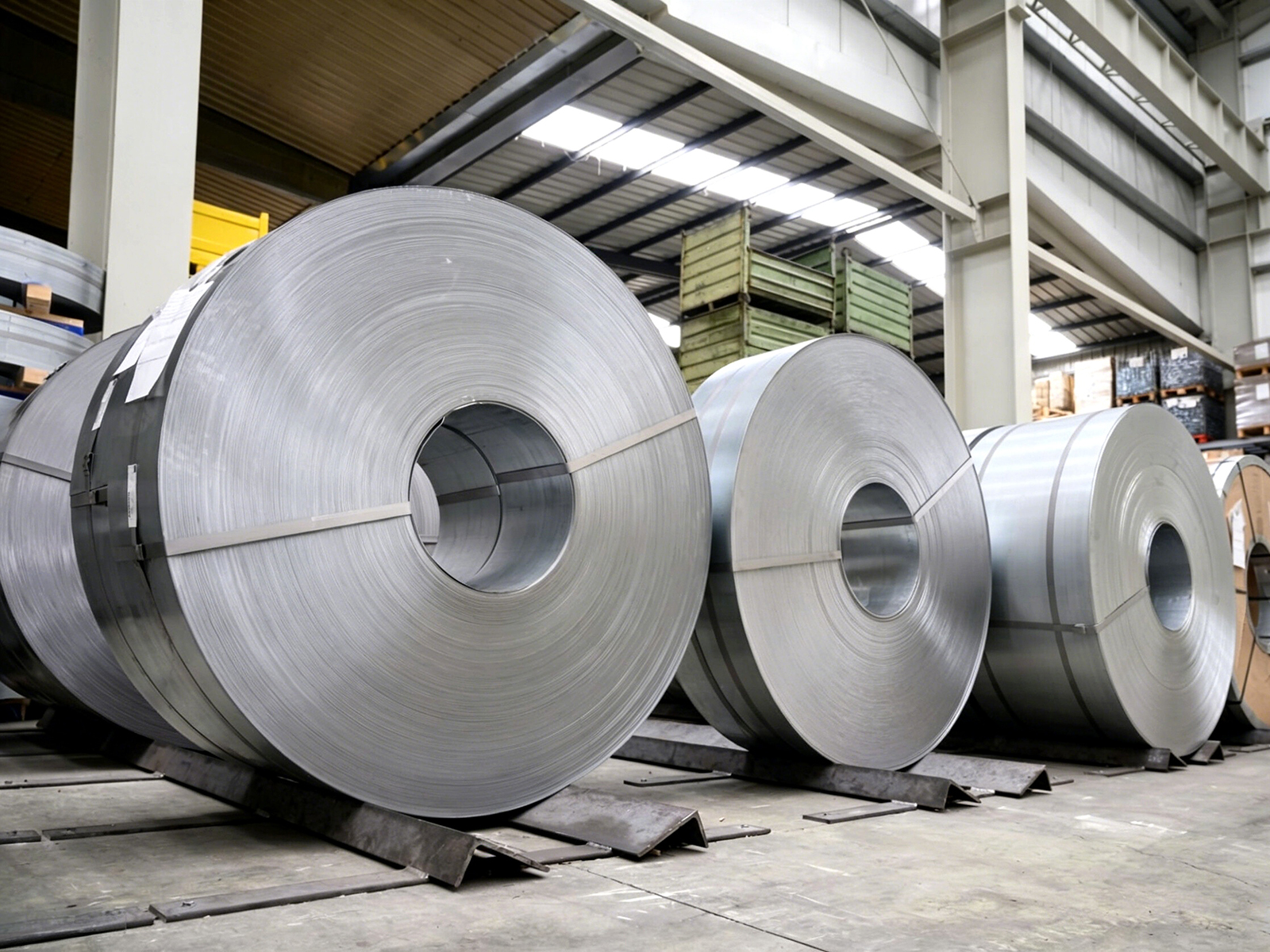
Direct engineering answer. Zr702 foil should be evaluated against the finished component, product form, governing specification, downstream process and acceptance evidence. A general property value is an orientation tool; the released drawing, current certificate and inspection plan control the final decision.
In highly corrosive media such as hydrochloric acid and dilute sulfuric acid, material selection directly affects equipment service life and safety. Zr702 foil (commercially pure zirconium, UNS R60702, Zr+Hf≥99.2%) exhibits low corrosion rates in certain non-oxidizing acids and has therefore attracted attention in chemical corrosion protection, electrolytic equipment, and new-energy applications. This article reviews the composition characteristics, manufacturing processes, corrosion performance, and typical applications of Zr702 foil as a reference for engineering material selection. All corrosion conclusions should be validated against the specific medium, temperature, and aeration conditions, and should not be simply extrapolated.
1. Zr702 Foil: Composition System and Basic Physical Properties
(1) Chemical Composition: Impurity Control and Corrosion Resistance
Zr702 is a commercially pure zirconium grade, corresponding to UNS R60702, and is typically supplied to ASTM B551 or Chinese standard GB/T 21183. Its key composition requirements are Zr+Hf≥99.2%, Hf≤4.5%, Fe+Cr≤0.20%, O≤0.16%, N≤0.025%, and C≤0.05%. This composition system helps reduce the risk of localized corrosion caused by impurity segregation or second-phase precipitation, allowing it to maintain stable corrosion resistance in some strongly acidic media. Note, however, that commercially pure Zr702 is not the same as nuclear-grade zirconium and cannot be broadly claimed to meet nuclear-industry cleanliness requirements. Neutron-economy-sensitive components such as nuclear fuel assemblies require hafnium removal and stricter impurity control and must use nuclear-grade zirconium alloys; Zr702 cannot be directly substituted.
(2) Physical Properties: Density, Melting Point, and Service Temperature Limits
Physical Property | Value or Description |
Density | 6.51 g/cm³ |
Melting point | Approx. 1855℃ |
Magnetic behavior | Non-magnetic |
Service temperature in air | Generally recommended not to exceed approx. 200–300℃; evaluate in conjunction with the allowable degree of oxidation and surface condition |
The melting point is taken as approximately 1855℃, the value commonly used in engineering practice. The density of 6.51 g/cm³ lies between that of titanium (about 4.51 g/cm³) and nickel (about 8.90 g/cm³). With respect to non-magnetic behavior, titanium is also non-magnetic and has a lower density, so the non-magnetic nature of zirconium is not a unique advantage that titanium cannot provide. The case for zirconium should be based primarily on its corrosion resistance in specific corrosive environments, not on non-magnetism itself. The maximum service temperature in air should not be stated as an absolute engineering limit. Zirconium undergoes significant oxidation and nitridation in air at elevated temperatures; the allowable service temperature depends on the permissible degree of oxidation, loading conditions, surface condition, and service-life requirements. Oxidation risk increases markedly above 300℃ and should be evaluated on a case-by-case basis.
(3) Mechanical Properties: Formability in the Annealed Condition
Based on the common requirements in ASTM B551 for annealed R60702 sheet, strip, and foil, the following mechanical properties can be used as a reference:
- Tensile strength: ≤380 MPa
- Yield strength: ≥205 MPa
- Elongation: ≥20% (standard specimen)
A low yield-to-tensile ratio favors stamping, bending, and precision forming. Compared with the cold-worked condition (cold-worked in ASTM terminology), the annealed condition (often designated M in Chinese practice, generally “annealed” in ASTM) typically exhibits less springback and is better suited to complex forming. It should be noted that the tensile properties of very thin foils such as 0.02 mm differ markedly from standard sheet specimens. Their elongation is strongly affected by gauge length, thickness, surface condition, and test method, so the “≥20% elongation” value cannot be applied directly. Purchasing and design specifications should define the thickness range, sampling direction, specimen standard, and statistical basis.
2. Precision Manufacturing Processes: Cold Rolling, Annealing, and Precision Slitting
Zirconium is highly reactive and readily picks up oxygen and nitrogen at elevated temperatures, and it also exhibits substantial springback. The key stages in manufacturing Zr702 foil therefore include multi-pass cold rolling, protective-atmosphere annealing, surface cleaning, and slitting. The following is a description of typical processes and does not reflect the specifications of any particular supplier.
(1) Multi-Pass Cold Rolling and Thickness Tolerance Control
Zr702 foil is generally produced by multi-pass cold rolling with intermediate annealing. Intermediate annealing restores ductility and prevents cracking of the foil caused by accumulated work hardening; poor flatness, residual stress, or uneven tension can cause warping, which must be mitigated through flatness control and a well-designed annealing schedule. Thickness tolerances should be specified in segments rather than applying a single absolute value across the full 0.02–0.8 mm thickness range. For example:
- 0.02–0.1 mm foil: controllable to within approximately ±0.001 mm;
- 0.1–0.8 mm foil: tolerances should normally be relaxed appropriately, as specified by the applicable standard or by agreement between supplier and purchaser.
The thickness measurement method, sampling frequency, measurement-point coverage, and statistical basis should also be clearly defined; otherwise, stating “±0.001 mm” on its own can be misleading.
(2) Protective-Atmosphere Annealing and Surface Quality Control
Annealing Process Parameter | Value or Description |
Annealing atmosphere | Vacuum or continuous argon shielding |
Furnace temperature uniformity | Approx. ±5℃ depending on equipment capability; actual material temperature uniformity must be measured |
Cleaning process | Ultrasonic + alkaline cleaning, mainly to remove rolling oil and surface contaminants |
Surface wetting tension | ≥44 mN/m, used as a consistency lower limit before coating or welding |
Surface appearance | Uniformly bright, free of obvious oxide stains or color differences |
At elevated temperatures, zirconium readily reacts with oxygen and nitrogen to form a brittle oxide layer, so annealing must be performed in vacuum or an inert atmosphere. The temperature-uniformity specification should clearly state whether it refers to furnace-temperature uniformity or material-temperature uniformity. For wide continuous annealing furnaces, a furnace-temperature uniformity of ±2℃ is often idealized; actual acceptance should be based on furnace-temperature measurements and material-temperature calibration results. A surface wetting tension of 44 mN/m indicates a certain level of surface wetting consistency but does not in itself prove high cleanliness or freedom from organic contamination. For surfaces with more demanding cleanliness requirements, contamination test methods and acceptance levels should be specified separately.
(3) Fixed-Width Cutting and Edge Quality Control
Slitting of ultra-thin foil is a challenging operation. Tension fluctuations, tool wear, mismatched gaps, and material springback can all cause edge burrs, microcracks, or wavy edges. Wide coils can be cut to fixed widths or slit within the 350–670 mm range. If the finished width is 670 mm, the operation should be referred to as edge trimming or fixed-width cutting rather than slitting. The final terminology should be determined by the incoming coil width, the finished width, and the processing method. Edge quality should be controlled through blade condition, tension control, and periodic inspection, and vague phrases such as “among the industry’s lowest” should not be used.
3. Corrosion Resistance: Engineering Evaluation in Different Media
The low corrosion rate of Zr702 in certain non-oxidizing acids stems primarily from the dense ZrO₂ oxide film formed on its surface. However, this film is not indestructible under all conditions. In media containing fluoride ions, at elevated temperatures, in strongly oxidizing media, or in certain mixed acids, the ZrO₂ film can be damaged or lose its protective effect. It should therefore not be described as “insoluble, non-spalling” or “nearly inert.”
(1) Comparison with Titanium: Hydrochloric Acid, Dilute Sulfuric Acid, and Mixed Acids
Medium Type | Titanium Gr2 (UNS R50400) | Zr702 |
Hydrochloric acid | Generally not resistant in non-oxidizing hydrochloric acid; corrosion behavior depends on concentration, temperature, and aeration/deaeration conditions | Low corrosion rate over a wide concentration range at moderate to low temperatures and under deaerated or weakly oxidizing conditions; must be verified by testing at high temperature, under aeration, or with oxidizing ions |
Dilute sulfuric acid | Significant corrosion may occur at moderate to low concentrations | Generally stable in reducing dilute sulfuric acid, but concentration, temperature, and aeration conditions should be considered |
Organic acids | Generally stable | Stable in most organic acids, but must be tested at elevated temperatures or with chlorinated or oxidizing components |
Mixed acids | Performance depends on the acid types, proportions, temperature, and oxidizing character; cannot be generalized | May have an advantage in reducing mixed acids; excluded when fluoride or strongly oxidizing components are present |
The UNS designation of titanium Gr2 is R50400 and should not be written as “Ti702.” The table above is only a general comparison; actual material selection must be based on specific corrosion test data.
(2) Comparison with Stainless Steel: Pitting and Crevice Corrosion in Chloride Environments
Stainless steel is at risk of pitting and crevice corrosion in strongly acidic chloride environments. The ZrO₂ oxide film on Zr702 is generally more intact at higher chloride concentrations and in reducing environments, so Zr702 can be used for applications such as chemical reactor linings and heat-exchanger gaskets. However, in the presence of oxidizing chlorides, fluorides, or at elevated temperatures, Zr702 is not necessarily superior to stainless steel, and this should be determined by coupon testing or field data.
(3) Comparison with Nickel: Differences in Suitability in Acidic Systems
Nickel 200 generally offers good corrosion resistance in non-oxidizing hydrochloric acid at ambient temperature and should not be categorically dismissed for use in hydrochloric acid. However, under aerated conditions, in the presence of oxidizing ions, or at elevated temperatures, nickel may undergo accelerated corrosion. Nickel is dense, and zirconium offers a corrosion-rate advantage in some acidic systems, but the two materials differ in cost, workability, and maximum service temperature. Material selection should weigh the medium, temperature, aeration conditions, fabrication cost, and equipment service life as a whole; conclusions should not be based solely on a single corrosion data point or on density differences.
4. Typical Application Scenarios and Engineering Material-Selection Logic
(1) Chemical Corrosion Protection: Seals, Linings, and Gasket Structures
In equipment handling hydrochloric acid, sulfuric acid, organic acids, and similar media, Zr702 foil can be used for gaskets, thin lining sheets, and sealing diaphragms. Annealed material has good ductility and suits stamping into complex shapes. During design, however, the selection should still be validated against the actual medium composition, operating temperature, aeration state, and allowable corrosion rate, avoiding selection based on grade designation alone.
(2) Electrolysis and Electroplating: Corrosion-Resistant Substrates and Electrolytic Equipment Parts Requiring Conductive Design
Electrolytic environments require materials that resist acidic electrolytes, maintain dimensional stability, and do not contaminate the electrolysis products. Zr702 can be used in electrolytic equipment as corrosion-resistant substrates, electrode bases with conductive coatings, or substrates for conductive parts with appropriate structural design. Note that the ZrO₂ formed naturally on the Zr702 surface is an insulating ceramic and significantly increases contact resistance, so it should not simply be described as an “electrode foil substrate.” If used as an electrode, it must be supplemented with a coating, conductive connections, or a rational conductive-structure design. In terms of thickness, thin gauges such as 0.02–0.05 mm can be used in high-precision electrolytic equipment. If thinner gauges are required, tensile properties, flatness, and dimensional stability should be re-evaluated. The thickness range should remain consistent throughout this article; a “0.01 mm” gauge should not appear suddenly in the applications section.
(3) New Energy and Precision Vacuum Applications: Typical Potential Uses
Application Area | Typical Uses | Core Requirements or Limitations |
New energy batteries | Corrosion-resistant current collectors, sealing structures | Resistance to electrolyte corrosion; note the effect of insulating ZrO₂ on electrical conductivity |
Vacuum and precision instruments | Non-magnetic structural parts, shielding films | Non-magnetic, high cleanliness; however, the non-magnetic advantage is similar to that of titanium |
Aerospace | Corrosion-resistant thin-wall structural parts | Oxidation temperature limit and long-term high-temperature stability must be evaluated |
Nuclear industry non-core components | Reprocessing or non-nuclear-grade corrosion-resistant linings | Cannot replace nuclear-grade zirconium alloys for nuclear fuel assemblies |
In proton exchange membrane electrolyzers, the PEM membrane is generally not a metal foil, so Zr702 foil should not be described as a “PEM membrane structure.” Zr702 foil can be a candidate material for corrosion-resistant seals, current-collection supports, or structural parts, but a design basis or experimental validation should be provided.
5. Conclusion
Zr702 foil offers engineering value in specific non-oxidizing acids and chloride environments, but selection must account for the specific medium, concentration, temperature, aeration conditions, and allowable corrosion rate. In purchasing and design, particular attention should be paid to: segmented thickness tolerances, the tensile properties of very thin foil, the annealed-condition designation, the definition of surface cleanliness, weld shielding, and application boundaries. Material suppliers can provide composition, dimensional, tensile, and surface-quality data; purchasers should require that test methods and statistical bases be clearly stated. Fluoride-containing, high-temperature, strongly oxidizing, or certain mixed-acid environments are not suitable for direct application of the general corrosion conclusions for Zr702 and should be evaluated separately.
FAQ
(1) Q1: How significant is the performance difference between Zr702 foil and titanium Gr2 foil in hydrochloric acid environments?
Titanium Gr2 (UNS R50400) generally does not resist non-oxidizing hydrochloric acid. Zr702 exhibits low corrosion rates over a wide concentration range at moderate to low temperatures and under deaerated or weakly oxidizing conditions, but must be re-evaluated at elevated temperatures, under aeration, or in the presence of oxidizing ions. For equipment where hydrochloric acid is the primary medium, Zr702 may be more suitable than titanium Gr2, but validation under actual service conditions is still required.
(2) Q2: Can 0.02 mm ultra-thin Zr702 foil maintain adequate mechanical strength and dimensional stability?
The tensile properties of 0.02 mm foil differ from standard sheet specimens, and elongation may be lower; the “≥20%” value cannot be applied directly. Thickness accuracy can be controlled by segmented tolerances, and the gauge length, sampling direction, and test standard should be specified at the time of purchase. With appropriate cold-rolling and annealing processes, ultra-thin foil can have good forming stability, but acceptance should be based on actual measured data.
(3) Q3: Is Zr702 foil suitable for TIG welding, and is corrosion performance affected after welding?
Zr702 can be TIG-welded, but pre-weld cleaning must be rigorous, and high-purity argon shielding is required on both the face and root during welding. With good weld quality, the protective ZrO₂ film in the weld zone can reform after cooling, and the corrosion resistance of the joint is usually close to that of the base metal; if insufficient shielding causes oxidation contamination, pickling or rework is required, otherwise local corrosion resistance may be reduced.
Contact Us
Looking for a reliable Zr702 foil manufacturer, supplier, or processing service? Our professional zirconium company has full-process capability from cold rolling and protective-atmosphere annealing to precision slitting, supporting custom specifications across the 0.02–0.8 mm thickness range and small-batch prototyping. Contact us: sales@titaniumvalleys.com
References
- National Technical Committee on Nonferrous Metals Standardization. GB/T 26314-2010 Grades and chemical composition of zirconium and zirconium alloys [S]. Beijing: Standards Press of China, 2011.
- National Technical Committee on Nonferrous Metals Standardization. GB/T 21183-2007 Zirconium and zirconium alloy plates, strips and foils [S]. Beijing: Standards Press of China, 2008.
- Huang Boyun, Li Chenggong, Shi Likai, et al. China Materials Engineering Canon: Vol. 4 Nonferrous Metals Materials Engineering [M]. Beijing: Chemical Industry Press, 2006.
Engineering specification and verification framework
For Zr702 foil, state grade, ordered product form, condition, nominal dimensions, tolerances, surface requirement, quantity and documentation in one controlled RFQ. The applicable product-form reference is ASTM B265, subject to the current edition and project-specific requirements. When tensile evidence is required, define the test method and sampling basis; ASTM E8/E8M or ISO 6892-1 may apply where consistent with the order.
| RFQ field | Required detail | Reason |
|---|---|---|
| Material identity | Grade, form, ASTM B265, condition | Prevents unintended substitution. |
| Geometry | Nominal size, tolerance, length or coil form | Defines production and inspection scope. |
| Process context | Forming, machining, joining, etching or assembly | Relates supply condition to actual manufacture. |
| Verification | Certificate, dimensional checks, lot identity | Creates a traceable acceptance plan. |
Risk review and incoming control
Common avoidable risks include tolerance stack-up, unclear condition, surface damage, undocumented substitution and loss of lot identity after cutting. At receipt, reconcile the purchase order, packing label and certificate before release to production. Define any supplementary testing, sampling and report format before quotation rather than after shipment.
Technical FAQ
Can catalogue values approve the material?
No. Final approval must use the ordered form, condition, standard, drawing, process route and service boundary.
What should an RFQ include?
Provide the drawing where available, grade and standard, dimensions, tolerance, condition, quantity, process context, service information and documentation requirement.
Product resources and technical quotation
Review the relevant titanium foil product category. For a drawing-based review, request a technical quotation with the full specification.
References and use note
- ASTM B265, applicable edition, for the ordered product form.
- ASTM E8/E8M or ISO 6892-1 where the project specifies tensile verification.
- Project drawing, purchase specification, certificate and agreed inspection plan.
This engineering note supports procurement specification. It does not replace component design validation or the governing contractual standard.