
What Should You Know Before Buying Zirconium 702 Foil?
- Zr702 foil
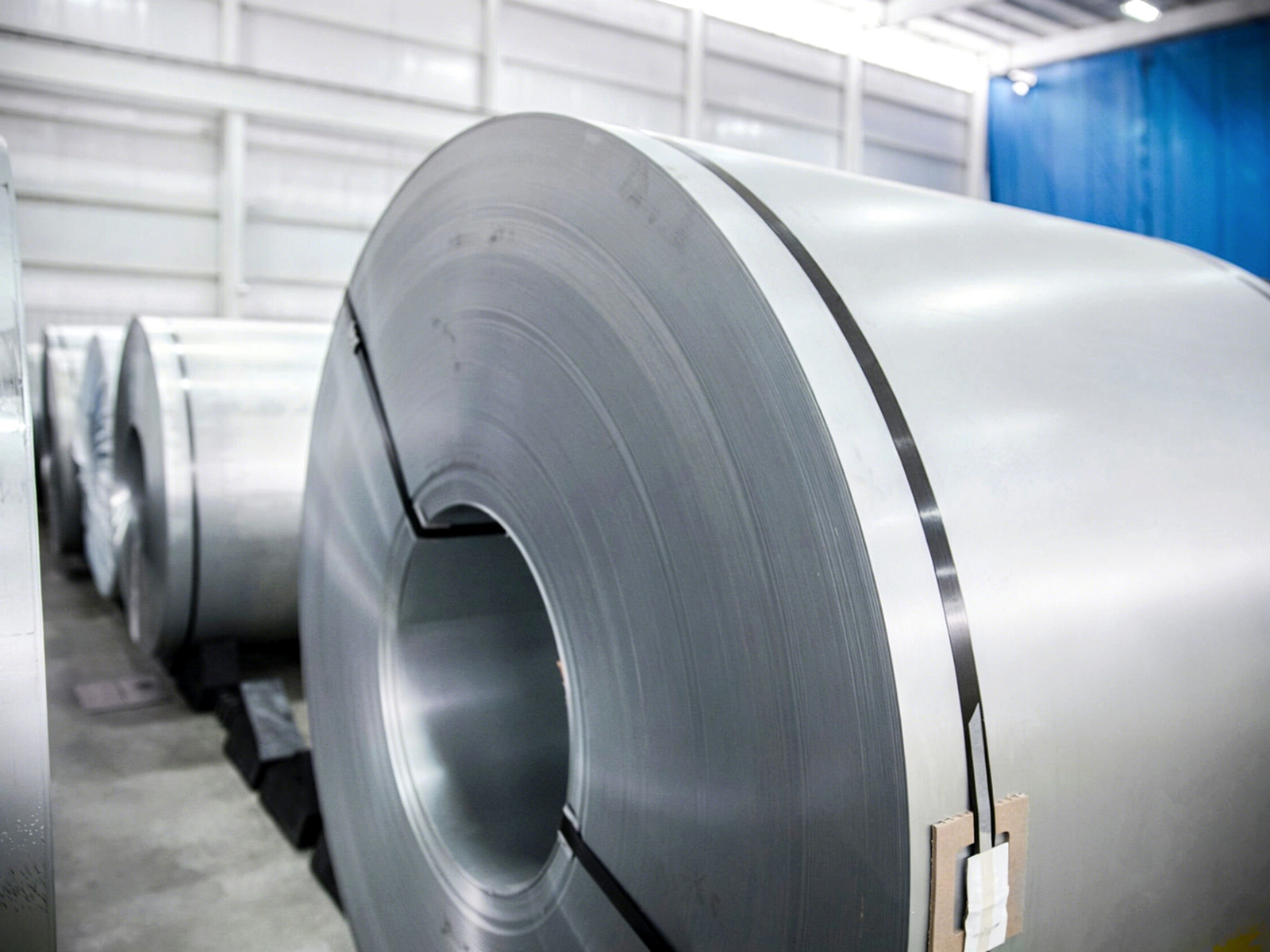
Direct engineering answer. Zr702 foil should be evaluated against the finished component, product form, governing specification, downstream process and acceptance evidence. A general property value is an orientation tool; the released drawing, current certificate and inspection plan control the final decision.
Before buying zirconium 702 foil (UNS R60702 Foil), you should not focus only on whether it is corrosion-resistant; a systematic evaluation across five dimensions is required: material properties, specification selection, manufacturing processes, application fit, and supplier qualifications. Zirconium 702 is a commercially pure zirconium material with a Zr+Hf content of ≥99.2% and demonstrates good long-term corrosion stability in many non-oxidizing acids. However, not all zirconium 702 foil products meet the requirements of high-reliability applications in terms of dimensional accuracy, surface condition, and lot-to-lot consistency. This article examines the five dimensions to help buyers make more accurate decisions.
1. Core Material Properties of Zirconium 702 Foil: Corrosion-Resistance Boundaries, Non-Magnetism, and Workability
(1) Outstanding Corrosion Resistance Must Be Judged Against the Medium Conditions
Zirconium 702 typically exhibits low corrosion rates in hydrochloric acid, dilute sulfuric acid, organic acids, and various mixed acids, making it suitable for reducing environments containing chloride ions. However, this conclusion cannot be divorced from the specific medium conditions. When oxidizing ions such as Fe3+ and Cu2+ are present in the acidic system, zirconium 702 may undergo significantly accelerated corrosion. Therefore, “zirconium 702 withstands hydrochloric acid” alone must not be used as the basis for material selection; a comprehensive evaluation covering acid concentration, temperature, oxidizing impurity ions, flow velocity, and possible contact with dissimilar metals is required.
By comparison, the suitability of titanium in hydrochloric-acid environments depends on the acid concentration, temperature, and oxidizing-impurity conditions; it cannot be assumed categorically that all hydrochloric-acid environments will cause rapid perforation. Nickel 200 generally has good corrosion resistance to non-oxidizing acids such as hydrochloric and sulfuric acid, but poor resistance to oxidizing acids such as nitric acid or environments containing oxidizing ions. The chemical composition and annealed mechanical properties of zirconium 702 can be referenced to ASTM B551/B551M-23 [1]; corrosion-resistance evaluation must be tied to specific medium conditions, and related material data can be found in the Handbook of Rare Metals [3].
(2) Non-Magnetic and High-Cleanliness Characteristics
Zirconium 702 foil is non-magnetic at room temperature, is highly clean as a material, and has a low risk of metal leaching. These two points are especially important in precision instruments, electronic shielding structures, and high-purity pharmaceutical equipment. Metal-leaching contamination can cause serious quality problems in high-purity chemical synthesis or biopharmaceutical manufacturing, and zirconium 702 foil demonstrates good inertness in these scenarios.
(3) Ductility and Weldability Fit
Annealed zirconium 702 foil typically has a tensile strength of ≤380 MPa and elongation of ≥16%, offering good capability for stamping, bending, and forming of seals. Although zirconium 702 has good weldability fit, zirconium has a strong affinity for oxygen, nitrogen, and hydrogen at elevated temperatures; welding must be performed under vacuum or with strict inert-gas shielding, including high-purity argon shielding and back shielding of the weld root; otherwise, oxidation, hydrogen pickup, and embrittlement risks arise. Related welding and high-temperature behavior can be referenced in Nuclear Structural Materials.
Material Comparison | Corrosion-Resistance Characteristics | Non-Magnetic | Formability | Key Applicable Scenarios |
Titanium foil (Gr2) | Good in neutral and oxidizing environments; reducing environments containing hydrochloric acid require evaluation | Yes | Excellent | Mild corrosion / structural parts |
Nickel 200 | Generally good resistance in non-oxidizing acids; poor in oxidizing acids | No | Excellent | Conductivity / electrodes |
Stainless steel | Prone to pitting and crevice corrosion in chloride-containing media | Some types non-magnetic or weakly magnetic | Fair | General structures |
Zirconium 702 foil | Excellent in non-oxidizing acids such as hydrochloric and dilute sulfuric acid; evaluate when oxidizing ions are present | Yes | Excellent | Severe corrosion / sealing / electrolysis |
2. How Specification Parameters Affect Purchase Decisions: Thickness, Width, Tolerance, and Surface Quality
(1) Thickness Range: Distinguish Foil, Thin Strip, and Thin Sheet
Standard foil is typically supplied in thicknesses primarily of 0.02–0.5mm; 0.5–1.0mm should generally be managed as thin strip or thin sheet rather than uniformly labeled “foil.” For research, high-precision electrolysis, and vacuum equipment, custom products can be as thin as 0.005mm. When choosing thickness, formability, rigidity, and assembly precision must be balanced: too thin raises assembly-precision requirements, while too thick can compromise flexible forming capability.
(2) Width Specifications and Slitting Quality
Common supply widths are about 15–680mm, covering requirements from narrow strip seals to wide electrolytic-cell linings. Width selection depends not only on part dimensions but also on how the slitting process affects edge quality. Ultra-thin, wide foil is prone to edge burrs and microcracks during slitting, so special attention should be paid to the supplier’s slitting-tension control and edge-cleanliness capability for ultra-thin material.
(3) Thickness Tolerances Must Be Specified by Thickness Range
Thickness tolerance cannot be expressed as a single fixed absolute value covering all thickness specifications. Actual rolling precision differs across thickness ranges; in particular, for 0.005mm-class ultra-thin foil, simply specifying ±0.002mm corresponds to a relative error of up to ±40%, contradicting a “high-precision” claim.
It is recommended to agree tolerance-control capability by thickness range:
Thickness Range | Recommended Tolerance-Control Approach | Remarks |
0.005–0.02mm | As a percentage of nominal thickness, e.g., ±10% to ±15%, or by mutual agreement | 0.005mm class should not be specified as ±0.002mm |
>0.02–0.05mm | ±0.002mm | Common high-precision range |
>0.05–0.15mm | ±0.003mm | Mid-thickness range |
>0.15–0.5mm | ±0.005mm | Thicker foil |
>0.5–1.0mm | Refer to ASTM B551/B551M-23 [1] or by mutual agreement | Managed as thin strip/sheet |
(4) Surface Condition Should Be an Independent Quality Requirement
Surface condition should not be grouped together with thickness and width as the same type of specification parameter. Common surface conditions include bright-annealed and pickled, but they should be defined by indicators such as surface roughness Ra, wetting tension, residual surface contaminants, and oxide-layer condition, rather than by vague classifications such as “bright/matte/functional surface.” For zirconium 702 foil, surface cleanliness mainly affects weld quality, coating/adhesion, and suitability for high-purity environments. Sealing performance depends primarily on thickness tolerance, flatness, roughness, and material deformability; surface cleanliness should not be equated directly with sealing performance.
3. Key Process-Control Steps in Manufacturing: Which Operations Affect Final Quality?
(1) Multiple Cold-Rolling Passes with Intermediate Annealing
Zirconium work-hardens noticeably; rolling directly to ultra-thin gauges readily produces microcracks and thickness non-uniformity. Multiple cold-rolling passes combined with intermediate annealing restore ductility after each pass reduction, ensuring thickness uniformity and microstructural stability. Temperature uniformity in the annealing zone should be controlled within a reasonable range depending on the furnace type and specification — for example, on the order of ±5℃ to ±10℃; the key is not a single number but avoiding local overheating or under-heating that causes grain coarsening or non-uniform microstructure.
(2) Vacuum or Inert-Atmosphere Annealing
Zirconium oxidizes readily at elevated temperatures; surface oxidation not only affects appearance and color but also degrades subsequent weldability and formability. Vacuum or inert-gas-shielded annealing effectively suppresses oxidation and preserves surface cleanliness and uniform color. It should be noted that surface condition is important for weld quality and high-purity applications, but sealing performance depends more on thickness tolerance, flatness, roughness, and material deformability.
(3) Cleaning and Surface Treatment
Ultrasonic cleaning combined with alkaline treatment effectively removes rolling-oil residues, metal particles, and surface-adsorbed impurities. After treatment, the surface wetting tension consistently reaches 40 dyn/cm (about 40 mN/m); this indicator mainly affects coating, adhesion, and the uniformity of subsequent surface treatment and should not be over-interpreted as a direct indicator of stamping formability or welding stability. An automated cleaning line helps ensure lot consistency, but the automation rate must have a clearly defined statistical basis and should not be a core criterion in purchasing evaluation.
4. Material-Selection Logic for Zirconium 702 Foil Across Application Scenarios
(1) Chemical Anti-Corrosion: Focus on Medium Conditions and Sealing Reliability
In strong-acid chemical systems, zirconium 702 foil is mainly used for gaskets, linings, and sealing structural parts. When selecting, confirm the acid concentration, temperature, presence of oxidizing ions such as Fe3+ and Cu2+, flow velocity, and possible contact with dissimilar metals. Fe+Cr ≤0.20% is a chemical-composition impurity-control indicator that mainly affects corrosion resistance and mechanical stability; it cannot be equated directly with reduced galvanic-corrosion risk. Galvanic-corrosion risk should be controlled through structural design, galvanic-couple area ratios, medium conductivity, and insulation measures. The good ductility of the annealed condition makes it suitable for stamping complex-shaped seals.
(2) Electrolysis and New Energy: Focus on Conductivity Stability, Medium Compatibility, and Weld Shielding
In electrolytic cells and new-energy battery applications, zirconium 702 foil is used as electrode foil or a corrosion-resistant current collector, requiring both electrical-conductivity stability and chemical inertness to the electrolyte. Ultra-thin gauges such as 0.02–0.05mm help reduce internal resistance and increase energy density, but it must be confirmed that thickness tolerances and edge defects meet continuous-operation requirements. Where welding is involved, the inert-gas shielding process must be evaluated to avoid local oxidation, hydrogen pickup, or embrittlement.
(3) Precision Instruments and Aerospace: Focus on Non-Magnetism, Dimensional Stability, and High-Temperature Use Limits
Precision-instrument and aerospace applications place high demands on a material’s non-magnetic character and dimensional stability. Zirconium 702 foil’s non-magnetic character makes it suitable for magnetic-field-sensitive components, shielding structures, and precision assemblies. For moderate-to-high-temperature applications, structural stability cannot be judged by melting point alone; zirconium oxidizes and absorbs hydrogen readily at elevated temperatures, so the service atmosphere, temperature range, and surface-protection measures must be evaluated. Related high-temperature behavior can be referenced in Nuclear Structural Materials and the China Materials Engineering Canon.
5. How to Evaluate a Zirconium 702 Foil Supplier’s Real Capability
(1) Process Equipment Matched to Product Specifications
A single equipment model or total capacity should not substitute for actual manufacturing capability. Buyers should verify that the supplier has a complete complementary setup including multi-roll precision mills, continuous annealing lines, and high-precision leveling and slitting lines, and confirm that the equipment capability covers the target thickness, width, and tolerance ranges.
(2) Quality Certification and Testing System
Before purchasing, confirm whether the supplier provides complete material test reports (MTR) and inspection reports covering Zr+Hf ≥99.2%, Fe+Cr ≤0.20%, oxygen content, tensile strength, elongation, measured thickness values, surface defects, and metallographic structure analysis. Conformance to ASTM B551/B551M-23 is a basic requirement; for nuclear-industry or aerospace applications, nondestructive testing (NDT) capability should also be considered.
(3) Actual Batch Capability and Lot-to-Lot Consistency
Production-capacity scale alone does not imply high-precision custom capability or lot-to-lot consistency. Require the supplier to provide actual batch-delivery records for similar specifications, as well as statistical data on thickness, surface condition, and mechanical properties across multiple lots. For long-term, stable purchasing, lot-to-lot consistency is more informative than the performance of a single sample.
6. Conclusion
Purchasing zirconium 702 foil (UNS R60702 Foil) requires systematic evaluation across five dimensions: whether the material properties match the service conditions and corrosion boundaries, whether the specification parameters precisely cover the design requirements, whether the manufacturing process ensures long-term stability, whether the application scenario clearly defines temperature, medium, and protection conditions, and whether the supplier has verifiable quality control and batch-delivery capability. Mastering these five dimensions is the way to reliably translate material advantages into long-term, reliable equipment operation.
FAQ
(1) Q1: How do you determine whether zirconium 702 foil is suitable for a hydrochloric-acid system containing oxidizing ions?
A simple judgment based solely on “zirconium 702 withstands hydrochloric acid” is insufficient. Ask the supplier for corrosion-rate data under the target medium conditions, or conduct coupon and electrochemical testing first. Acidic systems containing oxidizing ions such as Fe3+ and Cu2+ can significantly accelerate zirconium corrosion, so it is essential to confirm whether these ions are present in the medium and their approximate concentrations.
(2) Q2: When purchasing 0.005mm-class ultra-thin zirconium foil, how do you avoid unreasonable tolerance commitments?
Require the supplier to state whether the tolerance is an absolute value or a percentage and to specify the corresponding thickness range. For 0.005mm-class products, ±0.002mm corresponds to a relative error of up to ±40%, which cannot be described simply as “high precision.” Require measured thickness-distribution and multi-point measurement data rather than relying on the nominal tolerance alone.
(3) Q3: Besides chemical composition, what items in the material test report (MTR) should be given special attention?
In addition to Zr+Hf, Fe+Cr, and oxygen content, pay attention to annealed mechanical properties, measured thickness data, edge defects, and surface cleanliness or wetting tension. Where welding is involved, also request the supplier’s surface-oxide-layer control records and shielding-process recommendations.
Contact Us
Looking for a reliable manufacturer, supplier, or processing service for zirconium 702 foil (UNS R60702 commercially pure zirconium foil)? A professional zirconium-materials company with end-to-end capability covering sponge-zirconium batching, vacuum melting, multiple cold-rolling passes, vacuum/inert-atmosphere annealing, and high-precision leveling and precision slitting can supply to standards such as ASTM B551/B551M-23 and GB/T 21183, with standard thicknesses of 0.02–0.5mm and widths of 15–680mm; 0.005mm-class ultra-thin gauges can be custom-developed through dedicated review. Thickness tolerances are agreed by range; surface conditions can be supplied as bright-annealed or pickled, with wetting-tension, roughness, and oxide-layer-control data provided. Material test reports (MTR, covering Zr+Hf, Fe+Cr, O, N, H, C, and mechanical properties), measured thickness distributions, multi-lot consistency statistics, and NDT reports are available, and material-selection and weld-shielding assessment support is provided for chemical anti-corrosion, electrolysis/new-energy, and precision-instrument applications. Contact us: sales@titaniumvalleys.com
References
- ASTM International. ASTM B551/B551M-23, Standard Specification for Zirconium and Zirconium Alloy Strip, Sheet, and Plate [S]. West Conshohocken, PA: ASTM International, 2023.
- Liu Jianzhang. Nuclear Structural Materials [M]. Beijing: Chemical Industry Press, 2007.
- Handbook of Rare Metals Editorial Board. Handbook of Rare Metals [M]. Beijing: Metallurgical Industry Press, 1992.
- Huang Boyun, Li Chenggong, et al. China Materials Engineering Canon, Vol. 4: Nonferrous Metal Materials Engineering [M]. Beijing: Chemical Industry Press, 2006.
Engineering specification and verification framework
For Zr702 foil, state grade, ordered product form, condition, nominal dimensions, tolerances, surface requirement, quantity and documentation in one controlled RFQ. The applicable product-form reference is ASTM B551, subject to the current edition and project-specific requirements. When tensile evidence is required, define the test method and sampling basis; ASTM E8/E8M or ISO 6892-1 may apply where consistent with the order.
| RFQ field | Required detail | Reason |
|---|---|---|
| Material identity | Grade, form, ASTM B551, condition | Prevents unintended substitution. |
| Geometry | Nominal size, tolerance, length or coil form | Defines production and inspection scope. |
| Process context | Forming, machining, joining, etching or assembly | Relates supply condition to actual manufacture. |
| Verification | Certificate, dimensional checks, lot identity | Creates a traceable acceptance plan. |
Risk review and incoming control
Common avoidable risks include tolerance stack-up, unclear condition, surface damage, undocumented substitution and loss of lot identity after cutting. At receipt, reconcile the purchase order, packing label and certificate before release to production. Define any supplementary testing, sampling and report format before quotation rather than after shipment.
Technical FAQ
Can catalogue values approve the material?
No. Final approval must use the ordered form, condition, standard, drawing, process route and service boundary.
What should an RFQ include?
Provide the drawing where available, grade and standard, dimensions, tolerance, condition, quantity, process context, service information and documentation requirement.
Product resources and technical quotation
Review the relevant zirconium product category. For a drawing-based review, request a technical quotation with the full specification.
References and use note
- ASTM B551, applicable edition, for the ordered product form.
- ASTM E8/E8M or ISO 6892-1 where the project specifies tensile verification.
- Project drawing, purchase specification, certificate and agreed inspection plan.
This engineering note supports procurement specification. It does not replace component design validation or the governing contractual standard.