
Why Is Gr2 Titanium Wire Widely Used in Industrial Applications?
- Gr2 Titanium Wire
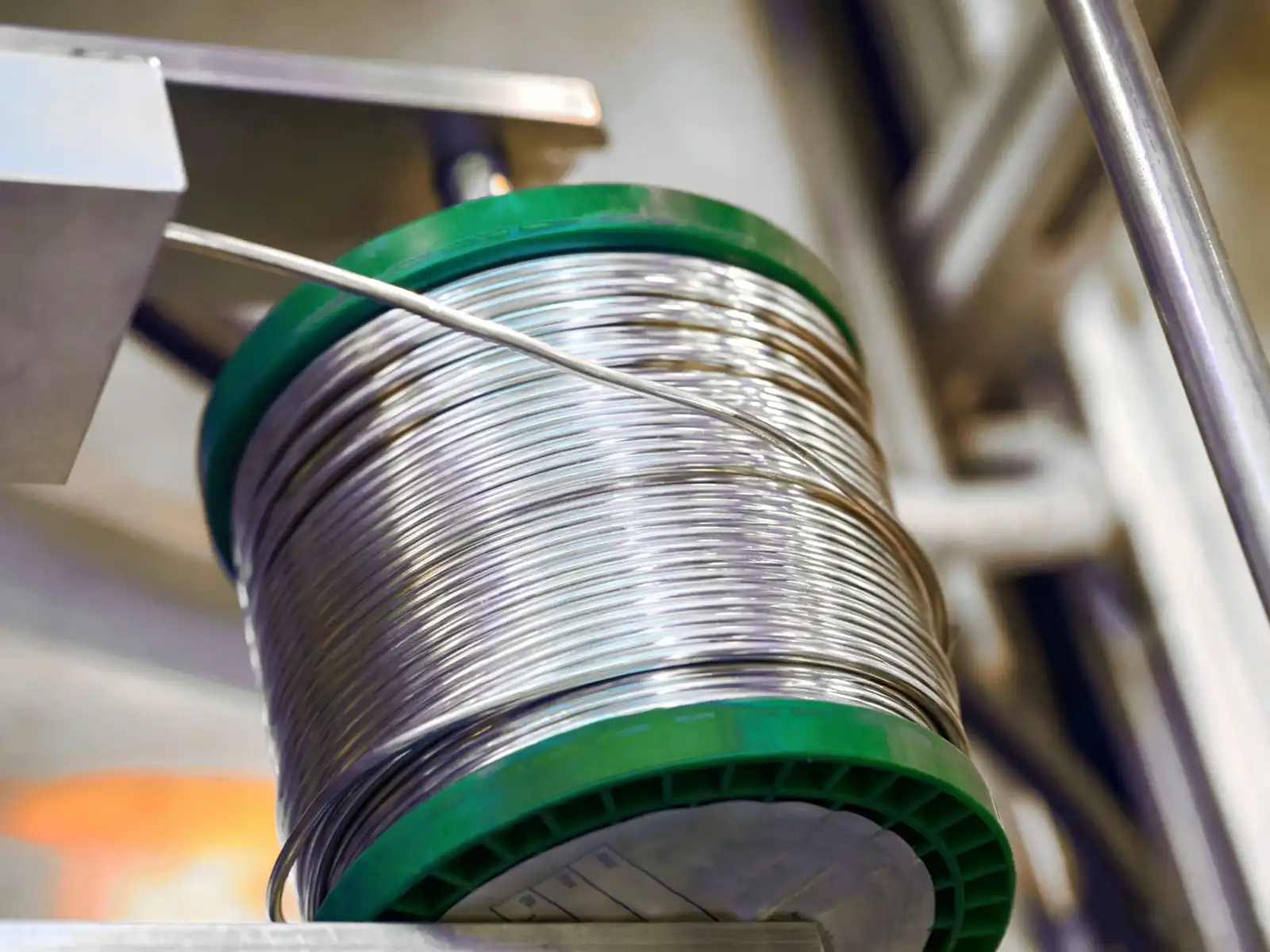
Gr2 commercially pure titanium wire is commonly used in industrial scenarios that demand high corrosion resistance, lightweight design, and biocompatibility. However, if material selection focuses only on “purity” or “strength,” it is easy to overlook chemical composition, wire diameter, cold-worked condition, and specific service limitations. The following content organizes the performance data for Gr2 wire, typical application boundaries, and the verification items that should be checked before purchasing.
1. Material Properties and Standard Conformance
(1) Composition and Standards
Under the chemical composition requirements of ASTM B863 for commercially pure titanium Grade 2, the principal element limits are: Fe≤0.30%, O≤0.25%, C≤0.08%, N≤0.03%, H≤0.015%; each other element ≤0.10%, and the total of other elements ≤0.40%.
It should be noted that the “total of other elements ≤0.40%” here does not include the principal interstitial or impurity elements such as Fe, O, C, N, and H. Therefore, “titanium content ≥99.2%” is usually only a nominal value calculated by the difference method and cannot substitute for the individual element limits in the standard. Engineering acceptance should be based on the specific standard and the manufacturer’s quality documentation.
(2) Commercially Pure Titanium Grade System
Commercially pure titanium is commonly available in a continuous series of grades: Gr1, Gr2, Gr3, and Gr4. The principal differences between grades come from oxygen and iron content control, rather than simply “higher purity” or “lower total impurities.” Gr2 permits higher oxygen and iron limits than Gr1, so its strength increases while ductility and cold workability decrease slightly. Gr3 and Gr4 are generally further strengthened, but with a corresponding reduction in cold workability.
(3) Typical Mechanical Property Ranges
The ranges below are examples based on a manufacturer’s typical statistical values for cold-drawn or annealed Gr2 wire in the φ1.0 mm to φ6.0 mm diameter range; they do not represent ASTM B863 acceptance values. The standard minimum tensile strength for ASTM B863 Gr2 wire is 345 MPa.
Condition | Process Description | Tensile Strength / MPa | Yield Strength / MPa | Elongation / % | Hardness / HV |
Annealed | Recrystallization annealing after cold drawing | 400–500 | 275–420 | 15–20 | 140–200 |
Half-hard | Medium cold-work deformation | 480–620 | 380–520* | 8–12 | 180–240 |
Hard | Higher cold-work deformation | 550–750 | 480–680* | 5–8 | 220–300 |
Note: Values marked with * are manufacturer’s typical statistical ranges and must be confirmed according to wire diameter, process batch, and the specific product. Hardness ranges and strength ranges do not correspond strictly one-to-one and cannot be used for precise matching.
(4) Lightweight Properties
Gr2 titanium wire has a density of approximately 4.51 g/cm³, lower than stainless steel and most nickel-based alloys. This is a clear advantage for weight-sensitive structural components. However, lightweight design still requires a comprehensive evaluation of component stiffness, cost, processing methods, and loading conditions; a lower density alone does not justify substituting for other materials.
2. Key Properties and Engineering Boundaries
(1) Corrosion Resistance
Titanium forms a dense TiO₂ oxide film on its surface and generally exhibits good corrosion resistance in seawater, chloride solutions, oxidizing acids, and weakly alkaline media. However, in reducing acids, fluoride-containing media, or high-temperature, high-concentration acidic environments, titanium can corrode relatively rapidly. Corrosion compatibility should be evaluated against the actual media before material selection.
The absence of visible corrosion after a 480-hour neutral salt spray test can only serve as a short-term screening or comparative reference and cannot be extrapolated directly to a 20-year service life. Long-term life should be calculated on the basis of actual media, temperature, flow rate, stress state, and corrosion rate.
(2) Usage Limitations Across a Wide Temperature Range
Temperature Range | Service Condition | Notes |
-253℃ cryogenic | Most commercially pure titanium grades have good low-temperature toughness | Oxygen content, grain size, and heat treatment condition must be confirmed, based on measured low-temperature tensile/impact data |
Room temperature to 300℃ | Generally suitable for long-term stable service | Evaluate on the basis of media, stress, and exposure time |
300℃ to 450℃ | Possibly suitable only for short-term or low-load service | Higher temperatures can cause oxidation, strength reduction, and creep; unrestricted long-term use is not advisable |
Gr2 titanium wire generally has good toughness at cryogenic temperatures, but it is not advisable to claim “no low-temperature embrittlement at -253℃” without providing the specific grade, condition, and measured data.
(3) Non-Magnetic Properties and Biocompatibility
Gr2 commercially pure titanium has low magnetic permeability and can generally be used as a non-ferromagnetic material for components sensitive to magnetic fields. It also offers good biocompatibility, but when used for medical devices or implant-related scenarios, it must still be validated against specific standards such as ISO 5832-2 or ASTM F67. A general “good biocompatibility” claim cannot substitute for medical-grade standards and product certification.
(4) Weldability and Formability
Gr2 is commonly used as ERTi-2 filler wire. Inert gas shielding must be used during welding to prevent oxidation and contamination of the weld zone. Annealed wire offers good ductility and is suitable for bending, winding, and precision forming; however, springback, work hardening, and the need for necessary intermediate annealing must be considered after cold forming.
(5) Cost Effectiveness and Applicability Boundaries
Among the Gr1–Gr4 commercially pure titanium grades, Gr2 offers a well-balanced combination of strength and ductility and is commonly used for industrial parts that require high corrosion resistance without extreme strength. However, it does not cover all pure titanium applications and certainly cannot replace high-strength titanium alloys such as Ti-6Al-4V. Strength, fatigue, toughness, and corrosion resistance should be re-verified before any substitution.
3. Typical Applications and Limitations
(1) Chemical Corrosion Protection Equipment
Gr2 titanium wire can be used for filter screens, fasteners, elastic elements, and heat exchanger accessories. However, if the media contain reducing acids or fluoride ions or are at higher temperature, corrosion testing should be performed first. Salt spray test results are only a reference and cannot replace corrosion evaluation under actual service conditions. Equipment life should be calculated from corrosion rate, stress level, maintenance conditions, and localized corrosion risk.
(2) Marine Engineering and Deep-Sea Exploration
Gr2 titanium wire can be considered for seawater piping, anchoring hardware, and underwater sensor structural components. Titanium has a good corrosion-resistance record in seawater, but the specific structural life must also account for crevice corrosion, joints, flow rate, contamination, and fatigue loading. A “20+ year service life expectation” should not be claimed on the sole basis of the material’s corrosion resistance.
(3) Medical Devices and Precision Electronics
Ultra-fine Gr2 wire with diameters of φ0.1 mm to φ0.4 mm can be used for surgical instrument components, minimally invasive device parts, and certain low-load orthodontic accessories. The mainstream material for dental orthodontic wires is nickel-titanium superelastic alloy; Gr2 commercially pure titanium wire is not a mainstream choice for orthodontic archwires, and such claims should be avoided in absolute terms.
In electronics, titanium’s electrical conductivity is relatively low and it is not suitable as a high-frequency electromagnetic shielding material. Its low magnetic permeability makes it more suitable for structural brackets, insulating supports in magnetic-field-sensitive environments, or miniature parts with higher biocompatibility requirements.
4. Manufacturing Processes and Inspection Compatibility
(1) Vacuum Melting, Cold Drawing, and Intermediate Annealing
Vacuum melting helps reduce gas and impurity content. Multi-pass cold drawing must be combined with necessary intermediate annealing, surface inspection, and lubrication management; otherwise, excessive work hardening, surface damage, or cracking can easily occur.
Cold drawing can increase strength, but surface finish depends primarily on the dies, lubrication, the raw material surface, and subsequent processing. It should not be assumed that cold drawing necessarily improves surface finish.
(2) Roller-Die Cold Drawing and Precision Straightening
Roller-die cold drawing helps improve roundness. For a φ6.5 mm product, for example, some production lines can control ovality within 0.15–0.20 mm, better than the typical commercial wire ovality level of about 0.30 mm. Straightness, measured on a baseline length of one meter per unit, can be controlled within 2 mm/m, i.e., 0.2%.
The data above are process capability indicators, not mandatory standard acceptance values. When ordering, the wire diameter, tolerance, roundness, straightness, reference length, and inspection methods should be specified.
(3) Inspection System and Specification Adaptation
Methods such as spectrochemical analysis, tensile testing, and eddy current inspection are applicable to most gauges. Ultrasonic inspection is typically used for larger-diameter wire; for ultra-fine wire of φ0.1 mm to φ0.4 mm, methods such as in-line eddy current, visual inspection, or surface inspection should be given priority rather than claiming, without distinction, that all products undergo ultrasonic non-destructive testing.
Even a “fully automated inspection system” must define the inspection items by gauge; otherwise it can be misleading. Automation rate data should have a clearly defined statistical scope and should not be used as the sole basis for quality assurance.
5. Supply Capability and Verification Requirements to Check Before Purchasing
(1) Hydrogen Energy and Cryogenic Applications
Gr2 titanium wire generally has good toughness at cryogenic temperatures, but for use in liquid hydrogen storage and transport pipelines, hydrogen fuel cell structural components, or connectors, additional data on hydrogen compatibility, weldability, low-temperature mechanical properties, and long-term service performance are required.
For electrical connection components in hydrogen fuel cells, the contact resistance of the titanium surface oxide film is relatively high, so Gr2 should not be selected primarily for electrical connections. Surface treatment, contact resistance, and durability should first be evaluated, and suitability determined in the context of the actual electrochemical environment.
(2) Precision Manufacturing Tolerances
If a customer requires a diameter tolerance of ±0.02 mm or tighter, the wire diameter, tolerance, roundness, straightness, surface condition, and inspection methods must be defined in the technical agreement. The brand of production equipment or a continuous rolling line in itself does not directly guarantee the final wire tolerances; the key factors remain the process route, die management, straightening, and closed-loop inspection.
(3) Market Supply Capability
Global demand for Gr2 commercially pure titanium wire continues to grow. Buyers should require suppliers to provide capacity for specific gauges, batch-to-batch consistency data, certificates of conformance, and traceability documents. Descriptions such as “tonnage-level capacity” should not be used as a basis for selection if they do not distinguish between plants, gauges, and product types.
6. Conclusion
The engineering value of Gr2 commercially pure titanium wire lies in its well-balanced combination of strength, ductility, corrosion resistance, and light weight. But its applicability boundaries are equally important: standard composition cannot be replaced by “purity,” mechanical properties depend on wire diameter and condition, salt spray results cannot be directly extrapolated to long-term life, and applications such as high-frequency shielding and hydrogen-energy electrical connections should not be casually assigned to Gr2 without test data. When selecting materials, buyers should make judgments based on the specific service conditions, corresponding standards, and supplier data.
FAQ
(1) Q1: What Are the Core Differences Between Gr2 Titanium Wire and Gr1 Titanium Wire?
Under the composition requirements for commercially pure titanium in ASTM B863, Gr1 typically has an oxygen limit of ≤0.18% and an iron limit of ≤0.20%; Gr2 has an oxygen limit of ≤0.25% and an iron limit of ≤0.30%. Gr2 therefore provides higher strength with slightly lower ductility. The annealed tensile strength of 400–500 MPa for Gr2 is typically a manufacturer’s typical range, while the ASTM B863 minimum tensile strength for Gr2 is 345 MPa. Selection should consider strength, formability, and cost requirements.
(2) Q2: Is Gr2 Titanium Wire Suitable for Medical Implant Devices?
Gr2 titanium wire has good biocompatibility, but specific implant components must be evaluated against implant standards for commercially pure titanium, such as ASTM F67 or ISO 5832-2. ASTM F136 applies to Ti-6Al-4V ELI and does not apply to Gr2 commercially pure titanium. Buyers should confirm that the supplier holds product approval or traceability documentation within the corresponding standard scope.
(3) Q3: How Can Product Quality Compliance Be Confirmed When Ordering Gr2 Titanium Wire?
Buyers may request an EN 10204-3.1 material certificate covering chemical composition, mechanical properties, dimensions, and inspection results, and confirm that the product conforms to ASTM B863 or the buyer-specified equivalent standard. Reputable manufacturers should be able to provide complete batch traceability documentation.
Contact Us
For inquiries regarding Gr2 commercially pure titanium wire, contact Titanium Valley (Baoji Titanium Valley Titanium Nickel Zirconium Materials Deep Processing Co., Ltd.): sales@titaniumvalleys.com. Suppliers should provide products conforming to ASTM B863 or other equivalent standards, and include an EN 10204-3.1 material certificate with each shipment.
References
- ASTM International. ASTM B863-14: Standard Specification for Titanium and Titanium Alloy Wire. West Conshohocken, PA: ASTM International, 2014.
- International Organization for Standardization. ISO 5832-2: Implants for Surgery — Metallic Materials — Part 2: Unalloyed Titanium. Geneva: International Organization for Standardization, 2018.
- Leyens C., Peters M., translated by Chen Zhenhua, et al. Titanium and Titanium Alloys. Beijing: Chemical Industry Press, 2005.
- Wang Xiangdong, Hao Bin, Zhu Zhishou, eds. Titanium Handbook. Beijing: Chemical Industry Press, 2012.
- Zhang Xiyan, Zhao Yongqing, Bai Chenguang. Titanium Alloys and Applications. Beijing: Chemical Industry Press, 2005.