
What Should You Know About Gr2 Titanium Wire?
- Gr2 Titanium Wire
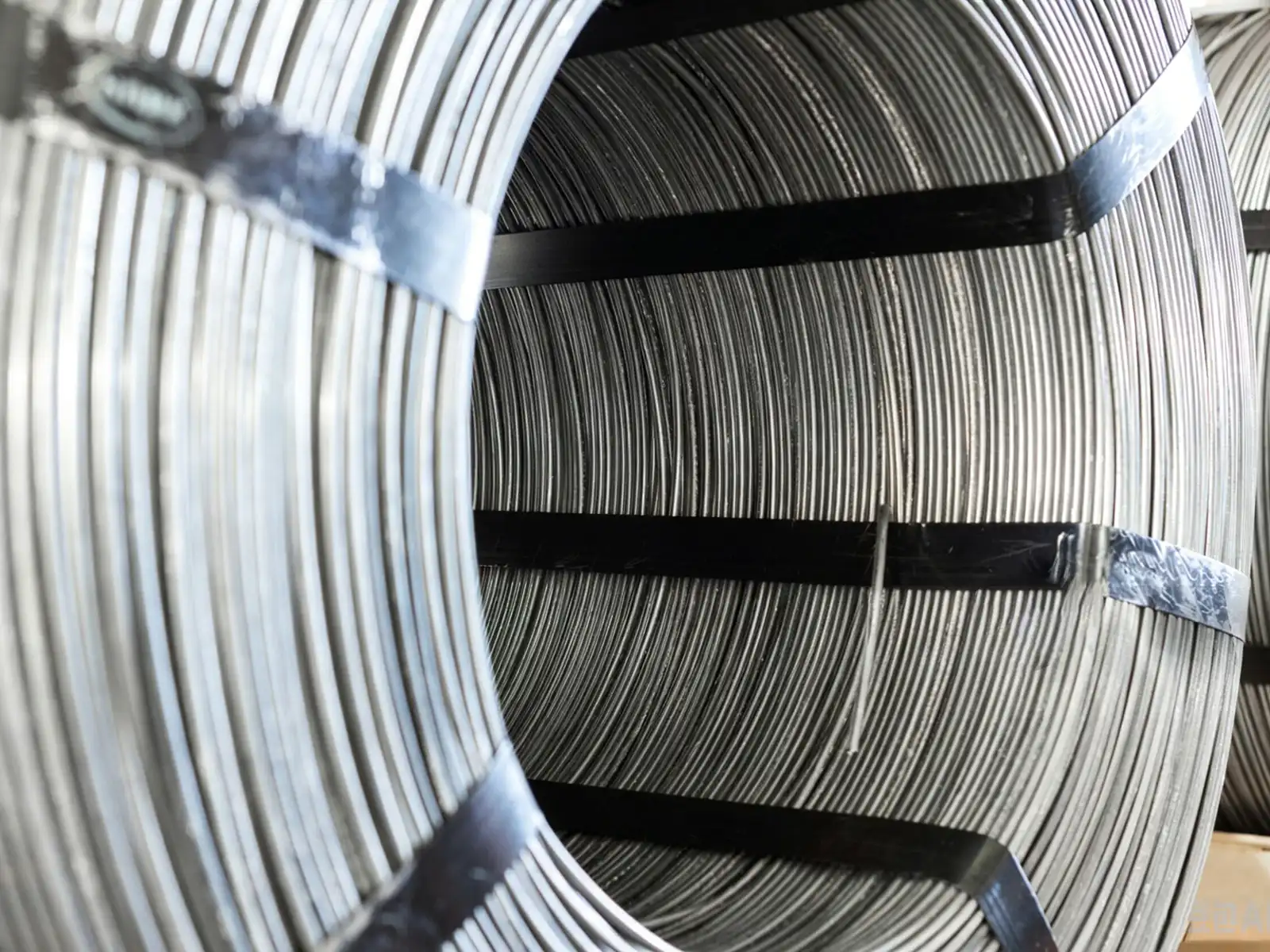
If you work in chemicals, marine engineering, medical devices, or precision electronics, Gr2 titanium wire (Grade 2 commercially pure titanium wire) is a common candidate material. With a titanium content of no less than 99.2%, it offers a balanced combination of strength, ductility, and corrosion resistance among the pure titanium grades. This article provides an objective introduction to Gr2 titanium wire, from the nature of the material and typical applications to key selection points.
1. Core Material Properties and Performance Indicators of Gr2 Titanium Wire
(1) Chemical Composition: High Purity Lays the Foundation for Performance
Gr2 titanium wire has a titanium content of no less than 99.2%, with impurities strictly controlled. Oxygen content is ≤0.25%, iron content is ≤0.30%, and nitrogen, carbon, and hydrogen are controlled below 0.03%, 0.08%, and 0.015%, respectively. Composition control helps reduce batch-to-batch performance variation and minimizes wire breakage or processing anomalies caused by out-of-tolerance impurities.
Element | Ti | O | Fe | C | N | H |
Content | Balance | ≤0.25% | ≤0.30% | ≤0.08% | ≤0.03% | ≤0.015% |
(2) Mechanical Properties: Distinguishing Standard Requirements from Typical Values
In the annealed condition, Gr2 titanium wire has a typical tensile strength of 400–500 MPa, a yield strength of 275–420 MPa, an elongation of 15%–20%, and a Vickers hardness of HV 140–200. Half-hard (Y2) products have typical tensile strength values up to 480–620 MPa, and hard (Y) products have higher typical values up to 550–750 MPa. It should be noted that the half-hard and hard conditions, along with the hardness ranges, are generally not temper requirements for Gr2 wire under ASTM B863; they are common commercial typical values or indicators agreed between the supplier and buyer.
Condition | Tensile Strength (MPa) | Yield Strength (MPa) | Elongation (%) | Typical Hardness HV |
Annealed (M) | Standard ≥345; typical 400–500 | Standard ≥275; typical 275–420 | Standard ≥15% by wire diameter; typical 15–20 | 140–200 |
Half-hard (Y2) | Typical 480–620 | Agreed between supplier and buyer | Typical 8–12 | 180–240 |
Hard (Y) | Typical 550–750 | Agreed between supplier and buyer | Typical 5–8 | 220–300 |
Note: ASTM B863 typically specifies a minimum tensile strength of 345 MPa and a minimum yield strength of 275 MPa for annealed Gr2 wire; elongation requirements vary with wire diameter and should be checked in the relevant standard clauses.
(3) Physical Properties: Lightweight Design and Usage Boundaries Across a Wide Temperature Range
Gr2 titanium wire has a density of approximately 4.51 g/cm³, far lower than steel (about 7.85 g/cm³), which gives it an advantage in lightweight applications such as aerospace, medical, and sporting equipment. Its melting point is about 1668℃, its thermal expansion coefficient is about 8.6×10⁻⁶/°C (20–100℃), and its thermal conductivity is about 16 W/(m·K) (near 20℃, varying with temperature). Gr2 titanium wire generally does not exhibit low-temperature embrittlement in the liquid hydrogen temperature range (about -253℃) or the liquid oxygen temperature range (about -183℃), but engineering applications must still be validated for the specific strain rate and stress state. Its upper service temperature is about 300℃, where atmosphere, stress, and surface oxidation conditions must be considered; at higher temperatures, strength retention and oxide layer effects should be evaluated.
2. Primary Application Scenarios and Industry Fit for Gr2 Titanium Wire
(1) Welding Consumables: The Standard Choice of ERTi-2 Filler Wire
Gr2 titanium wire (ERTi-2 specification) can be used for welding titanium equipment, pipelines, and pressure vessels. Standard filler wire diameters cover φ0.8 mm to φ3.0 mm, providing good strength matching with the base metal in the weld zone, a stable weld pool, and low porosity. Gas shielding must be carefully controlled during welding to reduce the risk of embrittlement caused by porosity and contamination.
(2) Chemical and Marine Engineering: Scenario-Based Evaluation of Corrosion Resistance
Gr2 titanium wire generally outperforms most stainless steels in seawater, salt spray, and oxidizing acids such as nitric acid, but specific conditions such as reducing acids or fluoride-containing media must be evaluated separately. In an ISO 9227 neutral salt spray test, with acceptance agreed between the supplier and buyer, the absence of base-metal corrosion spots after 480 h, or mass loss within the agreed limits, can indicate corrosion resistance in marine atmospheres and seawater environments. Corrosion resistance evaluation, however, must account for the actual medium, temperature, and flow rate. It is commonly used as a candidate wire for seawater piping, electrolyzers, heat exchangers, and deep-sea exploration structural components.
(3) Medical and Electronics Fields: Biocompatibility and Low Magnetic Susceptibility
In precision electronics, its low magnetic susceptibility and weak paramagnetism allow it to be treated as a non-ferromagnetic material for engineering purposes, making it suitable for sensor mounts sensitive to ferromagnetics or precision components in MRI environments. It should be noted that titanium’s electrical conductivity is far lower than that of copper and aluminum, so it is generally not the preferred choice for conductive or high-frequency electromagnetic shielding materials.
3. Production Processes and Quality Control for Gr2 Titanium Wire
(1) Full-Process Production: Precision Manufacturing from Bar Stock to Finished Product
The production process for Gr2 titanium wire typically includes: bar stock selection → multi-pass cold drawing (controlling strength and dimensional accuracy) → sectioned annealing (eliminating work hardening and restoring ductility/recrystallization) → precision straightening (tolerances set according to wire diameter) → surface treatment (pickling/brightening) → dimensional inspection and sorting → finished-product coiling → non-destructive testing (eddy current and/or ultrasonic, selected by wire diameter). Each process step should have process parameter records to ensure product traceability.
(2) Dimensional Control and Surface Treatment
Wire dimensional accuracy must be defined by wire diameter. For fine wire (e.g., φ0.1–0.4 mm), the diameter tolerance is typically much smaller than ±0.2 mm and should follow the product standard or the tolerance band agreed between the supplier and buyer. Larger-diameter wire must also control straightness and ovality; straightness is typically expressed in mm/m or as a per-meter percentage, and ovality in mm or as a relative percentage. In terms of surface condition, a bright surface suits precision fitting and can also be used for welding; a pickled surface must be thoroughly cleaned and passivated before subsequent welding or coating. The choice should be based on the process requirements.
(3) Quality Inspection System: Separating Methods, Acceptance Criteria, and Certificates
The following inspections are typically performed before shipment, with method standards and acceptance criteria managed separately:
Inspection Item | Inspection Method / Condition | Method Standard or Acceptance Basis |
Chemical composition | Spectrochemical analysis | ASTM B863 composition requirements |
Mechanical properties | Tensile and hardness testing | ASTM E8/E18; ASTM B863 mechanical requirements |
Dimensional accuracy | Diameter, roundness, straightness | ASTM B863 dimensional tolerances; fine wire per agreement |
Non-destructive testing (eddy current) | Eddy current inspection | ASTM E426 / supplier-buyer agreement |
Non-destructive testing (ultrasonic) | Ultrasonic inspection, applicable to larger wire diameters | ASTM E2375 / supplier-buyer agreement |
Corrosion resistance | Neutral salt spray (NSS), 480 h | ISO 9227 + agreed acceptance criteria |
Surface quality/cleanliness | Visual inspection, roughness measurement, cleanliness testing | Supplier-buyer agreement; ASTM B863 surface quality clauses may be referenced |
Coil weight/packaging | Weighing, coil diameter and joint count inspection | Supplier-buyer agreement |
Note: The specimen condition, salt spray parameters, and “no corrosion” acceptance criteria (such as no base-metal corrosion spots after 480 h, or mass loss limits) for the corrosion resistance salt spray test must be explicitly agreed between the supplier and buyer. EN 10204-3.1 is a certificate-of-inspection standard, not a non-destructive testing method standard; all batches can be supplied with an EN 10204-3.1 material test report (MTR) to document material quality traceability.
4. Selection Points and Common Misconceptions for Gr2 Titanium Wire
(1) Gr1 vs Gr2 vs Gr5: How to Correctly Define Your Requirements
Gr1 offers higher purity and better ductility but slightly lower strength, making it suitable for extreme forming conditions. Gr2 provides a good balance between strength and ductility and is one of the most widely used commercially pure titanium grades in industry. Gr5 (Ti-6Al-4V) provides higher strength but is more difficult to process and significantly more expensive, making it suitable for aerospace structural components. For moderate-strength requirements in chemical, medical, and welding applications, Gr2 titanium wire is a common candidate material.
(2) Selection Logic for Diameter and Surface Condition
Diameter selection must match the processing method: ultra-fine wire (φ0.1–0.4 mm) is used for precision instruments and medical devices; filler wire gauges (φ0.8–3.0 mm) suit TIG, plasma, and laser methods, while MIG applications are less common and require dedicated protection conditions; structural and electrode wire (φ0.5–6.0 mm) covers most industrial scenarios; custom diameters are available up to φ10 mm. In terms of surface condition, a bright surface suits precision fitting and can also be used for welding; a pickled surface requires thorough cleaning/passivation. The choice should follow the downstream process requirements.
(3) Common Purchasing Misconceptions and Risk Avoidance
Some buyers confuse “commercially pure titanium” with “titanium alloy.” Gr2 titanium wire is a commercially pure titanium and contains no alloying elements such as aluminum or vanadium; it must not be used interchangeably with Ti-6Al-4V (Gr5) in load-bearing structures. Another common misconception is overlooking batch consistency: different suppliers or different batches may exhibit composition variation, leading to weld porosity or wire breakage during processing. Buyers are advised to request spectrochemical analysis reports and mechanical property reports for each batch, and to verify the supplier’s production processes and inspection capability.
5. Conclusion
With its high purity, balanced mechanical properties, corrosion resistance in seawater and oxidizing acids, and low-temperature adaptability, Gr2 titanium wire has become one of the most widely applied grades of commercially pure titanium wire. During material selection, standard documents, material reports, and test data should be carefully reviewed and validated against the specific service conditions.
FAQ
(1) Q1: Can Gr2 Titanium Wire Be Used in Low-Temperature Environments for Hydrogen Energy Equipment?
Gr2 titanium wire generally does not exhibit low-temperature embrittlement in the liquid hydrogen temperature range (about -253℃) and maintains relatively stable mechanical properties, making it suitable for low-temperature hydrogen energy equipment such as liquid hydrogen storage and transport systems. It can also be used in the liquid oxygen temperature range of about -183℃, but the material condition and the diameter design or structural design must be confirmed against the specific service conditions.
(2) Q2: How Do You Determine Whether a Batch of Gr2 Titanium Wire Meets ASTM B863 Requirements?
The EN 10204-3.1 material certificate provided by the supplier should be reviewed; it should cover spectrochemical composition analysis, tensile mechanical property data, and diameter tolerance inspection records. An independent verification report from a third-party testing laboratory can also be requested.
(3) Q3: How Large Is the Corrosion Resistance Gap Between Gr2 Titanium Wire and Stainless Steel Wire in Marine Engineering?
Under ISO 9227 neutral salt spray conditions, Gr2 titanium wire typically shows no base-metal pitting after 480 h of testing, but the acceptance criteria must be agreed between the supplier and buyer. 316L stainless steel carries a risk of pitting and stress corrosion in chloride-enriched environments, and its long-term use costs may be higher.
Contact Us
If you are looking for a Gr2 titanium wire supplier, contact Titanium Valley. We supply Gr2 titanium wire in conformance with ASTM B863 (UNS R50400), along with material certificates, inspection reports, and OEM customization services. Send your inquiry to: sales@titaniumvalleys.com
References
- Zhang Xiyan, Zhao Yongqing, Bai Chenguang. Titanium Alloys and Applications [M]. Beijing: Chemical Industry Press, 2005.
- Zhao Yongqing, Hong Quan, Ge Peng. Titanium and Titanium Alloy Materials and Processing Technology [M]. Changsha: Central South University Press, 2010.
- Zou Zengda. Welding Handbook, Vol. 2: Welding of Materials [M]. 3rd ed. Beijing: China Machine Press, 2008.
- Xie Shuisheng. Processing Technology for Titanium and Titanium Alloys [M]. Beijing: Metallurgical Industry Press, 2012.