
What Should Engineers and Buyers Know About Gr1 Titanium Rod?
- Gr1 Titanium Rod
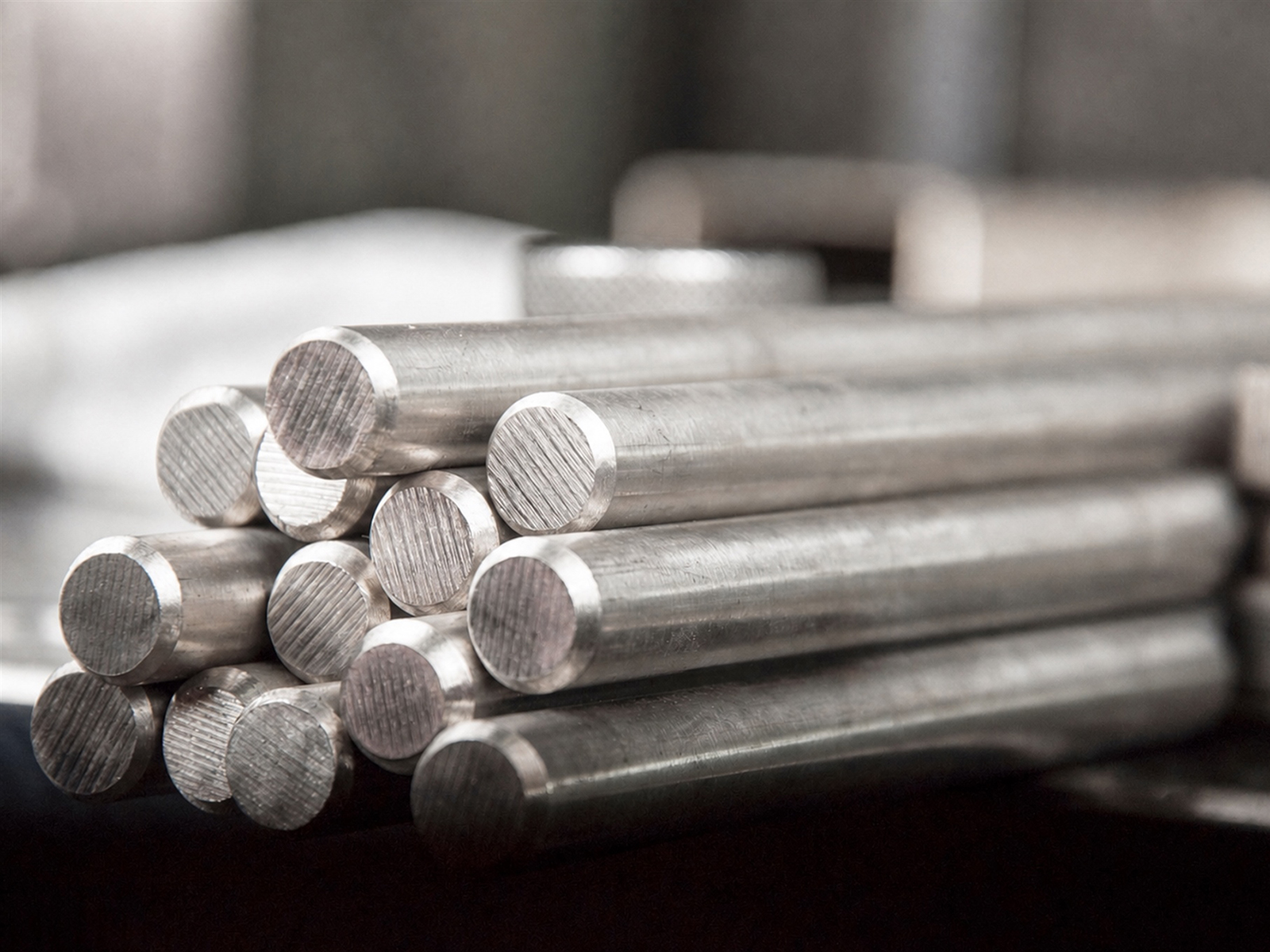
For equipment that must operate reliably over the long term in corrosive environments, medical devices, or precision electronics, material selection directly affects service life and total lifecycle cost. Gr1 titanium rod (Grade 1 Titanium Rod, UNS R50250) is an α-type commercially pure titanium (CP Ti), with relatively high purity among the four CP Ti grades—but it is not equivalent to high-purity or ultra-high-purity titanium. Its chemical composition follows ASTM B348 Grade 1, with titanium as the balance and controlled total impurities, providing good ductility, corrosion resistance, and weldability. Its density is approximately 4.51 g/cm³, about 43% lighter than common carbon steel (approximately 7.85 g/cm³). This article provides mechanical engineers, buyers, and technical professionals with a systematic introduction to the material characteristics, specification system, processing considerations, and typical applications of Gr1 titanium rod to support more accurate material selection and purchasing decisions.
1. Core Material Characteristics of Gr1 Titanium Rod
(1) Chemical Composition and Purity Indicators
Gr1 titanium rod is an α-type commercially pure titanium with UNS designation R50250. ASTM B348 Grade 1 does not directly specify a minimum titanium content of 99.5% or 99.30%; instead, titanium is the balance and purity is controlled by limiting impurities such as Fe, O, N, C, and H. The typical chemical composition is:
Element | Content Requirement (Mass Fraction) |
Titanium (Ti) | Balance |
Iron (Fe) | ≤ 0.20% |
Oxygen (O) | ≤ 0.18% |
Nitrogen (N) | ≤ 0.03% |
Carbon (C) | ≤ 0.08% |
Hydrogen (H) | ≤ 0.015% |
Note: This table is compiled per the impurity control requirements of ASTM B348 Grade 1; titanium content is by balance.
The low impurity content provides good ductility and relatively stable chemical inertness.
(2) Mechanical Properties: Not Chasing High Strength, but Outstanding Ductility and Formability
Per ASTM B348 Grade 1, the bar mechanical properties are typically required to be: tensile strength 240–345 MPa, yield strength ≥170 MPa, and elongation ≥24%. In actual engineering measurement, typical yield strength values commonly fall in the approximate range of 170–275 MPa, but this upper value is not an ASTM B348 standard limit and is provided only as a design reference. Compared with Gr2 and Gr5, Gr1 has lower strength but superior ductility among the commercially pure titanium grades, suiting common bar processes such as cold bending, cold heading, rolling, and local forming, with lower processing cracking risk—an advantage for manufacturing complex formed parts.
(3) Corrosion Resistance Mechanism: The Self-Healing Capacity of the Oxide Film
Gr1 titanium rod naturally forms a dense TiO₂ oxide film on its surface at ambient temperature, approximately 2–7 nm thick, which rapidly self-heals after local damage in oxidizing environments. This oxide film provides good corrosion resistance to brine, seawater, chloride-containing media, oxidizing acids such as nitric acid, and most alkaline media. However, titanium’s corrosion resistance in reducing acids such as dilute hydrochloric acid and dilute sulfuric acid depends markedly on concentration, temperature, aeration conditions, and impurities and cannot simply be summarized as “long-term stable tolerance”; selection should be based on specific media conditions or corrosion testing.
2. Specification System and Surface Conditions of Gr1 Titanium Rod
(1) Size Specifications: From Small-Diameter Cold-Drawn to Large-Diameter Forged
Type | Diameter / Cross-Section Range | Applicability |
Hot-rolled / forged black bar | φ20–φ300 mm | Subsequent turning and milling |
Turned bar (turned after hot working) | φ10–φ200 mm | Direct use in assembly and welding |
Polished bar (cold-drawn / precision-ground) | φ4–φ50 mm | Precision shafts, dies, instrument parts |
Pickled bar | φ8–φ200 mm | Chemical corrosion protection, pre-weld cleaning |
Square / hexagonal bar | Width across flats 6–80 mm | Custom shaped parts |
In terms of length, annealed (M condition) bars are typically 300–3000 mm, while hot-worked or cold-worked (R/Y condition) bars can reach 300–6000 mm. Cut-to-length tolerance is generally 0 to +20 mm, or symmetric tolerances per agreement.
(2) Surface Condition Details: Differences Among the Four Processing Methods
- Black bar: the as-hot-rolled or as-forged condition with oxide scale on the surface and wider dimensional tolerances (e.g., φ50 ±1.0 mm). Suitable for low-cost procurement of blanks above φ20 diameter that require subsequent turning.
- Turned bar: hot-worked bar turned after oxide scale removal, with surface roughness Ra of about 3.2–6.3 µm and tolerances of ±0.3–0.5 mm. Can be used directly for assembly and welding; the most common delivery condition in industry.
- Polished bar: cold-drawn or precision-ground surface with Ra ≤1.6 µm and tolerances of ±0.05–0.2 mm; shaft-type parts commonly adopt h7/h8 tolerances. Suitable for precision-fit parts, with high surface cleanliness meeting medical and vacuum chamber application requirements.
- Pickled bar: the natural metallic color after oxide layer removal, with no machining residue and no significant iron ion or foreign metal contamination on the surface. Suitable for chemical corrosion protection and clean service conditions sensitive to pre-weld cleanliness or metallic contamination.
(3) Metric and Inch Specifications
For European and American markets, stock inch sizes include 1/4″ (6.35 mm), 1/2″ (12.7 mm), 1″ (25.4 mm), 2″ (50.8 mm), and 3″ (76.2 mm). Japanese and Korean customers more commonly order metric precision specifications, with shaft tolerances such as h7/h8 on custom orders.
3. Typical Application Scenarios of Gr1 Titanium Rod
(1) Chemical and Marine Engineering
Chemical and marine engineering is one of the primary application areas for Gr1 titanium rod. Heat exchanger tube sheets, reactor agitator shafts, titanium flanges, titanium bolts, and desalination piping come into long-term contact with chloride-containing media or corrosive liquids. Compared with some common austenitic stainless steels, titanium generally exhibits better pitting and crevice corrosion resistance in specific environments such as seawater and chloride-containing media. However, the service life advantage is not unconditionally “10+ years”; the actual figure depends on medium type, temperature, concentration, flow rate, and aeration conditions and should be evaluated against the specific service scenario.
(2) Medical and Biocompatibility Applications
Orthopedic screws, dental implant blanks, and surgical instrument connector rods demand high biocompatibility, magnetic compatibility, and cleanliness. Gr1 contains no aluminum or vanadium, giving it better biosecurity than Gr5 and suiting some applications requiring long-term contact with human tissue. It should be noted that for bars used in implants or medical devices, compliance with ASTM B348 alone is insufficient; product registration or filing for the target market, biocompatibility testing (e.g., the ISO 10993 series), and compliance with the applicable medical device regulations and product standards are also required.
(3) Precision Instrumentation, Vacuum Technology, and Semiconductor Applications
Vacuum chamber components, titanium structural parts in semiconductor coating equipment, and precision sensor mounts impose strict requirements on magnetic characteristics, dimensional stability, and surface cleanliness. Gr1 titanium rod exhibits weak paramagnetism with relative permeability slightly above 1 and a low coefficient of thermal expansion, making it suitable for maintaining a stable physical state in high-precision electronic environments and reducing interference with nearby sensors or magnetic components.
> Note: Gr1 titanium rod is not suitable for high-stress load-bearing structures (e.g., primary engine load-bearing parts), high-speed heavy-load friction pairs, or severe impact conditions; in such scenarios, Gr5 (Ti-6Al-4V) or higher-strength titanium alloys should be prioritized.
4. Machining Considerations for Gr1 Titanium Rod
Problems such as tool sticking and poor surface quality during titanium machining are mostly related to improper process parameter settings. Although Gr1 has good ductility, its machining characteristics differ from those of ordinary steel and require controlled cutting, welding, and forming processes.
(1) Turning and Milling
Titanium’s thermal conductivity is about one-quarter that of ordinary carbon or low-alloy steel, similar to or slightly higher than austenitic stainless steel. Cutting heat concentrates at the tool-workpiece contact zone, accelerating tool wear. Carbide tooling is recommended, with rough turning speeds of approximately 30–50 m/min and finish turning speeds of approximately 40–60 m/min; feed rates should not be too low, and ample coolant should be supplied to carry away cutting heat. These parameters should be adjusted per tool type, cooling conditions, and machine rigidity; tool supplier recommendations and on-site trial cutting should prevail when necessary.
(2) Welding Processes
Gr1 titanium rod has good weldability and supports TIG and electron beam welding. The weld face, root, and heat-affected zone must be fully shielded with argon (purity ≥99.99%) throughout welding to prevent nitrogen, hydrogen, and oxygen from entering the weld at elevated temperatures and causing embrittlement. Weld color is a direct indicator of shielding quality: silver-white or light gold is generally acceptable, while blue or gray-black indicates insufficient shielding and requires rework.
(3) Cold Bending and Forming
Gr1 has an elongation ≥24%, making it suitable for cold bending, cold heading, and a certain degree of local forming. When cold bending annealed bar, the bend radius should generally be no less than 3–5 times the bar diameter; for complex forming or higher levels of cold work hardening, intermediate annealing should be scheduled to reduce the risk of surface microcracks. If residual stress relief is required after forming, vacuum annealing can be performed, with a typical process of a 600–700℃ hold and the holding time determined by cross-section size (e.g., about 0.5–1.5 h for small bars), followed by furnace cooling or controlled-rate cooling. Throughout the process, vacuum or inert atmosphere protection should be maintained to prevent surface oxidation and gas contamination.
5. Key Checks When Purchasing Gr1 Titanium Rod
(1) Material Certification and Quality Document System
Qualified Gr1 titanium rod suppliers should provide a complete Mill Test Certificate (MTC) including at least the heat number, chemical composition report, mechanical property data, and a statement of compliance with ASTM B348. For medical or aerospace applications, verify whether the supplier holds quality management system certifications such as AS9100 or ISO 13485, and request additional compliance documents per industry requirements.
(2) Production Capability and Delivery Lead Times
For bulk procurement, verify whether the supplier has full-process capability from billet forging, hot rolling, and cold drawing to precision grinding, pickling, and non-destructive testing, rather than simply warehousing and reselling. Annual capacity, equipment level, batch delivery records, and batch-to-batch consistency are important bases for judging delivery capability. It is recommended to request processing capability statements, delivery lead times, and supply track records for the same grade from at least 2–3 suppliers.
(3) Custom Fabrication Capability
Beyond stock standard sizes, engineering projects often require non-standard diameters, special surface treatments, or inch sizes. Whether a supplier offers prototyping services, small-batch customization, and complete processing records is an effective measure of overall capability. RFQs should specify drawings, tolerances, surface condition, length, packaging, and documentation requirements.
6. Conclusion
With its relatively high commercially pure titanium purity, good ductility, and corrosion resistance, Gr1 titanium rod has significant application value in the chemical, medical, marine engineering, and precision electronics industries. Material selection should comprehensively weigh mechanical property boundaries, surface condition, dimensional tolerances, and supplier quality systems, avoiding decisions based on price alone. Matching material properties with process requirements can reduce failure risk and total lifecycle cost at the source.
FAQ
(1) Q1: What are the core differences between Gr1 and Gr2 titanium rod, and how should they be selected?
Gr1 has stricter impurity control, with titanium by balance, better ductility, and elongation ≥24%, making it more suitable for cold forming, welding, and applications with high biocompatibility requirements. Gr2 has slightly higher strength and suits chemical piping and structural parts with certain mechanical property requirements. Both are commercially pure titanium with similar corrosion resistance; selection should combine the forming process and strength requirements.
(2) Q2: Can Gr1 titanium rod be used directly for medical implants, and what certification support is required?
Gr1 titanium rod offers good biocompatibility and weak paramagnetism and can serve as blanks for certain implants or devices. Actual application cannot rely solely on an ASTM B348 mill certificate; product registration or filing for the target market, biocompatibility testing (e.g., the ISO 10993 series), and compliance with the applicable medical device regulations and product standards are also required. At minimum, the supplier should provide a traceable mill certificate and ISO 13485 quality system proof.
(3) Q3: When purchasing Gr1 titanium rod, how can a batch be quickly assessed for quality compliance?
On receiving the material, verify the heat number, chemical composition, and mechanical property data on the accompanying MTC and compare them against the ASTM B348 Grade 1 requirements. If third-party retesting is needed, focus on the interstitial elements C, N, O, and H, using suitable methods such as infrared absorption and inert gas fusion. XRF and OES have limited resolution for light and gaseous elements and cannot alone be used to judge whether Gr1 conforms to ASTM B348. Also inspect the bar surface for quality defects such as cracks, laps, or severe eccentricity.
Contact Us
Titanium Valley is a manufacturer and supplier focused on precision processing and supply of titanium, nickel, and zirconium materials, with an annual production capacity of 20, 000+ tons of titanium bar and wire. We provide custom production and bulk supply of Gr1 titanium rod to global customers in the chemical, medical, marine engineering, and precision electronics industries. Contact us at: sales@titaniumvalleys.com
References
- National Technical Committee on Nonferrous Metals Standardization. GB/T 3620.1—2016 Designation and chemical composition of titanium and titanium alloys [S]. Beijing: Standards Press of China, 2016.
- National Technical Committee on Nonferrous Metals Standardization. GB/T 2965—2017 Titanium and titanium alloy bars [S]. Beijing: Standards Press of China, 2017.
- National Technical Committee on Nonferrous Metals Standardization. GB/T 13810—2017 Wrought titanium and titanium alloy products for surgical implants [S]. Beijing: Standards Press of China, 2017.
- Zhang Xiyan, et al. Titanium Alloys and Their Applications [M]. Beijing: Chemical Industry Press, 2005.