
How Do You Select a Reliable Gr4 Titanium Wire Manufacturer?
- Gr4 titanium wire
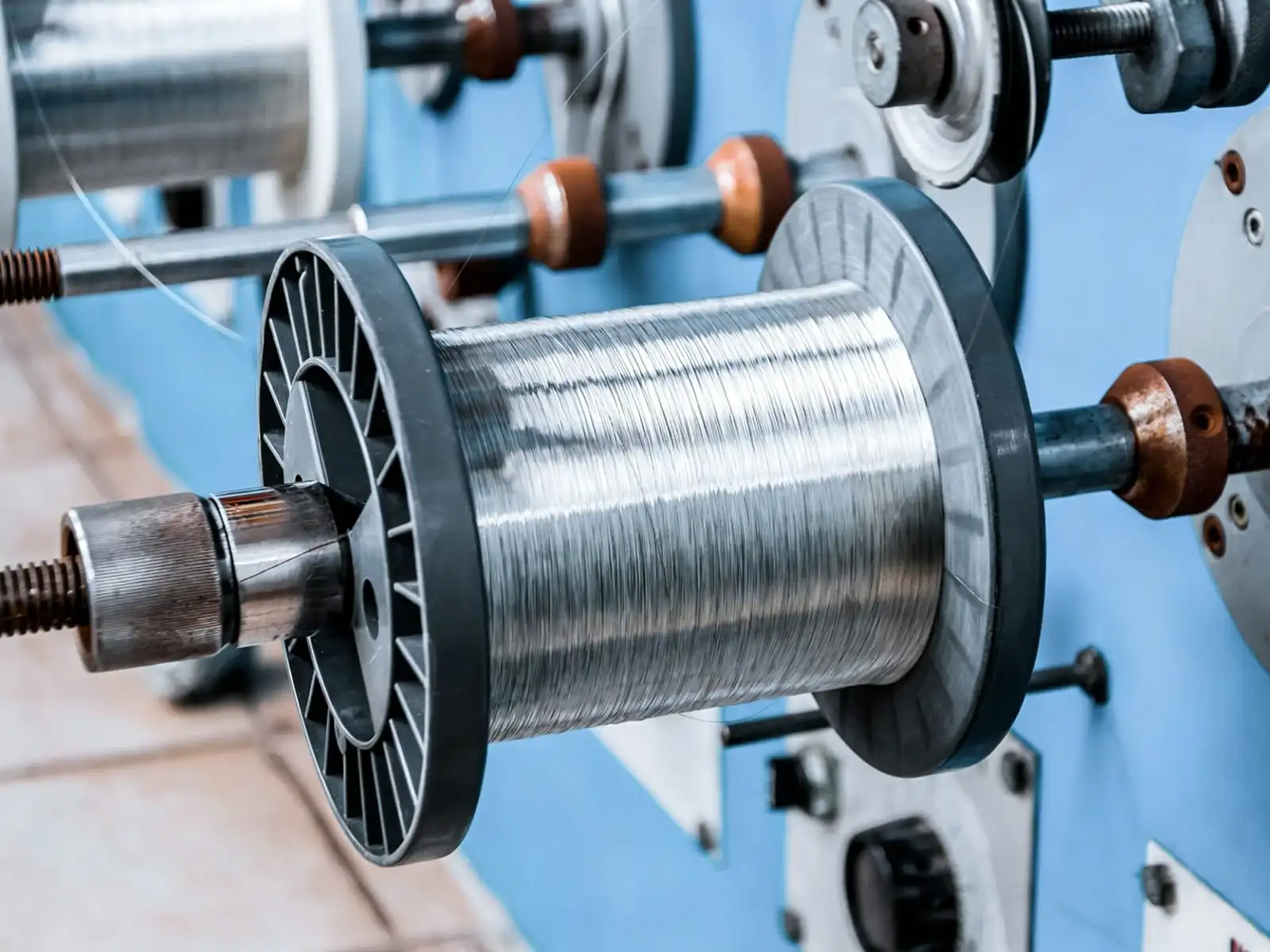
In demanding fields such as chemical corrosion protection, marine engineering, and precision medical devices, Gr4 pure titanium wire (Grade 4 commercially pure titanium wire) is becoming the preferred material for more and more engineers and procurement professionals. With a tensile strength of ≥ 550 MPa, it is the strongest of all commercially pure titanium grades, while also offering excellent corrosion resistance and weldability. However, the market contains suppliers of widely varying quality, and product quality differs greatly. Choosing the wrong supplier may at best cause frequent wire breakage and project shutdowns and, at worst, equipment failure and safety incidents. This article systematically reviews the core criteria for selecting a reliable Gr4 titanium wire manufacturer across four dimensions—material properties, production capability, quality systems, and supporting services—so that every procurement decision is grounded in evidence.
1. Understanding Gr4 Titanium Wire: Why Strength and Corrosion Resistance Are Equally Critical
(1) The Distinct Position of Gr4 in the Commercially Pure Titanium Family
Commercially pure titanium is divided into four grades, Gr1 through Gr4. As the grade number increases, the content of interstitial elements such as oxygen and iron rises, increasing material strength while somewhat reducing ductility. Gr4 has a maximum oxygen content of 0.40% and a maximum iron content of 0.50%. These higher interstitial element levels give it a tensile strength of ≥ 550 MPa and a yield strength of ≥ 485 MPa, clearly higher than Gr1 (≥ 240 MPa), Gr2 (≥ 345 MPa), and Gr3 (≥ 450 MPa), making it the strongest tier of the four commercially pure titanium grades. It should be noted that commercially pure titanium is predominantly an alpha-phase microstructure at room temperature, and industry generally does not refer to commercially pure titanium as an “alpha single-phase alloy.” Under high-load conditions, Gr4 wire offers markedly better fatigue life and load-carrying margin than lower-grade pure titanium.
(2) Dual Performance: High Strength and Corrosion Resistance Are Not Contradictory
Many procurement professionals worry that pursuing high strength comes at the expense of corrosion resistance. In fact, Gr4 relies on the dense TiO₂ oxide film that forms naturally on the surface of the titanium substrate, and it exhibits outstanding resistance to atmospheres, seawater, salt spray, perspiration, and a wide range of mildly acidic and alkaline environments. It passed 1, 000 hours of salt spray testing with no corrosion points and conforms to the NACE MR0175 sulfide stress corrosion standard. This means that under combined service conditions such as chemical pipeline welding and marine engineering fasteners, Gr4 titanium wire can simultaneously meet the dual requirements of strength and durability.
(3) Application Limits and Material Selection Pitfalls of Gr4
Gr4 is not a universal choice. Where ultra-high strength (> 900 MPa) is required, alloyed titanium such as TC4 (Ti-6Al-4V) is more suitable; for precision spring forming requiring extremely high ductility, the elongation of Gr1 or Gr2 is more advantageous. Understanding the performance limits of Gr4 helps procurement professionals avoid the cost waste of overspecification and prevent the failure risks of underspecification.
Grade | Tensile Strength (MPa) | Elongation (%) | Typical Applications |
Gr1 | ≥ 240 | ≥ 24 | Medical implants, extremely thin foil |
Gr2 | ≥ 345 | ≥ 20 | Chemical process equipment, heat exchangers |
Gr3 | ≥ 450 | ≥ 18 | Medium-strength structural components |
Gr4 | ≥ 550 | ≥ 15 | High-strength welding wire, heavy-duty structures, combined corrosion + stress service conditions |
2. Four Core Dimensions for Screening Suppliers
(1) Dimension One: Actual Level of Production Equipment
The gap between top-tier manufacturers and ordinary processors is first reflected in the level of equipment. Vacuum arc remelting (VAR) or electron beam melting (EBM) ensures billet purity and composition uniformity, preventing batch-to-batch performance variation. Suppliers that lack such core equipment cannot guarantee product consistency in practice, even if they claim ASTM B863 conformity.
(2) Dimension Two: Full-Process Automation and Process Control Capability
Production lines with an automation rate above 90% systematically eliminate human operating errors. Closed-loop-controlled rolling, annealing, and on-line inspection systems keep each batch highly consistent in dimensional tolerance (± 0.01 mm), surface roughness (Ra ≤ 0.6 μm), and mechanical properties. For industrial customers requiring long-term volume procurement, a supplier’s batch stability is often more valuable than the outstanding data of a single sample.
(3) Dimension Three: Material Traceability and Composition Transparency
A trustworthy manufacturer should be able to provide a complete material traceability chain: from the origin and batch number of the titanium sponge raw material, to the heat records of vacuum melting, through to the ICP spectrometric analysis report of the finished product. The main composition requirements for Gr4 are Ti ≥ 99.0%, O ≤ 0.40%, Fe ≤ 0.50%, N ≤ 0.05%, C ≤ 0.08%, and H ≤ 0.015%. Exceeding any single element limit can affect material performance. Only suppliers that can provide heat-by-heat composition reports genuinely offer “transparency.”
3. Quality Certifications and Inspection Reports: The Hard Criteria of a Trustworthy Manufacturer
(1) The Substantive Meaning of International Certification Systems
ISO 9001 certification represents the rigor of a quality management system, but for high-end fields such as aerospace and medical it is only the minimum threshold. ASTM B863 is the core technical standard for Gr4 titanium wire, covering complete requirements for composition, mechanical properties, and dimensional tolerances. NACE MR0175 certification specifically addresses material suitability for environments containing corrosive media such as hydrogen sulfide and is an indispensable qualification when purchasing Gr4 titanium wire for the oil, gas, and chemical industries. RoHS compliance reports are equally essential for export to the EU market.
(2) Material Certificate: An Irreplaceable Delivery Document
The EN 10204 3.1 certificate (referred to as the “3.1 certificate”) is issued by an inspection body authorized by the manufacturer and is the most widely recognized material certification document in international engineering projects. It records the chemical composition, mechanical property test data, and the inspection personnel’s qualification endorsement for a specific batch. When purchasing Gr4 titanium wire, buyers should insist that the supplier provide the 3.1 certificate corresponding to the delivered batch rather than a generic sample report.
(3) Nondestructive Testing: The Last Line of Defense Against Hidden Defects
Eddy current testing (ECT) and ultrasonic testing (UT) are the two main nondestructive testing methods for titanium wire. Eddy current testing excels at detecting surface and near-surface defects such as cracks and laps, while ultrasonic testing can detect internal inclusions and porosity. High-end manufacturers typically install on-line eddy current testing equipment in the finishing process to achieve 100% coverage inspection rather than sampling. This detail is an important differentiator between first-rate manufacturers and ordinary processors.
Inspection Item | Inspection Method | Key Criterion |
Chemical composition | ICP spectrometric analysis | Ti ≥ 99.0%, all impurity elements within limits |
Mechanical properties | Tensile testing | Tensile ≥ 550 MPa, yield ≥ 485 MPa, elongation ≥ 15% |
Dimensional accuracy | Laser diameter measurement | Tolerance ± 0.01 mm, roundness ≤ 0.002 mm |
Surface quality | Eddy current + visual inspection | No cracks, laps, or inclusions |
Corrosion resistance | Salt spray testing | No corrosion points in 1000 h |
Sulfide stress corrosion | NACE MR0175 | Conforms to standard requirements |
4. Specification Customization and Delivery Capability: End-to-End Considerations from Sample to Volume Production
(1) Specification Coverage: A Broader Range Means Greater Suitability
The diameter range of Gr4 titanium wire from a quality supplier typically extends from φ0.1 mm ultra-fine wire to φ6.5 mm industrial wire, with custom sizes up to φ10.0 mm. Delivery forms include coils (500–3000 m per spool) and cut-to-length straight wire (500 mm to 3000 mm), meeting the differing requirements of automatic welding and manual forming. Tempers cover annealed (M), cold-worked (Y), and hot-worked (R) conditions, and surface treatments include pickling, bright drawing, electropolishing, and passivation, among other options. The more complete the specification coverage, the lower the customer’s inventory management burden.
(2) The Ability to Transition from Sample Validation to Volume Delivery
Many suppliers can provide excellent samples but show batch instability during volume production. A truly reliable manufacturer should use the same process parameters, equipment, and raw materials for both samples and production lots. During the evaluation phase, it is recommended to ask the supplier to provide actual production data comparisons over the most recent 3–5 batches to verify mechanical property and dimensional consistency.
(3) Delivery Lead Times and Stocking Capability
For schedule-sensitive projects, the depth of the supplier’s stock inventory and the lead time for custom specifications are equally critical. Manufacturers with complete production capability from billet to finished product can typically complete custom specification delivery within 2–4 weeks, whereas intermediaries relying on outsourced processing may need 6–8 weeks or longer. Confirming whether the supplier owns its production lines is the most direct way to gauge delivery efficiency.
5. How to Evaluate a Supplier’s True Technical Capability
(1) Factory Visits and On-Site Production Audits
Written qualifications can be forged, but the production floor does not lie. During an on-site visit or a third-party factory audit, focus on the following: the model and operating condition of the vacuum melting equipment, the automation level of the cold drawing lines, the coverage of on-line inspection equipment, and the plant’s 5S management level. The cleanliness and operating discipline of the production floor often directly reflect the depth of product quality management.
(2) Technical Communication Capability: The Responsiveness of the Engineering Team
A true technology-driven manufacturer has sales and engineering teams that respond professionally to customers’ service condition questions—for example, material selection recommendations for specific corrosive media, welding parameter optimization suggestions, or feasibility assessments for special dimensions. If a supplier can only provide a product specification sheet and cannot discuss application scenarios in depth, its technical support capability is limited, and it will be difficult for it to provide sustained support in complex projects.
(3) Customer References and Long-Term Partnership Cases
Mature manufacturers typically have long-term customers from high-end fields such as aerospace, medical, and chemical. The continued repeat purchases of these customers are, in themselves, the strongest endorsement of product quality and service stability. During initial discussions, buyers can ask the supplier for reference cases in the same industry (subject to confidentiality) or ask whether it holds supplier qualification certification records for specific industries.
6. Conclusion
Selecting a Gr4 titanium wire manufacturer is fundamentally a search for the optimal balance between technical capability, quality systems, and supporting services. The equipment level determines the product ceiling, the quality system ensures batch stability, and the service capability determines the depth of cooperation. In increasingly complex industrial applications, a truly reliable supplier is not merely a provider of raw materials but also a technical partner in engineering realization.
FAQ
(1) Q1: What Are the Main Differences Between Gr4 Titanium Wire and TC4 Titanium Alloy Wire, and How Should They Be Selected Based on Service Conditions?
Gr4 is a commercially pure titanium with a strength of ≥ 550 MPa and excellent corrosion resistance, suitable for chemical and marine service conditions; TC4 is a Ti-6Al-4V alloy whose strength can exceed 900 MPa and is better suited to aerospace structural components, but at higher cost and with stricter welding process requirements.
(2) Q2: How Can You Verify Whether a Supplier’s Gr4 Titanium Wire Truly Conforms to ASTM B863?
Ask the supplier to provide the ICP composition analysis report, tensile test report, and EN 10204 3.1 material certificate for the corresponding batch, and verify the qualifications of the certifying body issuing the report. When conditions permit, a third-party laboratory can be commissioned to conduct an independent re-inspection of the received samples as the final basis for confirmation.
(3) Q3: When Purchasing Gr4 Titanium Wire, How Should the Annealed (M) and Cold-Worked (Y) Tempers Be Selected?
Annealed wire has a uniform microstructure and excellent ductility, making it suitable for welding wire, precision forming, and structural joining; cold-worked wire has higher strength and hardness, making it suitable for springs, fasteners, and other high-strength applications, though elongation decreases and forming difficulty increases accordingly.
7. Contact Titanium Valley Today
Please send your inquiries to: sales@titaniumvalleys.com
References
- Standardization Administration of the People’s Republic of China. GB/T 3623-2007 Titanium and titanium alloy wires [S]. Beijing: Standards Press of China, 2007.
- Zhang Xiyan, Zhao Yongqing, Bai Chenguang. Titanium Alloys and Their Applications [M]. Beijing: Chemical Industry Press, 2005.
- Wang Guisheng, Tian Rongzhang. Application Technology of Titanium [M]. Changsha: Central South University Press, 2007.
- Zou Wuzhuang. Titanium Handbook [M]. Beijing: Metallurgical Industry Press, 2012.
Published by: Titanium Valleys
Technical review: General Manager of the Production Department
Quality review: Quality Inspection Department
Last reviewed: October 20, 2026