
How Does Gr4 Titanium Bar Achieve Corrosion Resistance?
- Gr4 Titanium Bar
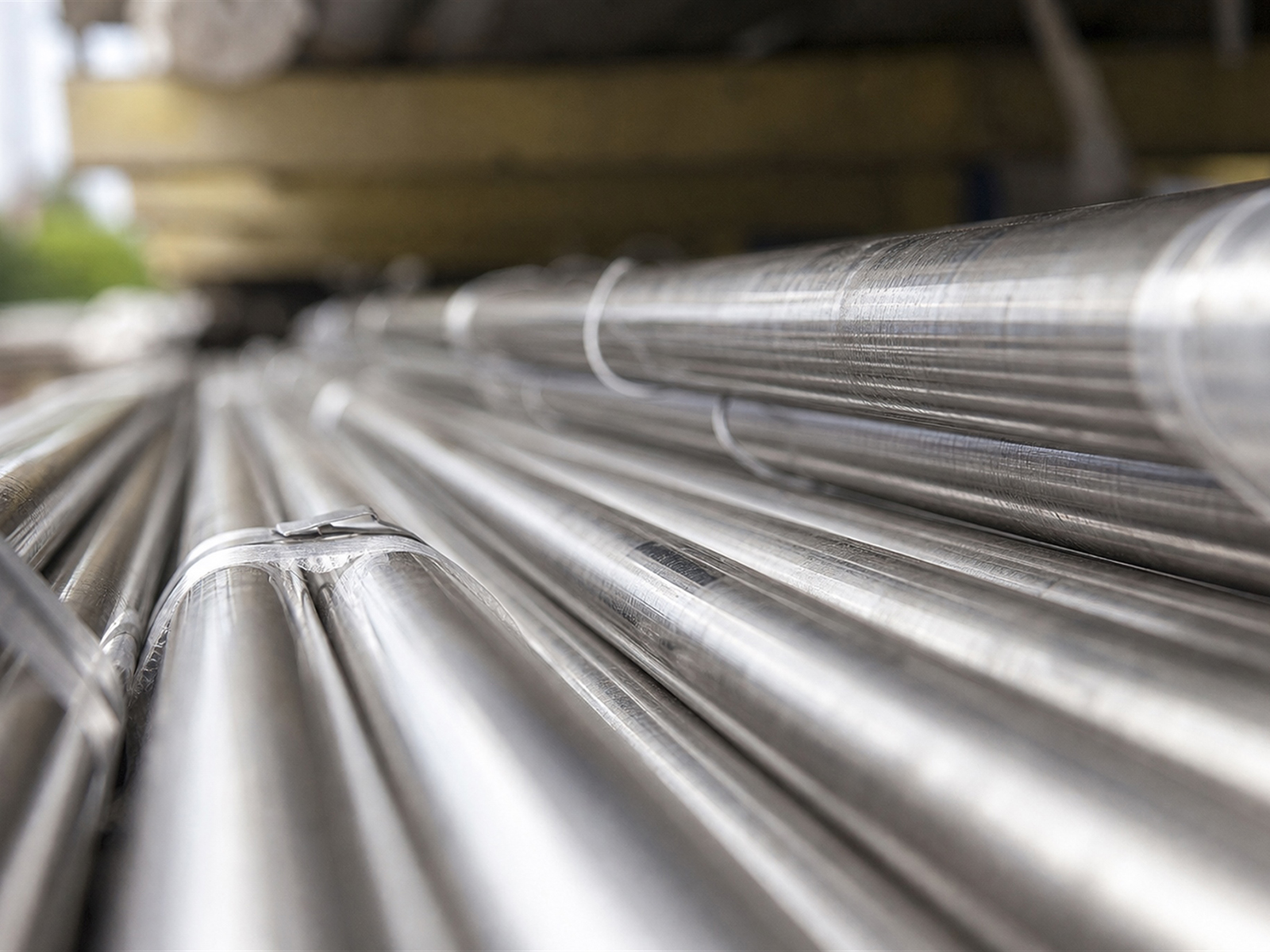
The corrosion resistance of Gr4 titanium bar originates from the chemical properties of the titanium element itself: when the surface of titanium contacts oxygen or moisture, a dense titanium dioxide (TiO₂) oxide film forms spontaneously within a very short time. This nanoscale oxide film effectively isolates corrosive media from direct contact with the metal substrate; even after slight damage, it rapidly self-repairs in oxygen-containing environments. As the strongest grade of commercially pure titanium, Gr4 is controlled to an oxygen content of ≤ 0.40% and an iron content of ≤ 0.50% per standard; its higher oxygen content primarily increases strength, and it exhibits good corrosion resistance stability in seawater, acidic and alkaline media, and chloride-containing environments.
1. The Underlying Logic of Gr4 Titanium Bar Corrosion Resistance: The Mechanism of Oxide Film Formation
To truly understand why Gr4 titanium bar resists corrosion, one must start with the material’s microstructure. Titanium’s corrosion resistance does not depend on external coatings or surface treatments but is the product of the reaction between the titanium element itself and its environment.
(1) The Formation Principle of the Self-Passivating Oxide Film
When titanium contacts air or water at room temperature, a TiO₂ passivation film quickly forms on the surface. Under natural air/room-temperature conditions, this film is typically about 2–7 nm thick, with the exact thickness influenced by surface condition and oxidation conditions. The film is chemically stable, strongly bonded to the substrate, and provides good protection in most neutral, oxidizing, and mildly reducing media. It is precisely this dense passivation film that gives Gr4 titanium bar long-lasting corrosion protection under a wide range of corrosive service conditions.
(2) The Self-Repairing Nature of the Oxide Film
Compared with stainless steel, which relies on a chromium-rich oxide film for corrosion resistance, the TiO₂ oxide film of Gr4 titanium bar rebuilds rapidly in oxygen-containing environments after mechanical scratching or chemical attack. This self-healing characteristic means the corrosion protection barrier can be maintained under dynamic stress or fluid erosion conditions, reducing maintenance frequency.
(3) Effect of Composition Control on Corrosion Resistance
Gr4 titanium bar is conventionally controlled to a nitrogen content of ≤ 0.03% and a carbon content of ≤ 0.08%. Interstitial elements such as oxygen and nitrogen exist mainly as dissolved atoms, affecting strength, ductility, and oxide film stability. Low impurity content favors the uniformity and integrity of the oxide film, although the actual film is also affected by surface condition, oxygen content, environmental media, and processing quality. It should be emphasized that Gr4 and the lower grades of commercially pure titanium such as Gr2/Gr3 all rely on the TiO₂ passivation film for corrosion resistance and share the same corrosion mechanism; the main difference of Gr4 lies in its higher strength, obtained through a higher oxygen content.
2. Actual Performance of Gr4 Titanium Bar in Different Corrosive Environments
With the corrosion protection mechanism understood, we now examine the specific behavior of Gr4 titanium bar in several typical corrosive scenarios. These data and behavioral patterns are of direct reference value to material engineers and procurement decision-makers.
Corrosive Medium Type | Gr4 Titanium Bar Performance | Comparison Material (Carbon Steel/Stainless Steel, etc.) |
Seawater / Chloride environments | Highly stable in conventional seawater with excellent pitting resistance; crevice corrosion risk to be assessed in high-temperature seawater or sealed-crevice conditions | Carbon steel corrodes severely; stainless steel is prone to chloride-induced pitting and chloride-induced stress corrosion cracking |
Dilute sulfuric acid / hydrochloric acid media | Stable at low concentration and low temperature; requires reassessment in high-concentration or high-temperature reducing acids | Carbon steel dissolves rapidly; stainless steel has corrosion risk depending on concentration and temperature |
Strong alkaline environments (NaOH, etc.) | Excellent alkali resistance, stable performance in long-term immersion | Carbon steel/low-alloy steel may suffer caustic embrittlement or corrosion in hot concentrated alkalis |
Chlorine gas / oxidizing atmosphere | Generally no chloride-induced stress corrosion cracking in wet chlorine/chlorine-containing oxidizing atmospheres; titanium is unstable in dry chlorine and this should be avoided | Austenitic stainless steel is prone to stress corrosion cracking (wet chlorine environments) |
High-temperature / high-humidity conditions | Good thermal stability and preserved oxide film integrity; crevice corrosion risk still to be assessed in high-temperature, high-humidity, chlorine-containing conditions | Carbon steel oxidizes severely at high temperature; stainless steel may pit or undergo chloride-induced stress corrosion in high-temperature, high-humidity, chlorine-containing conditions |
(1) Marine and Coastal Environments: High Tolerance to Chloride Ion Corrosion
The high concentration of chloride ions in seawater is a major trigger of metal corrosion. The TiO₂ oxide film of Gr4 titanium bar has good chemical inertness toward chloride ions, so in conventional seawater/chloride-containing environments it typically does not exhibit the chloride-induced pitting and chloride-induced stress corrosion cracking (SCC) commonly seen in stainless steel. However, titanium can still present a crevice corrosion risk in high-temperature seawater or sealed-crevice conditions, so crevices and temperature should be controlled in engineering design. Applications such as seawater pumps, marine piping, and offshore platform structural components have accumulated extensive service experience.
(2) Chemical Corrosion Protection: Applicable Boundaries Under Alternating Acid/Alkali Service Conditions
Some chemical processes involve alternating acidic and alkaline conditions. Gr4 titanium bar maintains a passive state in dilute hydrochloric acid, dilute sulfuric acid, and common alkaline solutions at low concentration and low temperature; its corrosion resistance requires re-evaluation in high-concentration, high-temperature reducing acids. Under suitable service conditions, it can reduce the replacement and maintenance costs associated with switching among multiple material types. Compared with carbon steel equipment requiring frequent maintenance, Gr4 may offer better full-life-cycle economics in locations with strong corrosivity and difficult maintenance.
(3) Water Treatment and Environmental Industry: Resistance to Chlorine-Based Disinfectant Corrosion
Chlorine-based disinfectants are commonly used in swimming pools, wastewater treatment plants, and drinking water purification facilities. Gr4 titanium bar generally does not exhibit typical chloride-induced stress corrosion cracking in chlorine-containing aqueous environments, and the service life of piping and pump body components can be markedly extended, depending on chloride concentration, temperature, and structural design. Its non-magnetic nature and extremely low metal ion release make it suitable for applications with high cleanliness requirements, such as food and hygiene.
3. Key Manufacturing Factors Affecting the Corrosion Resistance of Gr4 Titanium Bar
The environmental performance described above depends on the chemical properties of the material itself, but the manufacturing process determines whether the expected corrosion resistance level can be stably achieved. Differences in process quality directly determine whether titanium bar can continuously deliver its corrosion protection advantages under actual service conditions.
Manufacturing Process Step | Effect on Corrosion Resistance |
Vacuum arc remelting (≥ 2 times) | Reduces certain gas contents, minimizes macrosegregation, and improves microstructural uniformity; limited control over nitrogen content |
Forging breakdown + hot rolling forming | Improves microstructural uniformity, helping the oxide film adhere uniformly; strength is primarily determined by oxygen content |
Stress-relief annealing | Relieves residual stress and reduces susceptibility to stress corrosion cracking |
Pickling / turning or grinding (selected per product requirements) | Pickling removes scale and contamination layers; machining improves dimensions and surface condition but may introduce new residual stresses requiring subsequent stress relief |
Nondestructive testing (NDT) | Can reveal some surface and internal defects and improve quality consistency; cannot guarantee an absolutely defect-free product |
(1) The Role of Vacuum Melting in Microstructural Cleanliness
Gr4 titanium ingots produced by two or more vacuum arc remelting (VAR) cycles can typically control hydrogen content within 0.015% and nitrogen content to ≤ 0.03%. The primary functions of VAR are to reduce certain gas contents, minimize macrosegregation, and improve microstructural uniformity, although its control over nitrogen content is limited. Interstitial elements such as oxygen and nitrogen exist mainly as dissolved atoms rather than precipitating brittle phases at grain boundaries; they affect strength, ductility, and oxide film stability.
(2) The Relationship Between Hot Working and Microstructural Uniformity
Forging and hot rolling can improve the uniformity of the alpha grain structure of Gr4 titanium bar. For commercially pure titanium, strength is primarily determined by oxygen content, and the strength contribution of grain refinement is limited; improved microstructural uniformity helps the oxide film adhere uniformly and reduces the risk of selective corrosion caused by local microscopic defects. Under the relevant ASTM/GB/T standards, the minimum tensile strength requirement for Gr4 bar is typically 550 MPa.
(3) Surface Treatment as the Final Guarantee of Corrosion Protection
Pickling removes surface scale and contamination layers, providing a clean substrate for the re-formation of a high-quality TiO₂ passivation film. Turning/grinding improves dimensional accuracy and surface finish but may introduce new surface residual stresses; stress-relief annealing is the principal operation for reducing residual stress. Pickling and machining represent different surface conditions or process routes and may be selected according to product specification; the two are not necessarily required in combination.
4. Side-by-Side Comparison of Gr4 Titanium Bar with Other Metals and Typical Applications
In actual material selection, engineers frequently must weigh Gr4 titanium bar against stainless steel, Hastelloy, and other materials. A direct performance comparison helps quickly identify the optimal selection; typical application scenarios can also be summarized from a material selection perspective to avoid redundant elaboration.
Performance Dimension | Gr4 Titanium Bar | 316L Stainless Steel | Hastelloy C276 | Carbon Steel |
Resistance to chloride ion corrosion | ★★★★★ | ★★★ | ★★★★★ | ★ |
Resistance to acid media corrosion | ★★★★ | ★★★ | ★★★★★ | ★ |
Density (g/cm³) | 4.51 | 7.98 | 8.89 | 7.85 |
Tensile strength (MPa) | ≥ 550 (minimum requirement) | ≥ 515 (minimum requirement; typical 515–620) | ≥ 690 (minimum requirement) | 400–550 (typical range) |
Biocompatibility | Excellent | Moderate | Evaluate per specific grade/standard | Poor |
Magnetism | Non-magnetic | Weakly magnetic/paramagnetic | Non-magnetic/weakly magnetic | Strongly magnetic |
Overall cost (full life cycle) | Moderately high | Low | High | Low, but high maintenance cost |
Note: The more stars, the better the corrosion resistance in the listed conventional service conditions; overall cost is a qualitative full-life-cycle assessment and requires a life-cycle cost analysis against actual service conditions. Mechanical property data are for reference.
(1) Compared with Stainless Steel: The Advantage in Chloride Ion Environments
316L stainless steel performs well in neutral environments but is prone to pitting and chloride-induced stress corrosion cracking where chloride ion concentrations are high (seawater, chlorine-based disinfectants). Gr4 titanium bar exhibits very high corrosion resistance in conventional chloride environments, notably extending equipment life and reducing maintenance frequency; the exact extent of life extension is affected by factors such as temperature, chloride concentration, and structural crevices.
(2) Compared with Hastelloy: Balancing Lightweighting and Cost-Effectiveness
Hastelloy C276 has outstanding corrosion resistance in extreme strong-acid environments, but its density of approximately 8.89 g/cm³ is much higher than the 4.51 g/cm³ of Gr4 titanium bar, and it is also more difficult to process. For most chemical and marine engineering scenarios, Gr4 titanium bar already provides sufficient corrosion protection while offering a weight reduction of approximately 49% relative to Hastelloy C276, significantly reducing structural loads and installation costs.
(3) Replacing Carbon Steel: A Recalculation of Full-Life-Cycle Costs
Carbon steel has a low initial purchase cost, but maintenance, replacement, and downtime losses in corrosive environments are often hidden expenditures. Gr4 titanium bar has a higher initial investment than carbon steel, but its long service life and low maintenance requirements may deliver better full-life-cycle economics in strongly corrosive, hard-to-maintain service conditions once initial investment, maintenance, and downtime losses are combined. Actual projects should perform a life-cycle cost analysis.
(4) Chemical and Petrochemical Industry: A Suitable Material for Long-Term Corrosion Protection
In chemical equipment such as reactors, storage tanks, heat exchanger piping, and valves, Gr4 titanium bar is commonly used in systems containing corrosive media such as chlorine, sulfuric acid, or hypochlorous acid. Under conditions where concentration, temperature, and design are appropriate, it can significantly extend equipment replacement cycles; the specific service life is determined by service conditions and maintenance practices.
(5) Marine Engineering and Shipbuilding: A Preferred Choice Against Seawater Corrosion
In seawater pump bodies, ship propulsion system components, and offshore platform fasteners, Gr4 titanium bar exhibits excellent resistance to chloride-induced corrosion. Compared with carbon steel, it can reduce the need for painting and rust prevention, simplify maintenance procedures, and lower the operating costs of marine equipment; however, sealed crevices and high-temperature seawater conditions beyond the material’s applicable range should be avoided.
(6) Medical and Precision Instrumentation: The Dual Value of Bio-Inertness and Non-Magnetism
In orthopaedic implants, surgical instruments, and MRI auxiliary equipment, Gr4 titanium bar not only offers good resistance to body fluid corrosion but also, through its non-magnetic nature, avoids interference with precision instruments. Its extremely low metal ion release gives it an advantage in biocompatibility.
5. Conclusion
The corrosion resistance of Gr4 titanium bar stems from the unique self-passivation mechanism of the titanium element, supplemented by strict composition control and sound manufacturing processes, enabling long-term, stable protection in marine, chemical, medical, and other corrosive environments. For engineering applications that pursue long equipment life, low maintenance, and reliable performance, Gr4 titanium bar is a high-value material choice that combines strength and corrosion resistance. Actual selection should be validated against the specific medium concentration, temperature, chloride content, and structural design.
FAQ
(1) Q1: Can Gr4 Titanium Bar Be Used Long-Term in Strong Acid Environments?
Gr4 titanium bar maintains a passive state in acidic media such as low-concentration, low-temperature hydrochloric acid and dilute sulfuric acid, and its surface oxide film effectively isolates corrosive attack. However, in media such as hydrofluoric acid, high-concentration sulfuric acid, or high-temperature reducing acids, the passivation film may be destroyed; selection should therefore follow evaluation against the specific service conditions.
(2) Q2: What Is the Difference in Corrosion Resistance Between Gr4 and Gr2 Titanium Bar?
Both grades share the same corrosion mechanism and both rely on the TiO₂ passivation film. Gr4 has a higher oxygen content (≤ 0.40%) and greater strength, with a minimum tensile strength requirement typically of 550 MPa, making it suitable for corrosive service conditions with higher strength demands; Gr2 has slightly lower strength but better ductility and is suitable for applications with higher forming requirements.
(3) Q3: How Can You Judge Whether the Surface Condition of Gr4 Titanium Bar Satisfies Corrosion Resistance Requirements?
Gr4 titanium bar shipped after pickling or turning/grinding should show a uniform, bright metallic luster with no scale or contamination residues. NDT reports and material certificates can confirm internal/surface defects and chemical composition, but they cannot directly assess corrosion resistance; corrosion resistance must be evaluated in combination with surface condition, passivation state, and actual service conditions.
Contact Us
Looking for a reliable Gr4 titanium bar manufacturer, supplier, or factory? Please contact us: sales@titaniumvalleys.com
References
- Standardization Administration of the People’s Republic of China. GB/T 3620.1—2016 Designation and chemical composition of titanium and titanium alloys. Beijing: Standards Press of China, 2016.
- Standardization Administration of the People’s Republic of China. GB/T 2965—2017 Titanium and titanium alloy bars and rods. Beijing: Standards Press of China, 2017.
- Standardization Administration of the People’s Republic of China. GB/T 1220—2016 Stainless steel bars. Beijing: Standards Press of China, 2016.
- Zhang Xiyan, Zhao Yongqing, Bai Chenguang. Titanium Alloys and Their Applications. Beijing: Chemical Industry Press, 2005.
- Zhu Zufang. Corrosion Resistance of Nonferrous Metals and Its Application. Beijing: Chemical Industry Press, 2005.
- Wei Baoming. Theory and Application of Metallic Corrosion. Beijing: Chemical Industry Press, 2004.
Published by: Titanium Valleys
Technical review: General Manager of the Production Department
Quality review: Quality Inspection Department
Last reviewed: October 20, 2026