
How Do You Choose the Right Gr5 Titanium Foil Thickness?
- Gr5 Titanium Foil
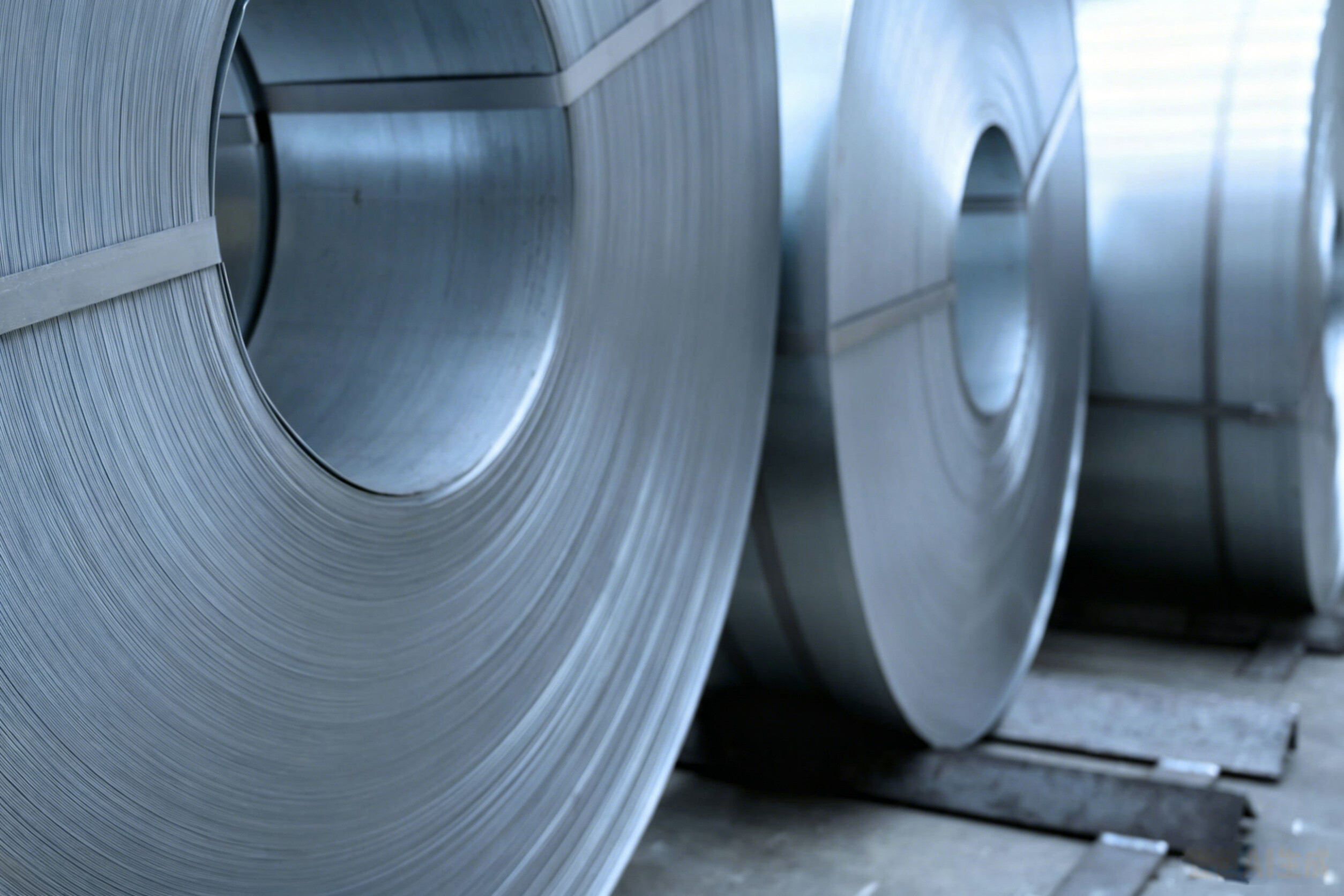
The thickness selection of Gr5 (Ti-6Al-4V, corresponding to the Chinese designation TC4) titanium foil directly affects the load-bearing capacity, forming process window, weldability match, and structural weight of a component. Gr5 is an α+β dual-phase titanium alloy. The standard-specified room-temperature tensile strength lower limit is typically 895 MPa, higher than most pure titanium grades, but its elongation is lower and its processing window narrower. Incorrect selection can lead to cracking, warping, overweight, or batch-to-batch variation. The following explains specification ranges, delivery conditions, influencing factors, industry applications, and tolerance control.
1. Specification Ranges and Delivery Conditions of Gr5 Titanium Foil
(1) Common Thicknesses and Widths
Gr5 titanium foil is commonly supplied in thicknesses of 0.03–0.8 mm, with widths mostly in the 350–670 mm range. Below 0.1 mm it is generally classified as ultra-thin foil and imposes high requirements on rolling, slitting, and flatness control. The thickness range should not be understood as a set of discontinuous intervals: 0.008–0.03 mm constitutes an ultra-thin custom segment that is not out of stock or unusable, but feasibility must be confirmed for the specific width, surface condition, and delivery form.
(2) Feasibility Limits of Ultra-Thin Specifications
For Gr5 titanium foil thinner than 0.008 mm, because Ti-6Al-4V has high strength and low ductility, cold rolling down to that scale requires dedicated precision mills, and publicly verifiable evidence of stable volume supply is currently limited. Extreme values such as 0.001 mm should not be used as routine design inputs. If such a specification is truly required, process validation, sample testing, and tolerance capability assessment should be completed with the supplier, and the inspection methods and rejection criteria should be clearly specified in the purchasing documents.
(3) Effect of Delivery Condition on Thickness Selection
Gr5 titanium foil is commonly supplied in the annealed and cold-rolled tempers. The annealed condition is heat treated under vacuum or inert gas protection, eliminating work hardening, undergoing recovery or recrystallization, lowering residual stress, and improving ductility, making it generally more suitable for subsequent forming and welding. The cold-rolled condition has higher strength but markedly lower ductility and is not suitable for scenarios requiring complex secondary forming; its dimensional accuracy is not necessarily higher than the annealed condition, as actual tolerances mainly depend on the mill precision, flatness control, and finishing process.
Table 1 Quick reference of common thicknesses and typical applications
Thickness Range | Classification | Typical Application Scenarios |
0.008–0.03 mm | Ultra-thin custom foil | Microelectronics, optical substrates, experimental shielding layers |
0.03–0.1 mm | Ultra-thin foil | Electromagnetic shielding, battery structural/protective foil, non-load-bearing liners |
0.1–0.3 mm | Thin foil/light strip | Honeycomb core, thermal protection and insulation foil |
0.3–0.8 mm | Light strip/sheet category | Lightweight structural components, corrosion-resistant linings |
2. Core Factors in Thickness Selection
(1) Balancing Strength and Weight
Gr5 has a density of approximately 4.43 g/cm³, with an annealed room-temperature tensile strength standard lower limit of 895 MPa (ASTM B265 Grade 5 / GB/T 3621 TC4). Actual engineering strength is related to heat treatment schedule, thickness, and batch and may exceed the standard lower limit, but any specific numerical range should not be guaranteed for all batches. Under equivalent load conditions, Gr5 can use thinner sections than some steels. The weight benefit of a 0.05 mm reduction can mean tens of grams of weight saving on aerospace structural components, but this should be based on stress analysis and stiffness requirements rather than the pursuit of thinning for its own sake.
(2) Formability Constraints
The annealed elongation of Gr5 is generally no less than 10%, but still clearly lower than pure titanium grades such as Gr1 and Gr2. Below 0.1 mm thickness, the forming limit narrows further, and bend radii and stamping depths must be determined through testing or simulation. Complex deep drawing is inherently unsuitable for Gr5 foil below 0.1 mm; simply increasing thickness does not fundamentally solve the cracking problem. Control should be exercised through the forming tooling, lubrication, speed, heat treatment condition, and intermediate annealing.
(3) Relationship Between Service Temperature and Thickness
Based on conventional aerospace material engineering data, Gr5 can be used long-term below approximately 300℃, with short-term resistance up to about 400℃, but these figures are affected by load, oxidizing environment, duration, and the specific standard evaluation method and cannot be cited unconditionally. Components subject to high-temperature thermal cycling should use increased thickness to add section modulus and corrosion/oxidation margin; room-temperature static-load structures can be thinned more aggressively.
3. Industry Applications and Recommended Thicknesses
(1) Aerospace: 0.05–0.3 mm
Aerospace honeycomb core, engine thermal protection foil, and lightweight skin-stiffening components are the main aerospace applications of Gr5 titanium foil. Honeycomb core commonly uses 0.05–0.1 mm; thermal protection and insulation foil focuses more on thickness uniformity than absolute thickness; structural skin-type applications commonly use 0.2–0.3 mm to ensure impact-resistance margin while meeting the dimensional requirements of standards such as ASTM B265 or GB/T 3621.
(2) New Energy Batteries: 0.05–0.1 mm
In battery packs, Gr5 titanium foil is mainly used in scenarios with higher strength and corrosion resistance requirements, such as corrosion-resistant bipolar plate substrates, structural support, or protective foil, rather than as a conductive path. The recommended thickness window is 0.05–0.1 mm, requiring a high degree of thickness consistency and extremely high surface cleanliness. Annealed product is more popular in this scenario because of its greater ease of laser welding and downstream lamination processes.
(3) Chemical and Marine: 0.1–0.5 mm
In electrolyzer electrode foil and corrosion-resistant linings for marine equipment, thickness selection is primarily driven by corrosion allowance. For electrode foil/substrates serving a support or corrosion-resistant function, thickness can lean toward 0.1–0.2 mm; however, if the component carries a conductive function, Gr5 titanium foil is not the right choice because its higher electrical resistivity increases ohmic losses. Chemical linings commonly use 0.3–0.5 mm to balance durability and cost control.
(4) Electronics/Semiconductors and Precision Manufacturing: 0.03–0.8 mm
Electromagnetic shielding and vacuum chamber linings in the electronics/semiconductor field commonly use 0.03–0.1 mm, emphasizing non-magnetic properties, ultra-thin uniformity, and surface quality; precision structural components and sensor protection parts in advanced manufacturing commonly use 0.2–0.8 mm, emphasizing dimensional tolerance, fatigue life, and batch consistency.
Table 2 Summary of recommended thickness ranges by industry
Industry | Typical Components | Recommended Thickness | Key Considerations |
Aerospace | Honeycomb core, thermal protection foil | 0.05–0.3 mm | Specific strength, temperature resistance, standard conformity |
New energy batteries | Bipolar plate substrates, structural/protective foil | 0.05–0.1 mm | Thickness consistency, surface cleanliness, corrosion resistance |
Chemical/marine | Support/corrosion-resistant electrode substrates, corrosion-resistant linings | 0.1–0.5 mm | Corrosion allowance, weldability |
Electronics/semiconductors | Electromagnetic shielding, vacuum chamber linings | 0.03–0.1 mm | Non-magnetic, ultra-thin uniformity |
Precision manufacturing | Precision structural components, sensor protection | 0.2–0.8 mm | Dimensional tolerance, fatigue life |
4. Thickness Tolerance and Transverse Uniformity
(1) Tolerance Capability of Ultra-Thin Foil
In the 0.03–0.1 mm ultra-thin range, when the width is narrow, thickness tolerance can typically be controlled to approximately ±0.001 mm to ±0.002 mm; when the width reaches 670 mm, transverse thickness variation increases and stably achieving ±0.001 mm is unrealistic. Selection should combine width, thickness, and the supplier’s measured capability rather than directly adopting an ideal tolerance. Precision 20-high mills, real-time thickness feedback, and tension control are the key equipment for achieving stable tolerances.
(2) Transverse Thickness Uniformity of Wide Foil
The transverse thickness distribution of wide Gr5 titanium foil must be improved through segmented tension control, high-precision roll crown, multi-zone cooling, and on-line thickness feedback. Roll-bending force has limited effect on the crown of extremely thin foil and cannot alone be relied on to guarantee transverse thickness deviation.
(3) Inspection Methods
Continuous coil thickness should be recorded over the full length using laser thickness gauges or contact-type on-line thickness gauges. CMM is mainly used for spatial dimensional measurement and is not suitable for continuous coil thickness measurement. Thickness measurement reports issued by the supplier should state the measurement positions, sampling intervals, and transverse measurement points.
5. Supplier Quality Control and a Thickness Selection Decision Framework
(1) Define the Load and Temperature Boundaries
First determine the maximum stress the component will bear, the service temperature range, and the static/fatigue load type, from which the thickness lower limit is derived. The ability of Gr5 to maintain strength during long-term service below approximately 300℃ must be evaluated against the specific application.
(2) Verify the Forming Process
Bending, stamping, and laser welding are sensitive to thickness: the thinner the foil, the narrower the forming limit and the lower the process tolerance. Design personnel should work with the process team to confirm minimum bend radius, weld penetration, and surface treatment requirements.
(3) Evaluate the Supplier’s Quality Control Capability
Beyond standard specifications, confirm whether the supplier has the capability for non-standard thickness customization and a choice of surface conditions, as well as complete material reports and third-party inspection reports. Batch consistency can be assessed through raw material batch management, heat treatment heat records, rolling parameter records, and process capability data, rather than relying only on advertised capacity.
6. Conclusion
The thickness selection of Gr5 titanium foil is a comprehensive trade-off among strength, weight, formability, temperature resistance, and tolerance capability. It should be based on actual load analysis and process validation, combined with the supplier’s verifiable specification and consistency data, rather than relying on rule-of-thumb figures or promotional materials.
FAQ
(1) Q1: What Is the Fundamental Difference Between Gr5 and Gr2 Titanium Foil in Thickness Selection?
Gr5 has far higher strength than Gr2, so under the same load conditions a thinner gauge can be selected for weight reduction; however, Gr5 has lower ductility and ultra-thin forming is more difficult, so the forming capability of downstream processes and die precision requirements must be evaluated simultaneously during selection.
(2) Q2: Can 0.05 mm Gr5 Titanium Foil Be Directly Laser Welded?
Annealed 0.05 mm Gr5 titanium foil can be laser welded, but heat input must be strictly controlled, and it is recommended to operate under inert gas protection to prevent oxidation embrittlement in the weld zone. Surface cleanliness should be confirmed before welding, as residual rolling oil can cause porosity defects.
(3) Q3: How Can You Verify That a Supplier’s Gr5 Titanium Foil Meets the Thickness Tolerance Requirement?
Ask the supplier for per-coil laser or contact-type on-line thickness measurement reports and check them against the relevant dimensional tolerance requirements in ASTM B265 Grade 5 or GB/T 3621; if necessary, commission a third-party laboratory to perform sampling re-inspection to ensure batch data traceability.
Contact Us
If you are looking for a Gr5 titanium foil supplier, please contact Titanium Valley. We provide Gr5 titanium foil conforming to ASTM B265 (UNS R56400), along with material certificates, inspection reports, and OEM custom services. Please send your inquiries to: sales@titaniumvalleys.com
References
- Zhang Xiyan, Zhao Yongqing, Bai Chenguang. Titanium Alloys and Their Applications [M]. Beijing: Chemical Industry Press, 2005.
- Leyens C, Peters M. Titanium and Titanium Alloys [M]. Translated by Chen Zhenhua, et al. Beijing: Chemical Industry Press, 2005.
- National Technical Committee on Nonferrous Metals Standardization. GB/T 3621-2007 Titanium and titanium alloy plates and sheets [S]. Beijing: Standards Press of China, 2007.
- Standardization Administration of the People’s Republic of China. GB/T 3620.1-2016 Designation and chemical composition of titanium and titanium alloys [S]. Beijing: Standards Press of China, 2016.