
How Do Molybdenum (Mo) and Nickel (Ni) Improve the Corrosion Resistance of Gr12 Titanium Rod?
- Gr12 Titanium Rod
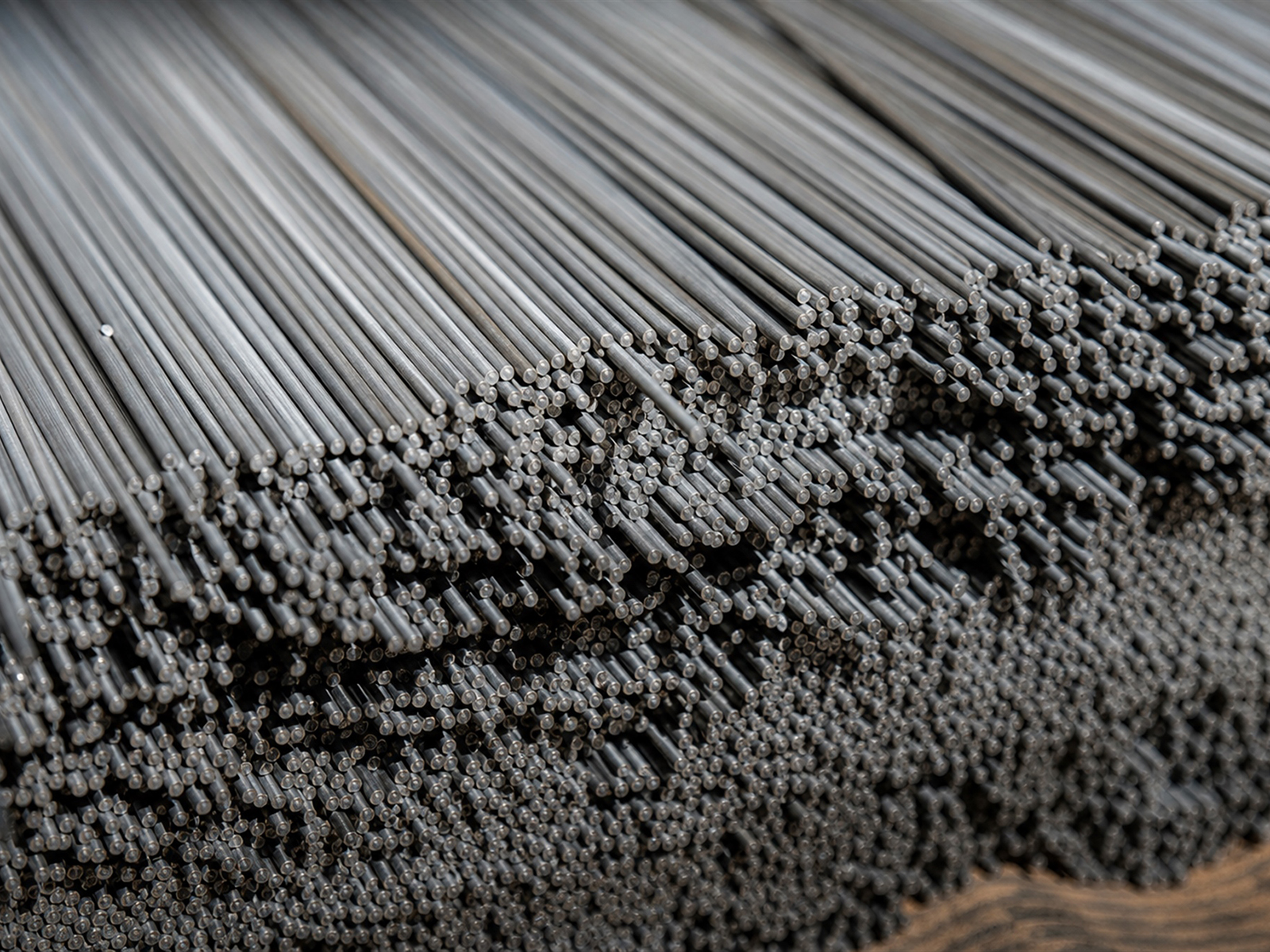
In chloride environments, moderate-concentration reducing acids, and low-to-intermediate temperature corrosive conditions, Gr12 titanium rod (Ti-0.3Mo-0.8Ni, UNS R53400) typically exhibits better corrosion resistance than Grade 2 commercially pure titanium. The main reason for this difference is that Gr12 contains 0.20%-0.40% Mo and 0.60%-0.90% Ni. Mo mainly improves the stability of the surface film in reducing acids, while Ni mainly improves resistance to crevice corrosion and hydrogen embrittlement; however, these advantages are bounded by service conditions. Drawing on published literature and standard requirements, this article discusses the mechanisms, applicable boundaries, and key acceptance points.
1. The Role of Molybdenum: Improving Surface Film Stability in Reducing Acids
(1) How does molybdenum enhance the stability of the passive film?
The TiO₂ passive film on commercially pure titanium is relatively stable in oxidizing media but is readily attacked in reducing acids such as hydrochloric acid and dilute sulfuric acid. When Mo atoms enter the titanium matrix, they can participate in the composition and structural adjustment of the oxide film during passivation, making the film more stable in low-pH, low-oxygen environments. This effect is a major reason Gr12 maintains low uniform corrosion rates in media such as dilute sulfuric acid and hydrochloric acid. The actual corrosion resistance varies with temperature, concentration, and flow velocity and should be confirmed by corrosion testing.
(2) Suppression of pitting initiation by molybdenum
Pitting usually initiates at locally weak areas of the passive film. Mo can concentrate in these regions, improving the local repassivation capability or the pitting potential and thereby delaying pitting initiation. This is similar to the role of Mo in stainless steel, but the Mo content in titanium alloys is lower and has less impact on workability. Gr12 titanium rod generally offers better pitting resistance than Grade 2 commercially pure titanium in chloride-containing chemical media.
(3) Engineering significance of the low-molybdenum design
The Mo content of Gr12 is controlled at 0.20%-0.40%, which is an engineering choice balancing corrosion resistance, cold workability, and weldability. Excessively high Mo content may alter the phase balance and processing behavior of the alloy; however, the specific effects should be determined by process testing and should not simply be attributed to increased brittleness. This composition range maintains an elongation after fracture of ≥18% and weldability while meeting the requirements of most moderate-corrosion service conditions.
Table 1: Corrosion resistance comparison of different titanium alloy grades in typical corrosive media
Alloy Grade | Dilute Sulfuric Acid (5%, 60℃) | Hydrochloric Acid (1%, boiling) | Chloride-Bearing Seawater (Pitting Resistance) | Crevice Corrosion Resistance |
Grade 2 (commercially pure titanium) | Moderate | Poor | Excellent | Excellent |
Grade 12 (Ti-0.3Mo-0.8Ni) | Excellent | Good | Excellent | Excellent |
Grade 7 (Ti-0.2Pd) | Excellent | Excellent | Excellent | Excellent |
316L Stainless Steel | Poor | Very poor | Moderate | Poor |
> Note: The ratings in the table are qualitative and are not standard corrosion rates; results vary with media concentration, temperature, flow velocity, and oxygen content. Compiled from published literature; engineering material selection should include testing in the specific media.
2. The Role of Nickel: Improving Resistance to Crevice Corrosion and Hydrogen Embrittlement
(1) Mechanism of crevice corrosion inhibition by nickel
Crevice corrosion is one of the more difficult localized corrosion forms to control in marine engineering and chemical equipment. Inside crevices, low oxygen concentration, a drop in pH, and chloride ion enrichment readily trigger localized corrosion. Ni improves Gr12’s ability to maintain its passive state in low-oxygen, acidic micro-environments and widens the repassivation potential range; consequently, Gr12 offers good corrosion resistance in crevice regions such as sealed connections and flange gasket contact areas. This also explains its use in seawater desalination systems and chemical piping connections.
(2) How does nickel reduce the risk of hydrogen embrittlement?
In hydrogen-containing media or under cathodic protection conditions, active hydrogen atoms may enter the metal lattice and cause hydrogen-induced cracking. Commercially pure titanium also presents a hydrogen embrittlement risk under excessive cathodic protection or in high-temperature hydrogen-containing environments. The addition of Ni is associated with decreased hydrogen embrittlement susceptibility of Gr12 in hydrogen-containing media, but the specific mechanism still needs to be evaluated in conjunction with environmental testing and should not be oversimplified as a single diffusion or grain-boundary migration mechanism. In practice, when Gr12 is used in cathodic protection systems, the protection potential must still be controlled to avoid excessive hydrogen charging.
(3) Selection of the nickel content range
The Ni content of Gr12 is limited to 0.60%-0.90%. If the Ni content is too low, the improvement in crevice corrosion and hydrogen embrittlement resistance is limited; if too high, it may affect cost, weldability, and corrosion resistance in certain media. This range is the result of long-term engineering test optimization and is one of the main compositional features distinguishing Gr12 titanium rod from certain near-alpha titanium alloys.
3. Synergistic Effects of Mo and Ni and the Balance of Mechanical Properties
(1) Division of functions and complementarity of the two elements
Mo mainly improves surface film stability in reducing acids, while Ni mainly improves repassivation ability in low-oxygen crevice regions and reduces hydrogen embrittlement susceptibility. The two elements differ in their areas of effect and are complementary to a certain degree. Accordingly, Ti-0.3Mo-0.8Ni covers a relatively wide range, spanning from oxidizing to reducing conditions and from uniform to localized corrosion. However, compared with alloys such as Ti-0.2Pd, Gr12’s advantages lie more in overall cost-effectiveness and performance in chloride-induced localized corrosion, not in stronger reducing acids.
(2) Effect of alloying on the balance of strength and ductility
The alloying of Mo and Ni gives Gr12 a tensile strength of ≥483 MPa, approximately 40% higher than the ≥345 MPa of Grade 2 commercially pure titanium, while maintaining an elongation after fracture of ≥18%. This strength improvement is of practical significance for the design of pressurized tubing and heat exchanger components, but fatigue, toughness, and welded joint properties still need to be evaluated against the applicable standards.
(3) Synergistic stability under welding conditions
Under proper TIG welding with adequate inert gas shielding, Gr12 shows a low tendency toward macrosegregation of Mo and Ni in the weld zone and is not prone to precipitation of harmful phases; the corrosion resistance of welded joints is usually close to that of the base metal. DC TIG welding is recommended, with argon purity of not less than 99.99% for both torch shielding and back purging, together with controlled heat input and interpass temperature; the specific welding parameter window should be established through procedure qualification. If the shielding is inadequate or heat input is not properly controlled, oxidation and contamination can still occur.
Table 2: Key mechanical properties of Gr12 titanium rod (Ti-0.3Mo-0.8Ni)
Property | Grade 12 (Gr12) | Grade 2 (Commercially Pure Titanium) | Unit |
Minimum tensile strength | 483 | 345 | MPa |
Minimum yield strength | 345 | 275 | MPa |
Elongation after fracture | ≥18 | ≥20 | % |
Rockwell hardness (HRB) | Maximum ≤80 | Maximum ≤80 | — |
> Note: The data reference the published values of GB/T 2965-2018 and ASTM B348; the specific version of the procurement standard shall prevail.
4. Typical Application Scenarios and Service Boundaries
(1) Chemical and petrochemical sector: combined reducing acid and chloride conditions
In sulfuric acid, hydrochloric acid, and chloride-containing organic media, Gr12 titanium rod is commonly used in reactors, condensers, heat exchanger tube bundles, and piping systems. For moderate-concentration reducing acids such as 5%-10% H₂SO₄ below 60℃, Gr12 typically exhibits a low uniform corrosion rate, with design targets generally of ≤0.1 mm/a; however, this must be verified by coupon or electrochemical testing. The suppression of crevice corrosion by Ni contributes to the long-term reliability of flanges and pipe joints. Gr12 should be avoided for use in strongly reducing concentrated acids or high-temperature, high-pressure conditions.
(2) Marine engineering and seawater desalination systems
Seawater contains Cl⁻, microorganisms, and dissolved oxygen, and its corrosion mechanisms are complex. Gr12 titanium rod offers excellent crevice corrosion resistance in seawater condensers, seawater piping, and desalination units. Compared with stainless steels such as 316L, it has significantly higher pitting resistance at high chloride ion concentrations. It should be noted that Grade 2 commercially pure titanium already has good crevice corrosion resistance in seawater at ambient temperature; Gr12’s advantages are more evident in seawater conditions involving crevices, low oxygen, or contamination.
(3) Energy and environmental equipment: low-to-intermediate temperature corrosive conditions
In flue gas desulfurization (FGD) systems and certain low-to-intermediate temperature heat exchange systems, materials must withstand the combined effects of moderate temperatures (150-300℃) and corrosive media. Gr12 can maintain a relatively stable oxide film in this temperature range, and the synergistic effect of Mo and Ni helps retard both uniform and localized corrosion. However, its high-temperature strength and microstructural stability are limited; 150-300℃ is already close to the conventional upper limit of use, and Gr12 should not simply be applied in higher-temperature pressurized environments such as nuclear high-temperature heat exchange. The temperature and pressure boundaries should be clearly defined during selection and verified against the applicable codes.
Table 3: Applicability assessment of Gr12 titanium rod in different corrosion scenarios
Application Scenario | Primary Corrosion Type | Contribution of Mo | Contribution of Ni | Overall Suitability |
Equipment in dilute sulfuric acid/hydrochloric acid media | Uniform corrosion | High | Medium | Good to excellent |
Desalination and condensing systems | Crevice corrosion, pitting | Medium | High | Excellent |
Cathodic protection environments | Hydrogen embrittlement risk | Low | High | Good; potential must be controlled |
Intermediate-temperature heat exchangers | Intermediate-temperature oxidation and uniform corrosion | Medium-high | Medium | Good |
Chloride-containing organic media | Pitting, stress corrosion | High | High | Excellent |
> Note: The low/medium/high ratings in the table are engineering judgments, not standard ratings; actual applications should undergo corrosion testing in the specific media. Compiled from published literature.
5. Inspection and Acceptance of the Corrosion Resistance Quality of Gr12 Titanium Rod
(1) Compositional uniformity
Corrosion resistance depends first of all on the compositional uniformity of Mo and Ni. If the alloying elements are distributed unevenly, locally depleted or enriched regions may become preferred sites for corrosion initiation. High-quality Gr12 titanium rod is usually produced by vacuum arc remelting (VAR), a process that favors compositional uniformity but cannot completely eliminate segregation; confirmation should still be obtained through chemical composition analysis and macrostructure examination. A complete chemical composition report should be provided for each batch. Mo and Ni contents are normally accepted per ASTM B348 or GB/T 2965; if stricter internal control is required, a Mo content deviation within ±0.05% may be specified, but this must be stated in the purchase agreement.
(2) Effect of heat treatment condition on corrosion resistance
Gr12 titanium rod is mostly delivered in the annealed condition. The annealing process affects the residual stress level and microstructural uniformity. Insufficient heat treatment may result in high residual stress or non-uniform microstructure, creating electrochemical differences in corrosive media that promote localized corrosion. Producers usually apply vacuum annealing, but the specific vacuum level, temperature, and cooling schedule may be specified by the product agreement or manufacturer’s specification and are not mandatory requirements of ASTM B348. Upon receipt, data such as hardness and metallographic structure should be verified.
(3) Non-destructive testing and surface quality
Defects such as surface cracks, laps, and scale are preferred sites for corrosion initiation. Gr12 titanium rod may be subjected to ultrasonic testing (UT) and/or eddy current testing (ET) as required by the purchaser, but these are not mandatory requirements for all grades in the standards. Surface roughness should also meet the requirements of subsequent processing and service. The inspection level and acceptance criteria should be clearly specified in the technical agreement at the time of purchase.
6. Conclusion
The alloying design of Mo and Ni clearly extends the corrosion resistance range of Gr12 titanium rod relative to Grade 2 commercially pure titanium: Mo improves surface film stability in reducing acids, and Ni improves crevice corrosion and hydrogen embrittlement susceptibility. Together, the two elements make Gr12 well suited to moderate-concentration reducing acids, chloride-bearing seawater, and low-to-intermediate temperature corrosive conditions. However, Gr12 has boundaries in service temperature, concentration, and welding parameter window, and material selection must be verified against the specific medium, temperature, flow velocity, and oxygen content.
FAQ
(1) Q1: What are the differences in corrosion resistance between Gr12 titanium rod and Grade 7 titanium rod, and how should one choose between them?
Grade 7 relies mainly on trace amounts of Pd to promote surface repassivation or improve the cathodic reaction and is often superior to Gr12 in strongly reducing acids; through the synergistic effect of Mo+Ni, Gr12 generally offers better overall cost-effectiveness in chloride-induced crevice corrosion and moderate-concentration reducing acids. When the service condition involves combined chloride corrosion and budget is limited, Gr12 is the more rational engineering choice.
(2) Q2: Is post-weld heat treatment required for Gr12 titanium rod to restore corrosion resistance?
In general, after welding with inert gas shielding, the corrosion resistance of the weld zone of Gr12 titanium rod is close to that of the base metal, and post-weld heat treatment is not mandatory. However, for conditions with residual stress risk or extremely high corrosion resistance requirements, vacuum stress-relief annealing may be performed to reduce residual stress; it should not be described as completely eliminating microstructural non-uniformity.
(3) Q3: When purchasing Gr12 titanium rod, which quality documents should be checked to ensure corrosion resistance meets the requirements?
Key documents to review include: the chemical composition test report, with Mo and Ni contents within the relevant standard ranges; the mechanical property test report, including tensile strength, yield strength, and elongation; proof of heat treatment condition, which should be annealed; and non-destructive test reports, such as ultrasonic or eddy current test results. A complete material test certificate (MTC) is the fundamental basis for project acceptance and compliance review.
Contact Us
If you are looking for a Gr12 titanium rod supplier, please contact Titanium Valley. We supply Gr12 titanium rod conforming to ASTM B348 (UNS R53400), together with material certificates, inspection reports, and OEM custom services. Send your inquiries to: sales@titaniumvalleys.com
References
- Zhang Xiyan, Zhao Yongqing, Bai Chenguang. Titanium Alloys and Their Applications[M]. Beijing: Chemical Industry Press, 2005.
- Liu Yonghui, Zhang Peifen. Principles of Metallic Corrosion[M]. Beijing: Aviation Industry Press, 1993.
- Cao Chunan. Principles of Corrosion Electrochemistry[M]. Beijing: Chemical Industry Press, 2008.
- Xiao Jimei, Cao Chunan. Principles of Materials Corrosion[M]. Beijing: Chemical Industry Press, 2002.
- Standardization Administration of the People’s Republic of China. GB/T 2965-2018 Titanium and titanium alloy bars and rods[S]. Beijing: Standards Press of China, 2018.
Published by: Titanium Valleys
Technical review: General Manager of the Production Department
Quality review: Quality Inspection Department
Last reviewed: October 20, 2026