
Why Is Gr1 Titanium Bar the Ideal Choice for Marine Engineering Projects?
- Gr1 Titanium Bar
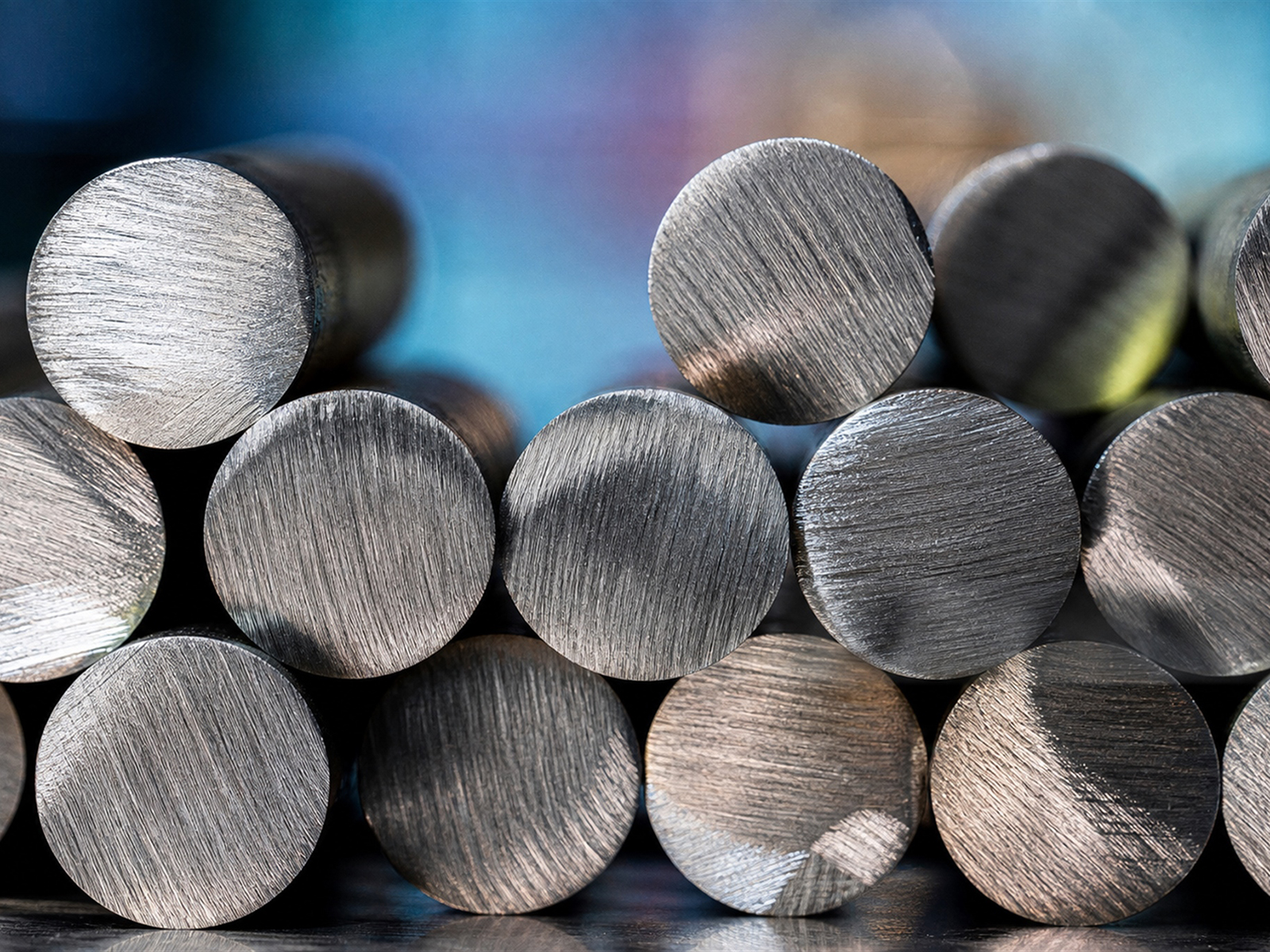
Marine engineering environments impose demanding requirements on metallic materials: continuous salt spray, immersion in high-chloride seawater, frequent wet-dry cycling, deep-water pressure, and biofouling act together to readily cause corrosion failure of ordinary carbon steel and stainless steel, along with high maintenance costs. Gr1 titanium bar (Grade 1 commercially pure titanium, UNS R50250, corresponding to ASTM B348 and GB/T 2965) offers clear advantages in certain marine engineering scenarios owing to its self-healing oxide film, low density, non-magnetic nature, and good ductility. This article analyzes its applicable conditions and performance limits from the perspectives of corrosion behavior, mechanical properties, processing techniques, and typical applications.
1. Marine Corrosion Environments and the Corrosion-Resistance Mechanism of Gr1 Titanium Bar
(1) Primary Causes of Seawater Corrosion
Seawater is not simply salt water; it also contains chloride ions (Cl⁻), dissolved oxygen, sulfate-reducing bacteria, and trace organic acids. Chloride ions are a key factor in initiating pitting and crevice corrosion and can destroy the passive film on ordinary stainless steel surfaces—especially in stagnant zones, crevices, and biofouling areas—leading to localized corrosion. The pitting resistance of 316L stainless steel in high-chloride environments is generally limited, and seawater applications must be evaluated in combination with flow velocity, temperature, and structural crevices [3][4].
(2) Titanium’s Oxide Film: Self-Healing Capacity and Its Limits
A dense TiO₂ oxide film, about 2–7 nm thick, forms spontaneously on the surface of Gr1 titanium bar. This film is self-healing: when fresh metal is exposed by mechanical scoring or local damage, the oxide film re-forms within seconds to minutes as long as trace amounts of oxygen or moisture are available. Chloride ions have limited ability to penetrate this oxide film, so the pitting potential of Gr1 titanium bar in seawater and chloride solutions is typically far higher than that of 316L stainless steel [3]. It should be noted that this oxide film is not stable in every corrosive environment. In high-temperature seawater, fluoride-containing media, or strongly reducing acids (such as high-concentration hydrochloric acid), the corrosion resistance of Gr1 titanium may decline, and targeted evaluation is required during material selection.
(3) Cross-Comparison of Corrosion Resistance with Mainstream Marine Materials
Material | Chloride Pitting Resistance | Crevice Corrosion Resistance | Biofouling Corrosion Resistance | Reference Service Life in Seawater |
Carbon steel Q235 | Poor | Poor | Poor | 1–3 years (uncoated) |
316L stainless steel | Poor to moderately low | Moderately low | Moderate | 5–15 years (depending on conditions) |
Duplex stainless steel 2205 | Good | Good | Moderate | 10–20 years |
Gr1 commercially pure titanium bar | Excellent | Excellent | Excellent | 20+ years (existing field cases) |
Gr5 titanium alloy bar | Excellent | Excellent | Excellent | 20+ years |
> Note: The service-life figures above are reference ranges. Actual results are affected by temperature, flow velocity, pH, chloride ion concentration, and structural crevices and should not be used directly as design service life.
Gr1 titanium bar exhibits low erosion-corrosion tendency under both static immersion and high-velocity flow conditions, but is not suitable for high-temperature, strongly reducing acid, or fluoride-containing environments.
2. Physical and Mechanical Properties: The Synergy of Lightweighting and Toughness
(1) Structural Weight-Reduction Potential from Low Density
Gr1 titanium bar has a density of 4.51 g/cm³, approximately 57% of carbon steel (7.85 g/cm³); it is lighter than steel and heavier than aluminum alloys (about 2.7 g/cm³), while its corrosion resistance is far superior to that of aluminum alloys. Replacing stainless steel components with Gr1 titanium bar can theoretically reduce weight by about 43% (calculation: (7.85 − 4.51)/7.85). In actual engineering, overall structural weight reduction is typically 30%–40% due to factors such as connecting structures, attachments, and stiffness compensation [2].
(2) High Ductility and Mechanical Property Range
Gr1 is one of the most ductile grades of commercially pure titanium. According to ASTM B348 and GB/T 2965, the minimum strength for annealed Gr1 bar is: yield strength ≥170 MPa and tensile strength ≥240 MPa. The standards specify only minimum values, not maximums. Typical values for industrially supplied products are often: yield strength 170–275 MPa and tensile strength 240–345 MPa, with actual values varying by diameter, process, and batch [1][2].
Elongation after fracture depends on bar diameter: small-diameter bars typically exhibit elongation of not less than 24%, while requirements for large-diameter bars may drop to about 20%. Purchasers should check the specific standard clauses according to diameter and delivery condition.
(3) Non-Magnetic Behavior and Permeability
Property | Gr1 Titanium Bar | 316L Stainless Steel | Carbon Steel |
Relative permeability | ~1.00005 (close to vacuum) | ~1.02–1.05 annealed; can exceed 1.5 after cold working | Clearly ferromagnetic |
Interference with magnetic compasses | Negligible | Minor interference in annealed condition; measurable interference possible after cold working | Strong interference |
Suitability for magnetically sensitive instruments | Applicable | Requires evaluation of cold-worked condition | Not suitable |
Deep-sea exploration equipment, seabed seismic sensors, and underwater navigation systems are sensitive to magnetic field interference from surrounding materials. The relative permeability of Gr1 titanium bar, close to that of a vacuum, makes it better suited to such magnetically sensitive structural components. 316L stainless steel has low magnetism in the annealed condition, but its permeability can rise after cold working; evaluation should account for the actual process condition [4][5].
3. Processing Techniques and Surface Condition: Key Considerations from Billet to Marine Component
(1) Differentiated Selection Among Four Surface Conditions
Marine engineering components vary widely in surface quality requirements. Gr1 titanium bar can be supplied in different surface conditions to suit different machining needs:
Black bar (hot-rolled/forged): surface with oxide scale; suitable for rough-machined parts of φ20 and above that require subsequent turning or milling; dimensional tolerance about ±1.0 mm
Turned bar (turned after hot working): Ra ≈ 3.2–6.3, no oxide scale; can be used directly for assembly or welding; tolerance ±0.3–0.5 mm
Polished bar (cold-drawn/precision polished): Ra ≤ 1.6, dimensional tolerance ±0.05–0.2 mm (h7/h8), suitable for precision shafts and seals
Pickled bar: metal-bright after removal of the oxide layer, free of machining marks; suitable for chemical contact parts and welded assemblies, helping to reduce surface contamination
> Note: Dimensional tolerance zones for shaft-type parts should be written in lowercase h, e.g., h7/h8; H7/H8 are hole tolerance zones and are not applicable to bar outer diameters.
(2) Dimensional Coverage
Type | Common Size Range | Typical Applications |
Round bar (standard stock) | φ8–φ200 mm | Valve stems, pump shafts, pipe connectors |
Small-diameter cold-drawn/polished bar | φ4–φ30 mm | Sensor probes, instrument shafts, precision pins |
Large-diameter forged bar | φ100–φ300 mm (custom) | Load-bearing structural components for offshore platforms |
Square/hexagonal bar | 6×6 mm–80×80 mm | Bolt blanks, flange machining stock |
Inch-dimensioned sizes | 1/4″–3″ | For interfacing with European and American standard equipment |
Small-diameter cold-drawn/polished bar and φ8–φ200 mm round bar overlap in the φ8–φ30 mm range, but the main difference lies in surface condition and dimensional accuracy: small-diameter cold-drawn/polished bar is typically in the cold-worked condition with low surface roughness and tight dimensional tolerance, whereas ordinary round bar of the same size may be in the hot-worked or turned condition with lower precision, making it suitable for further machining.
In terms of length, hot-worked (as-rolled)/cold-worked (cold drawn) bar can be supplied in 300–6000 mm, and annealed bar in 300–3000 mm. Fixed-length tolerance should be written as +20/−0 mm; an additional +5 mm machining allowance can be added for each additional saw cut, to be specified in the purchase agreement.
(3) Machining Considerations
Gr1 titanium bar has low thermal conductivity (about 17 W/m·K, roughly one-quarter that of carbon steel), so cutting heat tends to concentrate at the tool tip, causing built-up edge and accelerated tool wear. Lower cutting speeds (recommended linear speed 30–60 m/min) with a high-feed, shallow-depth strategy are recommended, together with chloride-free cutting fluids. Chloride-containing cutting fluids are not recommended because residual chloride ions may induce localized corrosion in weld heat-affected zones or crevices; if process constraints require their use, parts should be thoroughly cleaned immediately after machining and confirmed to be residue-free—however, this practice is still not recommended for critical marine components.
4. Typical Applications in Marine Engineering
(1) Typical Applications in Desalination Equipment
In seawater reverse osmosis desalination systems, high-pressure pump shafts, pressure exchanger tie rods, and brine discharge pipe supports are exposed to high-chloride, high-pressure seawater for extended periods. Gr1 titanium bar can be used to manufacture such components. Long-term operating cases exist in some large Middle East desalination projects, but project-specific service life and operating records should be verified by purchasers against actual service conditions.
(2) Marine Monitoring Instruments and Underwater ROVs
Components such as manipulator-arm connectors of remotely operated vehicles (ROVs) and support rods for deep-sea pressure sensors must simultaneously satisfy corrosion resistance, non-magnetic behavior, lightweight, and precision machinability. Gr1 titanium bar offers strong combined suitability across these dimensions and is commonly used in such precision marine instrument structures.
(3) Marine Fasteners and Flange Connection Systems
Bolts, studs, and flange pins are high-frequency replacement consumables on offshore platforms. Upgrading ordinary stainless steel fasteners to Gr1 titanium bar fasteners typically reduces the incidence of pitting and stress corrosion cracking. In conditions where corrosion failure is significant, whole-lifecycle maintenance costs may be lower than repeatedly replacing stainless steel parts, but the specific cost savings should be verified against project service conditions and procurement costs.
5. Material Selection Decisions: Applicable Scenarios and Performance Limits
Gr1 titanium bar performs well in corrosion resistance and plasticity, but its tensile strength is at the level of pure titanium and it is not suitable for high-impact loads, high-speed heavy-duty drive shafts, or engine load-bearing structures. For such conditions, high-strength titanium alloys such as Gr5 (Ti-6Al-4V) should be selected. Marine scenarios suited to Gr1 include: contact with high-chloride or mildly acidic seawater media, the need for cold bending or complex welded fabrication, sensitivity to magnetic field interference, and the pursuit of long life with low maintenance frequency under moderate to low loads. Scenarios that are unsuitable or require evaluation include: high-temperature seawater, fluoride-containing media, strongly reducing acid environments, and heavy-duty transmission or high contact-stress conditions. The boundary conditions above must not be overlooked simply because Gr1 titanium bar resists ordinary seawater corrosion.
6. Conclusion
Gr1 titanium bar offers engineering value in a range of moderate- to low-load marine engineering scenarios through the corrosion resistance imparted by its self-healing oxide film, the processing adaptability supported by high ductility, and its non-magnetic, lightweight characteristics. Its application scope is concentrated mainly in desalination, marine monitoring instruments, underwater structures, and corrosion-resistant fasteners. In actual material selection, its suitability boundaries should be evaluated against specific service conditions, mechanical requirements, and corrosive media, rather than treating it as a material applicable to all marine conditions.
FAQ
(1) Q1: How Should Gr1 and Gr5 Titanium Bars Be Selected for Marine Engineering?
Gr1 titanium bar offers higher plasticity and better weldability, making it suitable for moderate- to low-load corrosion-resistant applications such as pipe supports, fasteners, and sensor structures; Gr5 (Ti-6Al-4V) provides higher strength and is suitable for drive shafts and structural frames under heavier mechanical loads. Selection should be based on load level, corrosive media, and processing requirements in combination.
(2) Q2: Does Gr1 Titanium Bar Require Additional Anti-Corrosion Coating in Seawater?
Generally, no. The TiO₂ oxide film on Gr1 pure titanium is stable over the long term in seawater, chloride, and mildly acidic environments and self-heals after damage. However, in high-temperature seawater, fluoride-containing media, or strongly reducing acid environments, the film may become unstable, and the need for coating or a change of grade must be evaluated.
(3) Q3: How Can the Authenticity and Quality of Gr1 Titanium Bar Be Verified When Purchasing?
Request a material test certificate (MTC) complying with ASTM B348 or GB/T 2965, which should include chemical composition and mechanical property data. The chemical composition of Gr1 is generally controlled on the basis of titanium balance with Fe ≤ 0.20% and O ≤ 0.18%, rather than treating a nominal Ti ≥ 99.5% as the directly specified standard value. If necessary, request an ultrasonic test (UT) report to verify internal soundness and uniformity, and consider purchasing from mills with third-party testing capability [1][2].
Contact Us
Looking for a reliable Gr1 titanium bar manufacturer, supplier, or factory? Contact us at: sales@titaniumvalleys.com
References
- Standardization Administration of China. GB/T 3620.1-2016 Designations and chemical composition of titanium and titanium alloys [S]. Beijing: Standards Press of China, 2016.
- Standardization Administration of China. GB/T 2965-2017 Titanium and titanium alloy bars [S]. Beijing: Standards Press of China, 2017.
- Cao Chunan. Principles of Corrosion Electrochemistry (3rd ed.) [M]. Beijing: Chemical Industry Press, 2008.
- Lu Shiying. Introduction to Stainless Steel (2nd ed.) [M]. Beijing: Chemical Industry Press, 2007.
- Standardization Administration of China. GB/T 20878-2007 Stainless and heat-resisting steels – Designation and chemical composition [S]. Beijing: Standards Press of China, 2007.