
Why Is Grade 5 Titanium Foil the Ideal Choice for Lightweight Aircraft Components?
- Grade 5 Titanium Foil
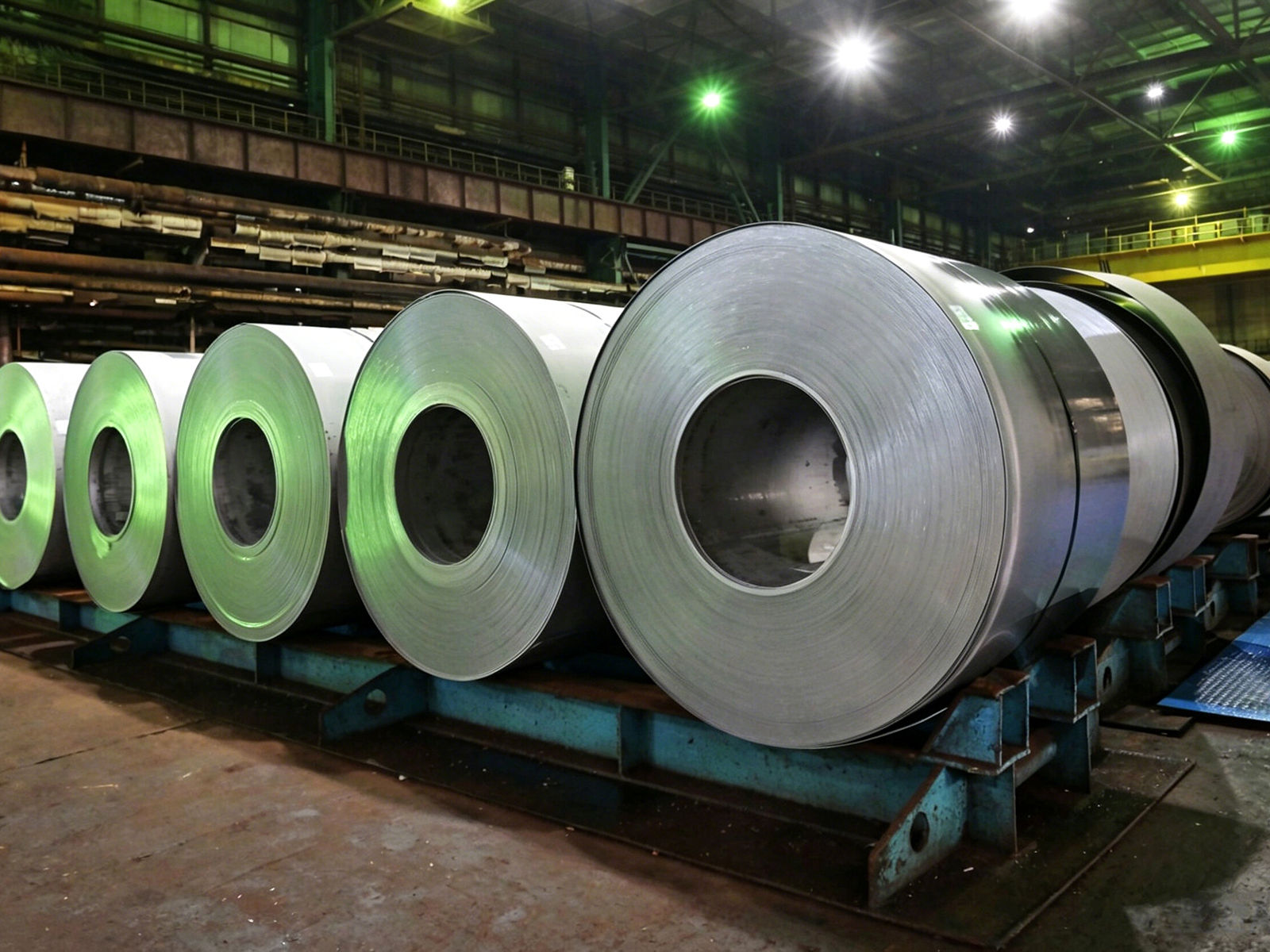
Aircraft engineers face an unavoidable trade-off in material selection: pursuing lighter weight often means sacrificing some strength, while pursuing higher strength usually adds weight. Grade 5 titanium foil (Ti-6Al-4V titanium alloy foil, also known as Gr5 Titanium Foil) offers an effective engineering solution to this dilemma. Based on an α+β two-phase titanium alloy, its density is about 60% of steel, and in the annealed condition its tensile strength is generally not less than 895 MPa (exact values depend on material condition and thickness range), while it retains good performance stability in service environments up to approximately 300℃. Under specific service conditions, this material can achieve a sound balance between light and strong. This article systematically discusses the suitability and limitations of Gr5 titanium alloy foil in lightweight aircraft components from four perspectives: material fundamentals, process capability, application scenarios, and engineering selection boundaries.
1. Core Material Characteristics of Gr5 Titanium Alloy Foil
(1) Role of the α+β Two-Phase Microstructure
In Ti-6Al-4V, aluminum (Al) acts as an α-phase stabilizer and vanadium (V) as a β-phase stabilizer; the coexistence of the two phases in the microstructure allows the material to balance strength and toughness. The α phase maintains good microstructural stability at elevated temperatures, while the β phase improves plastic formability and fracture toughness. The proportion and distribution of the two phases are not a simple mixture but must be controlled through sound melting, hot working, and heat treatment so that the material exhibits comprehensive properties superior to single-phase titanium alloys under cyclic loading, thermal shock, and corrosive environments.
(2) Mechanical Property Indicators: Comparison with Commercially Pure Titanium
Property | Gr1 (pure titanium) | Gr2 (pure titanium) | Gr4 (pure titanium) | Gr5 (Ti-6Al-4V) |
Tensile strength | ≥240 MPa | ≥345 MPa | ≥550 MPa | ≥895 MPa |
Yield strength | ≥170 MPa | ≥275 MPa | ≥483 MPa | ≥825 MPa |
Elongation | ≥24% | ≥20% | ≥15% | ≥10% |
Density | 4.51 g/cm³ | 4.51 g/cm³ | 4.51 g/cm³ | 4.43 g/cm³ |
> Note: The data above correspond to typical standard requirement values for annealed material, with reference to GB/T 3621 (Titanium and titanium alloy sheets and plates) and ASTM B265. Actual supplied properties vary with material thickness and heat treatment condition; the specific values should be confirmed against the material certificate.
As the table shows, the tensile strength of Gr5 is approximately 2.6 times that of Gr2 and 1.6 times that of Gr4, combined with a slightly lower density. This means that under the same load-bearing requirement, Gr5 titanium foil can use smaller cross-sections, directly reducing structural mass. Note, however, that the actual weight reduction also depends on engineering factors such as geometry, stiffness, and buckling constraints.
(3) Applicability of High-Temperature and Corrosion Performance
Gr5 titanium alloy foil can serve stably over the long term at approximately 300℃, with short-term use up to about 400℃. This level of performance covers a substantial portion of intermediate-temperature applications around aircraft engine nacelles and thermal protection layers. It should also be noted, however, that the material is not always suitable for zones where local temperatures may exceed 400℃; evaluation should be based on the specific temperature distribution.
In terms of corrosion resistance, Gr5 benefits from a dense titanium oxide passive film formed on the surface, providing good corrosion resistance in seawater, neutral chloride solutions, and numerous oxidizing media, typically without the need for additional coating protection. However, the corrosion resistance of titanium alloys is not equally reliable in every chemical environment: in strongly reducing acids (such as hydrofluoric acid and high-temperature sulfuric acid) and high-temperature chloride stress-corrosion environments, the corrosion resistance of Ti-6Al-4V may degrade significantly, requiring targeted evaluation during material selection. Strictly speaking, the corrosion resistance of titanium alloys derives primarily from the stability of the surface passive film rather than being directly determined by the mere presence of α or β phases.
2. Process for Ultra-Thin, Wide Gr5 Titanium Foil—From Feasible to Stable Mass Production
(1) Multi-High Precision Cold Rolling: Key Equipment for Ultra-Thin Rolling
For rolling high-strength titanium alloy ultra-thin strip/foil, the 20-high precision rolling mill distributes rolling forces through a multi-layer backup roll system, effectively reducing roll deflection and thereby improving flatness and thickness uniformity. For conventional thicknesses (e.g., 0.1 mm and above), mature production lines can typically control thickness tolerance on the order of ±0.001 mm; however, for thicker foil around 0.8 mm, the larger absolute thickness makes it significantly more difficult to achieve the same tolerance level, and a blanket statement is not appropriate. Specific tolerances should be governed by the product standard or the agreement between the supplier and the purchaser.
(2) Annealing: A Key Operation for α+β Microstructural Uniformity
Process Parameter | Air Annealing (No Protective Atmosphere) | Inert Gas or Vacuum-Protected Annealing (Common for Gr5) |
Atmosphere control | No protective atmosphere | Argon shielding or vacuum environment |
Oxidation risk | High | Low |
Phase microstructure uniformity | Affected by surface oxidation; difficult to control | Good (relatively uniform α+β two-phase distribution) |
Batch-to-batch mechanical property consistency | Relatively high variability | Relatively stable and controllable |
Surface cleanliness | Requires subsequent pickling or machining to remove oxide layer | Relatively clean surface; reduces downstream processing steps |
Gr5 titanium alloy is sensitive to oxygen, and oxygen ingress noticeably reduces the plasticity and toughness of the material. Gr5 titanium foil is therefore typically annealed in a vacuum furnace or under inert gas protection to avoid surface oxidation and oxygen pickup. It should be noted that vacuum annealing is typically a batch process, whereas continuous annealing is usually carried out under inert atmosphere protection. Combining the two into a single term such as vacuum continuous annealing is not rigorous, and the two approaches should be described separately according to the actual process conditions.
A relatively clean surface after annealing helps simplify downstream processing, but whether the product is ready for direct use depends on subsequent forming, welding, cleaning, and inspection requirements and should not be judged in absolute terms. In addition, the role of the annealing atmosphere is to reduce oxidation and oxygen pickup, thereby protecting surface quality; microstructural homogenization depends mainly on the temperature schedule, holding time, and cooling path. Although both are annealing process variables, there is no simple causal relationship in which eliminating the oxidizing medium directly leads to uniform transformation of the two-phase microstructure.
(3) Precision Slitting and Flatness Control
During slitting of wide Gr5 titanium foil, edge burrs, warping, and residual stress must be controlled. By optimizing tension during slitting with precision flattening, the strip straightness and edge quality can be improved effectively. For example, under conventional process conditions, edge burr height can be expected to be controlled to tens of micrometers or lower; the exact value depends on material thickness, hardness, and slitter tool condition. As an engineering statement, quantifiable and verifiable specific indicators are preferable to a vague term such as micron-level.
3. Typical Application Scenarios of Gr5 Titanium Foil in Lightweight Aircraft Components
(1) Honeycomb Core Materials: A Lightweighting Choice for High-Temperature, High-Load Zones
Honeycomb sandwich structures achieve high out-of-plane stiffness at low areal density. In zones with higher temperature or load, such as near the engine intake or in certain heat-affected areas, fabricating honeycomb cores from Gr5 titanium foil instead of aluminum foil allows the honeycomb geometry to be maintained at temperatures above 200℃ while withstanding relatively high compressive loads. Note, however, that for conventional aircraft interior panels and ordinary bulkhead partitions, operating temperatures are usually far below 200℃, and the economics of titanium honeycomb are debatable—aluminum alloy honeycomb normally satisfies the performance requirements at significantly lower cost.
(2) Engine Thermal Protection Foil: A Lightweight Solution for Intermediate-Temperature Zones
Thermal protection layers around the engine nacelle and exhaust ducting must serve for extended periods under intermediate temperatures, vibration, and gas flow erosion. Thanks to its ~300℃ long-term temperature capability and good fatigue performance, Gr5 titanium foil can be formed into relatively complex curved thermal insulation components and can replace some high-temperature alloy sheet in certain scenarios. The weight reduction must be calculated on the basis of equal-strength or equal-stiffness design. If a high-temperature alloy is simply replaced at the same thickness, weight reduction is on the order of about 40%; in actual engineering, however, because high-temperature alloys are usually stronger, the titanium foil thickness may need to be increased, so the actual weight reduction ratio is typically lower and must be confirmed by specific design strength checks.
(3) Thin-Wall Protective Housings and Sensor Protection Components
Protective housings, covers, and certain thin-wall stamped or welded structures for precision aircraft instruments and sensors have demanding requirements for low magnetic susceptibility, corrosion resistance, and dimensional accuracy. Gr5 titanium foil has extremely low magnetic susceptibility and is generally regarded as non-magnetic or weakly magnetic in engineering terms, causing no significant interference with most magnetic field-sensitive devices. Gr5 foil can also be combined with TIG welding, laser welding, and other processes for precision fabrication of thin-wall components. It should be noted, however, that direct use of titanium foil for precision structural connectors is not typical; connectors are usually made from plate, bar, or forgings, while foil is used more for thin-wall stamped parts, shielding parts, or welded-formed components.
4. Cross-Comparison of Gr5 Titanium Foil with Other Common Aerospace Materials
(1) Comparison with High-Strength Aluminum Alloys: Temperature Boundary and Specific Strength
Comparison Criterion | 7075-T6 Aluminum Alloy | Gr5 Ti-6Al-4V |
Tensile strength | ~572 MPa | ≥895 MPa |
Density | 2.81 g/cm³ | 4.43 g/cm³ |
Specific strength (strength/density) | ~204 kN·m/kg | ~202 kN·m/kg |
Long-term service temperature | ≤150℃ (depending on specific alloy temper) | ≤300℃ |
Corrosion resistance | Usually requires anodizing | Natural passivation; no coating needed in most environments |
Magnetic characteristics | Very low susceptibility; considered non-magnetic in engineering terms | Very low susceptibility; considered non-magnetic in engineering terms |
The two materials are broadly comparable in room-temperature specific strength, but Gr5 has roughly twice the temperature ceiling of 7075-T6 and requires no additional surface corrosion protection. Above 150℃, the performance degradation of 7075-T6 is manifested mainly as reduced thermal stability and lower strength retention, rather than pronounced creep in the classical sense. Therefore, in aerospace structures operating above 150℃, the temperature adaptability advantage of Gr5 becomes more prominent.
(2) Comparison with High-Temperature Alloys: Weight and Temperature Applicability
Nickel-based superalloys can maintain high strength above 600℃, but their density is typically above 8.0 g/cm³—approximately 1.8 times that of Gr5. For aircraft components operating in the 300–400℃ range, Gr5 titanium foil can be an attractive weight-reduction alternative. Notably, however, superalloys are usually considerably stronger than Gr5, so direct replacement at equal thickness is often not feasible. Under equal-strength design, the titanium foil may need increased cross-section thickness, narrowing the actual weight savings. The sound engineering conclusion is that, in intermediate-temperature, non-extreme conditions, Gr5 has the potential for significant weight advantages over superalloys, but the specific weight reduction must be confirmed by structural calculation.
(3) Overall Selection Guidance: When Is Gr5 the Better Choice?
When a component simultaneously meets the following conditions, Gr5 titanium alloy foil is generally a preferred candidate material:
- Operating temperature in the approximate 150–300℃ range;
- Some exposure to corrosive media, but not strongly reducing acids or high-temperature chloride environments;
- High structural loads with sensitivity to weight;
- A requirement for good weldability;
- Strict limits on magnetic field interference, where the non-magnetic approximation of a very low-susceptibility material is acceptable in engineering terms.
It should be emphasized that the above conditions serve only as preliminary screening criteria; the final selection should be based on a comprehensive evaluation of the specific load spectrum, environmental profile, manufacturing cost, and whole-lifecycle cost.
5. From Material to Supply: Engineering Capabilities to Scrutinize in Technical Procurement
(1) Thickness Tolerance and Flatness Control Capability
Precision aircraft components are highly sensitive to dimensional uniformity. Titanium foil out of tolerance tends to develop local stress concentrations during forming, leading to cracking or dimensional deviation. For suppliers, thickness tolerance control matched to the product standard is one of the basic requirements for meeting aerospace-grade precision machining needs.
(2) Batch Consistency and Quality Traceability Systems
Aerospace structural components typically require complete material traceability documentation, including melt heat numbers, chemical composition test reports, and mechanical property test data. Suppliers with a complete full-process quality management system can provide material certificates for each batch, supporting customer quality audits and certification efforts.
(3) Custom Sizes and Batch Supply Capability
The diversity of aircraft component designs creates individual demands on titanium foil sizes. The ability to offer flexible customization over a certain thickness and width range, together with stable supply capability matched to customers’ production cadence, is an important differentiator between mature suppliers and general processors. Specific annual capacity figures should be assessed in combination with the supplier’s equipment, yield, and production organization capability, rather than relying on a single number as an absolute criterion.
6. Conclusion
Gr5 titanium foil holds an important position among lightweight aircraft structural materials thanks to its high specific strength, good intermediate-temperature performance, corrosion resistance imparted by the natural passive film, and engineering-grade non-magnetic behavior. From material design to manufacturing processes, and from application scenarios to selection boundaries, this article has attempted to provide a systematic engineering perspective. As aviation equipment places ever higher demands on lightweighting and reliability, the application value of Ti-6Al-4V titanium foil is expected to be further unlocked in more intermediate-temperature, lightweight, and corrosion-resistant scenarios.
FAQ
(1) Q1: What Are the Core Differences Between Gr5 and Gr2 Titanium Foil in Aerospace Applications?
Gr5 (Ti-6Al-4V) has approximately 2.6 times the tensile strength of Gr2, along with a higher temperature ceiling (about 300℃ for long-term service) and superior fatigue properties, better suiting it to aerospace structural components with demanding load requirements. Commercially pure titanium Gr2 is typically used at continuous-service temperatures above 150℃; the exact ceiling depends on the service environment and surface condition and cannot be summarized as a single fixed value. Gr2 is better suited to low-load, highly formable applications or those demanding high weldability.
(2) Q2: How Formable Is Ultra-Thin Gr5 Titanium Foil (e.g., 0.03 mm) in Aircraft Components?
Because of its high-strength, low-ductility characteristics, Gr5 titanium foil is harder to cold form than pure titanium. With appropriate annealing after precision rolling, elongation can be restored to standard requirement levels (typically ≥10%). Combined with optimized die design and appropriate hot-forming processes, relatively complex cross-section components can be precision-formed, meeting the fabrication needs of certain thin-wall aerospace structures.
(3) Q3: What Quality Documents Should Be Requested When Purchasing Gr5 Aerospace-Grade Titanium Foil?
A complete mill test report, chemical composition analysis report (covering elements including Ti, Al, V, Fe, and O), mechanical property test report (tensile strength, yield strength, elongation), non-destructive testing records, and production batch traceability documents should be requested to satisfy aerospace-grade quality audit and certification requirements.
Contact Us
Looking for a professional Gr5 Titanium Foil manufacturer, supplier, or factory? Baoji Titanium Valley Nickel Zirconium Material Processing Co., Ltd. (Titanium Valley) provides stable batch supply and custom processing of Ti-6Al-4V titanium foil across the full 0.03–0.8 mm size range. Please contact us by email at: sales@titaniumvalleys.com
References
- Zhang Xiyan, Zhao Yongqing, Bai Chenguang. Titanium Alloy Materials and Their Applications [M]. Beijing: Chemical Industry Press, 2007.
- Wang Jinyou, Ge Zhiming, Zhou Yanbang. Handbook of Titanium and Titanium Alloys [M]. Beijing: Metallurgical Industry Press, 2005.
- Editorial Board of China Aeronautical Materials Handbook. China Aeronautical Materials Handbook: Volume 4 Titanium Alloys, Copper Alloys [M]. Beijing: Standards Press of China, 2002.
- General Administration of Quality Supervision, Inspection and Quarantine of the People’s Republic of China. GB/T 2965—2007 Titanium and titanium alloy bars and wires [S]. Beijing: Standards Press of China, 2007.
- Zhao Yongqing, Qu Henglei, Feng Liang, et al. Research progress on microstructure and properties of Ti-6Al-4V titanium alloy [J]. Rare Metal Materials and Engineering, 2013, 42(Suppl. 1): 97–101.
- Li Liang, Sun Jianke. Development and application of high-strength titanium alloys for aerospace [J]. Journal of Materials Engineering, 2006(7): 53–56.