
What Makes Ti-15V-3Al-3Cr-3Sn Titanium Foil a High-Performance Aerospace Material?
- Ti-15V-3Al-3Cr-3Sn Titanium Foil
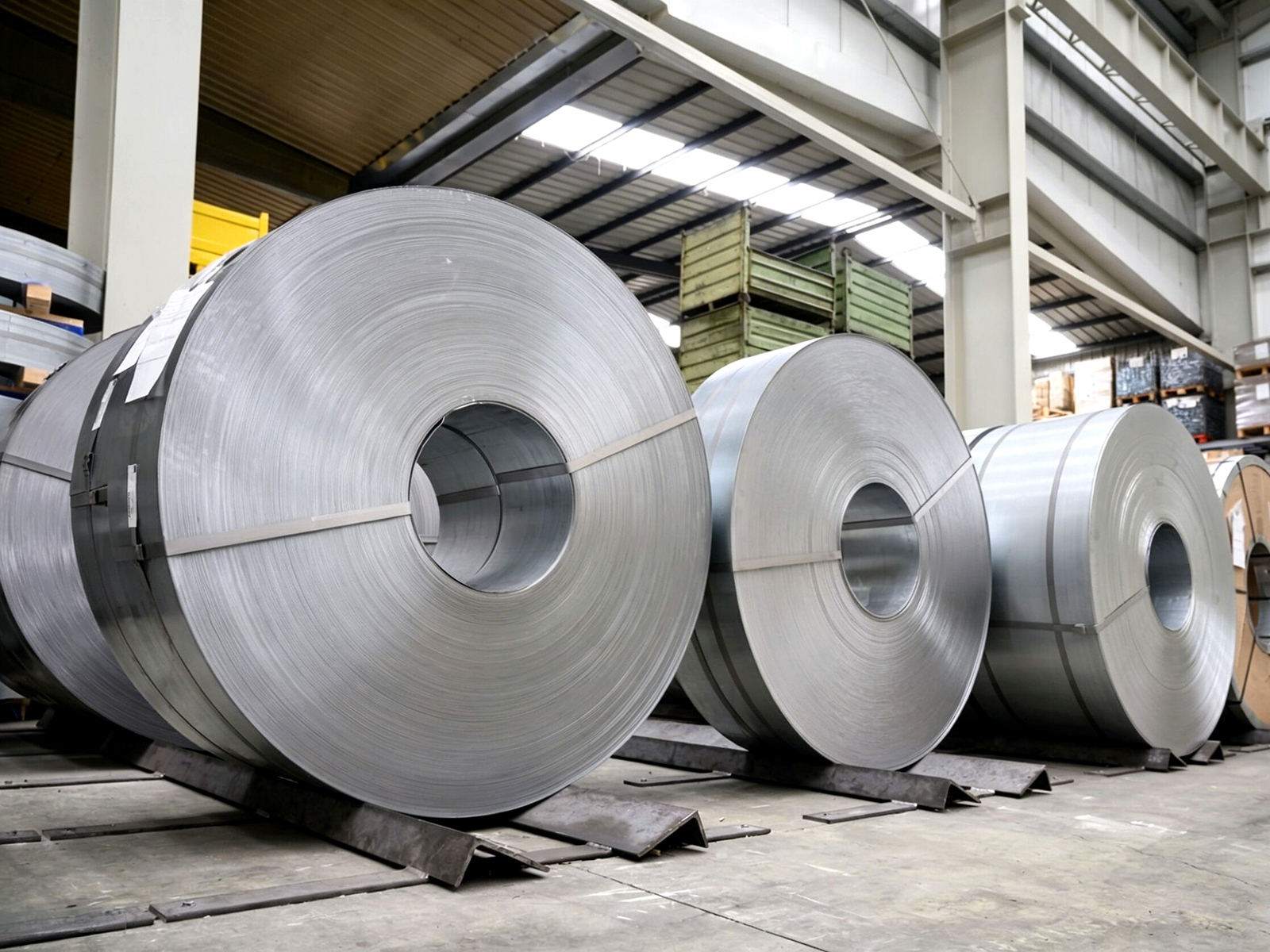
In aerospace, precision electronics, and high-end manufacturing, material performance often sets the ceiling for the final product. As an ultra-thin strip of a near-β titanium alloy, Ti-15V-3Al-3Cr-3Sn titanium foil—which, under suitable heat treatment and cold-working conditions, retains a predominantly metastable β microstructure and therefore offers good cold-formability, and whose strength is raised by subsequent aging—is emerging as one of the candidate materials for manufacturing complex thin-walled components. Compared with α+β alloys such as Gr5 (Ti-6Al-4V), the core advantage of Ti-15V-3Al-3Cr-3Sn titanium foil is that cold-formability and final service strength can be controlled in separate stages, which provides a wide process window for volume production of complex parts. It should be made clear, however, that this advantage mainly has value in the specific scenarios suited to cold forming plus age hardening and does not cover all titanium alloy applications.
1. Alloy Characteristics and Core Advantages of Ti-15V-3Al-3Cr-3Sn Titanium Foil
(1) Forming Advantages of Near-β Alloys
In the metastable β condition, near-β titanium alloys generally offer better cold-formability than most α+β alloys and can be bent, stamped, and formed with relatively large deformation. For ultra-thin foils, conventional high-strength titanium alloys carry a higher risk of edge cracking or surface micro-damage during cold working, whereas Ti-15V-3Al-3Cr-3Sn generally demonstrates a greater ductility margin within a suitable thickness and process window. It should be noted that this comparison mainly concerns cold-working processes. α+β alloys such as Gr5 can still improve their workability through hot forming, superplastic forming, and other methods.
(2) Engineering Value of the Age-Hardening Mechanism
After rapid cooling from the β region, the alloy precipitates fine α-phase particles during aging, raising tensile and yield strength while retaining a degree of ductility. By adjusting the aging temperature and time, the strength–toughness balance can be tuned within a certain range. This characteristic has engineering significance for lightweight aerospace thin-walled parts. The adjustable strength range is not unlimited, however; the properties actually achievable depend on composition, thickness, heat-lot practice, and the uniformity of the heat-treatment equipment, so measured data should govern.
(3) Synergistic Value of Specific Strength, Density, and Non-Magnetic Behavior
The typical density of Ti-15V-3Al-3Cr-3Sn is about 4.76 g/cm³, offering significant weight savings compared with steel. Its non-magnetic character also means it experiences little static magnetic attraction in magnetic-field environments, yet full compatibility with medical imaging equipment such as MRI cannot be inferred from non-magnetism alone; factors such as electrical conductivity, radio-frequency artifacts, and biocompatibility also need to be evaluated. High specific strength means a thinner material or foil can be selected for the same load capacity, but the final weight-saving benefit also depends on structural stiffness, forming constraints, and joining methods.
Table 1: Basic Information and Typical Properties of Ti-15V-3Al-3Cr-3Sn
Property | Value / Characteristic |
Alloy Type | Near-β titanium alloy |
UNS Number | R58153 |
Density | Approximately 4.76 g/cm³ (typical) |
Melting Range | Approximately 1590–1660℃ (solidus/liquidus; per actual heat-lot measurement) |
Magnetic Behavior | Non-magnetic |
Microstructure in Cold-Formed Condition | Predominantly metastable β; good cold-formability |
Typical Aged Tensile Strength | Approximately 1000–1240 MPa (depends on the aging schedule) |
Typical Aged Yield Strength | Approximately 950–1170 MPa (depends on the aging schedule) |
Typical Elongation | 5%–13% (elongation generally decreases as strengthening increases; the exact value depends on material condition, amount of cold work, aging schedule, and specimen orientation) |
Applicable Standards | AMS 4914 (current issue for sheet/strip, where applicable); corresponding grade in ASTM B265/B265M; corresponding grade in GB/T 3621 |
Note: The mechanical properties are typical ranges from the literature or standards and do not constitute guaranteed values for any specific lot.
2. Production Process and Key Equipment Capabilities
(1) End-to-End Control from Melting to Precision Cold Rolling
A complete production flow typically includes: vacuum melting → forging/hot-rolling breakdown → intermediate annealing → surface conditioning/pickling → multi-pass precision cold rolling on a 20-high mill → degreasing/ultrasonic cleaning → continuous in-line annealing → temper rolling → slitting → inspection and packaging. Of these, intermediate annealing and surface conditioning/pickling have a strong influence on the flatness, surface quality, and downstream rolling-cracking risk of ultra-thin foil and should not be simplified or omitted. The 20-high precision mill can reach a maximum rolling speed of 400 m/min and a maximum rolling force of 3500 kN. For regular volume supply, the thinnest gauge that can be rolled consistently is 0.02 mm; 0.005 mm-class products require a separate feasibility assessment and small-lot validation and should not be regarded as regular, stable production capability.
(2) Heat-Treatment System and Surface Cleanliness Control
The continuous annealing furnace has a maximum temperature capability of 1100℃, but the actual annealing temperature for Ti-15V-3Al-3Cr-3Sn ultra-thin foil should be set according to the target microstructure and thickness and is generally held below the β transus or within a narrower process window to avoid grain coarsening, sticking, or loss of microstructure control.
Temperature uniformity should be verified by furnace temperature uniformity survey reports. For wide foil, the temperature difference across the strip during production should be controlled in accordance with the process documents—for example, within ±5℃—rather than taking the instrument display value as a substitute for actual furnace temperature uniformity. Elevated-temperature and oxidation-prone operations should be protected by an inert-gas or vacuum atmosphere; ambient-pressure operations such as ultrasonic cleaning must be followed promptly by drying to prevent secondary contamination. Surface wetting tension can reach above 40 mN/m, and test methods may follow in-house standards or the contact-angle/dyne-solution method.
(3) Dimensional Tolerance and Flatness Control System
The thickness tolerance is recommended to be graded by thickness range, for example:
- 0.02–0.05 mm: approximately ±0.005 mm;
- 0.05–0.10 mm: approximately ±0.008 mm;
- 0.10–0.50 mm: approximately ±0.015 mm;
- 0.50–1.0 mm: may be executed in accordance with standards such as GB/T 3621 or ASTM B265.
The slit-width tolerance should be graded by width specification, for example:
- 15–100 mm: approximately ±0.05 mm;
- 100–300 mm: approximately ±0.08 mm;
- 300–680 mm: approximately ±0.12 mm.
The goal of tension optimization is to reduce the risk of deformation during coiling and slitting of thin strip. For ultra-thin, wide combinations with a thickness below 0.05 mm and a width above 400 mm, an upfront feasibility assessment and sample validation should be carried out.
3. Comparison with Mainstream Titanium Alloys
(1) Essential Differences from Commercially Pure Titanium Foil
Gr1 titanium foil has the best ductility and suits extreme forming operations, but its strength is relatively low. Gr4 unalloyed titanium offers the highest strength, but at the cost of greater difficulty in processing. Gr2 offers balanced overall properties and suits general industrial applications. Compared with these unalloyed titanium grades, Ti-15V-3Al-3Cr-3Sn titanium foil has a significant strength advantage while providing better cold-formability than Gr4 through its metastable β microstructure, filling part of the gap for the combination of “higher strength plus better cold-formability.” This does not mean it should replace unalloyed titanium in every application; cost, corrosion resistance, weldability, and maturity must also be considered.
(2) Direct Comparison with Gr5 (Ti-6Al-4V)
Comparison Item | Gr5 (Ti-6Al-4V) Typical Annealed | Ti-15V-3Al-3Cr-3Sn Cold-Formed/Aged |
Alloy Type | α+β | Near-β |
Density | Approximately 4.43 g/cm³ | Approximately 4.76 g/cm³ |
Cold Formability | Prone to cracking in cold working; low forming limit; hot forming/superplastic forming possible | Good in the cold-formed condition; suitable for complex bending/stamping |
Typical Room-Temperature Tensile Properties | Tensile strength ≥895 MPa; yield strength ≥830 MPa; elongation ≥10% | Aged: tensile strength approximately 1000–1240 MPa; yield strength approximately 950–1170 MPa; elongation approximately 5%–10% |
Adjustable Strength Range | Narrow; relies mainly on work hardening and heat treatment | Wide; adjustable via aging temperature and time |
Process Window | Narrow cold-working window | Wide window for the cold-forming-then-aging route |
Typical Applications | General high-strength structural parts, especially complex structures formed hot or superplastically | Aerospace thin-walled parts; precision structural parts requiring cold forming |
Note: The tensile properties in the table are typical ranges or standard minimum values and do not represent guaranteed values for any specific lot; engineering selection should rely on measured data.
Gr5 is one of the most widely used titanium alloys in industry, and its limitations of poor cold-formability and a narrow cold-working window are pronounced in the manufacture of complex thin-walled parts. Through its staged process control, Ti-15V-3Al-3Cr-3Sn offers an alternative for precision thin-walled parts produced by cold forming. For parts suited to hot forming or superplastic forming, however, Gr5 remains a mature and economical choice.
(3) Boundary-Condition Analysis of Applicable Scenarios
The core logic for choosing Ti-15V-3Al-3Cr-3Sn is: complex part geometry, relatively thin wall thickness, high final in-service strength requirements, and strict volume-production consistency. When parts are simple in shape and highly cost-sensitive, Gr2 or Gr5 remains a reasonable choice. Only by understanding the applicable boundaries of each grade can the optimal balance between material performance and economy be achieved.
4. Main Application Scenarios, Service Boundaries, and Industry Value
(1) Aerospace Thin-Walled Structural Components
In aerospace structure manufacturing, large thin-walled parts have long faced the problems of overweight, forming difficulty, and poor batch consistency. Ti-15V-3Al-3Cr-3Sn titanium foil can be stamped and bent in the cold-formed condition and then age-hardened to the design strength; this entire flow reduces the cracking risk of directly cold working a high-strength alloy. Regarding standards, the applicable material specification should be chosen per the drawing requirements—for example, AMS 4914 (current issue for sheet/strip, where applicable), the corresponding grade in ASTM B265/B265M, or the corresponding grade in the domestic GB/T 3621. The specific revision, acceptance criteria, and supply condition must be confirmed by both supplier and purchaser and should not be described loosely as “aerospace standard.”
(2) Precision Electronic Components and Special Non-Magnetic Structural Parts
Ti-15V-3Al-3Cr-3Sn titanium foil can be used for precision electronic components—magnetic-field-sensitive structures, supports, and spring plates—that simultaneously require relatively high specific strength and corrosion resistance. For electromagnetic shielding, however, it must be noted that the electrical conductivity of titanium alloys is far lower than that of conventional shielding materials such as copper and aluminum, and being non-magnetic does not mean high shielding effectiveness. This material is suitable only for specific shielding assemblies that need non-magnetic behavior, mechanical support, or corrosion resistance in high field strengths, or as a mechanical support layer in composite shielding structures. For broadband, high-conductivity shielding, copper, aluminum, or composite conductive layers should be preferred; titanium foil should not be treated directly as a high-efficiency electromagnetic shielding material.
(3) Precision Instruments, Composite Materials, and Chemical Anti-Corrosion Applications
In precision sensors and composite laminate structures, control of machining deformation and uniformity of interface bonding are critical for ultra-thin foil. The dimensional stability and surface-treatment compatibility of Ti-15V-3Al-3Cr-3Sn make it usable in laminate structures and sensor elastic elements. In chemical equipment linings, titanium and some titanium alloys have good corrosion resistance, but for Ti-15V-3Al-3Cr-3Sn specifically, corrosion verification should be based on the medium composition, temperature, concentration, and service conditions; judgment should not rely merely on the “titanium alloy” category and should be supplemented with specific corrosion test data. One-piece forming can reduce the number of welds and lower the corrosion risk points at welds, but it cannot be described as eliminating corrosion risk “from the root.”
5. Key Points for Procurement and Specification Selection
(1) Standard Specifications and Customization Capability
Parameter | Range / Option |
Thickness | Regular volume: 0.02–1.0 mm; 0.005–0.02 mm only as special-review/R&D customization, not part of the default stable volume range |
Width | 15–680 mm; extremely thin/wide combinations require evaluation of the thickness-to-width ratio and flatness |
Length | Per customer requirements; foil is often supplied as cut sheets, cut strips, or coils |
Supply Form | Coil / strip / cut sheet / cut strip |
Surface Condition | Bright / matte |
Applicable Standards | Corresponding grades in GB/T 3621 and ASTM B265/B265M; AMS 4914 (current issue for sheet/strip); per the revision confirmed by both parties |
Note: 0.005 mm-class products or ultra-thin products wider than 600 mm require a special review; ordering directly to the extreme values is not recommended.
(2) Quality Assurance and Acceptance System
The supplier should provide raw material composition reports, in-line thickness measurement records from the rolling process, heat-treatment process curves, surface quality inspection records, and finished-product performance reports such as tensile or hardness testing. For aerospace or medical customers, complete batch traceability records and material test reports (MTR) are also required. Acceptance criteria should be specified down to the concrete standard number and revision—for example, the corresponding clauses in GB/T 3621, ASTM B265/B265M, or AMS 4914—rather than vague expressions such as “aerospace standard.”
(3) Supply Capability and Response Efficiency
The annual capacity for regular titanium and titanium alloy foil/strip can be estimated from the supplier’s integrated line capabilities—for example, about 3000 tons—but this capacity is based on regular specifications such as 0.05–1.0 mm thickness and widths ≤680 mm. For ultra-thin products below 0.02 mm, capacity should not be measured by tonnage alone; it should be assessed comprehensively by area, batch acceptance rate, and equipment utilization. Rolling and annealing equipment consists of multi-roll precision mills and automated continuous annealing lines. The ability to switch between small-lot sampling and large-volume supply must be confirmed with the supplier and cannot be judged from advertised capacity or extreme specifications alone.
6. Conclusion
Through a “form first, age-harden afterward” route, Ti-15V-3Al-3Cr-3Sn titanium foil alleviates the long-standing conflict between high strength and high formability. Its value is mainly realized in thin-walled precision structural parts that require cold forming and in specific non-magnetic structural parts, rather than as a replacement for all titanium alloys or general shielding materials. Engineering selection should combine the specific standard revision, measured performance, dimensional tolerances, surface condition, and process-feasibility data to avoid decisions based only on alloy type or extreme specifications.
FAQ
(1) Q1: Compared with Gr5 titanium foil, what is the essential difference of Ti-15V-3Al-3Cr-3Sn titanium foil in cold working?
In the cold-formed condition, Ti-15V-3Al-3Cr-3Sn has a predominantly metastable β microstructure and generally better cold-formability than the α+β alloy Gr5. Engineers can complete complex bending and stamping in the low-strength condition and then reach a higher strength level through aging, giving great process flexibility. Gr5 can still compensate for its limited cold-working capability through hot forming or superplastic forming, so material selection should weigh all options.
(2) Q2: Which standards does Ti-15V-3Al-3Cr-3Sn titanium foil comply with? Is it suitable for aerospace procurement?
This material can be supplied to the corresponding grades in AMS 4914 (sheet/strip, where applicable), ASTM B265/B265M, and GB/T 3621. The specific revision, supply condition, and acceptance criteria must be confirmed between the purchaser and supplier. Whether it is suitable for aerospace procurement must ultimately be determined by the drawing requirements, the material specification, and the material certificate.
(3) Q3: Can ultra-thin gauges below 0.02 mm be custom-produced? What is the minimum processable thickness?
Regular volume supply is consistently available down to 0.02 mm. 0.005 mm-class products fall under R&D or special-review customization capability and are not part of the default stable mass-production range. If the purchaser genuinely needs gauges below 0.02 mm, a feasibility assessment and sample validation should be conducted with the supplier to confirm flatness, strip-break rate, width-to-thickness ratio, and coiling damage risk.
Contact Us
Looking for a reliable Ti-15V-3Al-3Cr-3Sn titanium foil manufacturer, a near-β titanium alloy foil supplier, or an aerospace-grade titanium foil mill? Titanium Valley provides volume production and customization services for titanium and titanium alloy foil, supporting OEM customization, specification development, small-lot sampling, and stable volume supply. For ultra-thin gauges, wide foil, and special surface conditions, specific evaluations can be carried out according to the customer’s requirements on thickness, width, supply condition, mechanical properties, and surface quality.
Inquiries are welcome for Ti-15V-3Al-3Cr-3Sn titanium foil, Gr5 (Ti-6Al-4V) titanium foil, and other titanium alloy foils.
7. Inquiry email: sales@titaniumvalleys.com
References
- Zhao Yongqing, Xin Shewei, Zeng Weidong. Titanium Alloys and Their Engineering Applications [M]. Beijing: Metallurgical Industry Press, 2015.
- Zhang Xiyan, Zhao Yongqing, Bai Chenguang. Titanium Alloys and Applications [M]. Beijing: Chemical Industry Press, 2005.
- Editorial Committee of the China Aeronautical Materials Handbook. China Aeronautical Materials Handbook, Volume 4: Titanium Alloys, Copper Alloys [M]. 2nd ed. Beijing: Standards Press of China, 2002.
- Wang Jinyou, Ge Zhiming, Zhou Yanbang. Aerospace Titanium Alloys [M]. Shanghai: Shanghai Scientific and Technical Publishers, 1985.
- GB/T 3620.1—2016 Designation and chemical composition of titanium and titanium alloys [S]. Beijing: Standards Press of China.
- GB/T 3621—2007 Titanium and titanium alloy plates and sheets [S]. Beijing: Standards Press of China.