
What Is Ti-15V-3Al-3Cr-3Sn Titanium Foil and What Is It Used For?
- Ti-15V-3Al-3Cr-3Sn Titanium Foil
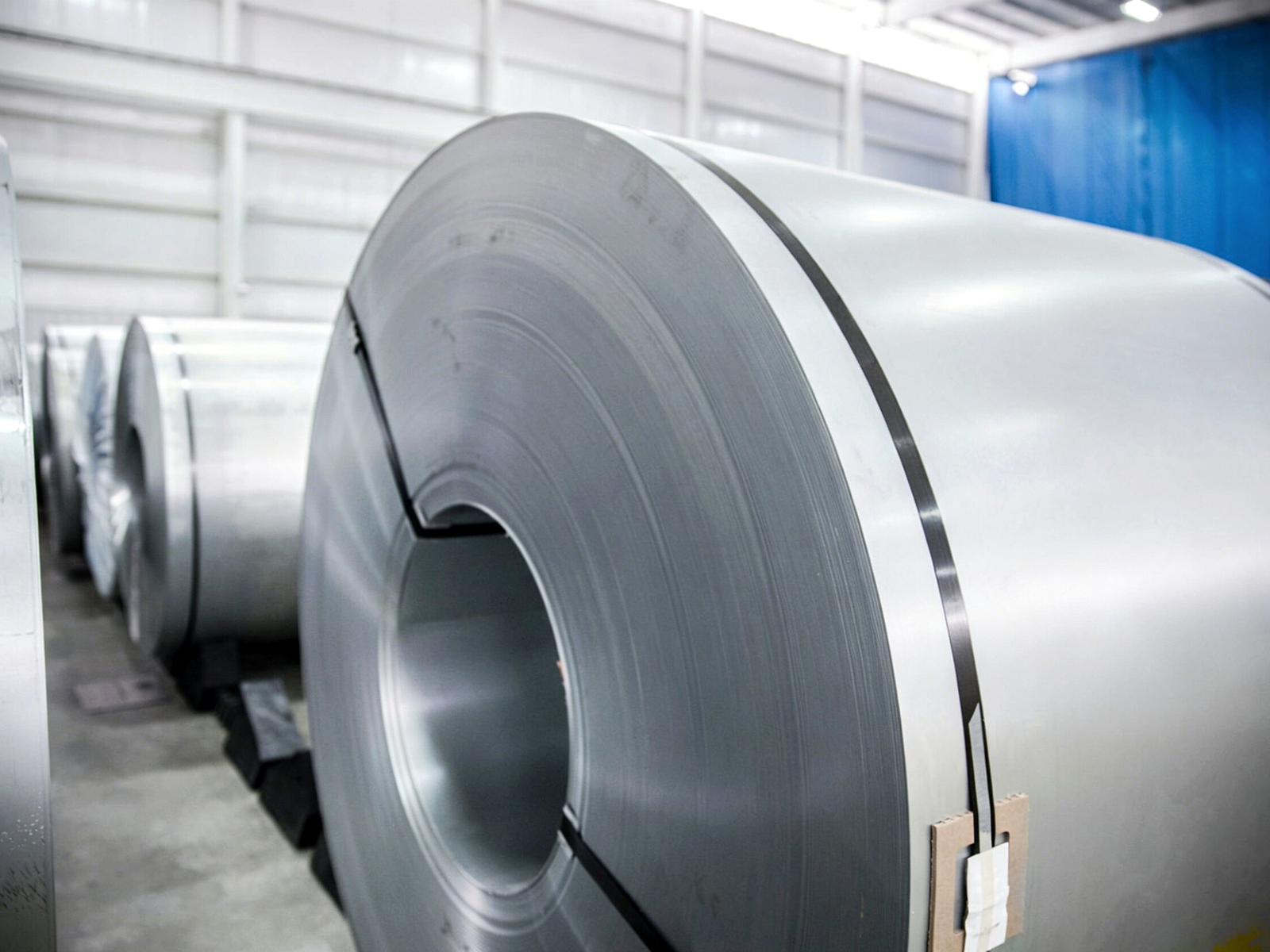
Ti-15V-3Cr-3Al-3Sn titanium foil is an ultra-thin near-β titanium alloy strip intended mainly for precision manufacturing, aerospace, and similar applications. Based on a titanium matrix with four alloying elements—vanadium, chromium, aluminum, and tin—it develops a near-β microstructure composed primarily of metastable β phase after appropriate heat treatment, offering good cold formability and tunable age-hardening characteristics. The process rationale is to complete complex forming in the annealed, softened condition and then raise strength to the target level through aging treatment, thereby separating the control of formability and final strength. The standard thickness range covers 0.02–1.0 mm, with widths up to 680 mm, and the material is applied mainly in aerospace, precision electronics, chemical corrosion protection, and high-end precision components.
1. Material Characteristics and Alloy Design Rationale
(1) Role of β-Stabilizing Elements: Vanadium and Chromium
Vanadium (V) is a β-stabilizing element, and chromium (Cr) is a β-eutectoid element in titanium alloys that also stabilizes the β phase. The addition of about 15% V and 3% Cr allows the alloy to remain predominantly metastable β phase after rapid cooling, imparting excellent cold formability. The β phase is relatively ductile at room temperature and is less prone to cracking in complex forming operations such as bending and stamping—an important reason this alloy is of interest for precision-formed parts.
(2) Role of Strengthening Elements: Aluminum and Tin
Aluminum (Al) and tin (Sn) play mainly a matrix-strengthening role in this system. Aluminum is an α-stabilizing element that helps raise matrix strength; tin strengthens the matrix mainly through alloying. It should be clarified that Ti-15V-3Cr-3Al-3Sn is not primarily a high-temperature titanium alloy, and high-temperature stability is not normally promoted as a core property.
(3) Microstructural Advantages of Near-β Alloys
In the annealed condition, near-β titanium alloys typically consist mainly of metastable β phase, rather than being a simple intermediate microstructure between the α+β and fully β types. During aging, fine, dispersed α-phase particles precipitate from the β matrix, significantly increasing tensile strength and fatigue performance. This form-first, then-age-strengthen route is difficult to achieve in commercially pure titanium grades; other titanium alloys can also have their strength adjusted by heat treatment, but their cold formability is generally inferior to this alloy.
2. Table 1: Function Comparison of Alloying Elements in Ti-15V-3Cr-3Al-3Sn (Nominal Mass Fraction, %)
Element | Nominal Mass Fraction/% | Primary Function | Contribution to Properties |
Vanadium (V) | 15 | β-phase stabilization | Retains metastable β phase; improves cold formability |
Chromium (Cr) | 3 | β-eutectoid element / β-phase stabilization | Works with vanadium to stabilize the β phase; strengthens the matrix |
Aluminum (Al) | 3 | α stabilization / matrix strengthening | Raises matrix strength; aids α-phase precipitation |
Tin (Sn) | 3 | Alloying strengthening | Increases strength; improves the strength-toughness balance |
3. Note: The contents are nominal mass fractions; allowable deviations can be referenced to GB/T 3620.1—2016.
4. Production Process and Key Equipment Capability
(1) Multi-Pass Cold Rolling and Thickness Control
Industrial production typically uses multi-roll precision cold rolling mills equipped with closed-loop thickness control systems to maintain thickness consistency for gauges of 0.02 mm and above. Width and thickness limits are not determined by a single factor; a balance must be struck among rolling force, roll-system deflection, flatness control, and tension schedules. For thinner gauges, a process-feasibility assessment tailored to the specific width and flatness requirements is recommended; the same wide-strip capability should not simply be assumed.
(2) Continuous Annealing and Microstructural Uniformity
Continuous annealing lines typically use multi-zone electric heating and can run without stoppage. Furnace temperature uniformity is a key indicator affecting strip microstructure and residual stress. The display accuracy of the instrument is not the same as the actual in-furnace temperature uniformity; furnace temperature uniformity test results should be the acceptance basis. Uniform heat treatment helps avoid abnormal local grain growth and residual stress concentration, providing a stable microstructural basis for subsequent forming and aging treatment.
(3) Surface Treatment and Cleanliness
After ultrasonic cleaning line treatment, the surface wetting tension can reach 40 dyn/cm (40 mN/m) or above, serving as a check of surface cleanliness. Oxidation-prone steps such as high-temperature treatment should be carried out under inert gas or vacuum protection; cold rolling, cleaning, and slitting are generally performed in a controlled environment, and a blanket description such as full-process vacuum or inert atmosphere is not appropriate. Finishing treatment can improve surface uniformity, benefiting subsequent functional treatments such as coating and bonding.
Complete production flow:
> Melting → Forging → Hot-rolling breakdown → Multi-pass precision cold rolling → Ultrasonic cleaning → Continuous annealing → Aging treatment (per customer requirements) → Finishing → Slitting → Inspection and packaging
5. Comparison with Other Titanium Materials
(1) Comparison with Commercially Pure Titanium Grades (Gr1/Gr2/Gr4)
Gr1 has the best ductility and the lowest strength; Gr2 offers a balanced combination; Gr4 has higher strength but increased processing difficulty. Commercially pure titanium grades generally cannot be substantially strengthened by aging treatment and offer limited performance adjustment space, making them unsuitable for structural components requiring both formability and high strength.
(2) Comparison with Gr5 (Ti-6Al-4V)
Gr5 is an α+β high-strength titanium alloy with high strength but relatively poor cold formability. Its room-temperature plasticity is low, and when cold-rolled to ultra-thin foil it is more prone to edge cracking, flatness fluctuation, and thickness control problems. Ti-15V-3Cr-3Al-3Sn offers better cold formability than Gr5 in the annealed condition, can reach strength comparable to Gr5 in the aged condition, and has a wider aging window, making it suitable for strengthening after complex forming.
(3) Strength Tunability: Not the Only Advantage, but a Matching Advantage
For most titanium alloys, the mill delivery condition determines the main strength range, leaving limited room for customer-side adjustment. The main advantage of Ti-15V-3Cr-3Al-3Sn lies in the ability to form first, then age-strengthen. Note, however, that other heat-treatable titanium alloys can also have their strength adjusted by heat treatment, so this should not be described as the sole technical advantage; rather, the match between cold formability and age strengthening should be emphasized.
6. Table 2: Qualitative Comparison of Comprehensive Performance Among Common Titanium Foil Grades
Comparison Item | Gr1 | Gr2 | Gr4 | Gr5 | Ti-15V-3Cr-3Al-3Sn |
Alloy type | Commercially pure titanium | Commercially pure titanium | Commercially pure titanium | α+β type | Near-β type |
As-delivered strength level | Low | Low to medium | Medium | High | Low to medium (annealed); high (aged) |
Cold formability | Excellent | Good | Fair | Poor | Excellent |
Strength adjustability | None | None | None | Moderate (narrow window) | Superior (wide aging window) |
Primary application positioning | Extreme forming | General industrial | Load-bearing structures | General high-strength structures | Aerospace structures / precision-formed parts |
7. Main Application Fields
(1) Aerospace: An Option for Thin-Wall Structural Components
The aerospace sector has high demands for weight reduction, forming precision, and batch consistency. Large thin-wall parts face challenges such as weight overrun, forming difficulty, and inconsistent quality. Ti-15V-3Cr-3Al-3Sn titanium foil, through annealed-condition forming plus age strengthening, helps reduce structural weight and maintain good consistency in mass production. The governing standards may reference AMS 4983/4984, but note that an AMS material specification is not equivalent to aerospace quality system certification; procurement should still be confirmed against customer drawings, process specifications, and certification requirements.
(2) Electronic Components and EMI Shielding: Large-Area Uniformity Requirements
In precision electronics and electromagnetic shielding, common problems with large-area shielding materials are excessive joints, signal leakage, and thickness non-uniformity. Wide strip gauges can reduce splicing, but the supply capability for ultra-thin wide strip must be assessed against specific thickness, flatness, and tolerance requirements. Its non-magnetic nature and dimensional stability make it suitable for large-area EMI shielding applications.
(3) Precision Instruments, Sensors, and Composite Materials
In precision instruments and sensors, deformation control during the processing of ultra-thin materials is critical. The dimensional stability and forming consistency of this alloy reduce the risk of warping and deformation. In composite or laminated structures, the interfacial continuity and bond strength with the matrix material should be verified by testing; suitability should not be judged on the material grade alone.
(4) Chemical Corrosion Protection and Marine Engineering
In chemical corrosion protection and marine engineering, this alloy has good corrosion resistance to certain neutral salt spray, marine atmospheres, and mildly acidic environments and can serve as a candidate material for linings or thin-wall components. Note, however, that its corrosion resistance is not applicable to all media—particularly in strongly reducing acids, hydrofluoric acid, or high-temperature high-concentration chloride environments, evaluation should be based on the specific medium, temperature, and concentration, and it should not be loosely treated as a general-purpose corrosion-resistant alloy.
8. Key Procurement Indicators
(1) Thickness Tolerance and Width Accuracy
The standard thickness range is 0.02–1.0 mm; special gauges can be supplied as thin as 0.005 mm, but the actually processable width, flatness, and tolerances for thinner gauges must be assessed against equipment capability and batch conditions. Slitting width tolerance can be controlled within ±0.1 mm, but this holds only when flatness is good and measurement conditions are consistent; for wide foil, it is recommended to specify the measurement method and acceptable range in the contract and to require the supplier to provide dimensional inspection reports.
(2) Surface Quality and Cleanliness
Products can be supplied with a bright or matte finish. Surface cleanliness can be assessed by wetting tension; suppliers should be asked to provide post-cleaning surface dyne value test data (≥40 dyn/cm or 40 mN/m). The thickness and uniformity of the surface oxide layer affect downstream coating and bonding quality and should be included in acceptance.
(3) Heat Treatment Condition and Traceability
The delivery condition must be clearly specified at purchase: the annealed condition suits subsequent forming; the aged condition suits high-strength applications for direct use. Suppliers should be required to provide mechanical property test reports covering tensile strength, yield strength, and elongation and to confirm compliance with the applicable standards such as GB/T 3620.1, GB/T 3622, or AMS 4983/4984. Traceability of performance data is a basic threshold for high-end industrial procurement.
9. Conclusion
Through its form-first, then-age-strengthen process route, Ti-15V-3Cr-3Al-3Sn titanium foil provides a material option for complex thin-wall components that combines cold formability and high strength. Understanding its alloy design, process capability, and applicability boundaries is more important than relying solely on grade comparisons.
FAQ
(1) Q1: How Large Is the Strength Difference Between the Annealed and Aged Conditions of Ti-15V-3Cr-3Al-3Sn Titanium Foil?
In the annealed condition, tensile strength is typically about 700–900 MPa with good plasticity; after aging at 480–540℃ for 4–16 h, tensile strength can be raised to about 1100–1400 MPa, with reduced elongation. The exact values depend on strip thickness, cold-work reduction, and aging schedule and must be confirmed by batch testing.
(2) Q2: Can Ti-15V-3Cr-3Al-3Sn Titanium Foil Be Used in Corrosive Chemical Environments?
It has good corrosion resistance to certain neutral salt spray, marine atmosphere, and mildly acidic environments. However, direct substitution for corrosion-resistant alloys in demanding media such as hydrofluoric acid, strongly reducing acids, and high-temperature high-concentration chlorides without testing is not recommended. Suitability should be assessed on the basis of medium, temperature, concentration, and flow velocity, with corrosion testing performed when necessary.
(3) Q3: How Thin Can Ti-15V-3Cr-3Al-3Sn Titanium Foil Be Supplied, and What Delivery Forms Are Available?
The standard thickness range is 0.02–1.0 mm; special gauges can be supplied as thin as 0.005 mm, but the supply width, flatness, and tolerances of ultra-thin gauges require separate review and cannot simply be assumed to be reliably mass-producible at the full 680 mm width. Delivery forms include coil, strip, and cut-to-size sheet, with common widths of about 15–680 mm; the specifics are governed by the technical agreement between the supplier and the purchaser.
Contact Us
Looking for a reliable Ti-15V-3Cr-3Al-3Sn titanium foil manufacturer, near-β titanium alloy foil supplier, or aerospace-grade titanium foil factory? Titanium Valley has the capability to produce and customize precision titanium alloy foil, supporting OEM customization, small-batch prototyping, and stable batch supply. Annealed- or aged-condition Ti-15V-3Cr-3Al-3Sn titanium foil can be provided according to customer requirements for thickness, width, flatness, dimensional tolerance, surface condition, and heat treatment condition.
For standard gauges of 0.02–1.0 mm and thinner ultra-thin foil, process-feasibility assessments can be carried out based on specific thickness, width, and batch requirements, for applications including aerospace thin-wall structural components, precision electronic elements, sensors, composite materials, and specific corrosion-resistant structures. Please send inquiries to: sales@titaniumvalleys.com
References
National Technical Committee on Nonferrous Metals Standardization. GB/T 3620.1—2016 Designations and chemical composition of titanium and titanium alloys [S]. Beijing: Standards Press of China, 2016.
National Technical Committee on Nonferrous Metals Standardization. GB/T 3622—2012 Titanium and titanium alloy strip and foil [S]. Beijing: Standards Press of China, 2012.
National Technical Committee on Steel Standardization. GB/T 228.1—2010 Metallic materials – Tensile testing – Part 1: Method of test at room temperature [S]. Beijing: Standards Press of China, 2010.
Zhang Xiyan, Zhao Yongqing, Bai Chenguang. Titanium Alloys and Applications [M]. Beijing: Chemical Industry Press, 2005.
Zhao Yongqing, Hong Quan, Ge Peng. Metallographic Atlas of Titanium and Titanium Alloys [M]. Beijing: Standards Press of China, 2011.