
What Is the Best GR5 Titanium Foil Buying Guide for Global Buyers in 2026?
- Gr5 Titanium Foil
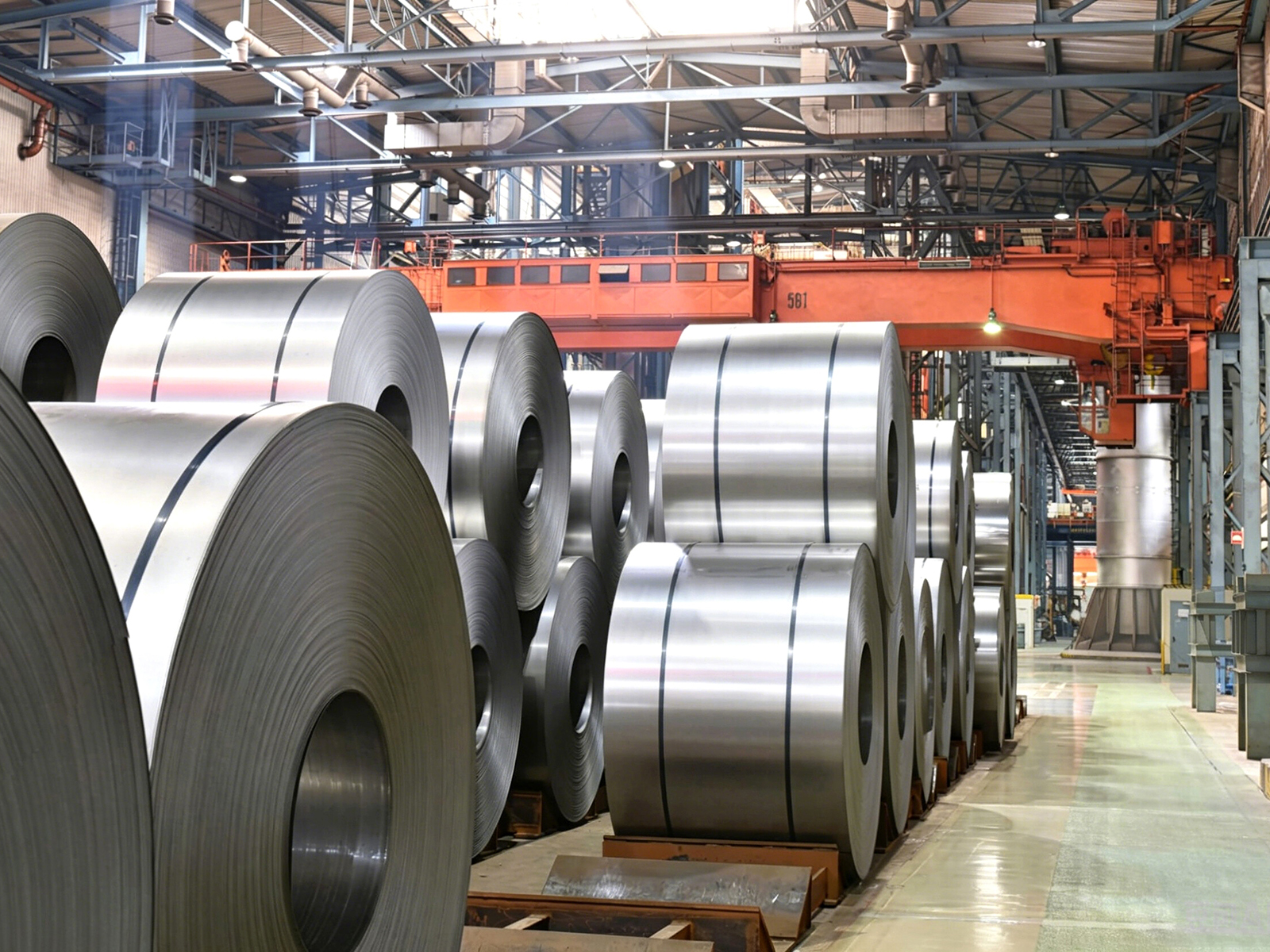
As material standards continue to rise across aerospace, new-energy battery structural components, precision electronics, and other fields, Gr5 titanium foil (Ti-6Al-4V) has become one of the high-performance thin-metal products drawing attention from global buyers. Per the minimum requirements of ASTM B265 for annealed Grade 5, its tensile strength is no less than 895 MPa, its 0.2% yield strength no less than 828 MPa, and its elongation no less than 10%, providing higher load-bearing capacity per unit weight than commercially pure titanium.
However, product quality on the market varies widely—runaway thickness tolerances, unstable batch-to-batch properties, surface oxidation contamination—these problems trouble professional buyers in the U.S. aerospace and medical device industries, German high-end manufacturing, Japanese precision electronics, and the Korean battery industry. This article reviews the core points most worth attention when purchasing Gr5 titanium foil in 2026 from five dimensions: material fundamentals, specification selection, production processes, supplier evaluation, and supply chain stability.
1. Understanding the Material Fundamentals and Performance Advantages of Gr5 Titanium Foil
(1) What Makes the Alloy Structure of Gr5 Unique?
Gr5 titanium foil is based on the Ti-6Al-4V composition and belongs to the α+β two-phase titanium alloy family. Aluminum stabilizes the α phase, while vanadium stabilizes the β phase; the two phases work in concert to give the material a favorable strength-ductility balance. This is fundamentally different from single-phase commercially pure titanium (Gr1/Gr2/Gr4), whose strength and ductility combinations differ markedly from those of Gr5.
(2) Key Performance Comparison with Commercially Pure Titanium Grades
Property | Gr1 (Commercially pure titanium) | Gr2 (Commercially pure titanium) | Gr4 (Commercially pure titanium) | Gr5 (Ti-6Al-4V) |
Tensile strength | ≥240 MPa | ≥345 MPa | ≥550 MPa | ≥895 MPa |
Yield strength | ≥170 MPa | ≥275 MPa | ≥483 MPa | ≥825 MPa |
Elongation | ≥24% | ≥20% | ≥15% | ≥10% |
Density | 4.51 g/cm³ | 4.51 g/cm³ | 4.51 g/cm³ | 4.43 g/cm³ |
Typical service temperature reference | ~150℃ | ~260℃ | ~260℃ | ~300℃ |
Note: Mechanical property data reference material standards including ASTM B265 and GB/T 3621; *the service temperature data are engineering reference values and are not the long-term service temperatures specified in ASTM B265 or GB/T 3621. Actual service must be assessed in combination with load, medium, oxidation, and service-life requirements. Commercially pure titanium can be used at higher temperatures under suitable conditions.
As shown in the table, the tensile strength of Gr5 is nearly 63% higher than that of Gr4, while its density is slightly lower. This “lighter but stronger” characteristic is a key reason why designers of high-end structural components select Ti-6Al-4V foil.
(3) High-Temperature Stability: An Often-Overlooked Selection Dimension
Many buyers focus only on room-temperature mechanical data when selecting materials and overlook the influence of service temperature. Gr5 titanium alloy is generally considered suitable for long-term service at approximately 300℃, with higher temperatures tolerable for short periods; commercially pure titanium can also be used at higher temperatures in the absence of severe oxidation and stress, but the specific upper limit must be assessed against load, medium, and life requirements. For applications such as aero-engine heat shields and fuel-cell bipolar plates, this property directly affects component service life and safety margins.
2. Analysis of Mainstream Size Requirements in the Global Market in 2026
(1) Thickness and Width: Differentiated Requirements Across Industries
Application | Recommended thickness range | Common width | Key performance requirements |
Aerospace honeycomb structures | 0.05–0.15 mm | 500–670 mm | High flatness, low residual stress |
New-energy battery structural components/tab connectors | 0.08–0.20 mm | 350–500 mm | High specific strength, corrosion resistance, good formability |
Precision elastic elements/acoustic diaphragms | 0.03–0.08 mm | 350–450 mm | Ultra-thin, strict thickness tolerance, high fatigue life |
Chemical corrosion-resistant linings | 0.20–0.80 mm | 400–670 mm | Pitting resistance, surface integrity |
Vacuum/semiconductor equipment linings | 0.10–0.30 mm | 400–600 mm | Ultra-low oxygen content, clean surface |
Note: The thermal conductivity of titanium alloys is significantly lower than that of aluminum and copper; they are not recommended as heat-dissipation functional materials.
(2) How Does Surface Condition Affect the Final Application?
Gr5 titanium foil is typically available in three surface conditions: pickled, bright, and matte. The pickled surface provides a relatively clean surface, but degreasing and surface cleaning are still usually required before welding or coating; the bright surface is obtained by finish rolling, offers low surface roughness, and is suitable for precision parts with high surface quality requirements; the matte surface should be produced by processes suited to thin materials, such as chemical treatment or light grinding, to achieve a uniform low-gloss appearance, and should not be produced by belt grinding or other methods that could cause scratching, thickness loss, and local deformation. Before purchasing, buyers must clarify the quantitative surface roughness Ra requirement with the supplier and confirm that the surface treatment is compatible with the ordered thickness.
(3) Delivery Condition: Practical Effects of the Annealed and Cold-Rolled States
The annealed condition (M condition) eliminates work hardening through vacuum annealing, restoring elongation to at least 10%, and is suitable for manufacturing parts that require subsequent forming. The cold-rolled condition (Y condition) retains the additional strength imparted by work hardening, but ductility is relatively limited, making it more suitable for applications demanding very high strength without subsequent complex forming. For 2026 purchases, it is recommended to specify the delivery condition according to the part’s post-processing steps to avoid discovering inadequate formability only after delivery.
3. Three Core Dimensions for Evaluating Suppliers
(1) Equipment Capability: The 20-High Precision Mill Is the Dividing Line
The thickness uniformity and flatness quality of foil fundamentally depend on the precision class of the rolling mill. Through the rigid constraint of multiple backup rolls, a 20-high cluster mill precisely distributes the rolling force and, in a reasonable thickness range (e.g., 0.05–0.15 mm), can achieve tighter thickness tolerance control, generally superior to four-high or six-high mills; however, the specific tolerance should be agreed in combination with thickness, width, and standard requirements rather than promised as a blanket absolute value. When evaluating suppliers, buyers should proactively ask about the mill model, roll configuration, and calibration records.
(2) Annealing Process: The Necessity of Vacuum and Inert Gas Protection
Gr5 titanium foil is highly susceptible to surface oxidation and nitriding contamination during annealing, which can create an oxygen-enriched hardened surface layer affecting subsequent welding and formability. Qualified suppliers should have vacuum annealing furnaces or argon-protected annealing furnaces to ensure an extremely low oxygen partial pressure in the annealing atmosphere and, through precise control of annealing temperature, holding time, and cooling schedule, obtain a uniform α+β two-phase microstructure. Batch-to-batch microstructural uniformity directly determines the repeatability of mechanical properties.
(3) Batch Consistency Verification: Demand CPK Data, Not Verbal Assurances
For buyers in Japanese precision electronics and German high-end manufacturing, batch consistency is often more critical than the performance of a single batch. For projects with high batch-consistency requirements, the buyer may include process capability indicators such as Cpk, thickness distribution, and inter-batch deviation in the supplier audit requirements. A Cpk of ≥1.33 may serve as an internal quality control target for some companies, but the specific threshold should be determined based on the product’s critical dimensions and the quality agreement between both parties.
4. Identifying and Avoiding Technical Risks in the Procurement Process
(1) Standard Compliance: ASTM B265 Gr5 Is the Baseline Requirement
For Ti-6Al-4V thin material, buyers should first confirm the product form, delivery condition, and applicable standard when sourcing. Both ASTM B265 and AMS 4911 may apply to specific forms of Ti-6Al-4V thin material, but their technical requirements and scopes of application must be confirmed item by item against the specific purchase specification. UNS R56400 is used to identify the Grade 5 material system. The applicable standard should be clearly specified in the purchase contract, and the supplier should be required to provide a conformance report issued by a third-party testing institution. Aerospace purchases may require compliance with ASTM B265 or AMS 4911; surgical implants for medical devices should be evaluated separately under ASTM F136 or ISO 5832-3, and aerospace-grade and medical-grade standards should not be interchanged.
(2) Chemical Composition Control: Oxygen Content Is the Critical Variable
In Ti-6Al-4V, the oxygen content (O ≤ 0.20%) significantly affects material ductility, and the oxygen content upper limit should be controlled according to the forming process during procurement. For applications requiring precision stamping or deep drawing, it is recommended that suppliers provide a spectrochemical analysis report for each batch of metallic elements, as well as oxygen content data determined by inert gas fusion infrared absorption or thermal conductivity methods, rather than delivering against nominal values alone.
(3) Slitting Quality: The Hidden Cost of Burrs and Edge Deformation
Ultra-thin, wide titanium foil is highly prone to edge burrs and localized plastic deformation during slitting, which can become crack initiation sites in subsequent precision blanking operations. High-quality suppliers should be equipped with high-precision rotary slitting lines and optimize tension matching for ultra-thin foil to ensure that slit edges meet no-burr, no-roll-over standards. At acceptance, buyers may request cross-section micrographs as evidence of quality.
5. Supply Chain Stability and Customization Capability of Concern to Global Buyers in 2026
(1) Annual Capacity and Lead Time: Practical Considerations for High-Volume Demand
For the rapidly expanding demand of the Korean battery industry and Vietnamese electronics manufacturing, a supplier’s production capacity directly determines whether it can reliably take on large orders. Suppliers with stable batch foil production capability can satisfy parallel supply requirements across multiple industries and specifications while ensuring quality consistency, avoiding delivery delays caused by capacity bottlenecks.
(2) Custom Specifications and OEM Service Capability
Standard specifications often cannot fully match the design requirements of special parts. Professional foil suppliers should support:
- Custom thickness: ultra-thin foil from 0.03 mm and above to 0.8 mm thick strip; thinner gauges require a dedicated feasibility assessment
- Custom width: any width within 350–670 mm, including non-standard widths
- Custom length: cutting by coil weight or fixed length
- Custom surface: bright, matte, pickled, and special functional surface treatments
- Custom delivery condition: annealed or cold-rolled as required
(3) One-Stop Processing Services to Reduce Supply Chain Complexity
Full in-house control of the entire process—from titanium ingot → hot rolling breakdown → multi-pass cold rolling → ultrasonic cleaning → vacuum annealing → finishing → slitting → surface treatment—means the supplier is accountable for quality parameters at every step, avoiding the risk of broken responsibility chains from subcontracting across multiple suppliers. For emerging buyers in India’s industrial upgrade and Southeast Asian electronics manufacturing, this one-stop procurement model also significantly reduces supply chain management costs.
6. Conclusion
Selecting Gr5 titanium foil in 2026 is fundamentally about conducting evidence-based assessment centered on material performance, specification matching, process assurance, and supply chain stability. Choosing a manufacturer with 20-high precision rolling, vacuum or argon-protected annealing, full-process testing capability, and a stable supply record helps lower procurement risk and safeguard project quality.
FAQ
(1) Q1: What is the difference in corrosion resistance between Gr5 and Gr2 titanium foil, and how should they be selected for chemical applications?
Gr5 has slightly lower corrosion resistance than Gr2 but still performs well in neutral and weakly acidic media. Gr2 is preferred for chemical equipment linings; if high-strength load bearing is also required (e.g., electrolyzer structural components), Gr5 is more suitable, and the selection should be assessed in combination with the specific medium concentration and temperature.
(2) Q2: 0.03 mm ultra-thin Gr5 titanium foil is prone to cracking during stamping. How can this problem be prevented from the purchasing side?
The purchase specification should explicitly require delivery in the annealed condition (M condition), an oxygen content of ≤0.18%, and elongation of no less than 10% (or the minimum annealed requirements of ASTM B265/AMS 4911), and the supplier should be required to provide tensile property data and formability data suitable for thin sheet, such as bend testing or forming limit assessment. Also confirm that the surface is free of scratches and the edges are free of burrs, which effectively reduces the risk of forming cracks.
(3) Q3: How can you tell whether the Gr5 titanium foil provided by a supplier truly meets the AMS 4911 aerospace-grade standard?
Require the supplier to provide a material test report issued by an ISO/IEC 17025-accredited laboratory or a third-party organization of equivalent qualification. The report should cover four core items of data—chemical composition (spectrochemical analysis), room-temperature tensile properties, hardness, and microstructural examination—and each item should be verified item by item against the AMS 4911 specified values.
Contact Us
Looking for a reliable Gr5 titanium foil manufacturer, Ti-6Al-4V foil supplier, or aerospace-grade titanium alloy foil plant? Titanium Valley has batch foil production capability and supports OEM customization and stable volume supply. Please send your inquiries to: sales@titaniumvalleys.com
References
- National Technical Committee on Nonferrous Metals Standardization. GB/T 3621-2022 Titanium and titanium alloy sheets and plates. Beijing: Standards Press of China, 2022.
- National Technical Committee on Nonferrous Metals Standardization. GB/T 3620.1-2016 Titanium and titanium alloys—Designation and chemical composition. Beijing: Standards Press of China, 2016.
- National Technical Committee on Nonferrous Metals Standardization. GB/T 3620.2-2016 Wrought titanium and titanium alloy products—Permissible variations in chemical composition. Beijing: Standards Press of China, 2016.
- National Technical Committee on Nonferrous Metals Standardization. GB/T 228.1-2021 Metallic materials—Tensile testing—Part 1: Method of test at room temperature. Beijing: Standards Press of China, 2021.
- Zhao Yongqing, Chen Yongnan, Zhang Xuemin, et al. Phase Transformations and Heat Treatment of Titanium Alloys. Changsha: Central South University Press, 2015.
- Zhang Xiyan, Zhao Yongqing, et al. Titanium Alloys and Applications. Beijing: Chemical Industry Press, 2005.
Published by: Titanium Valleys
Technical review: General Manager of the Production Department
Quality review: Quality Inspection Department
Last reviewed: October 20, 2026