
What Is the Ultimate Nickel 200 Wire Guide for Engineers and Procurement Professionals?
- Nickel 200 Wire
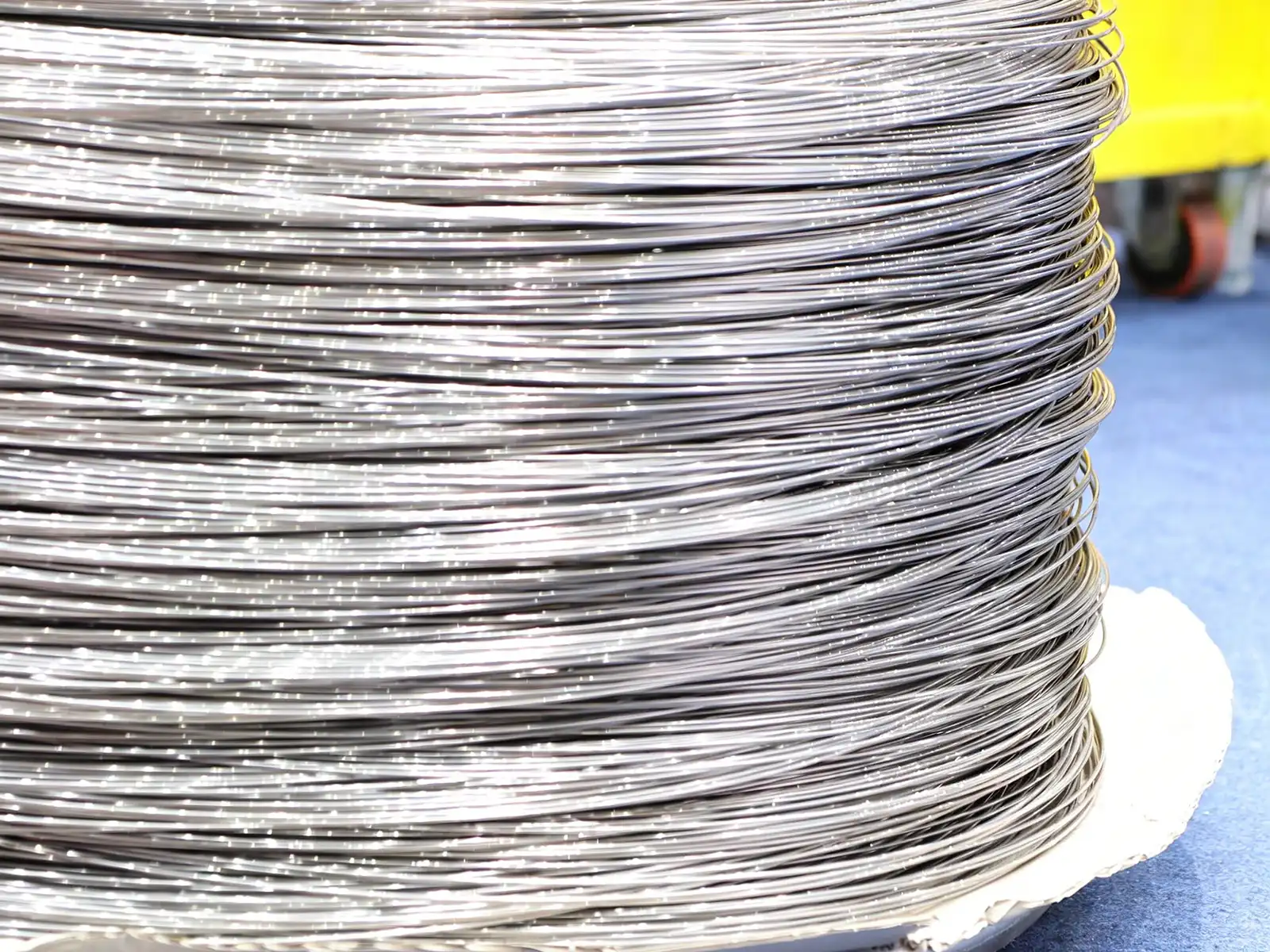
Nickel 200 wire (UNS N02200) is one of the more widely used wrought products among industrially pure nickel grades. Its high-purity composition design gives it good corrosion resistance in strong alkalis and in certain low-to-moderate-temperature reducing media, together with good electrical conductivity, thermal conductivity, and cold-workability. This article provides a reference for material engineers and procurement professionals covering composition, properties, application boundaries, specification selection, and procurement quality control. It must be emphasized that Nickel 200 is not a non-magnetic material, nor is it suitable for all acids or high-temperature environments. Selection must always be judged against the specific media, temperature, mechanical processing, and standard requirements.
1. Key Properties of Nickel 200 Pure Nickel Wire and Their Engineering Significance
(1) Chemical Composition: Distinguish Between Common Standard Limits and Internal Control Values
The common chemical composition limits for Nickel 200 (UNS N02200) under the ASTM B160/B160M and GB/T 5235 systems are:
Element | Common standard limit |
Ni+Co | ≥99.0% |
C | ≤0.15% |
Mn | ≤0.35% |
Fe | ≤0.40% |
Si | ≤0.35% |
Cu | ≤0.25% |
S | ≤0.01% |
Phosphorus is generally not a universal acceptance item for this material. If a particular mill applies a tighter internal control range or imposes special control on elements such as P, this must be expressly stated as an ‘internal control value’ in the quality certificate and must not be presented as a general ASTM/GB/T standard value.
A lower sulfur content helps reduce the risk of grain boundary embrittlement in high-temperature sulfur-bearing environments, but it cannot ‘fundamentally eliminate’ hot-shortness failure. Service limitations in high-temperature sulfur-bearing atmospheres are covered in Section IV of this article.
(2) Mechanical Properties: Reference Values for the Soft Condition and Scope of Application
Property | Soft (annealed) reference value | Notes |
Tensile strength | ≥350 MPa | Typical for cold-drawn wire of diameter ≤6 mm; per standard or mutual agreement otherwise |
Yield strength | ≥130 MPa | Same as above |
Elongation after fracture | ≥30% | Typical for soft wire; actual values may be higher |
Hardness | Approx. 75–105 HB | Annealed hardness typically varies over a wide range; 85–95 HB alone should not be used as the sole criterion |
Mechanical properties are strongly influenced by diameter, cold reduction, annealing practice, and test method. At purchase, the corresponding diameter range, delivery condition, and acceptance test standard should be clearly specified; a single set of values should not be used as the sole acceptance basis.
(3) Physical Properties: Electrical Conductivity, Thermal Conductivity, and Magnetic Characteristics
Physical parameter | Typical value |
Density | 8.90 g/cm³ |
Melting point | 1453–1455℃ |
Electrical resistivity | Approx. 6.84×10⁻⁸ Ω·m (20℃) |
Thermal conductivity | Approx. 70 W/(m·K) |
Pure nickel is a ferromagnetic metal with a pronounced magnetic response at room temperature and a Curie temperature of approximately 358℃. Nickel 200 pure nickel wire therefore cannot be treated as a ‘completely non-magnetic’ material and is not suitable for MRI-compatible or other medical device applications that must strictly avoid magnetic response.
In addition, pure nickel has a relatively high temperature coefficient of resistance, so its resistivity changes noticeably with temperature. For precision resistors or heating elements requiring low drift over a wide temperature range, Nickel 200 is not an ideal choice; its electrical conductivity is better suited to battery connections, leads, and weld terminals, where conductivity and solderability are the primary requirements.
2. Typical Application Scenarios and Limitations of Nickel 200 Pure Nickel Wire
(1) Chemical Processing and the Chlor-Alkali Industry: Corrosion Resistance in Strong Alkalis Is the Primary Advantage
In concentrated NaOH solutions and hot alkaline media, Nickel 200 exhibits low corrosion rates and is therefore commonly used for electrolytic cell electrodes, filter screens, alkaline-media processing equipment, and related connectors.
For reducing acids such as dilute sulfuric and phosphoric acids, acceptable corrosion resistance is possible only under low-temperature, low-concentration, non-aerated conditions with few oxidizing impurities. If the media is aerated, contains oxidizing impurities, or rises in temperature or concentration into a specific range, the corrosion rate increases significantly, and the performance cannot simply be described as ‘excellent’ or ‘manageable.’ For acidic service, material selection should be based on corrosion testing or published corrosion data.
(2) Electronic and Electrical Components: Conductivity and Solder/Weld Compatibility
Nickel 200 pure nickel wire is widely used in battery tabs, battery connector strips, semiconductor package leads, resistance welding electrodes, and terminals. It offers good conductivity and favorable weld compatibility with copper, aluminum alloys, and nickel-based materials, with high joint strength.
A typical misuse to avoid is using it as the primary conductor for transformer windings. Pure nickel has lower conductivity than copper, so conventional windings generally would not prioritize pure nickel wire. For heating elements or precision resistors with high demands on resistance-temperature stability, it should not be assumed that Nickel 200’s resistivity ‘varies little with temperature’; instead, the temperature range should be specified or comparison made against Ni-Cr type alloys.
(3) Medical Devices: Only for Non-Implant, Non-MRI-Compatible Applications
Nickel 200 has a magnetic response and carries risks of nickel ion release and nickel allergy; it therefore cannot be claimed as ‘non-magnetic’ or ‘non-toxic’ and is not suitable for long-term implant accessories, MRI-compatible guidewires, stent springs, or similar uses.
If used in single-use in vitro tools, non-implant probe assemblies, or short-contact instruments, biological evaluation and risk management are required, and nickel ion release should be controlled through cleaning, surface treatment, or coating. A bright or polished surface reflects only the processing condition and does not equate to achieved cleanliness. ISO 13485 is a quality management system standard, not a surface cleanliness standard; cleanliness should be verified through product standards, cleaning processes, and test data.
(4) Summary Comparison Table of Application Scenarios
Application area | Key performance requirements | Advantages and limitations of Nickel 200 |
Chemical/chlor-alkali | Resistance to strong alkalis | Low corrosion rate in strong alkalis such as NaOH; reducing acids require low temperature and freedom from oxidizing impurities |
Electronics/electrical | Conductivity, solderability/weldability | Good conductivity and weld compatibility; not suited to wide-temperature low-drift precision resistors or conventional copper windings |
Medical devices | Corrosion resistance, workability | Only for non-implant, non-MRI-compatible applications; nickel release and allergy risks must be assessed |
Precision machinery | High ductility, dimensional accuracy | Elongation ≥30%; tolerances segmented by diameter, typically ±0.005–±0.05 mm |
High-temperature industry | High melting point | Melting point 1453–1455℃, but limited in hot oxidizing acids and sulfur-bearing atmospheres; see Section IV |
Automotive/hardware | Corrosion resistance, formability | Good ductility; diverse surface treatment options |
3. Specification Selection and Key Procurement Considerations
(1) Diameter and Tolerance: A Single Tolerance Cannot Cover All Sizes
Nickel 200 pure nickel wire is routinely supplied in diameters from about φ0.05 mm to φ6.00 mm. Sizes beyond this range, such as φ200 mm, fall into the category of bars or round stock and should no longer be purchased or accepted as ‘wire.’
A single tolerance of ±0.01 mm cannot cover all diameters. Fine wires can be controlled to the order of ±0.005 mm, while coarse wires or non-circular sections may require relaxation to ±0.02 mm to ±0.05 mm. Specific tolerances should be agreed by diameter segment, product form, and processing method.
Standard references must also be accurate: bar/rod products may reference ASTM B160/B160M or GB/T 4435, while wire products should follow the mutually agreed wire specification or the corresponding Chinese standard. ASTM B166 primarily covers Ni-Cr-Fe type materials, and ASTM F72 is a standard for nickel alloy strip for electronic devices; neither applies to Nickel 200 pure nickel wire and neither should be broadly written into a procurement specification.
(2) Delivery Condition and Surface Finish
A bright finish suits applications with high surface requirements, such as electronics and medical tools; a pickled finish suits pre-welding treatment; a polished finish is used for high-cleanliness or decorative applications; and a semi-bright finish suits applications that must balance cost and appearance. The surface condition directly affects downstream processing and cleaning operations and should be confirmed with the supplier before ordering to avoid delivery delays from rework.
(3) Heat Treatment Condition: Choosing Between Soft and Cold-Work-Hardened States
The soft or annealed condition offers good ductility, suitable for winding, drawing, and bending forming; the cold-work-hardened condition provides higher strength, suitable for spring elements and load-bearing parts. The delivery condition must be clearly stated in the purchase contract. If only ‘Nickel 200 wire’ is specified without a condition, suppliers will typically ship the soft condition, which may not match the design requirements.
4. Service Boundaries and Non-Applicable Conditions for Nickel 200 Pure Nickel Wire
(1) Hot Oxidizing Acid Environments
In strongly oxidizing acids such as hot nitric acid, the passive film on Nickel 200 cannot form stably and the corrosion rate rises substantially. For such service, highly alloyed corrosion-resistant alloys such as the Inconel and Hastelloy C series should be given priority; pure nickel wire should not be forced into service.
(2) High-Temperature Sulfur-Bearing Atmospheres
When the service temperature exceeds 315℃ and the environment contains hydrogen sulfide or sulfur vapor, Nickel 200 is susceptible to sulfur-induced grain boundary embrittlement with a risk of sudden fracture. The media composition should be evaluated in advance, particularly in oil refining and natural gas sweetening units. Low-carbon Nickel 201 reduces the carbon-related risk of graphitization/grain boundary embrittlement, but high-temperature sulfur-bearing environments still require a holistic evaluation and cannot be resolved simply by changing the grade.
(3) Strongly Oxidizing Chloride Salt Media
If chloride ions in seawater coexist with strong oxidants such as hypochlorite, the corrosion resistance limits of Nickel 200 may be exceeded, causing pitting and crevice corrosion. In plain seawater or salt spray, Nickel 200 typically performs adequately, but for compounded oxidizing-chloride service, higher-alloy materials with better pitting resistance should be substituted.
5. Procurement Quality Control and Receiving Inspection
(1) Request Traceable Quality Documentation
The EN 10204 3.1 certificate is commonly used in international trade and includes melt/lot numbers, measured chemical composition, and mechanical properties, offering stronger traceability than a 2.2 certificate. For domestic procurement, a quality certificate conforming to GB/T or the mutually agreed technical specification may also be requested. In fields such as aerospace and medical devices, documents with stronger traceability should be given priority.
(2) Focus on Batch-to-Batch Consistency Rather Than a Single Test
A single passing sample inspection does not mean the batch is stable. Suppliers should be able to provide performance data records across consecutive batches, showing the variation ranges of composition, mechanical properties, and dimensional tolerances. Buyers should focus on process capability data or batch inspection records rather than judging solely on a single certificate.
(3) Receiving Inspection: Avoid Incorrectly Using a Magnet for Screening
A portable X-ray fluorescence (XRF) spectrometer can quickly screen the primary elements and is suitable for receiving inspection. A magnet test, however, cannot distinguish pure nickel from ferromagnetic impurities, because Nickel 200 itself has a magnetic response at room temperature. Using ‘no magnetic response at all’ as an acceptance criterion for pure nickel will cause false rejections or missed defects. Composition confirmation should be based on spectroscopy, chemical analysis, or third-party testing.
6. Conclusion
Thanks to its high purity, good corrosion resistance in strong alkalis, electrical and thermal conductivity, and cold-workability, Nickel 200 pure nickel wire has value in the chemical, electronics, and certain non-implant medical device tool applications. It is, however, not non-magnetic and is not suitable for all acids or high-temperature environments. Material selection should simultaneously verify standard applicability, diameter tolerances, delivery condition, mechanical property data, and quality documentation, avoiding the importation of inapplicable standards or marketing language into engineering decisions.
FAQ
(1) Q1: What Is the Difference Between Nickel 200 and Nickel 201, and How Should I Choose at the Time of Purchase?
Nickel 201 (UNS N02201) has a carbon content limit of 0.02%, far lower than the common standard limit of 0.15% for Nickel 200. When the service temperature remains above 315℃ for long periods, the higher carbon content of Nickel 200 can increase the risk of graphitization or grain boundary embrittlement; therefore, Nickel 201 is recommended for sustained high-temperature service.
(2) Q2: What Specific Advantages Does Pure Nickel Wire Offer in Lithium Battery Tab Welding?
Nickel 200 pure nickel wire has good conductivity and favorable compatibility with laser and ultrasonic welding to aluminum foil and copper current collectors, producing strong weld joints without introducing harmful impurities. It is suitable for conductive connections such as tabs and connector strips in power and energy-storage batteries, although ‘stable resistivity with temperature’ should not be used as a selection criterion.
(3) Q3: When Purchasing Nickel 200 Wire, How Can I Confirm the Product Conforms to the Agreed Standard?
The supplier should be required to provide a complete inspection report issued by a third-party testing body, with particular verification of diameter tolerance, surface quality, tensile strength, and chemical composition. The standard numbers and editions cited in the certificate should also be checked for validity and applicability to pure nickel wire. Standards that do not apply to Nickel 200 pure nickel wire, such as ASTM B166 and ASTM F72, should be avoided as acceptance criteria.
(4) Supplier Contact Information
For Nickel 200 wire supplier support, please contact Titanium Valley: sales@titaniumvalleys.com. The company provides processing of nickel, titanium, and zirconium wire and can supply EN 10204 3.1 certificates. The specific grade, specifications, tolerances, heat treatment condition, and quality documents shall be governed by the mutually agreed technical specification.
References
- Standardization Administration of China. GB/T 5235—2007 Wrought nickel and nickel alloys—Chemical composition and forms of wrought products [S]. Beijing: Standards Press of China, 2007.
- Standardization Administration of China. GB/T 4435—2010 Nickel and nickel alloys—Rods [S]. Beijing: Standards Press of China, 2010.
- Zuo Jingyi. Corrosion Data Handbook [M]. Beijing: Chemical Industry Press, 1982.
- Huang Boyun, Li Chenggong, Shi Likai, et al. China Materials Engineering Canon: Vol. 4 Nonferrous Metal Materials Engineering: Part 1 [M]. Beijing: Chemical Industry Press, 2006.
Published by: Titanium Valleys
Technical review: General Manager of the Production Department
Quality review: Quality Inspection Department
Last reviewed: October 20, 2026 (before the latest content update; the updated content is pending review).