
How Do You Select the Thickness of Gr2 Titanium Foil: Standard Sizes, Application Recommendations, and Process Boundaries?
- Gr2 titanium foil
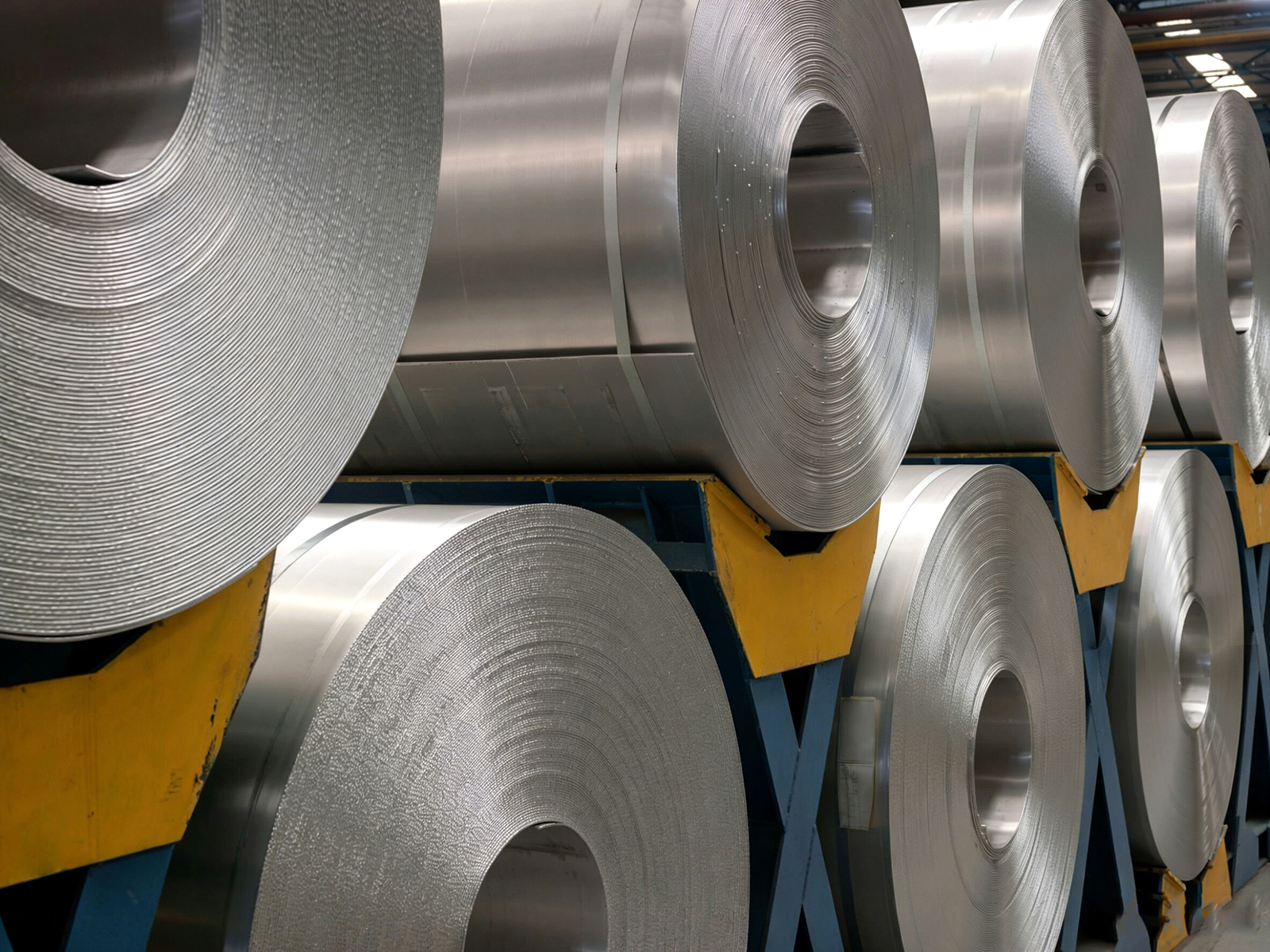
Selecting a thickness for Gr2 industrial commercially pure titanium foil requires distinguishing between “material standard guaranteed values” and “supplier custom capability.” Gr2 (UNS R50400) is commercially pure titanium whose chemical composition is predominantly titanium, along with oxygen, iron, carbon, nitrogen, and hydrogen within specified limits. The tensile strength, 0.2% proof strength, and elongation after fracture of annealed products must meet the requirements of the applicable material specification; for example, some sizes can achieve a tensile strength of ≥345 MPa, a 0.2% proof strength of ≥275 MPa, and an elongation after fracture of ≥20%. Common Gr2 titanium foil thicknesses on the market are concentrated in the 0.02–1.0 mm range; some high-precision production lines can supply custom sizes on the order of 0.005 mm, but this thickness is a supplier custom capability rather than a general standard across all suppliers. Thinner foils favor light weighting and precision forming, whereas greater thickness generally improves stiffness and load-carrying capacity. Selection should comprehensively consider load, forming, corrosive media, downstream welding or coating processes, and achievable tolerances.
1. Thickness Range and Basic Properties of Gr2 Titanium Foil
(1) Standard Thickness Range and Custom Capability
The common supply thickness of Gr2 titanium foil and strip can range from about 0.02 mm up to 1.0 mm; specific sizes and tolerances depend on the product specification and the supplier’s production capability. Some high-precision production lines can supply ultra-thin custom sizes on the order of 0.005 mm, primarily for precision fields such as microelectronics, optical films, and sensors. Such products generally require the supplier to have precision rolling, in-line thickness gauging, and stable annealing control capabilities, and the thickness tolerance, flatness, and surface quality should be separately agreed in the order. The custom lower limit of one supplier should not be equated with a general standard for the Gr2 grade.
(2) Density and Lightweighting Advantages
Gr2 titanium foil has a density of about 4.51 g/cm³, approximately 60% of ordinary steel [3]. In weight-sensitive applications such as aerospace and automotive lightweighting, the mass per unit area of titanium is typically lower than that of steel and copper at the same thickness, enabling a certain weight reduction while satisfying strength, stiffness, and corrosion resistance requirements.
(3) Relationship Between Mechanical Properties and Thickness
The mechanical properties of annealed Gr2 titanium foil should be based on the applicable material specification and the actual delivery condition; for example, some sizes have minimum requirements of 345 MPa tensile strength, 275 MPa proof strength, and 20% elongation [1]. An overly narrow yield strength range should not be used as a general design value, because variations in thickness, heat treatment condition, sampling orientation, and production process can cause differences in measured properties. The thinner the foil, the higher the requirements for rolling precision, flatness, and annealing uniformity; as thickness increases, more attention is typically needed to forming loads, bending radius, flatness, and residual stress.
Thickness Range | Typical Application Fields | Key Performance Focus |
0.005–0.05 mm (custom sizes) | Microelectronics, optical films, sensors | Ultra-thin precision, surface cleanliness, tolerance agreement |
0.05–0.2 mm | EMI shielding, precision instruments, medical implant devices | Dimensional consistency, ductility, biocompatibility |
0.2–0.5 mm | Chemical linings, heat exchanger fins, electrode/electrolytic electrode substrates | Corrosion resistance, weldability, stiffness |
0.5–1.0 mm | Aerospace structural components, composite laminates | Strength, flatness stability, fatigue performance |
2. Thickness Selection Logic for Different Application Scenarios
(1) Aerospace and Lightweight Structural Components
Gr2 titanium foil of 0.3–1.0 mm can be used for certain thin-wall structural or composite structures. Thickness selection is primarily based on stiffness, loads, fatigue requirements, and forming capability. Although thinner gauges favor weight reduction, stiffness, buckling, and fatigue checks are required in high-vibration or high-stress environments; suitability cannot be judged from thickness alone.
(2) Electronic Components and EMI Shielding
Gr2 titanium foil of 0.05–0.2 mm is non-magnetic, corrosion resistant, and highly ductile, and can be used in shielding structures with special requirements for corrosion resistance, non-magnetic behavior, or weight. Note that the electrical conductivity of titanium is lower than that of copper and aluminum; EMI shielding effectiveness therefore cannot be judged by thickness alone and is also related to structural design, grounding, and surface treatment. Excessive thickness increases assembly difficulty, while too little thickness may reduce mechanical stiffness and forming stability.
(3) Chemical Corrosion Protection and Electrolytic Electrodes
Gr2 titanium foil can operate stably for long periods in seawater, chloride-containing neutral/oxidizing environments, and oxidizing acids by virtue of its passive film. However, in reducing acids such as dilute hydrochloric acid and dilute sulfuric acid, commercially pure titanium is generally not corrosion resistant, and a blanket assumption that “titanium is corrosion resistant” is not valid [5]. Chemical lining thickness is typically selected at 0.3–0.8 mm, primarily considering weld sealing, adhesion, stiffness, and pressure resistance. Electrolytic electrode substrate thickness can be evaluated at 0.2–0.5 mm depending on structure and process requirements; the thickness is governed mainly by substrate stiffness, joint reliability, and downstream coating processes, rather than simply “improving electrical conductivity.” The electrical conductivity of titanium is lower than that of highly conductive materials such as copper, and the actual electrochemical performance of electrodes is closely related to the surface catalytic coating and electrode structure.
(4) Medical Implant Devices
For medical and biomaterials applications, Gr2 thin sheet or foil can be evaluated per specific product requirements. Thinner gauges favor forming, weight reduction, and complex-structure fabrication, and can be used in applications such as certain titanium meshes and thin-wall barrier structures. The specific thickness should be determined on the basis of product structure, loading conditions, forming requirements, and applicable medical device specifications, and should not be selected simplistically from a uniform 0.05–0.2 mm range.
Application Scenario | Recommended Thickness | Key Considerations |
Aerospace thin-wall structural components | 0.5–1.0 mm | Strength, fatigue life, stiffness |
EMI electromagnetic shielding | 0.05–0.2 mm | Uniform coverage, non-magnetic, formability |
Chemical equipment linings | 0.3–0.8 mm | Corrosive-environment matching, weld sealing |
Electrode/electrolytic electrode substrates | 0.2–0.5 mm | Stiffness, joint reliability, coating adhesion |
Medical implant devices | 0.05–0.2 mm | Biocompatibility, flexibility |
Precision sensors | 0.02–0.05 mm | Ultra-thin precision, response sensitivity |
3. Key Process Factors Affecting Thickness Selection
(1) Rolling Precision and Thickness Tolerance Control
The thickness tolerance of high-precision Gr2 titanium foil cannot be judged by rolling mill speed and roll force alone. The actual tolerance is jointly influenced by incoming thickness variation, roll stack condition, pass schedule, tension settings, thickness gauging feedback (AGC/AFC), and flatness control [2]. More importantly, thickness tolerance should be evaluated in segments by nominal thickness: achieving ±0.001 mm on 0.02 mm foil corresponds to ±5%, whereas the same absolute tolerance on 0.005 mm foil corresponds to about ±20% and cannot be called high precision. Therefore, tolerance bands should be individually agreed for the thinnest gauges rather than applying a single absolute value. Mill configuration and in-line thickness gauging capability are only prerequisites and do not mean that all products can achieve the same tolerance class.
(2) Effect of Annealing Process on Processing Performance
Gr2 industrial commercially pure titanium is typically annealed at about 650–760℃ to eliminate cold-rolling hardening, restore ductility, and control grain size [3][4]. The nominal maximum temperature of 1100℃ for continuous annealing equipment is only the equipment capability and does not equal the Gr2 annealing temperature; directly writing 1100℃ into a Gr2 annealing process would be misleading. For products requiring subsequent stamping or bending, the annealed (M) condition should be preferred as the delivery condition; for products requiring only flattening or low forming requirements, the cold-worked (Y) condition is acceptable.
(3) Effect of Flatness and Levelness on Downstream Processes
Ultra-thin, wide titanium foil is prone to warpage and waviness due to residual stress. The flattening/leveling process improves flatness through tension, roll profile, and elongation control, providing a stable substrate for coating, lamination, and precision welding. If downstream processes are sensitive to flatness, the flatness value should be agreed in the purchase agreement rather than specifying only the thickness tolerance.
4. Thickness Selection Differences Between Gr2 and Gr1 Titanium Foil
(1) Effect of Strength Differences on Minimum Usable Thickness
Gr2 has a higher guaranteed tensile strength than Gr1, so under purely tensile or simple loading conditions, Gr2 may allow thinner gauges than Gr1. However, “thinner” does not equal “better”; stiffness, buckling, fatigue, corrosion, and formability must all be checked simultaneously.
(2) Trade-off Between Forming Performance and Thickness Lower Limit
Gr1 typically has higher elongation and is more conducive to very thin deep drawing or superplastic forming. Gr2 also satisfies ≥20% elongation, but for deep drawing below 0.05 mm, increasing the frequency of recrystallization annealing and optimizing die radius and lubrication are recommended, with Gr1 considered when necessary.
(3) Thickness Selection in Corrosive Environments
Gr1 and Gr2 have essentially equivalent corrosion resistance in most corrosive environments, and “Gr2 has stronger stress corrosion resistance” should not be used as a material-selection basis. Risks in hot, humid, chloride-containing environments are typically not simple stress corrosion cracking but may involve pitting, crevice corrosion, or hydrogen embrittlement, and are significantly affected by temperature, pH, chloride content, and oxygen content. During design, corrosion testing or review of corrosion data should be performed for the specific medium [5]; thickness is primarily determined by structure and stiffness, and reserving a “corrosion allowance” in the manner used for carbon steel is not recommended.
5. Technical Points to Confirm When Ordering Custom Thickness
(1) Provide Complete Application Service Conditions
Provide the supplier with temperature, medium, load type, downstream processing methods, and delivery condition requirements. The more complete the information, the easier it is to determine the minimum usable thickness and tolerance design.
(2) Specify Surface Quality and Tolerance Class
Gr2 titanium foil can be supplied with different surface conditions according to processing and usage requirements. For products requiring subsequent coating, bonding, or precision welding, the surface roughness, cleanliness, defect level, and corresponding inspection methods should be specified in the purchase agreement. For high-cleanliness applications, the presence of oil, particles, or other contaminants that may affect downstream processes should also be confirmed.
(3) Confirm Standard Compliance and Test Reports
When purchasing Gr2 titanium foil, confirm that the material complies with standards such as GB/T 3621, GB/T 3622, or ASTM B265 Grade 2 (UNS R50400) [1][2], and request a material certificate, mechanical property report, and any necessary third-party inspection documents. For custom sizes at the 0.005 mm level, special attention should be paid to reviewing whether the tolerance, flatness, and surface defect acceptance criteria are clearly defined.
6. Conclusion
Selecting a thickness for Gr2 titanium foil hinges on distinguishing material standard guaranteed values, supplier custom capabilities, and specific service-condition requirements. From the 0.005 mm custom ultra-thin gauge to the 1.0 mm structural grade, different thicknesses correspond to different process boundaries and failure modes. Only when application requirements, achievable tolerances, and standard compliance are confirmed together can the selection decision be translated into stable, repeatable supply quality.
FAQ
(1) Q1: How thin can Gr2 titanium foil be made, and which scenarios is it suitable for?
The minimum customizable thickness is 0.005 mm, which is a high-precision custom capability rather than the general standard lower limit of Gr2. Whether this thickness can be obtained consistently depends on the tolerance, flatness, and surface quality agreement. It is primarily suitable for precision fields such as microelectronics, optical films, and sensors.
(2) Q2: How thick should Gr2 titanium foil be selected for chemical corrosion environments?
The medium type must first be confirmed. For seawater, neutral, or oxidizing chloride environments, 0.3–0.8 mm is commonly used for linings; for reducing acids such as dilute hydrochloric acid and dilute sulfuric acid, Gr2 is generally not corrosion resistant and should not be used. Thickness is primarily designed on stiffness, welding, and pressure, and should not be selected simply by the carbon-steel “corrosion allowance” approach [5].
(3) Q3: How do you distinguish between annealed and cold-worked Gr2 titanium foil in selection?
The annealed (M) condition has better ductility and suits subsequent stamping, bending, and deep forming; the cold-worked (Y) condition suits applications with low forming requirements that need a certain hardness and strength. The delivery condition should be specified in the technical agreement at purchase.
Contact Us
For bulk supply or custom services of Gr2 titanium foil, contact the professional Gr2 titanium foil manufacturer: sales@titaniumvalleys.com
References
- National Technical Committee on Nonferrous Metals Standardization. GB/T 3621—2022 Titanium and titanium alloy plates and sheets [S]. Beijing: China Standards Press, 2022.
- National Technical Committee on Nonferrous Metals Standardization. GB/T 3622—2012 Titanium and titanium alloy strips and foils [S]. Beijing: China Standards Press, 2012.
- Zhang Xiyan, Zhao Yongqing, Bai Chenguang. Titanium Alloys and Their Applications [M]. Beijing: Chemical Industry Press, 2005.
- Wang Jinyou, Ge Zhiming, Zhou Yanbang. Titanium Alloys for Aviation [M]. Shanghai: Shanghai Scientific & Technical Publishers, 1985.
- Zuo Jingyi, Zuo Yu. Corrosion Data and Material Selection Handbook [M]. Beijing: Chemical Industry Press, 1995.
- National Technical Committee on Plastics Standardization. GB/T 14216—2008 Plastics—Film and sheeting—Determination of wetting tension [S]. Beijing: China Standards Press, 2008.