
Why Choose Gr2 Titanium Foil in Seawater Desalination Systems?
- Gr2 titanium foil
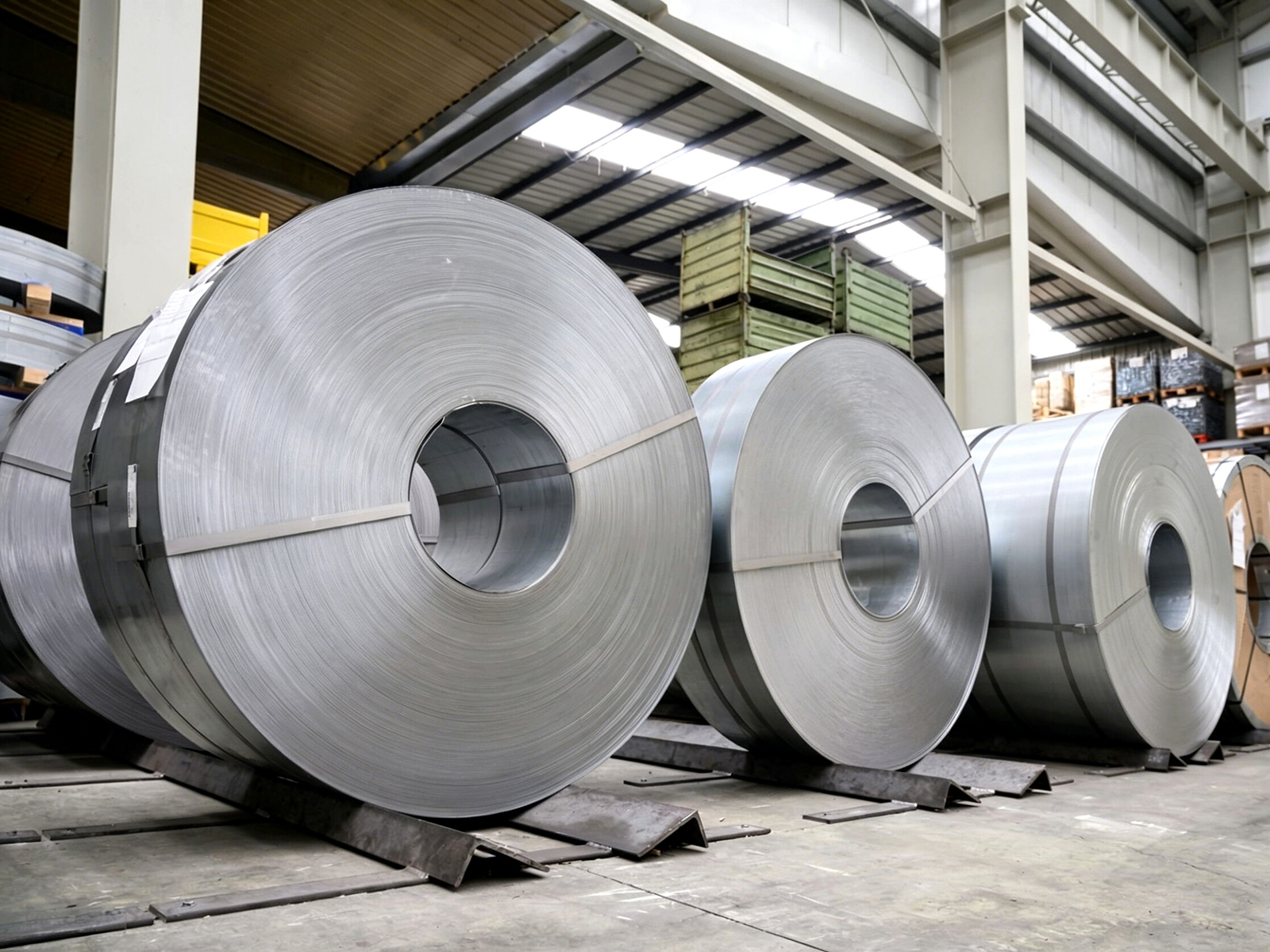
Against the backdrop of increasingly scarce global freshwater resources, seawater desalination has become a key technology for ensuring water security in coastal countries and regions. However, the high concentrations of chloride ions, sulfate, and complex dissolved salts in seawater impose extremely stringent requirements on equipment materials. Gr2 titanium foil, with its excellent seawater corrosion resistance, superior mechanical strength, and stable long-term service performance, has become an ideal material for heat exchangers, evaporator linings, and electrode components in seawater desalination systems. Its industrial-grade titanium matrix with a purity of ≥ 99.2% can spontaneously form a dense TiO2 passive film in a seawater environment, maintaining long-lasting protection even under conditions of high salinity and large temperature differences, significantly extending equipment service life and reducing maintenance costs.
1. What Should You Know About Extreme Challenges for Materials in Seawater Desalination Systems?
(1) Why Is Corrosion Risk Caused by High Chloride Ion Environment Important?
The concentration of chloride ions in seawater reaches 19, 000 ppm. This highly reactive anion can destroy the passive film on the surface of most metals. Traditional stainless steel is prone to pitting and crevice corrosion in seawater, especially in the weld heat-affected zone, where the corrosion rate can reach 0.5-2 mm/year. The TiO2 passive film on the surface of Gr2 titanium foil has self-healing properties, allowing it to rapidly regenerate in an oxygen-containing environment even if locally damaged, with a corrosion rate controlled below 0.001 mm/year.
(2) What Should You Know About Synergistic Effect of Temperature Fluctuations and Stress Corrosion?
In multi-effect distillation (MED) and multi-stage flash (MSF) systems, the temperature fluctuates frequently between 70-120℃, while also enduring pressure variations of 3-8 bar. This thermo-mechanical coupled stress can accelerate stress corrosion cracking of materials. Gr2 titanium foil has a ductility of ≥ 20%, which allows it to absorb strains generated by thermal expansion, and combined with its excellent inherent resistance to stress corrosion, it can maintain structural integrity under cyclic loads.
(3) What Should You Know About Dirt Deposition and Cleaning Medium Compatibility?
Calcium sulfate, calcium carbonate, and biofilms in seawater can deposit on heat exchange surfaces, requiring regular cleaning with diluted sulfuric acid or hydrochloric acid. Ordinary metal materials can suffer severe corrosion during acid cleaning, whereas Gr2 titanium foil remains stable over a wide pH range of 2-12, and its surface is undamaged after cleaning, maintaining high heat transfer efficiency.
2. Why Is the Application Advantages of Gr2 Titanium Foil in Key Components Important?
(1) What Should You Know About Material Breakthrough of Thin-walled Tube Bundle in Heat Exchangers?
Plate heat exchangers and shell-and-tube heat exchangers in seawater desalination systems require materials that have both high thermal conductivity and extremely thin wall thickness to reduce weight. The thickness of Gr2 titanium foil can range from 0.02 to 1.0 mm, with ± 0.001 mm thickness tolerance controlled through 20 passes of high-precision cold rolling technology. Compared with conventional 3 mm thick titanium plates, ultra-thin foil can reduce the weight of the heat exchanger by 60% while increasing the heat transfer coefficient by 25%.
Table 1: Performance Comparison of Different Materials in Seawater Desalination Heat Exchangers
Material Type | Corrosion resistance (mm/year) | Density (g/cm³) | Thermal conductivity (W/m·K) | Service life (years) | Relative cost |
|---|---|---|---|---|---|
316L stainless steel | 0.1-0.5 | 8.0 | 16.3 | 5-8 | 1.0 |
Nickel-based alloy | 0.01-0.05 | 8.9 | 10.5 | 15-20 | 3.5 |
Gr2 Titanium Foil | <0.001 | 4.51 | 17.0 | 25-30 | 2.2 |
(2) What Should You Know About Integrated Molding Technology for Evaporator Liners?
Traditional evaporators use multiple plates welded together for the lining, with the joints becoming corrosion-prone weak points. Gr2 titanium foils with widths of 350-670 mm can achieve large-area seamless coverage and can be bonded to the substrate through explosive bonding or adhesive processes. Titanium foils with a thickness of 0.5 mm can cover the inner wall of an evaporator with a diameter of 3 meters, reducing weld points by 80%, eliminating the risk of crevice corrosion, and extending the maintenance cycle of the equipment from 18 months to 60 months.
(3) What Should You Know About Performance Assurance of Electrolytic Electrode Substrates?
The electro-dechlorination system in reverse osmosis pretreatment requires stable anode materials. Gr2 titanium foil has excellent electrical conductivity (resistivity 0.56 μΩ·cm) and electrochemical stability. After being coated with ruthenium-iridium oxide on the surface, it can withstand a current density of 10, 000 A/m². Compared with the problems of graphite electrodes being brittle and stainless steel being easily passivated, titanium foil-based electrodes have a service life of over 8 years, with a stable current efficiency of over 95%.
3. How Industrial Production Technology Ensures Performance Consistency?
(1) What Should You Know About 20-roll Finishing Rolling Process Breaks Through Ultra-thin Limits?
The core challenge in producing 0.02 mm ultra-thin titanium foil lies in controlling the elastic springback and plate warping during the rolling process. A 750 mm wide 20-roll precision mill achieves uniform distribution of a rolling force of 3500 KN through the coordinated action of 10 sets of support rolls and work rolls above and below. Multiple-pass cold rolling gradually reduces the thickness, with each pass having a reduction ratio controlled at 15-25%, and a total of 12-18 rolling passes to ensure a thickness deviation of ≤ 1%.
(2) What Should You Know About Argon-protected Annealing to Relieve Internal Stress?
The cold-rolled titanium foil contains a high density of dislocations and residual stress, which need to be restored for ductility through annealing. The continuous annealing line uses seven-zone electric heating control, with a temperature gradient rising from 600℃ to 850℃ and then decreasing to 400℃, with a temperature control accuracy of ± 2℃. An argon protective atmosphere (oxygen content <20 ppm) prevents surface oxidation. After annealing, the grain size is uniformly 20-50 um, the tensile strength stabilizes in the range of 345-480 MPa, and the elongation recovers to ≥ 20%.
(3) What Should You Know About Surface Cleanliness Determines Welding Quality?
In the assembly of seawater desalination equipment, TIG welding of titanium foil with pipes and flanges requires the base material surface to be free of grease and oxide scale. The ultrasonic cleaning line, combined with a self-developed alkaline cleaning formula, completes degreasing and passivation at a line speed of 30 m/min, achieving a surface dyne value of ≥ 40 dyne/cm. The strength of welded joints on cleaned titanium foil can reach over 92% of the base material, with an X-ray inspection pass rate of >99.5%.
Table 2: Key Process Parameters for Gr2 Titanium Foil Production
Process step | Core equipment | Key parameters | Control accuracy | Performance impact |
|---|---|---|---|---|
Precision Cold Rolling | 20-roll mill | Rolling force 3500 KN, speed 400 m/min | Thickness ± 0.001 mm | Dimensional accuracy, plate shape |
Annealing | Continuous annealing furnace | Temperature 850℃, Zone 7 control | ± 2℃ | Strength, ductility |
Surface cleaning | Ultrasonic cleaning | Alkaline cleaning ultrasonic, line speed 30 m/min | Dain value ≥ 40 | Weldability, cleanliness |
Precision slitting | High-precision slitting line | Width 15-680 mm | ± 0.1 mm | Material Utilization Rate |
4. Why Is the Dual Value of Economy and Sustainability Important?
(1) Why Is Life-cycle Cost Advantage Analysis Important?
Although the initial purchase cost of Gr2 titanium foil is 2.2 times that of 316L stainless steel, its service life of 25-30 years far exceeds the 5-8 years of stainless steel. Taking a seawater desalination plant with a daily capacity of 100, 000 tons as an example, using a titanium foil heat exchanger can reduce equipment replacements by 4 times, save about $15 million in downtime losses, and reduce maintenance costs by 70%. Over a 15-year operating period, the water treatment cost per ton can be reduced by $0.08/m³.
(2) What Should You Know About System Benefits Brought by Lightweight Design?
The density of titanium (4.51 g/cm³) is only 60% that of steel. In offshore floating desalination platforms, using titanium foil heat exchangers can reduce structural load by 35%, lower construction costs of the floating body, and improve resistance to wind and wave stability. In land-based fixed power plants, lightweight equipment reduces foundation engineering investment by about 12%, which is particularly significant in earthquake-prone areas.
(3) What Should You Know About the Recyclability of the Materials Meets Green Standards?
Titanium foil has 100% recyclability. Titanium materials from dismantled old equipment can be remelted to restore their original properties, with a recovery rate of over 95%. Compared with single-use composite liners, titanium foil complies with EU REACH regulations and US EPA environmental requirements, helping desalination projects achieve green building certification and carbon-neutral ratings.
5. How Should Selection Recommendations and Key Points for Quality Control?
(1) What Should You Know About Match Thickness Specifications According to Operating Conditions?
For multi-effect evaporators, it is recommended to line the shell side with 0.5-0.8 mm thick titanium foil to balance pressure resistance and weight; for plate heat exchangers, corrugated plates with a thickness of 0.3-0.5 mm are suitable to improve heat transfer efficiency; for electrolytic electrodes, choose 0.1-0.2 mm ultra-thin foil as the substrate to reduce electrical loss. In terms of width, large equipment preferably uses materials with a width of 500-670 mm to reduce longitudinal welds.
(2) What Should You Know About Surface Condition Affects Subsequent Processing?
Cold-rolled bright surfaces are suitable for evaporator inner walls that require high reflectivity; polished surfaces (Ra 0.4-0.8 um) provide better coating adhesion and are used for electrode substrates; mirror polishing (Ra <0.2 um) is suitable for ultra-clean laboratory-grade equipment. When selecting materials, it is necessary to clarify surface roughness requirements to avoid additional costs from secondary processing.
(3) What Should You Know About Quality Certification and Traceability System?
Seawater desalination projects typically require materials to meet the ASTM B265 standard, accompanied by reports on chemical composition analysis, mechanical performance testing, and intergranular corrosion tests. Batch traceability codes should include the furnace number, rolling batch, and annealing records to ensure traceable quality throughout a 25-year service life. It is recommended to choose suppliers certified by ISO 9001 with an annual production capacity of ≥ 3, 000 tons to ensure stability in the delivery of large orders.
Table 3: Recommended Selection of Gr2 Titanium Foil for Different Application Scenarios
Application Component | Recommended thickness (mm) | Recommended width (mm) | Surface condition | Key performance requirements |
|---|---|---|---|---|
Multi-effect evaporator lining | 0.5-0.8 | 500-670 | Cold-rolled bright surface | Pressure-resistant, corrosion-resistant |
Plate heat exchanger | 0.3-0.5 | 350-500 | Cold-rolled bright surface | High heat transfer coefficient |
Electrolytic electrode substrate | 0.1-0.2 | 100-300 | polished surface | Conductivity, coating adhesion |
Pipe lining | 0.2-0.4 | Customized according to pipe diameter | Cold-rolled bright surface | Weldability, flexibility |
6. What Is the Conclusion?
The application value of Gr2 titanium foil in seawater desalination systems stems from the perfect combination of its intrinsic material properties and advanced manufacturing processes. Ultra-thin and wide specifications solve the problem of large-area corrosion resistance, stable mechanical properties ensure long-term safe operation, and economic advantages throughout the entire lifecycle make it the preferred material for high-end seawater desalination projects. As global freshwater demand continues to grow, technological innovation in titanium foil materials will continue to drive the seawater desalination industry toward higher efficiency and greener development.
FAQ
Q1: What are the differences between Gr2 titanium foil and Gr1 titanium foil in seawater desalination applications?
The tensile strength of Gr2 titanium foil (≥ 345 MPa) is about 20% higher than that of Gr1, making it more suitable for withstanding the pressure fluctuations of multi-effect evaporators while maintaining good stamping performance. Both have comparable corrosion resistance, but Gr2 offers a higher overall cost-performance ratio, making it the mainstream choice for industrial seawater desalination systems.
Q2: How can ultra-thin titanium foil avoid burn-through during welding?
Using the pulsed TIG welding process, the current is controlled at 30-60A, with argon back protection (flow rate 12-15 L/min). For ultra-thin foils below 0.2 mm, laser welding is recommended, with a heat input only 1/10 of that of conventional welding, achieving deformation-free precision connections. Pre-weld cleaning to ensure a surface Ra value ≥ 40 is key to success.
Q3: How to verify the seawater corrosion resistance of titanium foil material?
Standard tests include the ASTM G48 pitting test (no pitting for 72 hours in 6% FeCl₃ solution) and the ASTM G78 crevice corrosion test (weight loss <0.1 mg/cm² after 30 days in artificial seawater). Long-term validation can refer to the dissection inspection data of equipment from actual seawater desalination plants. After 15 years of service, the surface passive film of Gr2 titanium foil remains intact, with no significant thinning of the substrate.
7. What Should You Know About Get Professional Gr2 Titanium Foil Customization Service Immediately?
As a professional Gr2 titanium foil manufacturer and supplier, Titanium Valley has an advanced production line with an annual output of 3, 000 tons, capable of providing full-specification ultra-thin wide titanium foil materials from 0.02 to 1.0 mm. Our products have been used in multiple international seawater desalination projects and strictly comply with ASTM B265 standards. Please contact us for technical specifications and customized quotes: sales@titaniumvalleys.com
References
1. Zhang Weiguo, Li Minghua. ‘Research on the Application of Titanium and Titanium Alloys in Seawater Desalination Engineering.’ The Chinese Journal of Nonferrous Metals, 2021, 31(5): 1128-1145.
2. Smith, J.R., et al., ‘Corrosion Resistance of Titanium Alloys in Seawater Desalination Environments,’ Materials Performance and Characterization, 2020, 9(4): 687-702.
3. Wang Jianjun, Liu Zhiqiang. ‘Key Technologies of Precision Rolling for Ultra-Thin Titanium Foil and Its Industrial Application.’ Rare Metal Materials and Engineering, 2022, 51(8): 2945-2956.
4. International Desalination Association. ‘Guidelines for Material Selection in Seawater Desalination Plants – Titanium and Its Alloys.’ IDA Technical Report Series, 2019, Vol. 12: pp. 45-78.