
Why Is Application of Gr4 Titanium Rods in Medical Device Manufacturing Important?
- Gr4 Titanium Rods
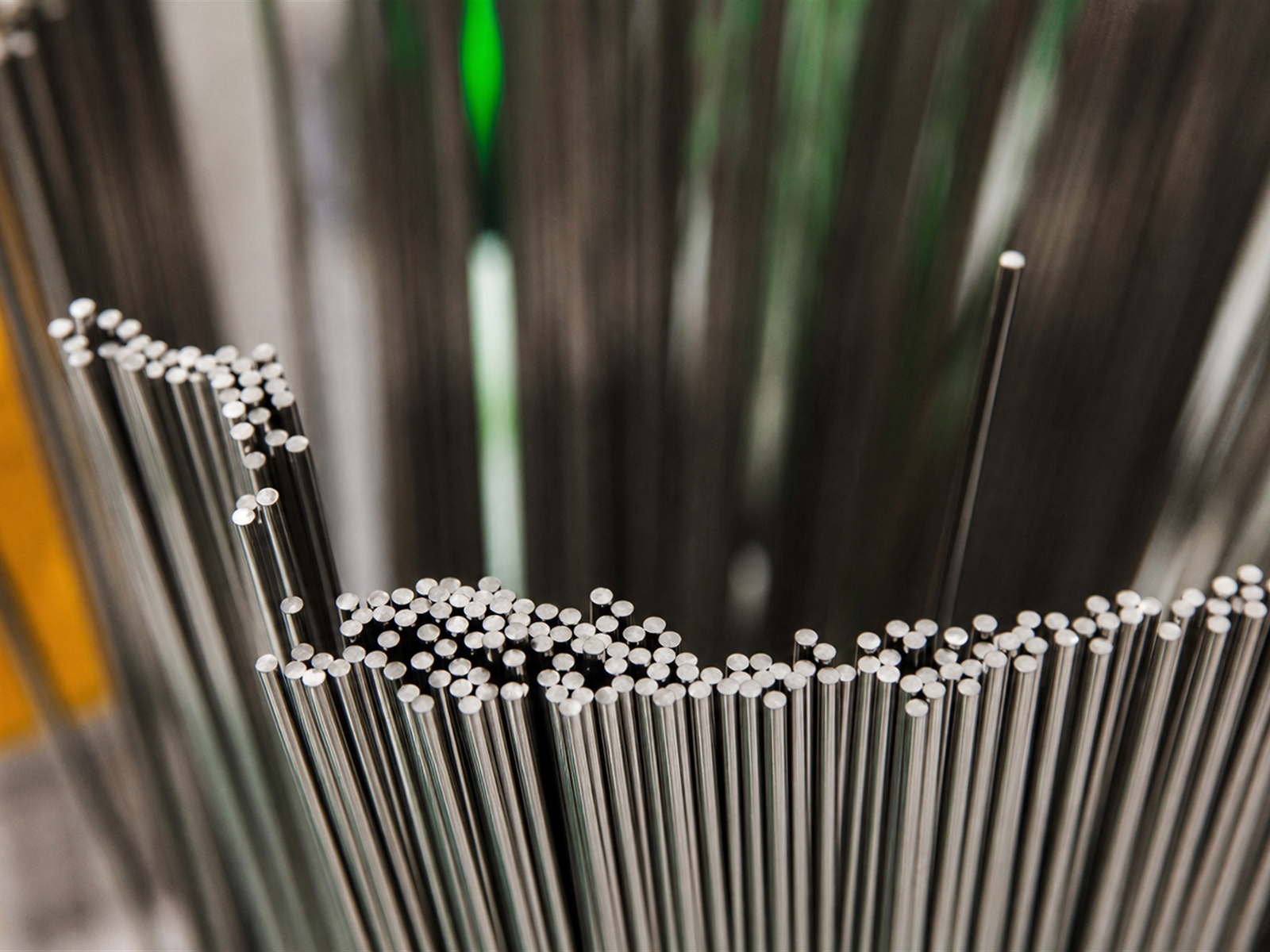
Gr4 titanium rods, with a high tensile strength of 485-550 MPa, excellent biocompatibility, and non-magnetic properties, have become a core material in modern medical device manufacturing. They play an irreplaceable role in orthopedic implants, surgical instruments, dental restorations, and medical equipment supports. Compared with traditional stainless steel materials, Gr4 titanium rods do not release metal ions, do not interfere with MRI imaging, and their low density of 4.51 g/cm³ reduces the burden of implants on the human body. Through vacuum annealing, precision machining, and ultrasonic cleaning processes, medical-grade Gr4 titanium rods can achieve strict control over surface cleanliness and dimensional accuracy, meeting the rigorous requirements for long-term in vivo use.
1. What Should You Know About Analysis of the Medical-Grade Material Properties of Gr4 Titanium Bar?
(1) What Should You Know About Microscopic Mechanisms of Biocompatibility?
The surface of Gr4 titanium rods can spontaneously form a dense TiO2 oxide film. This passivation layer, only a few nanometers thick, can effectively block the migration of metal ions into body fluids. Clinical studies show that after implantation in the human body, the cell adhesion rate of this material exceeds 92%, and the bone integration time is 30-40% shorter than that of stainless steel. The chemical inertness of the oxide film prevents immune rejection reactions, and the thickness of the fibrous capsule around long-term implants is only one-third that of traditional materials.
(2) What Should You Know About Mechanical Properties and Fatigue Strength Matching?
Medical devices subjected to cyclic loads require materials with extremely high fatigue limits. The fatigue strength of Gr4 titanium rods can reach 60-70% of their tensile strength, and after 10⁷ loading cycles, the strength retention rate still exceeds 85%. Its elastic modulus (110 GPa) is close to that of human bone (10-30 GPa), effectively preventing bone loss caused by stress shielding. This characteristic is particularly critical in long-term load-bearing components such as femoral stems and spinal fixation rods.
(3) What Should You Know About Non-magnetic and Imaging Compatibility?
A magnetic susceptibility lower than 1.2×10⁻⁶ ensures that Gr4 titanium rods will not produce artifact interference in a 3.0T high-field MRI environment. In contrast, nickel-containing stainless steel can cause image distortion, and titanium implants allow for accurate postoperative imaging follow-up. This feature is crucial for devices such as spinal fusion implants and cranial repair materials that require repeated MRI examinations, avoiding the need for secondary surgical removal.
Performance indicators | Gr4 Titanium Rod | 316L stainless steel | Medical advantages |
Density (g/cm³) | 4.51 | 8.00 | Reduce implant load by 43% |
Tensile Strength (MPa) | 485-550 | 480-620 | Balance of strength and toughness |
Magnetic susceptibility (×10⁻⁶) | <1.2 | 300-500 | No MRI artifacts |
Osseointegration Time (weeks) | 8-12 | 14-18 | Accelerate postoperative recovery |
2. Why Is Manufacturing Applications of Orthopedic Implant Instruments Important?
(1) What Should You Know About Processing Technology of Intramedullary Nails and Bone Plates?
After the Gr4 titanium rods are cold-drawn, the surface roughness can be controlled within Ra 0.4 um, and with CNC milling and laser marking processes, anatomical bone plates are manufactured. The intramedullary nail billets produced by hot forging are subjected to multiple rotary forging processes, achieving a grain size of ASTM 8 or above, ensuring uniform tissue in the cross-section. Surface sandblasting treatment can create microporous structures of 20-50 um, increasing the contact area between the implant and bone tissue by 40%, significantly improving early stability.
(2) What Should You Know About Dimensional Accuracy of Artificial Joint Components?
The femoral stem of the hip joint is made from Gr4 titanium rods processed by precision grinding, with taper tolerance controlled within ± 0.02 mm and assembly accuracy reaching IT6 grade. The titanium rod substrate of the tibial tray in the knee joint is inspected using ultrasonic flaw detection, with internal defects controlled below 0.5 mm to avoid fatigue fractures caused by stress concentration. The surface of the forged joint stem is coated with a plasma-sprayed hydroxyapatite layer, with a coating bonding strength exceeding 30 MPa, effectively promoting bone ingrowth.
(3) What Should You Know About Modular Design of the Spinal Fixation System?
The pedicle screws are machined from Gr4 titanium rods with a diameter of 5.5-7.5 mm, and after threading, the torque strength reaches over 12 N·m. The connecting rods achieve physiological curvature matching through cold bending or hot bending processes, with a minimum bending radius of 30 mm without surface cracks. The porous structure of the modular intervertebral fusion device is machined from titanium rods, with a porosity controlled at 40-60%, ensuring both mechanical strength and bone conduction.
3. What Should You Know About Precision Manufacturing of Surgical Instruments and Dental Equipment?
(1) What Should You Know About Surface Treatment of Scalpel Handles and Needle Holders?
The scalpel handle made of Gr4 titanium rod can have its surface hardness increased to above HV 300 after anodizing treatment, and its wear resistance is improved fivefold compared to the polished state. The jaws of the needle holder are formed using cold heading, and combined with electrochemical polishing, the surface roughness is reduced to Ra 0.1 um, preventing damage to sutures. The anti-slip pattern on the instrument handle is formed through laser engraving with a depth of 0.3-0.5 mm, providing a reliable grip even in a blood environment.
(2) What Should You Know About Manufacturing of Thin Shafts for Minimally Invasive Instruments?
Endoscopic surgical instruments require ultra-fine titanium rods with a diameter of 3-8 mm. Using multi-pass cold drawing processes can achieve a diameter tolerance of ± 0.05 mm. The uniformity of the rod wall thickness is controlled through eddy current inspection, with wall thickness deviations not exceeding 0.1 mm. The shank of laparoscopic scissors needs to reach a bending strength of 50 N·cm. Through solution strengthening and low-temperature aging treatment, the yield strength of the material is increased to over 420 MPa, ensuring stable performance after repeated disinfection and sterilization.
(3) What Should You Know About Thread Accuracy of Dental Implants?
The implant thread is processed with precision turning, with a pitch error controlled within ± 0.02 mm and a thread apex angle tolerance of ± 1°. After surface treatment with sandblasting and acid etching (SLA), a micro- and nano-scale composite roughness is formed, increasing osteoblast adhesion by 60%. The low impurity content of the Gr4 titanium rod (Oxygen ≤ 0.40%, Iron ≤ 0.50%) ensures long-term stability of the implant, with a 10-year survival rate of over 95%.
Type of equipment | Titanium Rod Specifications | Key process | Performance requirements |
Orthopedic bone plate | Φ6-20 mm | Cold drawing milling | Surface roughness Ra ≤ 0.4 um |
Dental implant | Φ3-5 mm | Precision Turning SLA | Thread accuracy ± 0.02 mm |
Surgical instruments | Φ4-12 mm | Forging Electrolytic Polishing | Hardness HV≥ 300 |
spinal screw | Φ5.5-7.5 mm | Turning and Thread Rolling | Torque strength ≥ 12 N·m |
4. Why Is Structural Support Applications of Medical Electronic Devices Important?
(1) What Should You Know About Corrosion Protection of Pacemaker Casing?
Gr4 titanium rods are used to manufacture pacemaker housings through deep drawing, achieving a wall thickness uniformity of ± 0.05 mm and effectively shielding against electromagnetic interference. The pitting potential in body fluid environments is higher than 600 mV (relative to SCE), and the corrosion depth does not exceed 5 um over a 10-year implantation period. The hermetic welding of the titanium shell uses laser beam welding, with weld tensile strength reaching over 90% of the base material, ensuring the long-term stable operation of the internal circuitry.
(2) What Should You Know About Thermal Stability of the X-ray Tube Support?
The high-voltage generator bracket of the medical imaging equipment is made from Gr4 titanium rods. When operating continuously at 150℃, the dimensional change rate is less than 0.02%. The low thermal expansion coefficient of titanium (8.6×10⁻⁶/K) prevents looseness due to temperature cycling. The bracket’s hollow structure is formed through wire cutting, reducing weight by 30% while maintaining stiffness, thereby lowering the overall mass and energy consumption of the equipment.
(3) What Should You Know About Acoustic Matching of the Ultrasound Probe Housing?
The probe housing of ultrasonic diagnostic equipment requires materials with good sound wave transmissibility. The acoustic impedance of Gr4 titanium rods (27.3 MRayl) lies between that of piezoelectric ceramics and human tissue, and when used as a matching layer, it can reduce sound energy loss by 20%. The wall thickness of the housing is controlled to an accuracy of ± 0.03 mm, and together with the internal acoustic lens, it enables precise regulation of the focal depth, enhancing imaging resolution to the 0.3 mm level.
5. Why Is Quality Control System for Titanium Bars Used in Medical Devices Important?
(1) What Should You Know About Raw Material Purity and Batch Traceability?
Medical-grade Gr4 titanium bars are made from sponge titanium ingots melted three times in a vacuum self-consuming arc furnace, with oxygen content stabilized between 0.35-0.38% to prevent increased brittleness. A chemical composition record is established for each batch of titanium ingots, and carbon, nitrogen, and hydrogen elements are tested using the inert gas fusion method, with data fluctuation controlled within ± 5%. After ultrasonic testing of the ingots, only Grade A materials enter the forging process to ensure no internal inclusions or shrinkage defects.
(2) What Should You Know About Cleanliness Management of the Processing Procedure?
The titanium rod workshop uses a Class 100 laminar flow purification system, with particle concentration in the air ≤ 100 particles/m³ (≥ 0.5 um), to avoid surface contamination during the processing. The cutting fluid is prepared with medical-grade pure water, with conductivity <2 uS/cm, and undergoes regular microbial testing. Finished titanium rods are ultrasonically cleaned and rinsed with purified water, resulting in a surface carbon residue of <10 μg/cm², meeting implant-grade cleanliness standards.
(3) What Should You Know About Finished Product Inspection and Certification System?
Each medical-grade titanium rod must undergo tensile, impact, and fatigue performance tests, with a required pass rate of ≥ 99.5%. Metallographic inspection confirms that the grain size, α-phase morphology, and inclusion levels meet ASTM F67 standards. Surface roughness is measured individually using a coordinate measuring machine, and out-of-tolerance items are automatically sorted. The product comes with a material certificate (MTC) and a non-destructive testing report, and a full-chain traceability system from smelting to delivery is established.
Test items | Standard requirements | Testing method | Frequency |
Chemical composition | Conforms to UNS R50700 | Spectral analysis | per furnace |
Tensile strength | 485-550 MPa | GB/T 228 Test | each batch |
Ultrasonic Testing | No Φ0.5 mm defect | ASTM E213 | 100% |
Surface roughness | Ra ≤ 0.8 um | Contour measurement | Random inspection of 20% |
Biocompatibility | ISO 10993 compliant | Cytotoxicity test | Every quarter |
6. What Is the Conclusion?
Gr4 titanium rods, with their balanced advantages of mechanical properties, biocompatibility, and processing adaptability, have become the preferred material for orthopedic implants, surgical instruments, and medical electronic devices. From raw material purity control to precision processing techniques, and to surface modification treatments, a complete quality management system ensures the safety and reliability of medical devices. With the development of additive manufacturing and surface nanotechnology, Gr4 titanium rods will show broader application prospects in the fields of personalized implants and smart medical devices.
FAQ
Q1: How to choose between Gr4 titanium rods and Gr5 titanium alloy for medical implants?
Gr4 titanium rods have higher purity, better biocompatibility and MRI compatibility, and are suitable for long-term implanted devices; Gr5 (Ti-6Al-4V) has higher strength but contains aluminum and vanadium, mainly used for high-load joint prostheses. For spinal or fracture fixation that requires repeated imaging examinations, Gr4 material is preferred.
Q2: How does the surface treatment of titanium rods for medical devices affect osseointegration?
Sandblasting and acid etching treatment can create micron-level roughness, increase surface area and wettability, and improve osteoblast adhesion rate by more than 50%. When the thickness of the TiO2 layer formed by anodic oxidation treatment reaches tens of nanometers, it can promote hydroxyapatite deposition and shorten the bone integration period by 30-40%.
Q3: How to verify whether Gr4 titanium rods meet medical implant-grade requirements?
It is necessary to check whether the oxygen content in the material certificate is ≤ 0.40% and the iron content is ≤ 0.50%, request the ISO 10993 biocompatibility test report, and confirm that the ultrasonic flaw detection report shows no internal defects. For medical-grade titanium rods, surface cleanliness analysis and microstructure photos of grain size also need to be provided to ensure compliance with ASTM F67 or ISO 5832-2 standards.
7. What Should You Know About Medical-grade Gr4 Titanium Rod Customization Service Required?
Baoji Titanium Valley Titanium Nickel Zirconium Material Processing Co., Ltd., as a professional manufacturer, is equipped with Italian Danieli rolling lines and automated foil production lines, with an annual capacity of over 20, 000 tons, providing support for precise dimensional tolerances and surface treatment. Contact us for technical solutions: sales@titaniumvalleys.com
References
- Wang Jianhua, Li Ming. Research Progress on the Biocompatibility and Surface Modification of Medical Titanium Alloys [J]. Chinese Journal of Biomedical Engineering, 2021, 40(3): 345-356.
- Zhang Wei, Liu Qiang. Application and Process Optimization of Gr4 Pure Titanium in Orthopedic Implants [J]. Rare Metal Materials and Engineering, 2020, 49(8): 2701-2709.
- Chen Dong, Zhao Lei. Quality Control and Standardization System Construction of Titanium Materials for Medical Devices [J]. China Medical Device Information, 2022, 28(5): 12-18.
- Sun Jie, Zhou Hua. Research on the Application of Titanium and Titanium Alloys in Oral Implants [J]. Journal of Oral Materials, 2019, 28(4): 401-408.